
The Whole World Is a Narrow Bridge: Finding the Courage to Stand for a Cease-Fire
As long as some Israelis and Palestinians still risk arrest and intimidation to call for a cease-fire and an end to occupation, we Jews in the diaspora owe them our support.
A few weeks ago, I called my grandmother in New Jersey to check in. My parents had been out of town and, as she’s 95, I like to make sure she’s doing OK, and to hear her voice. I’ve been thinking about her a lot these last few months, since the October 7 terrorist attack, in which many Israeli grandmas were killed, or taken hostage. Some of those grandmas, like Yaffa Adar, a founder of Kibbutz Nir Oz, had stories similar to hers: They survived the Holocaust, survived antisemitic, authoritarian regimes, and were eventually offered visas and refuge in Israel—a trap door out of a lifetime of catastrophe and misery.
The sadistic and brutal attacks of October 7 have resurfaced those traumas, which were never so far below the surface. Jews worldwide—whether or not we’re connected to Israel by blood or belief, or both—have felt the impact of these attacks like a ton of bricks. The grief and fear of families who have lost parents or children, and those who are still holding out hope that their loved ones held hostage will be returned alive, have rippled out well beyond the borders of Israel, across the world. They have stoked memories of pogroms, of mass murders, of expulsion that cannot be shaken off.
There can be no justification for the atrocities that Hamas and Islamic Jihad perpetrated. There is no oppression, no dehumanization, no explanation of historic wrongs, no religion that makes righteous the murder of innocent civilians in cold blood, the taking of hostages, the sexual violence perpetrated against women. Those on the far left and far right who ignore, downplay, spread conspiracy theories or gaslight about these attacks not only reveal a moral bankruptcy but are corrosive to the causes they claim to champion.
And yet Benjamin Netanyahu’s embattled far-right government, which enjoys a mere 28 percent approval rating among Israelis, decided to respond to these attacks with devastating atrocities of its own, launching daily air strikes on Gaza that have destroyed or damaged nearly 100,000 buildings in the region and killed many thousands of civilians, many of them children. This is at least partially because Netanyahu’s government failed to prevent the attack on October 7, despite a year’s worth of warnings from military intelligence.
If Netanyahu were more interested in peace and security than in his own political survival, he would be prioritizing the release of the 122 Israelis still being held hostage in Gaza rather than pursuing a scorched-earth bombing campaign in Gaza with no clear end in sight.
Over his decade and a half in power, he has asserted a Jewish-supremacist vision for Israel that treats Palestinian citizens of Israel as second class, dehumanizes and steals land from Palestinians in the West Bank, and imprisons and deprives Palestinians in Gaza of basic livelihoods. And he has pursued a policy of propping up Hamas’ Islamic-nationalist rule as a way to divide and disempower Palestinians.
Watching from afar as the bombs rain down on Gaza, I find myself circling around these questions daily: What is justice, and what is revenge? What is a targeted strike, and what constitutes “defense”? Is what Israel is doing in Gaza now, in any meaningful way, protection? Does enforcing a siege of the Gaza Strip, dropping tens of thousands of bombs on bakeries, mosques, hospitals, and schools, forcing the displacement of millions, and restricting food, water, fuel, and medical supplies from reaching those in need—does that actually make anybody safer? There is no question that Hamas and Islamic Jihad—and their antisemitic ideologies—must be dismantled. But how, and at what cost?
These are not academic questions—they are life and death questions for millions of Israelis and Palestinians living on the same land.
Where I, and many of my Jewish friends and family, are landing with these questions is this essential truth: There is no military solution to the decades-old conflict in Israel and Palestine. An IDF campaign in Gaza that murders four or five civilians for every Hamas operative killed—what one former Israeli intelligence officer called “an assassination factory”—only serves to broaden and deepen despair in Gaza, and expand the potential recruiting base for groups like Hamas and Islamic Jihad. Surging support for Hamas in the West Bank suggests that this radicalization is already taking place. Hamas, fundamentally, represents an ideology—and ideologies cannot be defeated militarily. Ideologies can be defeated only by their being starved of public support.
As I watch with fear and anger and grief at what’s unfolding, I take strength from the wise words of Rabbi Nachman of Breslov, a Hasidic leader in the late 1700s, who said, “The whole world is a narrow bridge, and the main thing is to have no fear at all.” Even as we walk the narrowest of bridges, with death and destruction on either side, we must have the courage to reject a bloody military campaign in Gaza that will only serve to empower the terrorist groups like Hamas in the long run.
I know that my friends and family in Israel and the United States—many of whom have been doggedly advocating for peace and coexistence longer than I have been alive—may feel that pulling back from “Operation Iron Swords” in Gaza is naïve or tone deaf, that the dark mood and urge for revenge make it impossible. And some may feel they can’t speak out because there may be personal, professional, or legal repercussions. I hear all of this, and respect it.
But questioning the effectiveness of Israel’s military “solution” in destroying Hamas isn’t radical—in fact, US President Joe Biden and Secretary of State Antony Blinken have warned Israel that the scale of civilian deaths in Gaza, and Netanyahu’s insistence on a military occupation of Gaza after the war is over, are both unacceptable. Despite Netanyahu’s insistence that he is “the only one who can prevent a Palestinian state in Gaza, Judea and Samaria,” through military means, even he must understand that the only pathway to truly dismantling Hamas is to undercut its appeal through negotiation, and to work toward coexistence.
Popular
“swipe left below to view more authors”Swipe →The main thing is to have no fear at all
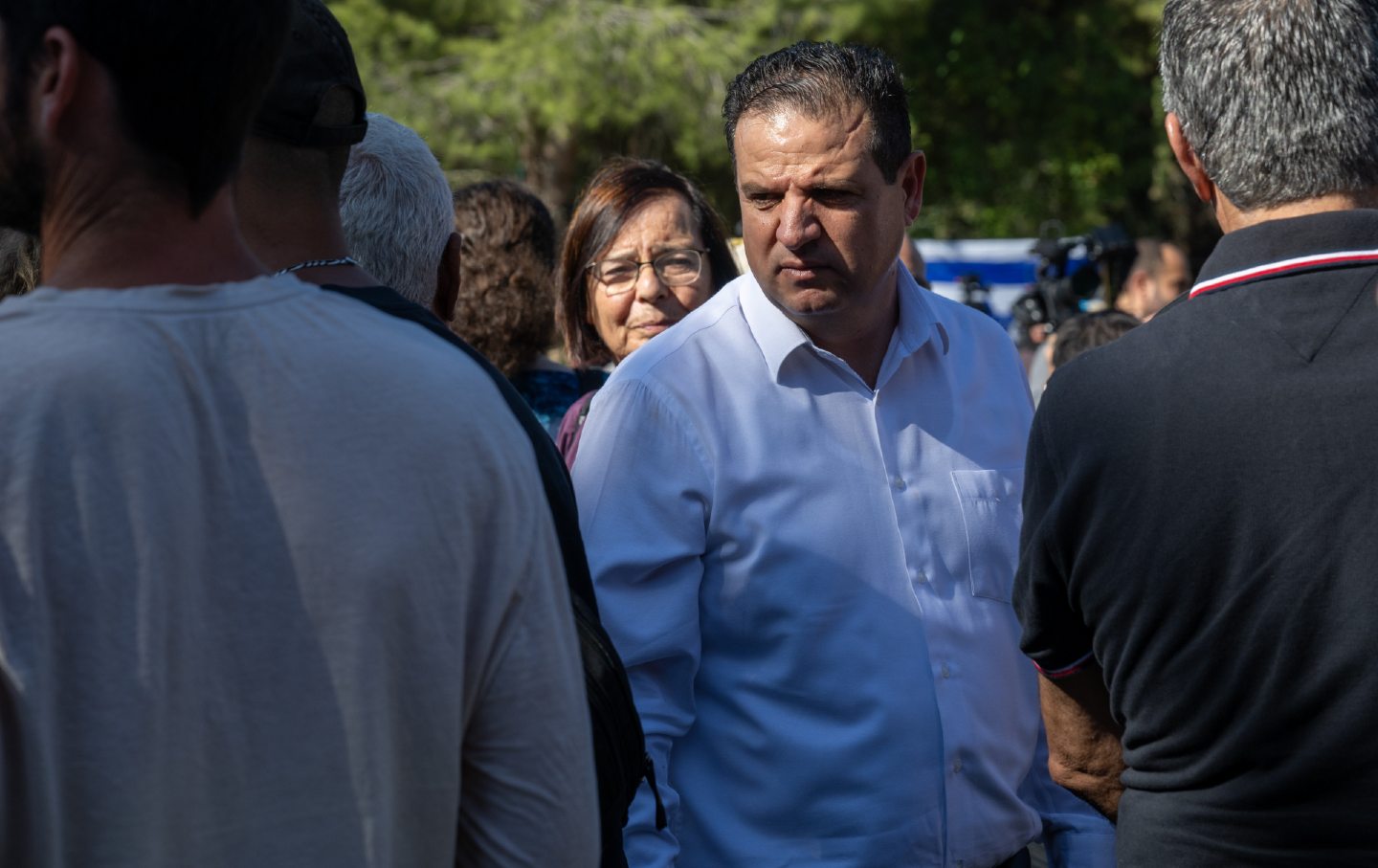
Itake inspiration every day from the Israelis and Palestinians who, despite the very real fear of repression, violence, or even imprisonment, are reaching across the chasm of grief to call for a stop to the indiscriminate bombing and rockets. People like Ayman Odeh, a Palestinian Israeli Knesset member, who knows what it takes to choose life over revenge, or the young Palestinians and Israelis with Standing Together, who are risking arrest and intimidation to advocate for an end to occupation, for de-escalation and coexistence.
If these Israelis and Palestinians, walking a very narrow bridge, can grab each other’s hands and pull together, despite the violence pulling them apart, then surely we, too, Jews in the diaspora, can come together with our allies and demand our governments advocate for the immediate release of the remaining hostages, and push for a brokered cease-fire.
When I asked my grandma over the phone what she thought about what was happening in Israel and Palestine, she paused a moment, and said, “I wish we could have left you a better world, but we didn’t.”
When I’m her age, I want to have a better answer.
More from The Nation

The Accidental Activists of Data Center Alley The Accidental Activists of Data Center Alley
These would-be rebels in Northern Virginia joined the fight against data centers mostly to stop the encroachment on their homes and exclusive private communities.
An Effective Movement for Palestine Needs Allies Like Zohran Mamdani An Effective Movement for Palestine Needs Allies Like Zohran Mamdani
In order to build a broad-based coalition, we need to work together—not practice purity politics.

The First Amendment Applies to Concert Stages Too The First Amendment Applies to Concert Stages Too
Protests like that of Macklemore on Palestine should never be silenced by billionaire owners.
France’s Students Won’t Back Down France’s Students Won’t Back Down
Without full-time teachers, temperature-regulated classrooms, or school nurses, French students are turning their grievances into a national movement.
Inside Cornell’s Week of Protest Inside Cornell’s Week of Protest
“We won’t be silenced anymore. Our university needs to start protecting us, like they should’ve with Jane Doe and all other survivors on campus.”
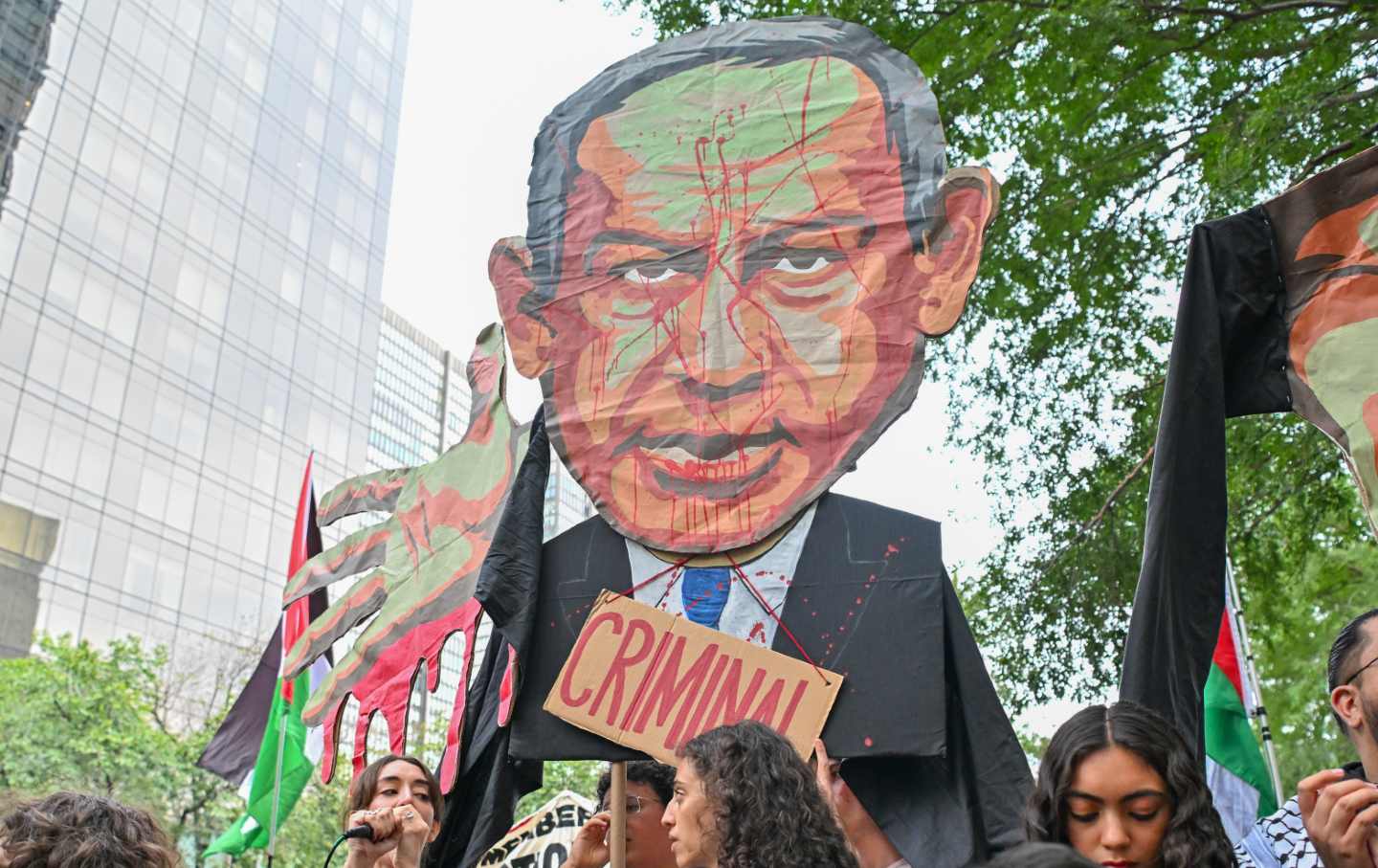
Netanyahu Came to New York. New Yorkers Were Ready for Him. Netanyahu Came to New York. New Yorkers Were Ready for Him.
Scenes from the defiant protest against the genocidal leader’s UN speech.

