
DSA Is United in Its Commitment to a Free Palestine
Our strong stance isn’t due to entryism but to years of dedicated organizing by anti-occupation activists—and a robust internal democratic process.
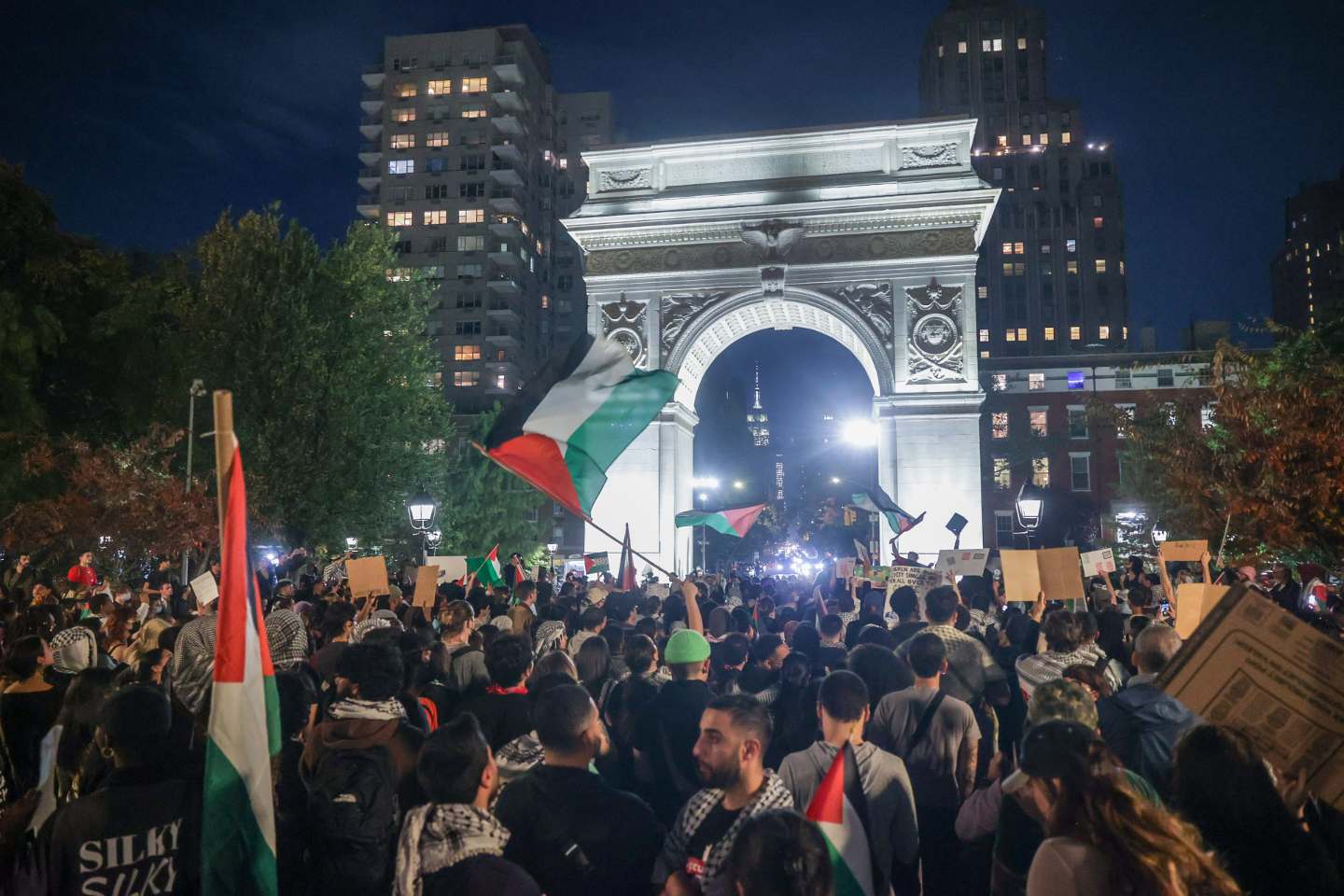
Pro-Palestinian demonstrators in Washington Square Park on October 26, 2023.
(Selcuk Acar / Anadolu via Getty Images)As representatives of the national leadership body of the Democratic Socialists of America (DSA), we believe it’s always unfortunate when members choose to leave the organization. When they tell us why they’re leaving, we seek to give them a respectful hearing and learn any lessons that we can.
This week, longtime DSA member Maurice Isserman used an article in The Nation to explain why he was quitting our organization. We want to thank Isserman for his years of dedication to the organized left, and for his scholarship that has contributed to a better understanding of the history of social movements for liberation. It is regrettable that he felt he had no other choice but to end his association with DSA.
However, while everyone is entitled—even encouraged—to express their views about the decisions we make, we fundamentally disagree with Isserman’s portrayal of DSA, and we want to set the record straight about several of his assertions and analyses.
The central argument of Isserman’s piece is that DSA’s growing consensus on our solidarity with Palestinian liberation is a result of the organization’s being “captured by left sectarian ‘entryists.’” This is not true. DSA’s political commitment against the Israeli occupation is just one small part of a broader generational and cultural shift in the way the public understands the conflict. The moral case for ending Israeli apartheid has never been clearer. Our taking a strong stance isn’t due to organized entryism but the result of years of dedicated organizing by anti-occupation activists across the globe—and a robust internal democratic process within DSA.
On October 7, a coalition of armed Palestinian groups entered Israel, killed more than a thousand people, and took hundreds of hostages. Israel responded by launching an indiscriminate bombing campaign against Gaza. As we write this, Gaza is now under massive bombardment from the Israel Defense Forces (IDF). Over 7,000 Gazans have been killed—nearly 3,000 of them children. Millions are displaced. As anti-war activists call for a cease-fire and de-escalation of violence, the IDF and the United States prepare for a potential ground invasion in which many more will surely be killed.
Isserman accuses DSA’s position on the conflict—demanding a cease-fire and calling attention to the history of occupation and apartheid in Palestine—of being “politically and morally bankrupt.” Let us be clear: we do not seek to justify or excuse the killing of any civilian. As we have said publicly, we abhor the deaths of Israeli and Palestinian civilians alike. Every life is precious.
What we are also determined not to do, though, is abandon our calls for Palestinian liberation, and for an end to Israeli apartheid. There is no contradiction in our eyes between recognizing the tragedy that has befallen too many innocent people in both Israel and Palestine and understanding that the root cause of that tragedy lies in Israel’s occupation and discriminatory policies.
The history of this conflict did not begin on October 7, despite the simplistic narrative being driven by much of the media. Since Palestinians were driven out of their homes en masse in the 1948 “Nakba” (Arabic for “catastrophe”), Israel has increased its control over the territory, including with the occupation of territories captured in the 1967 Six-Day War such as Gaza and the West Bank. This occupation has been a humanitarian crisis for the Palestinian people, with Gaza being turned into an “open-air prison,” and increasing settlement in the West Bank becoming an explicit political priority of the Israeli state in recent years.
DSA’s position in solidarity with the people of Palestine reflects a broader shift in public opinion about the occupation, as conditions across the occupied territories continue to deteriorate and the viability of a “both sides” approach to the conflict becomes less tenable. A March 2023 Gallup poll showed that net sympathy for Palestine (42 percent) had eclipsed support for Israel (40 percent) among US millennials surveyed. And in the wake of the recent conflict, a majority of Americans oppose sending military aid to Israel, according to CBS.
The shift has impacted developments within DSA, as the organization has grown considerably from its pre-2016 size and come to better represent the United States’ multiracial working class. The massive influx of members since 2016 has not been without contention. As DSA has grown we have faced a myriad of challenges and conflict about how best to integrate each new cohort, but with each of these, the organization has also matured.
Through this period, DSA’s work for Palestinian liberation has become a vital part of our international organizing. In response to the events of October 7, the National Political Committee worked around the clock and across political differences to put out an official toolkit for chapters and other DSA bodies to work with. We have organized a campaign, No Money for Massacres, to put pressure on Democrats in Congress to support calls for a cease-fire and to vote no on military aid to Israel. We have mobilized thousands of members to demonstrations that call for an immediate cease-fire, an end to US aid to Israel, and an end to the occupation in Palestine.
Though Isserman argues that DSA’s position on Palestinian liberation originates in “sectarian caucuses…gain[ing] strength in the organization’s ruling body,” the truth is that DSA’s commitment to Palestinian liberation goes far beyond the composition of our leadership. Our political positions stem from robust democratic processes and our position on Palestine is no exception. Hundreds of delegates at the DSA national convention voted in 2017 to endorse the national Boycott, Divestment, and Sanctions movement—which works to end international support for Israel’s oppression of Palestinians and pressure Israel to comply with international law. In 2019, DSA voted to further extend these commitments and establish a BDS Working Group (recently merged by the 2023 convention into DSA’s International Committee), and in 2021 to enshrine commitment to solidarity with Palestinian liberation in our national platform. The repeated reaffirmation of support for Palestine at our national convention is evidence that across political tendencies; at least within DSA, this is a noncontroversial position.
Popular
“swipe left below to view more authors”Swipe →Isserman also bemoans what he sees as the relative anonymity of DSA’s current leadership, mentioning that “in the old days, everyone in DSA knew who Mike Harrington was and who Barbara Ehrenreich was and how they agreed upon or differed on organizational priorities.” Isserman believes that the current crop of DSA’s leaders should be better known by rank-and-file members and the broader public. We believe it is a positive development that DSA’s leadership comes overwhelmingly from regular working-class people who have experience in DSA as effective leaders of local chapters or national campaigns. However, we agree that DSA can do more to make our leadership’s political work known, within the organization and with the broader public.
Contrary to Isserman’s insistence that DSA is headed towards a split in the same vein as SDS, DSA is stronger than ever. Our organization is maturing, members are developing political positions and self-organizing to push for them. We are united in our call for a free Palestine and an end to the US’s role in the occupation, and we are proud of our members’ contributions in other arenas like social movements, a resurgent labor movement, and public office. We will continue to rely on our deep commitment to democracy both internally and in the world to guide our work. We invite anyone who shares our vision for a world where all people have everything they need to live meaningful lives free of violence and oppression to join us in fighting for freedom and dignity for Palestinians, and for working people across the world.
Become a Sustaining Donor This September
Between the reemergence of right-wing red-baiting and Donald Trump’s use of the chilling National Security Presidential Memorandum–7 to criminalize left political organizing, we’re seeing McCarthyism reborn before our eyes.
This assault on democracy cannot be ignored or wished away. Resisting it requires bravery in the face of threats and repression, a steadfast commitment to the truth, and the unwavering belief that we can—and will—overcome this darkness.
We must have an independent media that sets the record straight, unearths corruption and abuses of power, and advances a politics of justice and dignity for all if we’re to win this fight.
That’s why I’m writing to you today. This September, The Nation needs to add 100 monthly donors to sustain our progressive journalism. Your contribution makes the next investigative report, the next truth-speaking column, and the next pathbreaking essay all possible.
I hope you’ll support our work with a recurring donation today. If you donate $10 or more a month, we’ll send you a brand new “Hands Off the Free Press!” sticker to recognise your commitment to our cause. Please, donate today.
Onward,
Katrina vanden Heuvel
Editor and Publisher, The Nation
More from The Nation
The Impossible Will Take a Little While: The Power of Persistence The Impossible Will Take a Little While: The Power of Persistence
In troubled times, history offers a lesson: Seemingly impossible change can begin with ordinary people who refuse to give up.
Gloria Steinem’s Many-Splendored Feminist Life Gloria Steinem’s Many-Splendored Feminist Life
The feminist icon lived the struggle for gender equality and always found time to lend support and solidarity to other women leaders, even in her final days.
No, Woke 1 Was Not Crazy No, Woke 1 Was Not Crazy
AOC and others are laughing off 2020 as a wild, isolated moment. None of that is true.
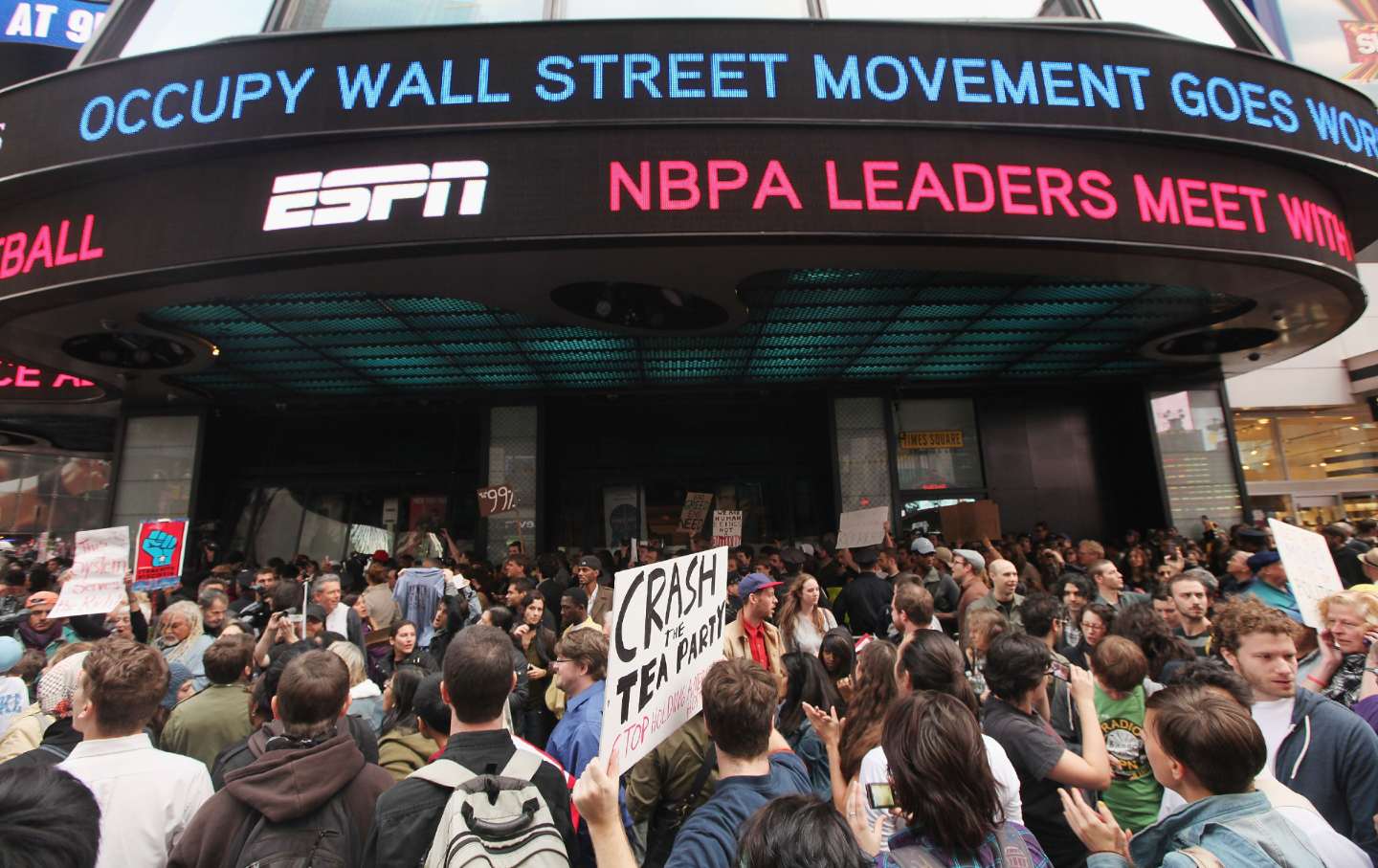
How Occupy Wall Street Still Explains Politics Today How Occupy Wall Street Still Explains Politics Today
It sowed the seeds for a new era of social movements—but its politics of powerlessness should act as a cautionary tale.
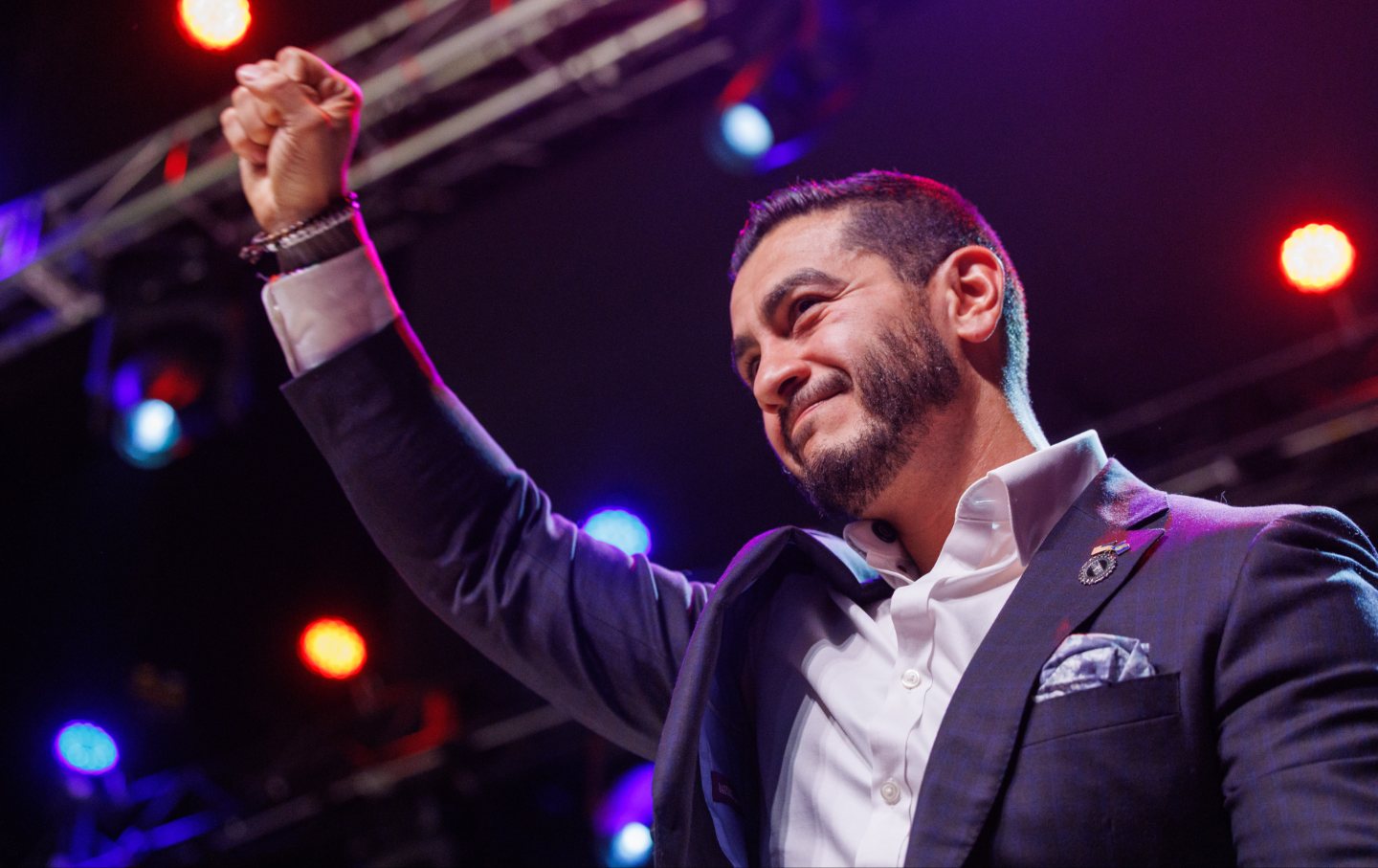
Abdul El-Sayed’s Win Is a Landmark. But the Fight Is Far From Over. Abdul El-Sayed’s Win Is a Landmark. But the Fight Is Far From Over.
Even though the Palestine movement is on the march, we can’t afford any complacency.

Mamdani’s Team Redefined Political Video. Now They’re Betting on Short Films. Mamdani’s Team Redefined Political Video. Now They’re Betting on Short Films.
Premiering exclusively in The Nation, a new short film produced by City Hall and narrated by Morgan Spector highlights the efforts of the biggest tenant-led union in New York City...

