
Peruvians Are Protesting Their Unelected President
Thousands have joined demonstrations against Dina Boluarte. Now, progressives in Congress are asking the Biden administration to stop supporting her far-right regime.
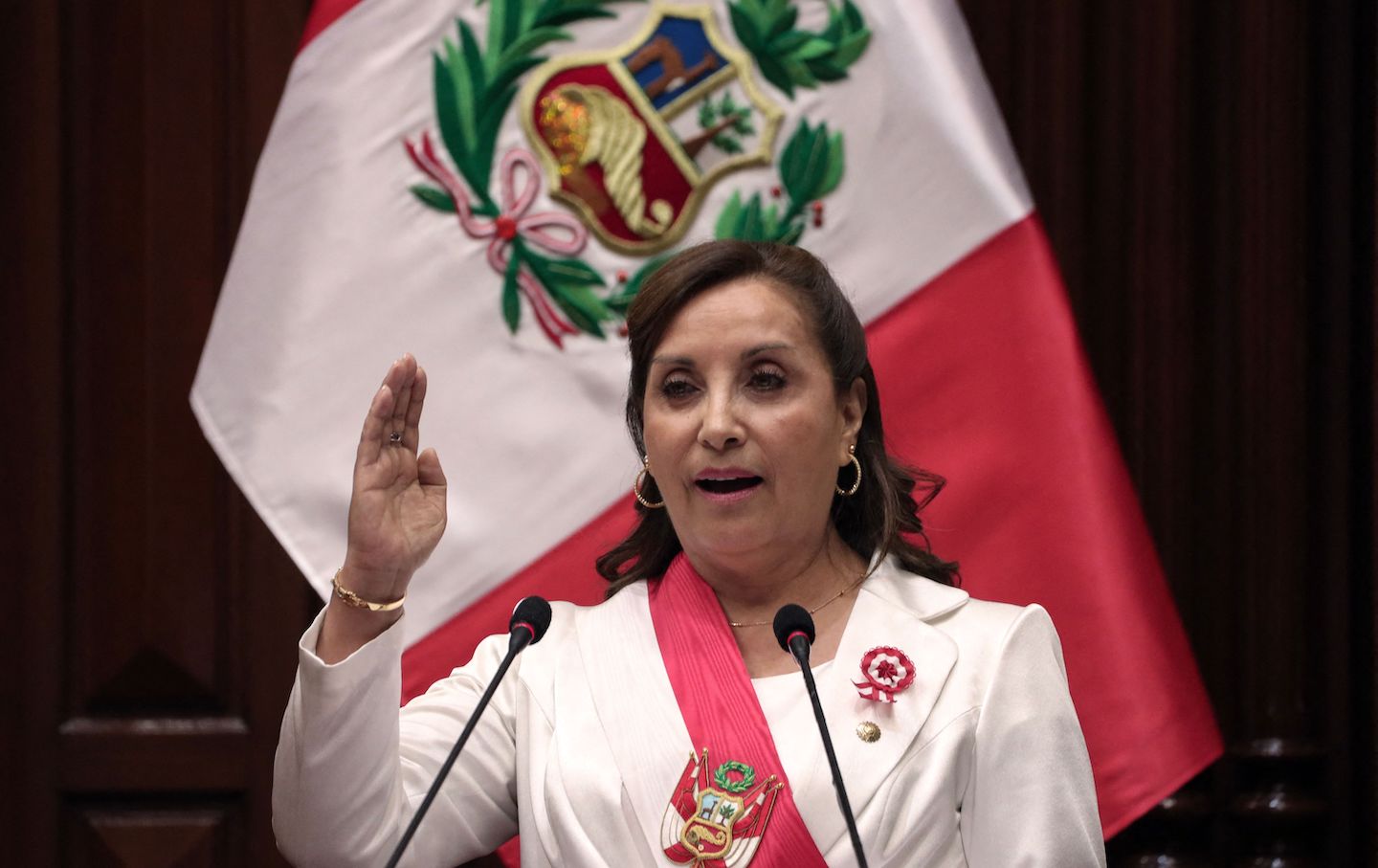
For the past few months, tens of thousands of protesters have taken to the streets in cities across Peru to demand the resignation of unelected President Dina Boluarte, who took office in December 2022 when a right-wing alliance overthrew and imprisoned the socialist President Pedro Castillo. The ongoing protests, led by Peru’s mostly Indigenous and poor majority since the day Boluarte assumed the presidency, have been brutally repressed by state security forces, leading to the deaths of at least 60 civilians. Anger over those deaths and the lack of any subsequent accountability fueled the latest wave of the uprising, which was rekindled in late July. Demonstrators are calling for new elections, the resignation of Boluarte, and even the drafting of a new Constitution.
The Biden administration, meanwhile, has maintained an alliance with Peru, which receives over $40 million in security assistance from the US every year, according to the Washington Office on Latin America. From June through December, the Pentagon will have deployed over a thousand US troops with weapons and equipment to participate in joint military exercises with the Peruvian military. Just a couple weeks ago, local media reported that the Biden administration is licensing sales of riot control weapons and equipment to Peru. But despite the violent response to the mobilizations, the Biden administration is not wavering from its support of the Boluarte government. In response, Democratic lawmakers, including a few moderate voices, are pressing the administration to condemn the abuses and halt military assistance to Peru until the violence comes to an end.
“By consistently voicing support for the Peruvian government, the US not only contradicts the human rights and democratic principles it professes to uphold but also strengthens a regime that continues to brutally repress the Peruvian people,” Francesca Emanuele, a Peruvian analyst and senior research fellow at the Center for Economic and Policy Research, told The Nation.
International groups, including the Inter-American Commission on Human Rights and the UN Office of the High Commissioner for Human Rights, have found that state security forces committed serious human rights violations against Peruvians during the protests. A Human Rights Watch report in April found that the killings were “most likely extrajudicial or arbitrary killings under international human rights law.” Even as the death toll reached 20 civilians back in December, Secretary of State Anthony Blinken called Boluarte, telling the Peruvian leader that the US “looks forward to working closely” with her government. Not long after the call, the US went further in signaling its support. Ambassador Lisa Kenna, who spent nearly a decade in the CIA before becoming a diplomat, announced that the Biden administration would be pumping an additional $8 million into coca eradication in the Upper Huallaga Valley.
Former President Pedro Castillo, a rural school teacher and trade unionist who had never previously held public office, was elected in 2021 on a platform that promised to end monopolies and enact major social spending, representing a major victory for the most exploited and oppressed segments of Peruvian society. It marked a new era for Peru, a break from the neoliberal model that has governed the country for decades and a challenge to the multinational corporations controlling the extractive mining and oil industries. Unsurprisingly, Castillo’s administration faced fierce right-wing opposition at every turn, from the conservative-controlled Congress and Lima-based political elite to the mainstream media. They were determined to get rid of him, and right-wing lawmakers carried out a series of three impeachment attempts during Castillo’s term. In a last-ditch effort to outmaneuver the third attempt, Castillo called for the dissolution of Congress and the creation of an emergency government. Desperate for an excuse to remove Casillo from power, the far-right Congress used this move, which technically violated the Constitution, as a pretext to overthrow and imprison him. Regardless of its technical legality, the ouster has been more popular with Peru’s capitalist class than with the civilian majority. Surveys have placed Boluarte’s approval rating at around 12 percent among the general population, and a whopping 71 percent among CEOs.
Since January, a diverse group of House Democrats has been pressuring the Biden administration on Peru’s political crisis, calling on the US to stop all US military aid to the Boluarte government until the “pattern of repression” has ended and the country’s authorities take steps to investigate human rights violations and prosecute those responsible. Twenty Democratic lawmakers, led by Representative Susan Wild of Pennsylvania, wrote a letter to Biden to try to push the US to publicly denounce the Boluarte government’s repression. “We are concerned that, in the current context, statements by U.S. officials in support of the Boluarte Administration or calling for ‘peace on all sides’ send an ambiguous message,” the letter read.
In June, New York Representative Alexandria Ocasio-Cortez increased the momentum, pushing a measure to cut military aid to Peru until “free and fair” presidential and congressional elections are held. The amendment, which would have required the Pentagon to report back on the crimes committed by state security forces, was blocked from receiving a vote on the House floor by the GOP-controlled House Rules Committee. Ocasio-Cortez had introduced the amendment weeks after US troops arrived with weapons in Peru to carry out “cooperative training activities.”
House Democrats have been speaking out on the crisis alongside a coalition of peace and foreign policy groups, including dozens of faith organizations. To counter activism around the issue, the Boluarte regime secured a $40,000 a month lobby contract with the public relations firm Patriot Strategies. The firm’s services include “targeted communications, strategic planning, tactical execution, and public relations assistance” on matters before Congress, the White House, the business community, the media, and more.
In July, Representatives Joaquín Castro, the highest ranking Democrat on the House Foreign Affairs Subcommittee on the Western Hemisphere, and Sydney Kamlager-Dove led 13 of their Democratic colleagues in a separate letter to the Biden administration, demanding that Secretary of State Anthony Blinken work with the Defense Department to temporarily cease joint exercises or cooperation with units of the Peruvian security forces responsible for human rights violations. Though Castro’s letter didn’t go as far as to call for an outright stop to US military aid, the lawmakers urged an investigation into whether the Peruvian security units responsible for the human rights violations have received assistance from the US, and that the White House “restrict further assistance as consistent with United States law.”
“The US avoided referring to possible abuses and excessive use of force by security forces for months and, to this day, it has not adequately denounced very serious human rights violations and threats to democracy in Peru,” Cesar Munoz, Americas associate director at Human Rights Watch, told The Nation. The recent letter from Castro and Kamlager-Dove, he added, is an important step.
The Biden administration must act now, and at the very least cut aid to certain Peruvian security units, or risk being in violation of their own laws. The Leahy Law, in particular, bars US assistance from reaching security force units that commit “gross violations of internationally recognized human rights.” Continuing to enable the Boluarte government’s lethal repression would set up a confrontation with Congress and further plant the US on the side of the Peruvian elites.
After taking office in 2021, the Biden administration issued a statement promising to place “human rights at the center of U.S. foreign policy.” What became of that promise in the case of Peru?
More from The Nation
Progressives Are Backing Puerto Rican Independence. It’s About Time. Progressives Are Backing Puerto Rican Independence. It’s About Time.
More and more leftists are concluding that statehood for the island is not enough.
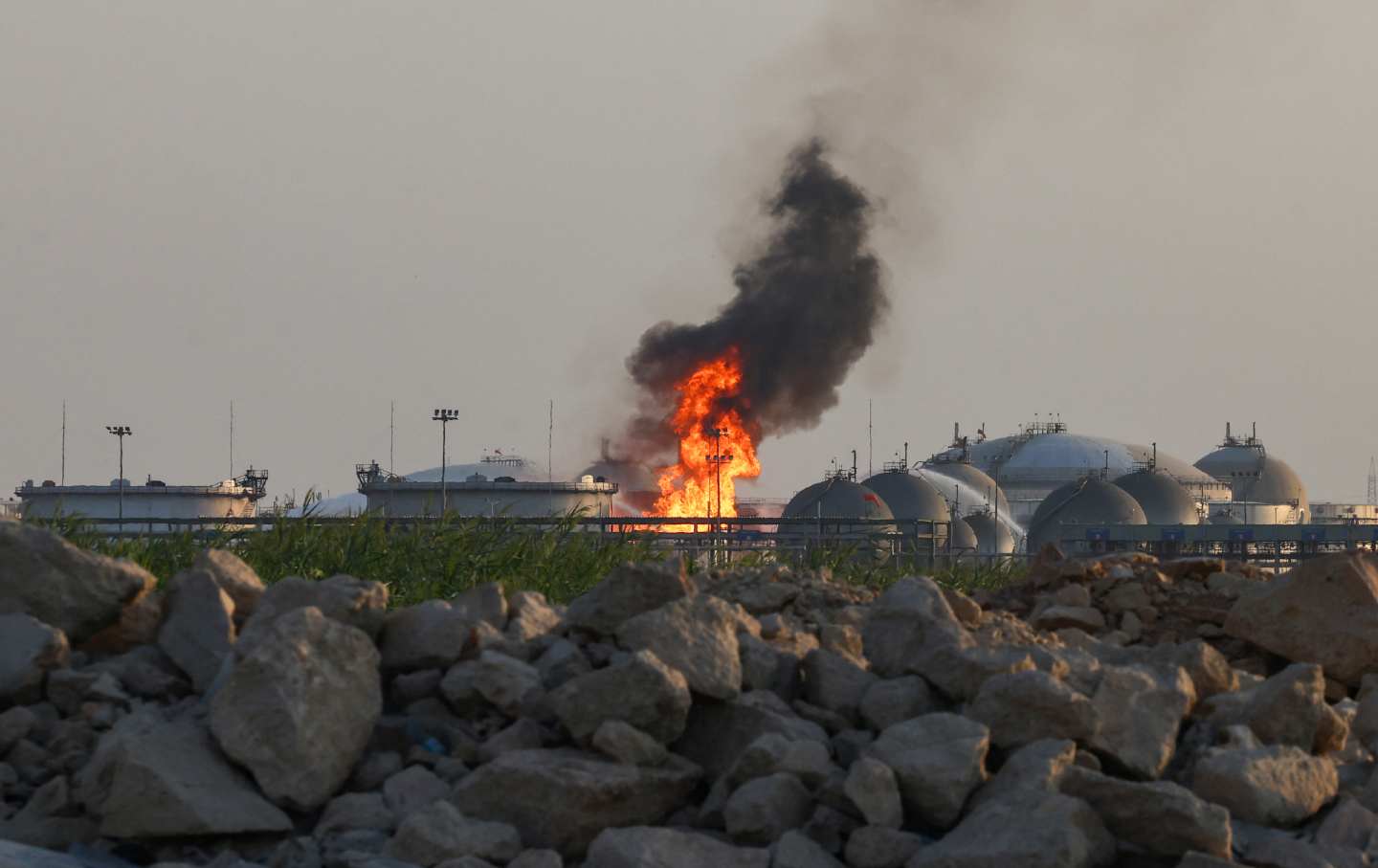
The Saudi Phase of the Iran War Signals More Chaos to Come The Saudi Phase of the Iran War Signals More Chaos to Come
The conflict that Donald Trump has repeatedly proclaimed an unequivocal American victory keeps spiraling out of control.
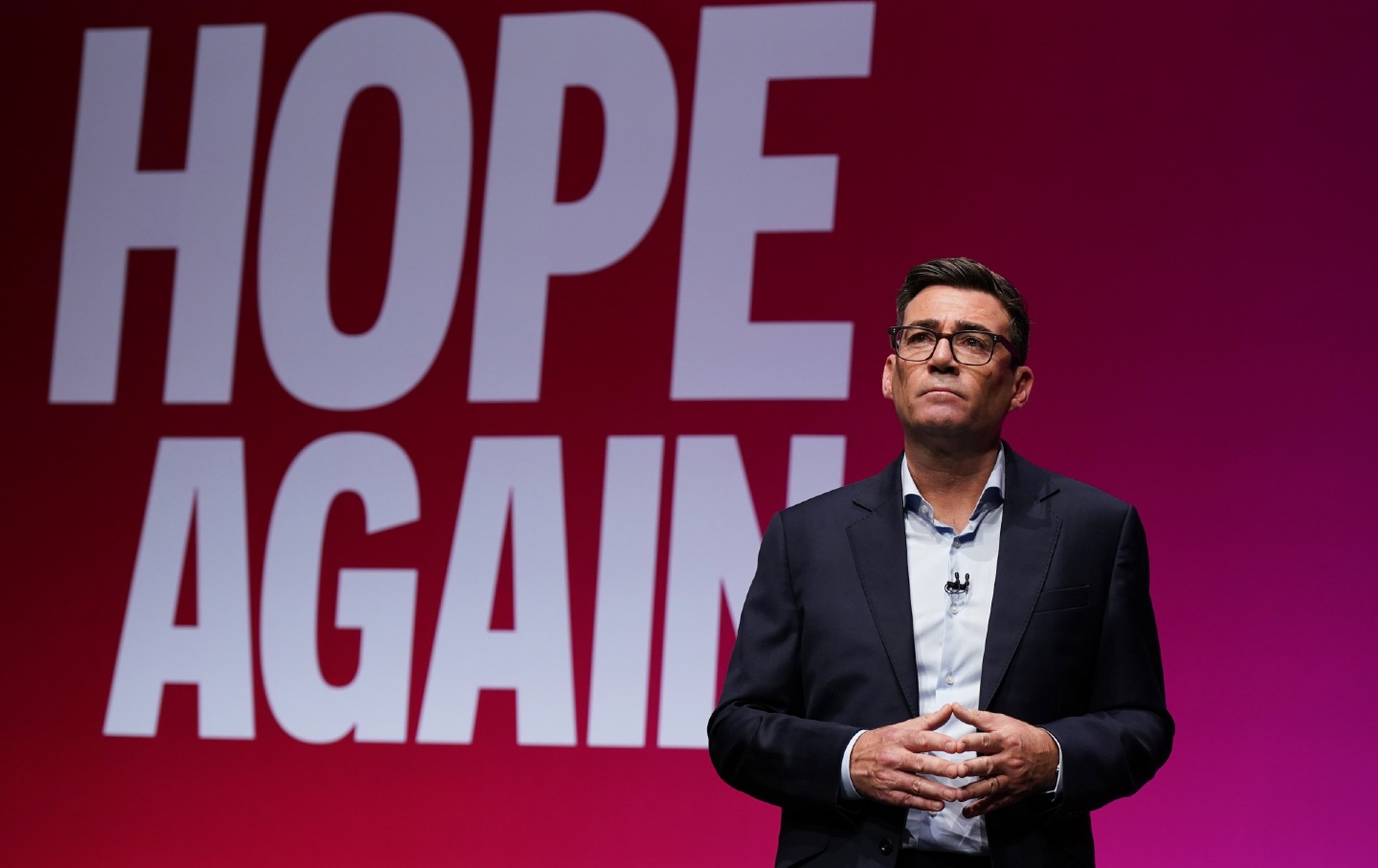
Andy Burnham’s Speech to the Labour Party Conference Could Be the Start of a Positive Social-Democratic Politics Andy Burnham’s Speech to the Labour Party Conference Could Be the Start of a Positive Social-Democratic Politics
But the autumn budget to be released at the end of October will offer needed details.
Why Navi Pillay’s Receiving the Nobel Peace Prize Is So Important Why Navi Pillay’s Receiving the Nobel Peace Prize Is So Important
She believes that human rights and international law are universal principles that must be enforced regardless of violator’s ideology, ethnicity, or geostrategic alignment.
Writing About War as Bombs Fall Writing About War as Bombs Fall
While the Israeli government launched a well-orchestrated offensive of disinformation and hyperbole that would make the illegal permissible in the war on Gaza.

