

April 22, 1970: Earth Day Is Celebrated For the First Time April 22, 1970: Earth Day Is Celebrated For the First Time
“It is an operation—however well meaning, however many good people involved—that is, at its core, a shuck.”
Apr 22, 2015 / Richard Kreitner and The Almanac
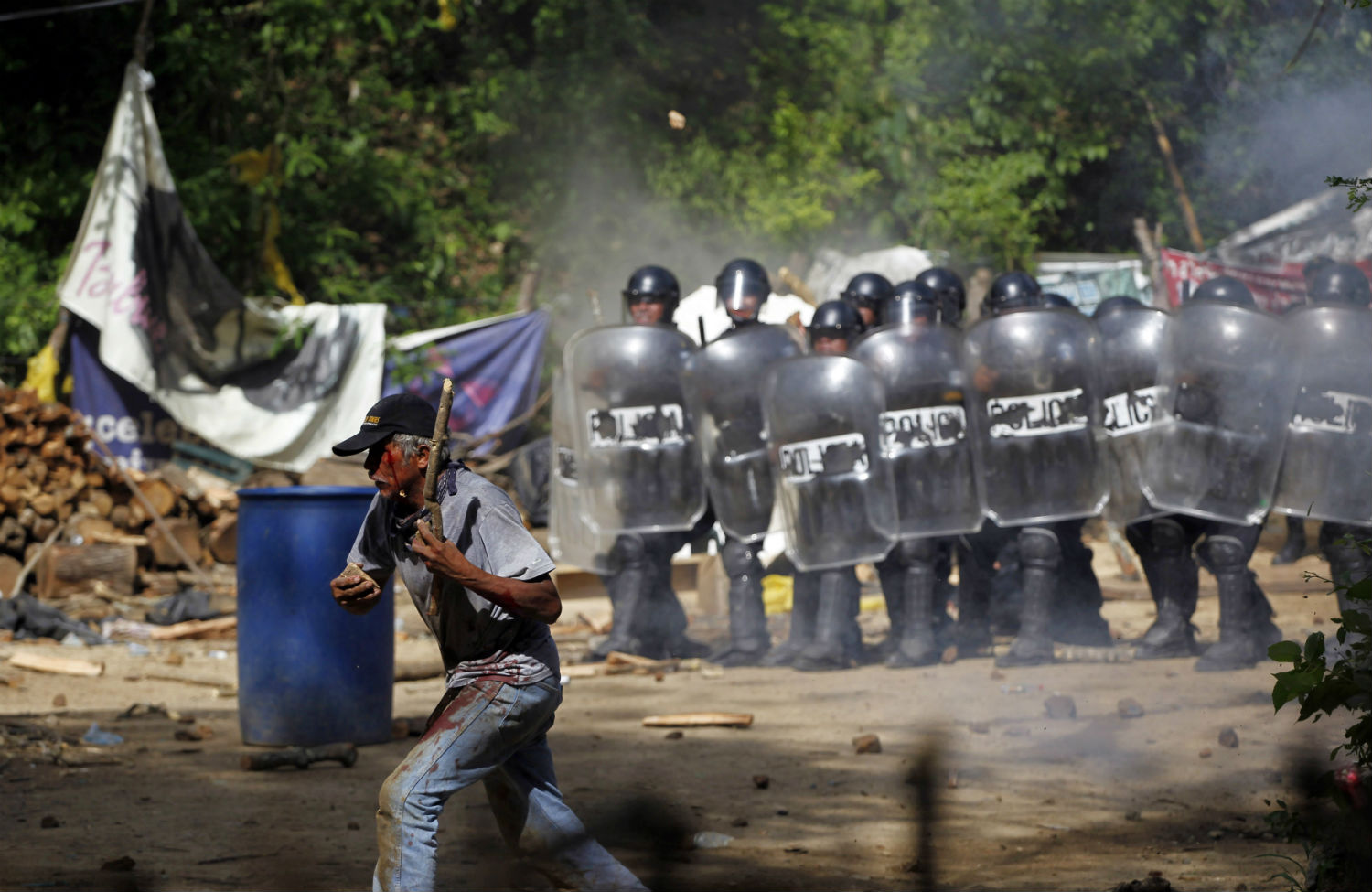
Happy Bloody Earth Day Happy Bloody Earth Day
The resource wars in Latin America are heating up, and the poor are paying the price.
Apr 22, 2015 / Greg Grandin
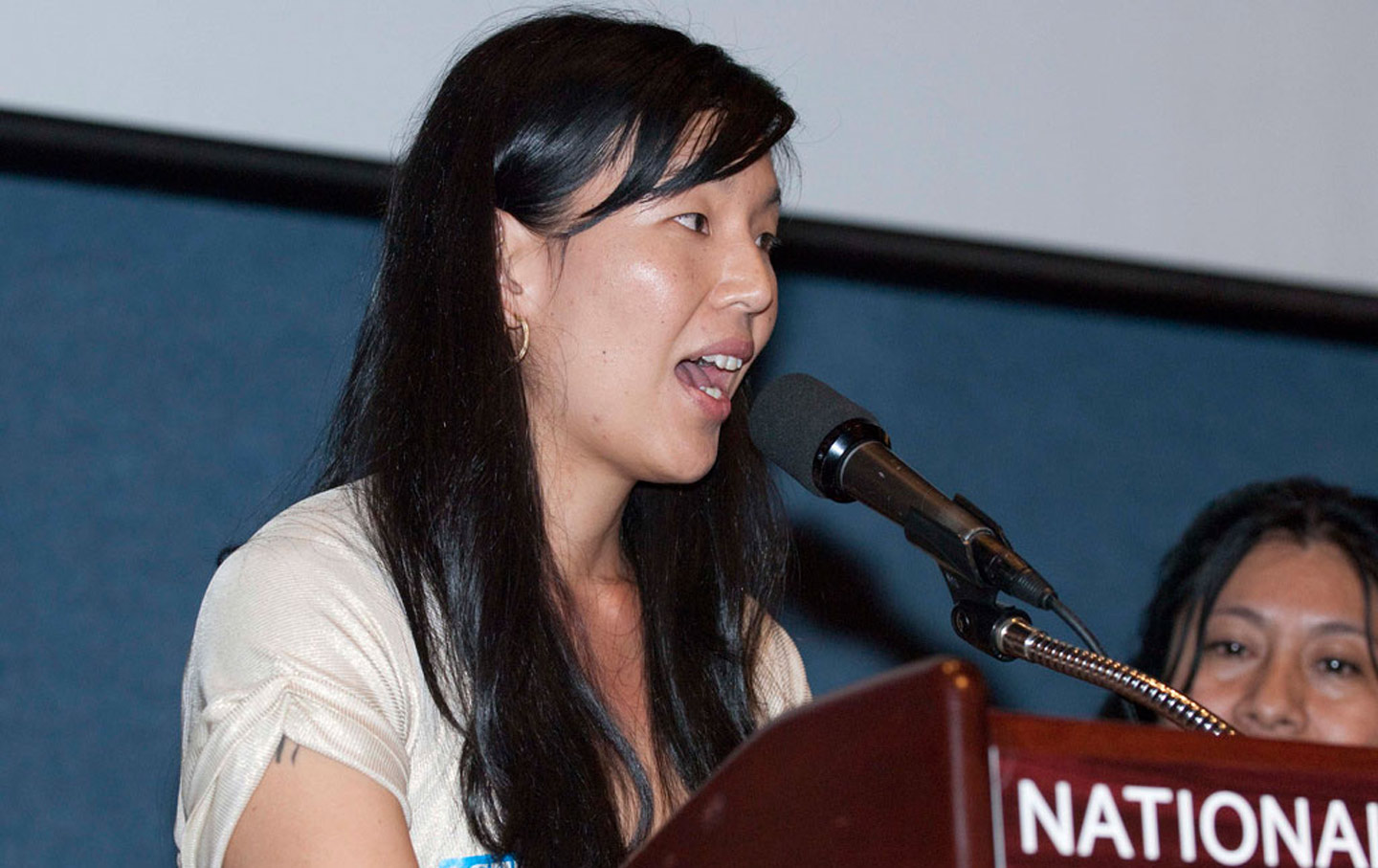
Would You Rather Grow Old at Home With Your Family or Alone in a Nursing Home? Would You Rather Grow Old at Home With Your Family or Alone in a Nursing Home?
How Ai-jen Poo’s radical vision for caregiving could remake our economy along more humane lines.
Apr 22, 2015 / Michelle Chen and Sarah Jaffe
Puzzle No. 3360 Puzzle No. 3360
Click HERE to download a printable PDF of this puzzle. ACROSS 1 Crazy proposal for travel (10) 6 Assistant reversing digital divide? (4) 10 Business associate sending back money for housing strike (7) 11 Yale student invested in plastic dyes—they keep out the light (7) 12 You sat awkwardly with a poet (5) 13 Where some children learn arrangement of crop holes (9) 14 Think about a swindle, with employee behind schedule (11) 17 and 18 across Miscellaneous source of heat, without liquid (6) 18 See 17 across 19 Where you could get milk or grain, in the past, with raw material (6,5) 21 In the far south, tactic ran off the rails (9) 24 Wood from a plank, turned over (5) 25 Terribly bored, sanction magazine (7) 26 Water shortage is severe within the boundaries of Detroit (7) 27 Dressing from April 30? (4) 28 It might keep you from suffering a retreat before a male jerk (10) DOWN 1 Pretend to sing along with South Korean rapper in Long Island and North Carolina (3-4) 2 Surprisingly tiny trace leads to conviction (9) 3 Lists to choose from when a planet’s face is magnified by a factor of 200 (5) 4 Academic exercise for Rev. Spooner: style hair with a candle (4,5) 5 Robes evidently concealing fat (5) 7 Judge came down against the essence of Roe (5) 8 The smallest quantity of soda, unopened, overcoming endless thirst (7) 9 Brutally scare the faculty (8) 15 Load in established staple of the slow-food movement? (8) 16 Three-digit sequences are not DC poems (4,5) 17 Herb interrupts insult to get attention (9) 18 Site of the Taj Mahal seen in poorly illuminated illustration (7) 20 Shred laciest part of some underwear (7) 22 Diminutive cover for the state’s lawyer, at present (5) 23 Naked star (a well-known doll) is not available (5) 24 Stall an assassin (5) SOLUTION TO PUZZLE NO. 3359 ACROSS 1 2 defs. 4 VI + DEOT (rev.) + APE 9 hidden 10 CHO(M)P 11 [f]EELS 12 “cone and oil” 14 pun 15 KNIF (rev.) + [d]ES[k] 18 B(L)EACH 19 BUD + A PEST 22 anag. 24 hidden 26 “Thai grrr” 27 QUID + DITCH 28 H + OPEC + HE’S + T 29 rev. DOWN 1 [s]HO[t] + THÉ + AD 2 anag. 3 SO FA[r] 4 [o]VER + MOUTH 5 phonetic hidden 6 [a/O]-CCIDENTAL 7 AGO + NY 8 EM (rev.) + PRESS 13 EGOCEN(T)RIC (concierge anag.) 16 F(RE)IGHTER 17 hidden 18 BEW (rev.) + ITCH 20 TO(Y)SHOP (photos anag.) 21 OPA[l] + QUE 23 rev. 25 A + D.D.S.
Apr 22, 2015 / Joshua Kosman and Henri Picciotto

Does Talking About ‘Women’ Exclude Transgender People From the Fight for Abortion Rights? Does Talking About ‘Women’ Exclude Transgender People From the Fight for Abortion Rights?
Abortion fund activists respond to Katha Pollitt’s opposition to gender-neutral language.
Apr 22, 2015 / Our Readers and Katha Pollitt

The Old Consciousness The Old Consciousness
Hilary Mantel and Penelope Fitzgerald have saved historical fiction from a middlebrow wasteland.
Apr 22, 2015 / Books & the Arts / Leo Robson
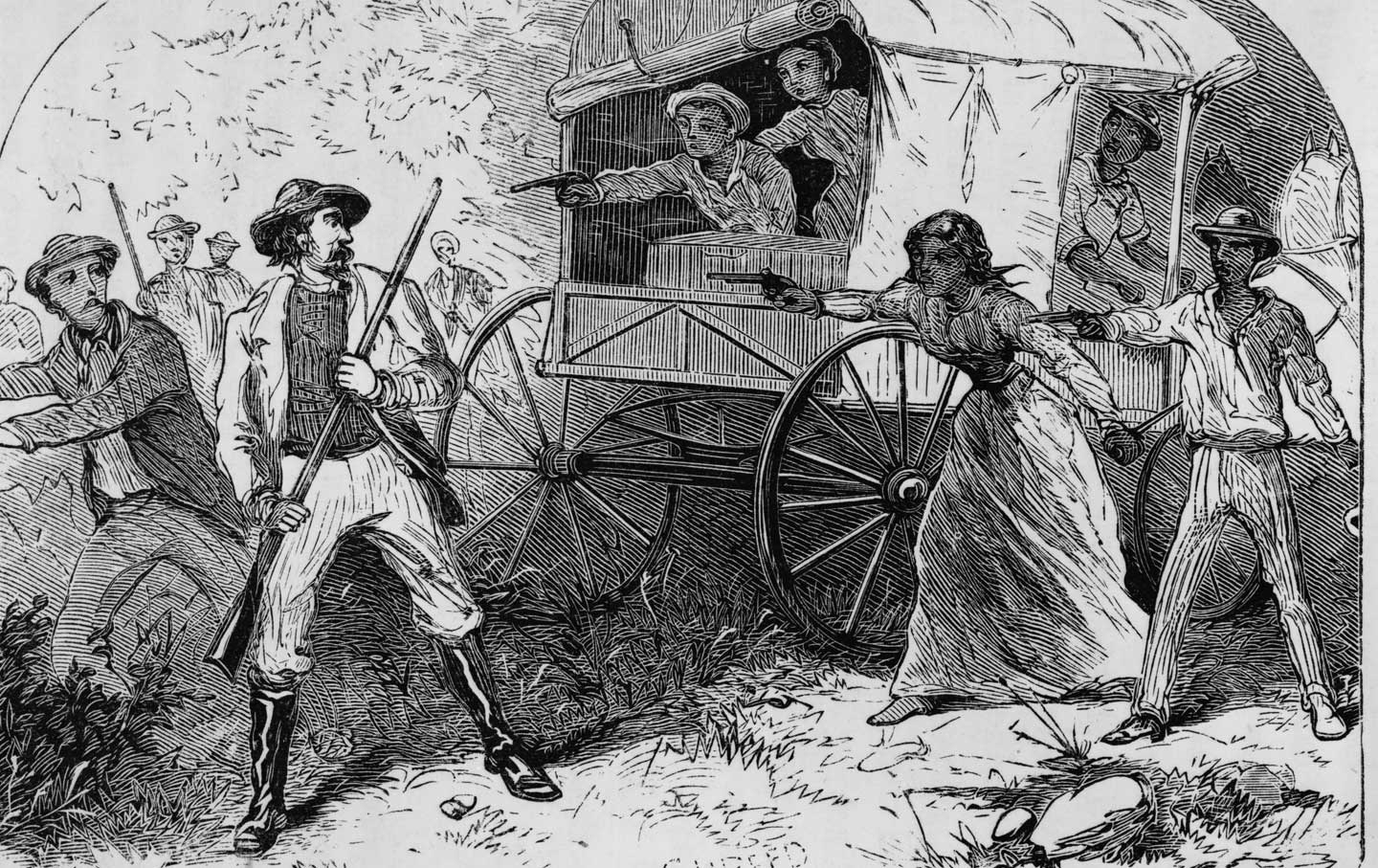
In Our Orbit: Vigilance In Our Orbit: Vigilance
In Eric Foner’s Gateway to Freedom, the Underground Railroad is a network of dignity and defiance.
Apr 22, 2015 / Books & the Arts / Richard Kreitner
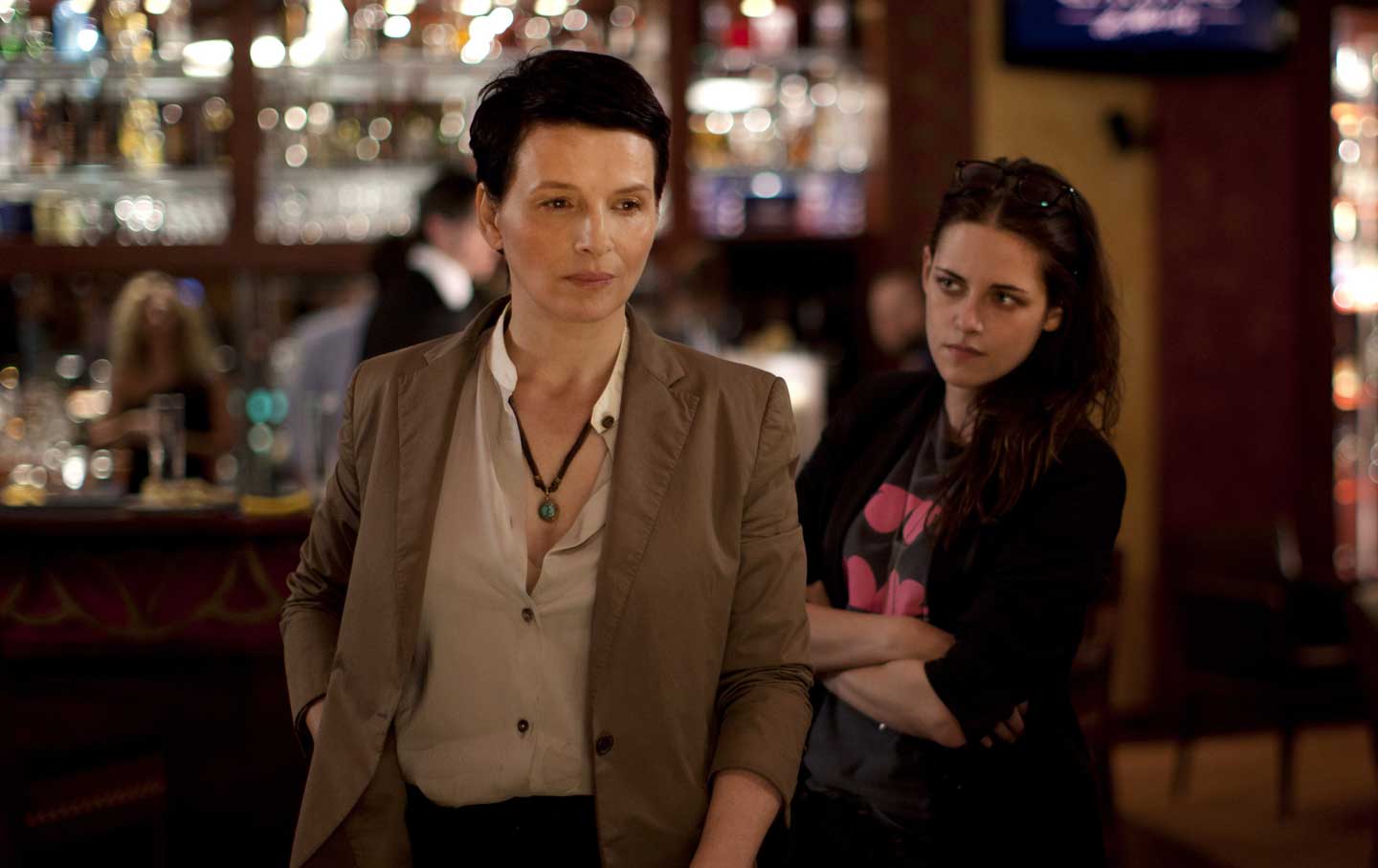
Rivalries Rivalries
Clouds of Sils Maria is prolonged debate about the passage of time and the ceaseless rivalry of generations.
Apr 22, 2015 / Books & the Arts / Stuart Klawans
Out of Habit Out of Habit
The soldier the patrol forgot in the garden, the patrol the border guards forgot at the checkpoint, the checkpoint the occupation forgot at the doorstep, the occupation the politician forgot in our lives, the politician who was a soldier of the occupation. The Merkava the army forgot at the school, the army the war forgot in the city, the war the general forgot in the room, the general whom peace forgot in our sleep, the peace that was driving the Merkava. They still open fire at our heads, without orders, just like that, out of habit. (translated from the Arabic by Fady Joudah)
Apr 22, 2015 / Books & the Arts / Ghassan Zaqtan
Shelf Life Shelf Life
“There is no such thing as not voting” is the faith that Darryl Pinckney grew up in.
Apr 22, 2015 / Books & the Arts / Ari Berman