
UNRWA’s Demise Would Be Catastrophic for Gaza
The evidence that led to the suspension of aid to the relief agency is questionable. The disaster that would befall Palestinians if it goes away is not.
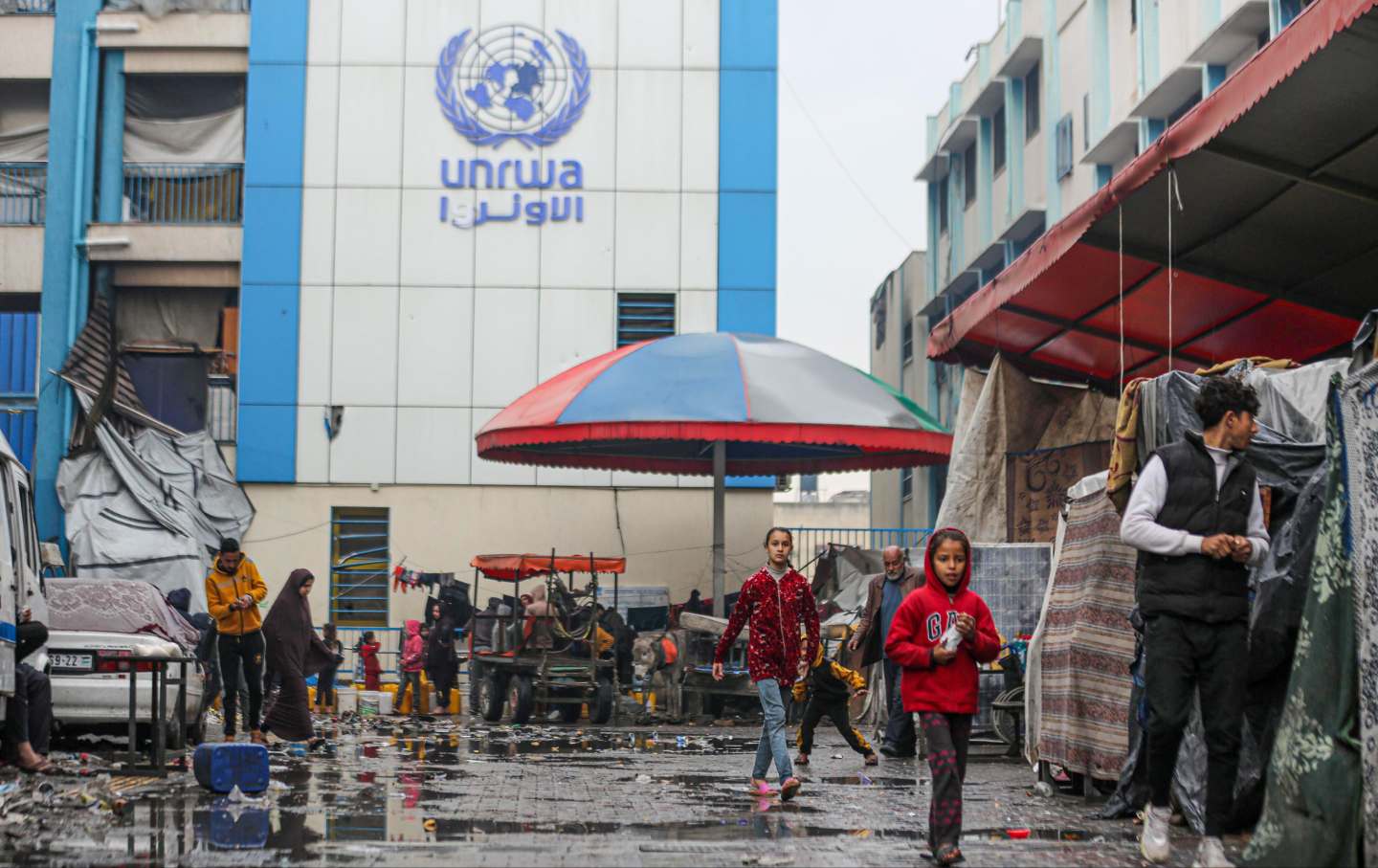
Palestinian families take refuge at a school affiliated to the United Nations Relief and Works Agency for Palestine Refugees at the Daraj neighborhood as the Israeli attacks continue in Gaza City, Gaza on February 6, 2024.
(Dawoud Abo Alkas / Anadolu via Getty Images)As Israel’s military assault on the Gaza Strip enters its fifth month, questions are emerging about what evidence states relied on to justify their rush to suspend funding for the UN Relief and Works Agency for Palestine Refugees in the Near East (UNRWA), the United Nations’ main aid agency for Palestinian refugees. Israel presented the UN with information alleging that at least a dozen staff members participated in the Hamas-led attacks on October 7, 2023, which killed hundreds of civilians.
The focus on the allegations has overshadowed the impact of the cuts on the humanitarian situation for Gaza’s 2.3 million residents. But amid these claims and counterclaims, one thing is certain: The people of Gaza need UNRWA operating at full strength. Governments should immediately restore funding to UNRWA, and clarify what information they used to justify their funding suspensions.
After Israel briefed UNWRA chief Philippe Lazzarini on the allegations, the UN not only promised an investigation but fired most of the accused employees. Yet despite this clear evidence that the matter was being treated seriously, the United States and other top donors hastily announced that they would freeze all payments to the agency, which has 30,000 employees in the region and is providing food, water, shelter, and other vital services to hundreds of thousands of Gazans.
It remains unclear what information Israeli authorities shared with Lazzarini. Secretary General António Guterres opened an investigation by the UN’s Office of Internal Oversight Services, saying that any UN employee “involved in acts of terror will be held accountable, including through criminal prosecution.”
The UN also commissioned a comprehensive review of UNRWA, led by the former French foreign minister Catherine Colonna and including three Scandinavian research organizations, to ensure that the agency is “doing everything it can to ensure neutrality and to respond to allegations of serious breaches when they arise.”
UNRWA had already paid a high price for its presence in Gaza. By the agency’s count, at least 154 UNRWA staff had been killed during the fighting in Gaza as of February 8. UNRWA also reported that its facilities have been hit at least 290 times in the hostilities, which have claimed the lives of over 27,000 Palestinians, according to the Gaza Health Ministry.
Initially, there was little questioning of the Israeli allegations. But, after Israeli officials reportedly began circulating a six-page summary of their claims to the media, journalists reported that Israel was offering no concrete evidence to back the allegations. (It is unclear whether donor governments have received additional information from the Israeli authorities.)
According to the Financial Times, “The intelligence assessment, which has been seen by the FT, provides no evidence for the claims, which it says are based on smartphone intercepts and captured identity cards.”
Britain’s Channel 4 TV also obtained the dossier and concluded that it “contains no evidence to support Israel’s explosive new claim.” Questions about the summary were also raised by France24 and the UN-focused news site PassBlue.
Human Rights Watch has also reviewed the six-page summary, which includes an introduction and photos of 12 alleged UNRWA participants in the October 7 attacks – but offers scant details about what evidence, if any, is behind its claims.
Israeli Prime Minister Benjamin Netanyahu has made clear that Israel’s objection to UNRWA goes beyond allegations of cooperation with Hamas. He suggested that UNRWA deserves much of the blame for the ruling against Israel by the International Court of Justice (ICJ). Israeli authorities have long campaigned against UNRWA and called for its closure. UNRWA has defended itself against an array of Israeli allegations in the past. UNRWA has cited several cases in which the Israeli media has reported and later retracted false allegations about the agency.
Israel had an ally against UNRWA in the Trump administration, which cut off US funding in 2018. The Biden administration restored US payments to UNRWA in 2021.
The latest allegations are serious and need to be fully investigated. It is possible that they are true. Israel most likely has more information than what is summarized in the dossier. But even if the allegations turn out to be true, that is no justification for suspending funding for the most important humanitarian agency in the midst of Israel’s military operation, which has destroyed much of the infrastructure in Gaza and left its civilian population on the brink of famine.
As for the investigations, Guterres has said that Israel’s cooperation “will be critical to the success of the investigation.” But France24 reported that Israel has so far refused to share any more information with UNRWA beyond what it initially gave Lazzarini.
Popular
“swipe left below to view more authors”Swipe →The funding suspensions have brought UNRWA to the brink of collapse, with Lazzarini warning that the agency has just weeks before it ceases to function. But while the United States, Australia, Britain, Canada, Germany, and others said they that they were pausing payments to UNRWA, the governments of Belgium, Ireland, Luxembourg, Slovenia, Spain, and Norway appropriately issued statements confirming their continued financial support to UNRWA.
UNRWA was established by the General Assembly in 1949 after more than 700,000 Palestinians were expelled or forced to flee their homes in what is now Israel during the events that led to the establishment of the state of Israel (what Palestinians call the Nakba). It is active in Gaza and the occupied West Bank, including East Jerusalem, Lebanon, Jordan, and Syria.
Government contributions to UNRWA are voluntary. But canceling payments during full-scale hostilities and amid a humanitarian crisis is callous and irresponsible. Humanitarian aid organizations active in the region have said that UNRWA is irreplaceable.
The ICJ ordered provisional measures on January 26 as part of South Africa’s case against Israel alleging violations of the Genocide Convention. Among other things, the court ordered Israel to ensure the provision of urgently needed essential services and humanitarian aid to Palestinians in Gaza.
In contrast to their lightning-fast suspension of funding to UNRWA even as multiple UN investigations are underway, the United States, the United Kingdom, Canada, and Germany continue to provide arms and military assistance to Israel despite mounting evidence of violations that could amount to war crimes. Human Rights Watch has urged Israel’s allies to suspend military assistance and arms sales to Israel so long as its forces continue to commit, with impunity, serious violations of international humanitarian law, including war crimes such as the use of starvation as a weapon of war.
The US and other donors should lead the way by pledging to resume payments to what other aid organizations call the only UN agency capable of keeping many Palestinians alive.
More from The Nation
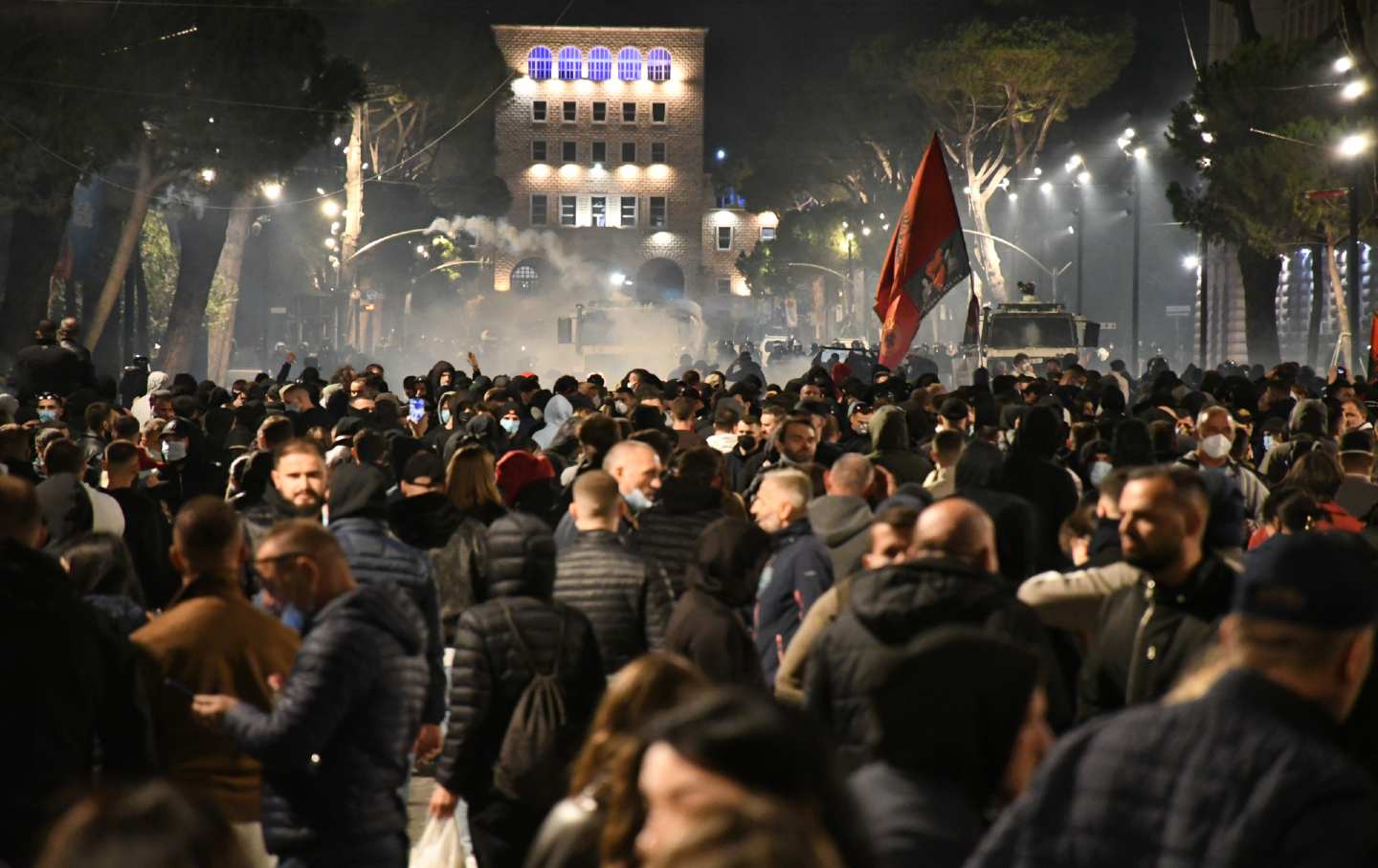
Albanian Student Strikes Spur a Political Crisis Albanian Student Strikes Spur a Political Crisis
A new round of protests against the ruling party’s corruption has Prime Minister Edi Rama giving cops bonuses to crack down on dissent.
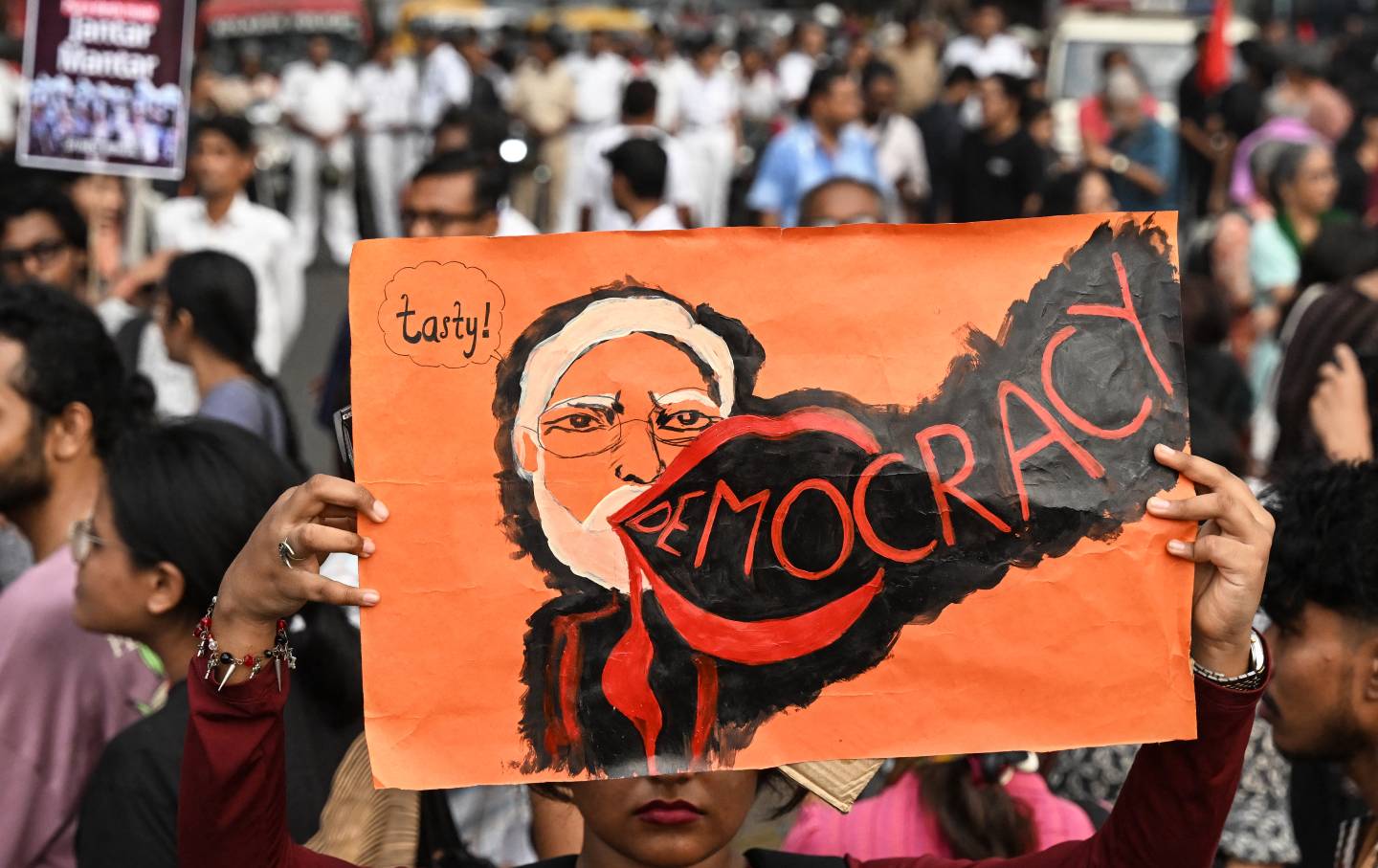
Inside India’s Gen Z Cockroach Janta Movement Inside India’s Gen Z Cockroach Janta Movement
Young Indians are challenging the purge of voter rolls by Modi’s right-wing government. Shrishti Khanna, who was detained by Delhi police while covering the protests, explains.
The Clarion Call of “NAZA” The Clarion Call of “NAZA”
Yuval Abraham and Rachel Szor’s new film not only documents the horrors of the present but give us a glimpse of a possible future too.
The Specter of Lepenism Looms Over France’s Social Crisis The Specter of Lepenism Looms Over France’s Social Crisis
Joining forces with the “yellow vests,” youth demonstrators are raising the alarm in a country falling to the far right.
Progressives Are Backing Puerto Rican Independence. It’s About Time. Progressives Are Backing Puerto Rican Independence. It’s About Time.
More and more leftists are concluding that statehood for the island is not enough.
The Saudi Phase of the Iran War Signals More Chaos to Come The Saudi Phase of the Iran War Signals More Chaos to Come
The conflict that Donald Trump has repeatedly proclaimed an unequivocal American victory keeps spiraling out of control.

