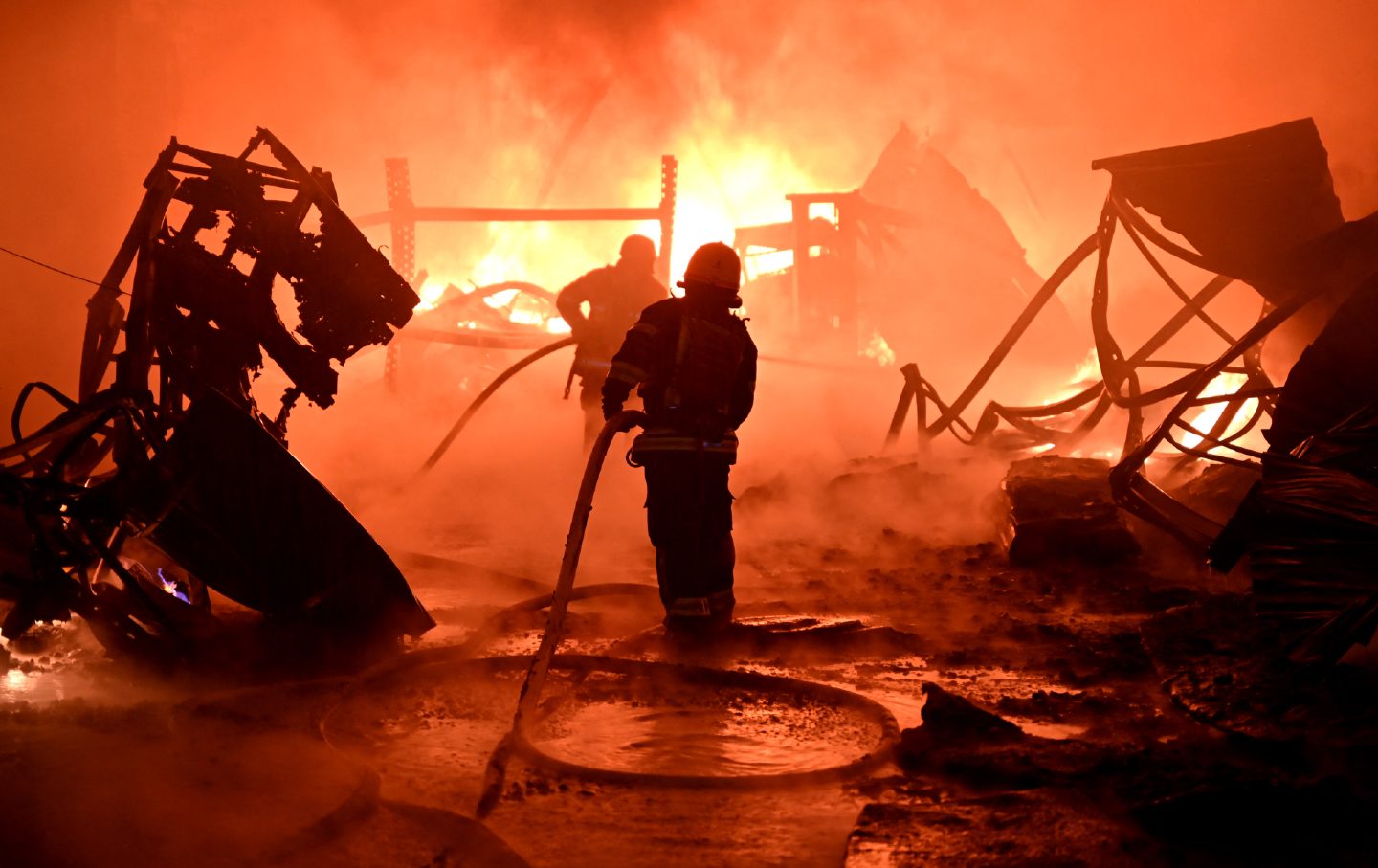
Whoever wins the US election, the start of a new administration should be an opportunity for a serious reevaluation of US policy toward the war in Ukraine. For it is abundantly clear that the present course is unsustainable, and if persisted in, is likely to lead sooner or later either to Ukrainian collapse or to direct NATO involvement in war with Russia. This is indeed now tacitly admitted by some US commentators like Robert Kagan, though he has not been willing to tell Americans that they must go to war in order to prevent Ukrainian defeat or a compromise peace.
The news from the Ukrainian front line is grim. Ukrainian forces are heavily outnumbered and outmatched in artillery and ammunition. There are growing signs of exhaustion, demoralization, desertion, and evasion of service by both the elites and ordinary people. Russian success is grounded in the fact that Russia simply has far greater resources than Ukraine in terms of both industry and manpower. It has been able to recruit hundreds of thousands of new troops by paying them very high wages. The salary for Russian soldiers in Ukraine is reported to be Rs200,000 per month, which is around three times the Russian average wage for 2023, and up to five times the average salary in the poorer areas of Russia from which most of the soldiers are recruited. Individual provinces also give extra bonuses.
Ukrainians and Western hawks claim that more Western weapons will make a critical difference; and indeed, if some of these had been provided in 2022, when the Russian armed forces were outnumbered and in serious disarray, they might have led to much greater Ukrainian success. Now however, so great is the Russian advantage that Western supplies can make little difference.
Western industry cannot produce anything like the number of artillery shells Ukraine needs; the USA cannot provide sufficient air defense systems to Israel and Ukraine and keep enough for a possible war with China. And above all, NATO cannot manufacture more soldiers for Ukraine. The German government has already declared that it is freezing military aid, and will cut aid to Ukraine by almost half next year, and by more than 90 percent by 2027.
Faced with this reality, Western advocates of unconditional support for complete Ukrainian victory are becoming increasingly desperate. Earlier this year, we were told by the likes of retired Lt. Gen. Ben Hodges that the (genuine) success of Ukrainian missiles and drones in driving the Russian Black Sea Fleet from its bases in Crimea meant that these could also drive the Russian army from Crimea and somehow regain it for Ukraine (after he told us in June 2023 that Ukraine could “free Crimea by the end of summer”). Then, we were told that the (genuine but very limited) Ukrainian incursion into the Kursk region of Russia marked a turning point in the war. Now, we are being told that allowing Ukraine to fire missiles guided by US satellites into Russia will allow Ukraine to transform the war.
It is true that the Ukrainian forces, with tremendous grit, are forcing the Russians to advance very slowly, and are inflicting heavy casualties. Together with the war weariness of much of the Russian population, and Russian economic problems, this could allow Ukraine to reach a peace settlement that would limit Russian territorial gains, and, while excluding NATO membership, allow Ukraine to seek membership of the European Union at some point in the future. This would be very painful for Ukrainians, but it would still be a great triumph in historical terms, and vastly better than what they are likely to get if the war continues. Headlines like “Ukraine must turn the tide before it can negotiate” are, however, meaningless, if by this is meant not just conducting a dogged fighting retreat but also driving the Russians back.
Tragically, the Ukrainian government and Western establishments have so often condemned the very idea of a compromise peace and insisted on complete Ukrainian victory that it is now very difficult for them to change course. They have also by now uttered so often the argument that if Putin is allowed to keep southeastern Ukraine he will go on to attack NATO that they may even have come to believe this nonsense themselves.
A more cogent argument, advanced for example by Ivan Krastev in the Financial Times, is that with the Russian army advancing, Putin has no incentive to seek peace at present; and that his offer of a ceasefire in return for Ukrainian withdrawal from the cities of Zaporizhia and Kherson (claimed but not fully occupied by Russia) is completely unacceptable.
This is true as far as it goes, but the counterargument is that we cannot discover which Russian conditions are absolute, and which negotiable, until we enter into negotiations with Russia; and starting negotiations does not mean accepting initial Russian terms. Members of the Russian establishment have suggested to me the possibility that in return for a treaty of neutrality excluding NATO membership, Russia would give up further territorial ambitions.
Let us make this suggestion in private and see what Moscow’s response is. Even better, empower neutral powers like India and Brazil to make such proposals for peace to the Russians. Given the effort that the Russian government has put into wooing these states and the “global majority,” it would be very difficult for it to spurn a peace initiative from them.
Western support to Ukraine should continue during negotiations so that the Ukrainian forces can continue to fall back slowly and inflict heavy casualties, thereby encouraging the Russians to accept a compromise. We must not, however, delude ourselves either that our support will last indefinitely, or that it can possibly help Ukraine to regain territory that it has lost. We therefore have no honest and viable alternative to also putting pressure on the Ukrainian government to accept a compromise peace.
If the next US administration fails to adopt this course, then there is a serious risk that, like First World War armies after years of trench warfare, the Ukrainian army will eventually collapse. Washington will find itself faced with a choice between accepting severe Ukrainian defeat or intervening directly and risking—or even ensuring—nuclear war with Russia. We must hope that the leaders of the next administration will have the intellectual clarity and the moral courage to recognize this, and act accordingly.
Support The Nation’s June Fundraising Campaign
With the midterm elections now firmly upon us, the question is whether Democratic candidates will do more than merely occupy ballot lines as mild alternatives to the red-hot crisis that is Donald Trump.
As Trump spends over $1 billion a day on a globally destabilizing war on Iran and admits that he doesn’t “think about Americans’ financial situation,” millions across the country are struggling with the surging costs of essentials. Democrats must seize this moment and advance bold, small-“d” populist ideas—not settle for cynical caution that once again snatches defeat from the jaws of victory.
The Nation elevates progressive ideas, movements, and elected officials achieving real change across the country into the national conversation. At the same time, our journalists are exposing how crypto and AI-funded super PACs are spending hundreds of millions of dollars to knock out candidates they oppose, reporting on the devastating impact of the Supreme Court’s evisceration of the Voting Rights Act, and sounding the alarm on attempts by red states to quickly redraw electoral maps, disenfranchising Southern Black voters.
We can play this critical role because of support from readers like you. This June, we’re raising $20,000 to power The Nation’s independent journalism in the run-up to November’s immensely consequential elections.
It’s in our power to build a more just society, and your support at this critical moment brings us closer to that bold vision. I hope you’ll donate today.
Onward,
Katrina vanden Huevel
Editor and Publisher, The Nation
More from The Nation
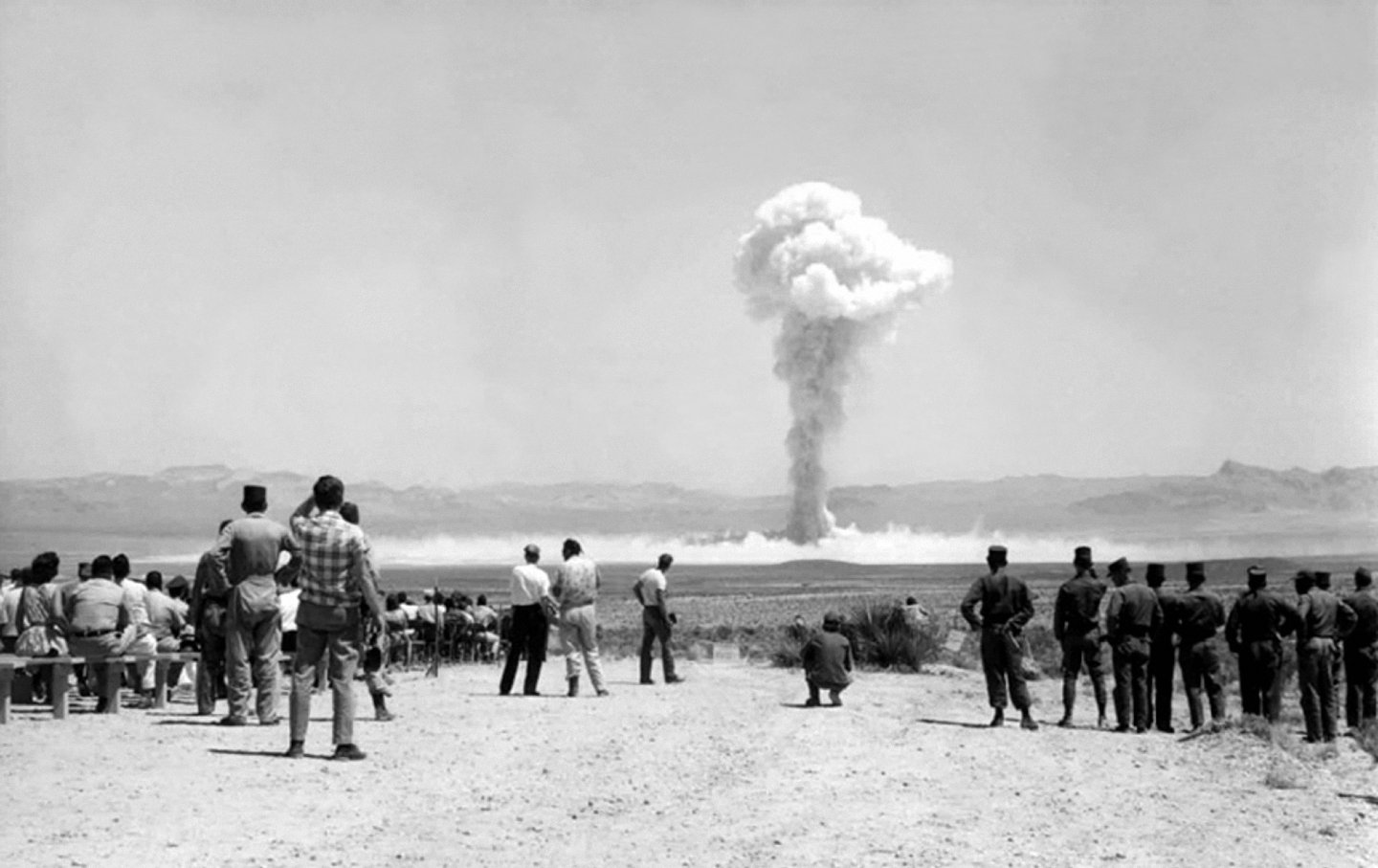
Daniel Ellsberg vs. “Ordinary Insanity” Daniel Ellsberg vs. “Ordinary Insanity”
A new documentary issues an urgent warning about our dangerous nuclear delusions.
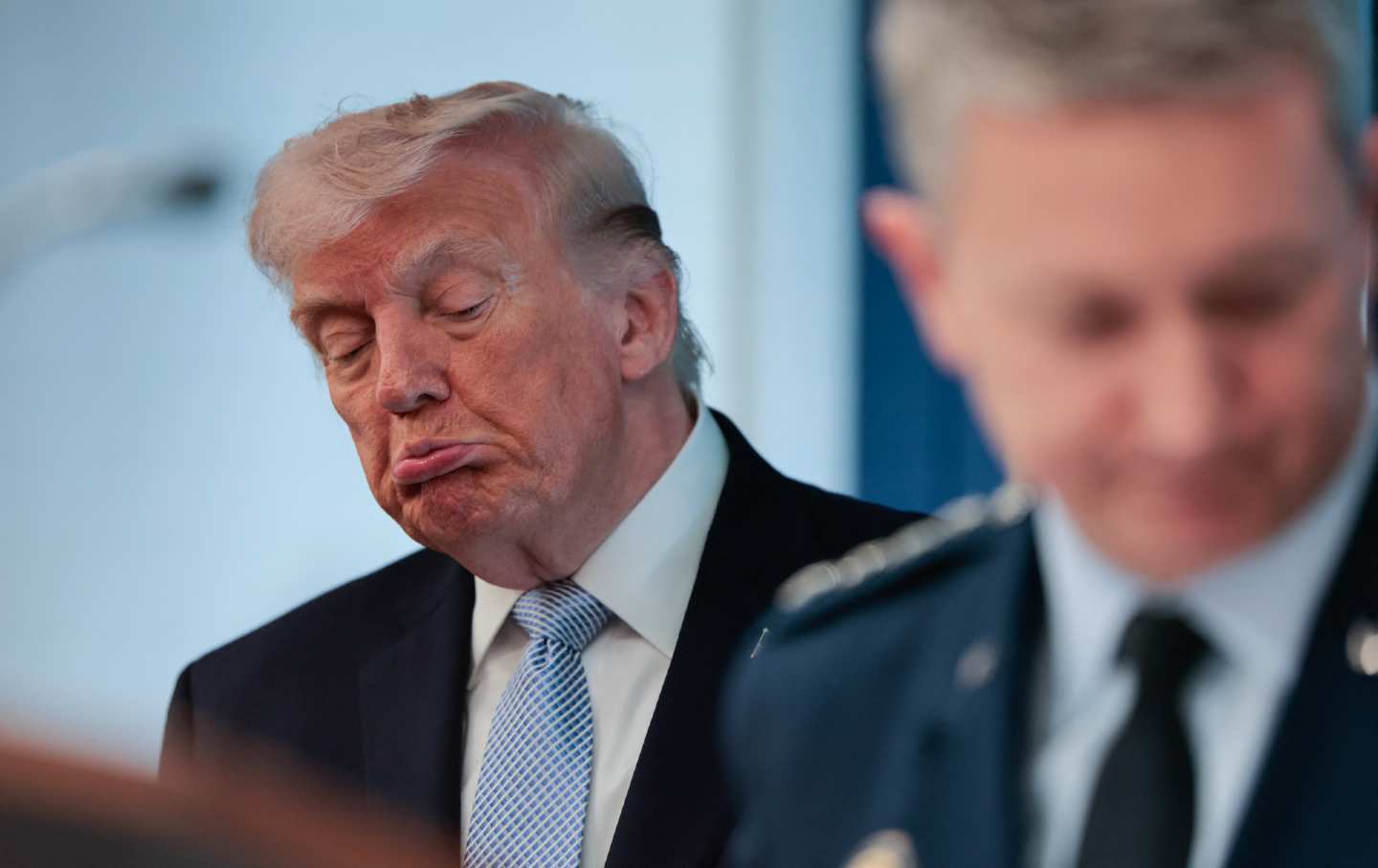
How Trump Has Boxed Himself Out of a Face-Saving Iran Deal How Trump Has Boxed Himself Out of a Face-Saving Iran Deal
By failing to absorb the lessons of Iran’s strategic victories, the White House is on course to turn the present stalemate into a disastrous quagmire.
The Revolution Heard Around the World The Revolution Heard Around the World
The global politics of 1776.
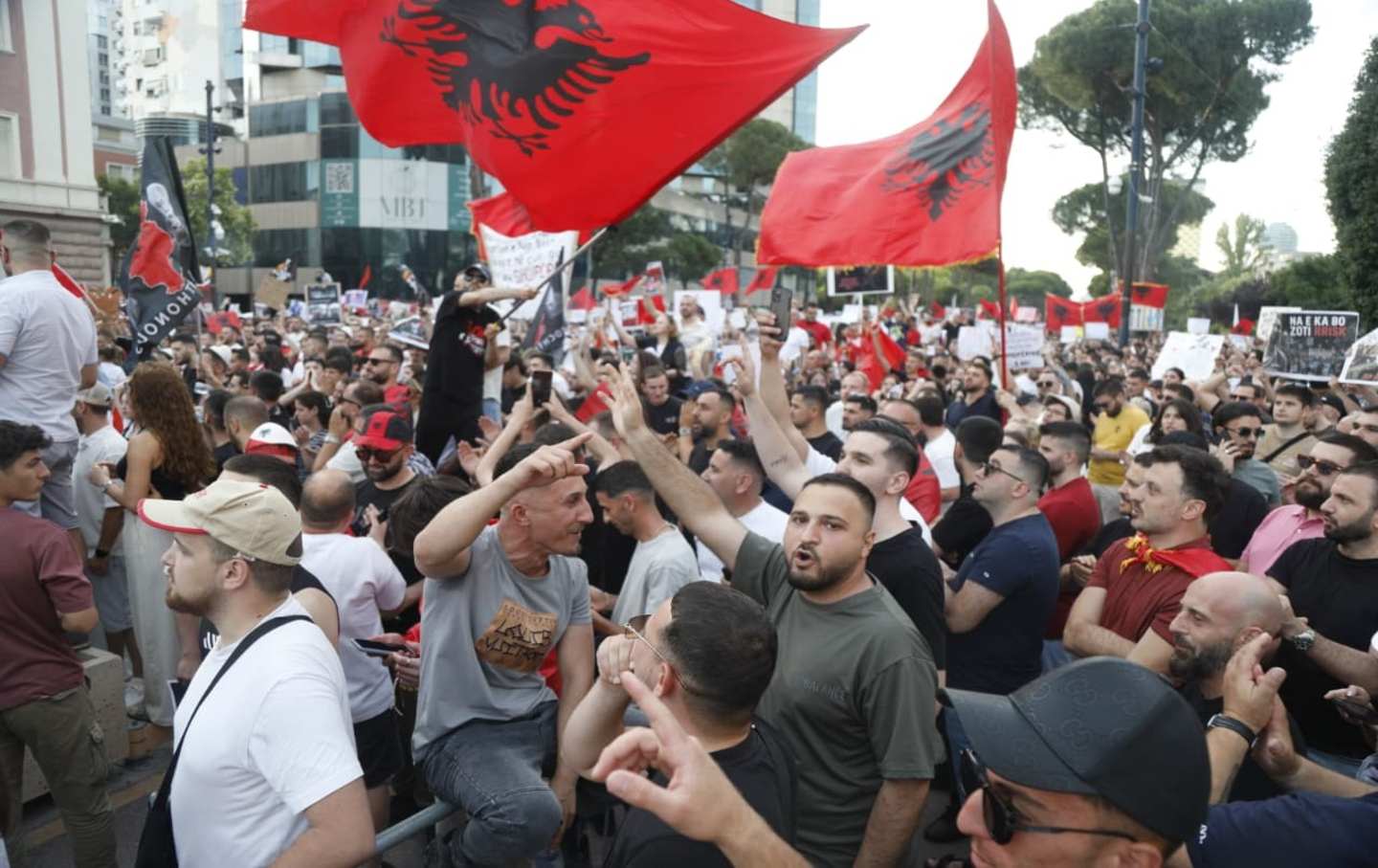
How Jared Kushner Sparked a Political Crisis in Albania How Jared Kushner Sparked a Political Crisis in Albania
Outraged Albanians are targeting the presidential son-in-law for pursuing a $4 billion luxury resort deal in a business climate rife with corruption and environmental neglect.
Trump’s Disregard for International Humanitarian Law Won’t End When the Iran War Does Trump’s Disregard for International Humanitarian Law Won’t End When the Iran War Does
As political pressure to end the war grows, Americans must not overlook the president’s blatant violations of the rule of law, abroad and at home.

