
The Myths of Camp David
A conversation with Robert Malley about Israel’s actions in Gaza and the West Bank, why the US failed to bring peace to the region, and his recent book Tomorrow Is Yesterday.
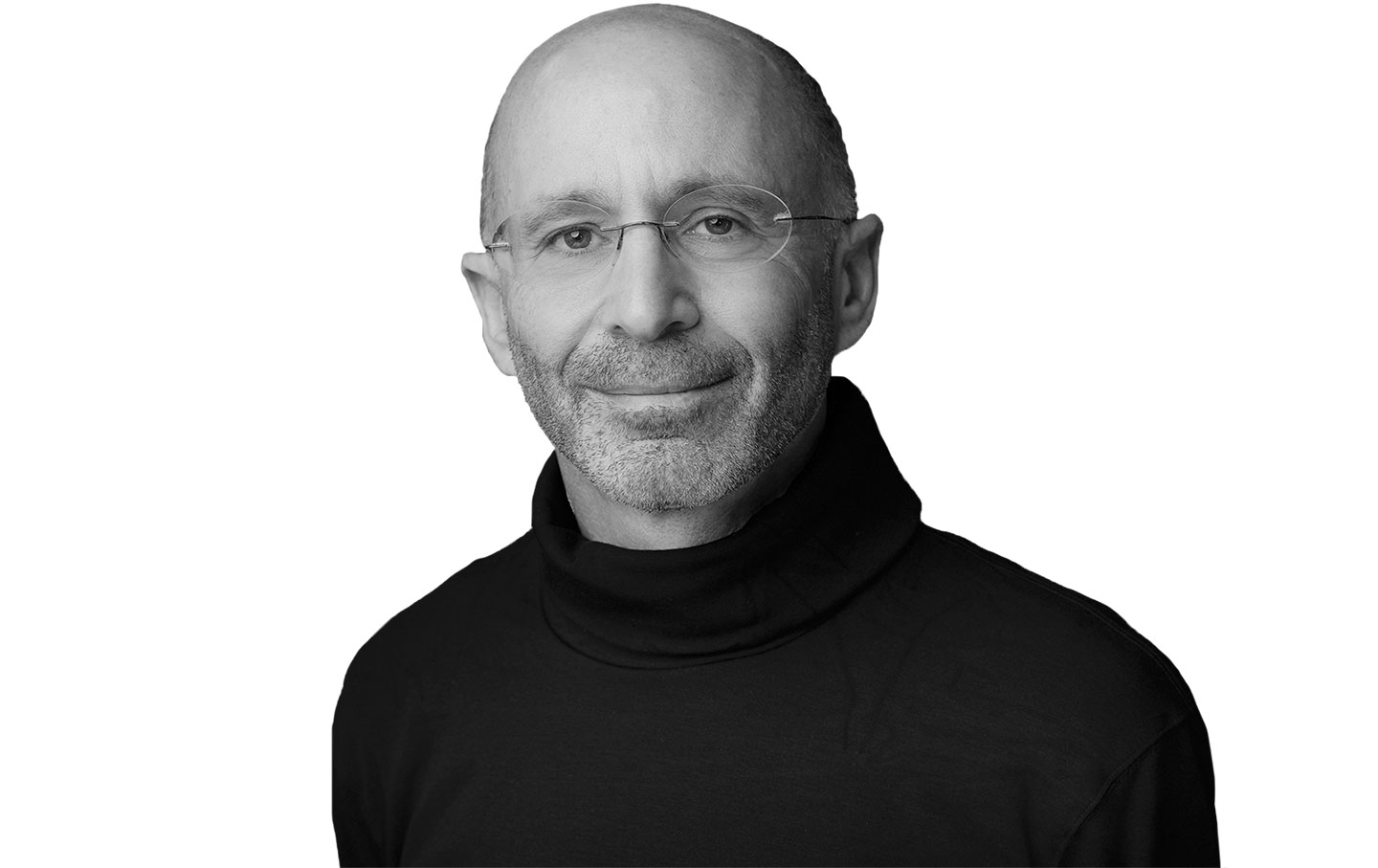
Robert Malley
(Kelley Norcia)Robert Malley and Hussein Agha have spent a lifetime immersed in the Palestinian-Israeli conflict. Agha has been involved for decades in negotiations and efforts to resolve the conflict, while Malley was an adviser to a number of US presidents. Both men participated in the Camp David talks in 2000 that ultimately failed to produce a Palestinian state; the Second Intifada began soon after.
The collapse of Camp David saw the Israeli and American camps blame the Palestinians for the failure—in particular, Yasir Arafat was described as being conniving and intransigent. Agha and Malley were dismayed by the American and Israeli effort to blame the Palestinians. They sought to correct the record in a 2001 essay in The New York Review of Books—one that received much attention and a rebuttal by Ehud Barak in the same magazine.
Malley went on to serve in the Obama administration, serving as lead negotiator of the nuclear deal with Iran. He was hired by the Biden administration to help reinstate that agreement before being suspended in June 2023 for allegedly using a personal e-mail account to hold sensitive information, an allegation he firmly denies. (His suspension coincided with a campaign by pro-Israel groups to to oust him from the role; he was viewed as being “too soft on Tehran.”)
In their new book, Tomorrow Is Yesterday, they take account of their experiences and all the errors that have led to Israel’s genocide in Palestine. Malley, who is now a lecturer at Yale’s Jackson School of Global Affairs, spoke with The Nation about the book and his views of Israel’s actions today in Gaza and the West Bank. This interview has been condensed and edited for clarity.
—Ahmed Moor
Ahmed Moor: Tomorrow Is Yesterday examines past claims about the Israeli-Palestinian peace process, dispelling some myths around Camp David. But why did you write the book today? What did you hope to achieve?
Robert Malley: There’s been a nagging question in the conversation between Hussein and myself for years: how the US, with all this leverage, all its power, with its vaunted intelligence apparatus, could get so much wrong and understand so little about the conflict. And how, as we say in the book, the state ended up lying over and over again. So it starts with that question, with that interrogation.
The big lie, of course, is the lie about the two-state solution—that the US has claimed to have tried endlessly to bring it about and determined, at least under the Biden administration, that it was an objective that could not be achieved after the impasse at Camp David, and could only be achieved between Israelis and Palestinians.
The book came out, obviously, after October 7, and we thought, “Let’s try to resume that conversation, bring it up to date, and ask searching questions about the Israeli-Palestinian conflict, but also about the United States’ role in acting as if it was solving it, when in fact, at best, [it was] playing a neutral role and, at worst, a negative one.”
AM: I was a teenager in Palestine, in Ramallah, when you all were working at Camp David, and I remember just feeling like it was all just one big lie, all around you. The settlements were growing, the occupation was deeply entrenched and accelerating. There was a disjuncture between the lived experience of Palestinians on the ground and what negotiators seemed to treat as pieces on a map. So does justice enter into the discussion? Does it ever feature in the minds of negotiators?
RM: My first experience with the conflict is from a more Palestinian-Arab perspective from my father [the Syrian-Egyptian journalist Simon Malley], and that was my frame of reference. I think virtually every other member of the team, maybe with one exception, had formative experiences [and saw things from] the Israeli lens. That helps explain to some extent the answer to the question you’re asking. Part of the lived experience of Palestinians was either ignored, or the notion was, “Well, you know what if we get a deal? All of this is going to go away. So, yes, the Palestinians may be suffering today. Yes, the settlements may be growing.” But this was the line that Barak, the prime minister at the time, would repeat to us over and over again. “All of those are details. Yes, the settlements may be increasing, but once we get a deal the settlements that need to go will go, and those that will stay will stay. And so all of this complaining by the Palestinians rather than them, thinking about those issues, they should think about the future and what it will look like.”
That infected American thinking, and led us to neglect not just the fact that events were moving completely in the opposite direction of what we claim we were seeking to achieve but had a corrosive effect on the possibility of getting a deal, because, as you said, it was lived as a lie. How could you be speaking about resolving the conflict, when on the ground the Israelis were behaving in ways that were moving you further away from anything that you’d consider a fair resolution?
How much of that figured in the internal thinking? I have to say it did not greatly feature in conversations within the team.
AM: President Clinton recently invoked Judea and Samaria—which is the language settlers and their supporters use to speak about the West Bank—in a speech. It was a revelatory moment, which may reflect updated thinking, but it was interesting. So let’s talk about ideology. You explain that the Americans focus on “Israel’s needs” and “Palestinian wants” which reflects a perspective. So with respect to Dennis Ross, who led the American negotiating team, is he somebody who would self-identify as a Zionist? And how does that ideological perspective inform the negotiating balance, the negotiating triangle?
RM: I don’t like speaking for colleagues—you could ask him—though, I have no doubt that he would describe himself as a Zionist. I think that would be true of virtually every member of the US team.
That perspective created a blind spot whenever we debated the justice (or injustice) of Israel’s cause. But if you asked them—and I really don’t like speaking for colleagues who are still around, and who could speak far better for themselves than I could—I think they would say being a Zionist is not inconsistent with believing that the Palestinians have a right to a state of their own, a sovereign state of their own.
Where it gets muddled is precisely what we were talking about earlier, what they believed was a fair outcome, what they believed was a realistic outcome.
I’ve spoken to many Arab and Palestinian audiences over my lifetime, and what I’ve always said to them is you can’t expect an unbiased, unprejudiced American mediator. If that’s what you want, you should look for another mediator, because that’s not what you’re getting.
AM: Was Israel’s genocide in Gaza inevitable, in your view?
RM: I don’t usually think anything is inevitable—things could always happen differently. Soon after October 7, it was pretty clear that we were heading toward something resembling where we are today. In other words, there was the undeniable desire for vengeance on the part of the Israelis, but also the opportunity that some saw of achieving goals that might not have been achievable under other circumstances, in terms of expelling or ethnically cleansing Palestinians, reasserting full control over Gaza, and taking similar steps in the West Bank.
I can’t say that I predicted the degree to which Western nations would be as complicit in what’s happening. But a large degree of complicity had to be assumed, so I don’t know that it was inevitable but I don’t think that it’s particularly surprising.
AM: The Palestinians have tried violent and nonviolent resistance to the occupation and the slow-motion ethnic cleansing in the West Bank. For example, you mention the Great March of Return in passing in the book. It was a nonviolent march that the Israelis put down with murderous violence in 2018.234 people were shot dead for protesting. You also mention in the book that Shlomo Ben Ami, Israel’s foreign minister during the Camp David talks once said, “If I were a Palestinian I would have rejected what was offered at the Camp David Summit.”
It seems like the Palestinians can’t win either way—so what would you do if you were Palestinian?
RM: For me to tell the Palestinians what to do, I think, would be utterly preposterous. But I have felt for a long time that they needed to give up on the illusion that they could convert the US to their side and bring them on board. They’ve been far too passive in leadership. It wasn’t just passive leadership, deferring to Western preferences—it also was a preference of the leadership of Fatah and the PLO, not to not to reconcile with Hamas, and Hamas had its own interests.
Because, in my opinion, Palestinian leadership has succumbed to their own self-interested partisan interest—and to the pressures of the Western world and the Arab world as well—which has stymied their ability to speak as one, to act as one, and find forms of resistance which would have [had an impact].
[Years ago] I was speaking to an audience of Palestinians, and I was saying, Why hadn’t there been marches, Palestinians on checkpoints, and other places? And as we were talking, somebody came in and passed a note to the senior Palestinian official in the meeting, and the note was passed to me, and it said that there had been a peaceful march, I think it was in Gaza. This is well before 2018, and [the march was] met with Israeli bullets, a number of Palestinians killed, and nobody had reacted, and [the Palestinian official] said, This is the answer to your question.
It’s easy for me, sitting where I am to say, “Unify your ranks and find forms of massive but ethical, internationally lawful forms of resistance.” But that’s where I was hoping, thinking that Palestinians could invest the energies rather than in trying to placate foreign demands. And, as we say in the book, the [Palestinian Authority] has become an empty shell that is more responsive to foreign pressure and demands than to those of their own people, and that doesn’t seem to be changing.
AM: Do you think that sanctions should be levied on Israel at this point?
RM: Sure.
AM: My final question to you goes to moral responsibility within the foreign service. You’re now at Yale, and you’re interacting with young people who may go into public service in one way or another.
There were a handful of high-profile resignations through the Biden administration over the genocide. How would you describe moral responsibility to young people who may be thinking about entering the State Department? Is it appropriate to resign? And if you hadn’t been pushed out of the Biden administration do you think you would have resigned over the genocide policy?
Popular
“swipe left below to view more authors”Swipe →RM: I hope I would have. I teach classes on Israel/Palestine at Yale, and I try to reserve one session, because many of the students are probably thinking of a career in the foreign service or in government, for the question of ethical and moral responsibility and the ethics of resigning.
I know all the arguments, you know, by staying in you can make a difference. I’ve had to make compromises, looking back, [I question]. None, I think of the magnitude of staying in while the US is complicit in the genocide. But I can also imagine many occasions the appeal of staying—a feeling that you could have an impact is so strong. And for some people it’s also financial. So I don’t want to dismiss people who have a mortgage, to pay for healthcare, who, by resigning, may be sacrificing things for the family that are important.
There has to be a point at which one tells oneself this is beyond my desire to be of some value in shifting policy and making an argument that otherwise wouldn’t be heard. Because you’ll often hear that if everyone who disagrees leaves, the only people who remain are going to be the people who are very happy continuing with the status quo or worse.
That argument has to have a limit at some point. When you see that your influence, your role is not having any influence, you’re not changing anything, you’re just giving more legitimacy to the administration. [They] could say, Look, we have people here with different views.
There must also be points in which even the personal, financial, professional interests have to take second place behind the moral responsibility. I’m sure you’ve read people in the Biden administration who justified staying by saying what you know, I could have gone out and written an op-ed, what difference would I have made?
OK. But could that be true of everything. You could be working for a fascist dictatorship and say, “Well, I go out and write an op-ed. What difference would it make?” No, at some point. I think you have to tell yourself this is just too much. So that’s my answer. What I would have done. I hope I would’ve resigned.
Support independent journalism that does not fall in line
Even before February 28, the reasons for Donald Trump’s imploding approval rating were abundantly clear: untrammeled corruption and personal enrichment to the tune of billions of dollars during an affordability crisis, a foreign policy guided only by his own derelict sense of morality, and the deployment of a murderous campaign of occupation, detention, and deportation on American streets.
Now an undeclared, unauthorized, unpopular, and unconstitutional war of aggression against Iran has spread like wildfire through the region and into Europe. A new “forever war”—with an ever-increasing likelihood of American troops on the ground—may very well be upon us.
As we’ve seen over and over, this administration uses lies, misdirection, and attempts to flood the zone to justify its abuses of power at home and abroad. Just as Trump, Marco Rubio, and Pete Hegseth offer erratic and contradictory rationales for the attacks on Iran, the administration is also spreading the lie that the upcoming midterm elections are under threat from noncitizens on voter rolls. When these lies go unchecked, they become the basis for further authoritarian encroachment and war.
In these dark times, independent journalism is uniquely able to uncover the falsehoods that threaten our republic—and civilians around the world—and shine a bright light on the truth.
The Nation’s experienced team of writers, editors, and fact-checkers understands the scale of what we’re up against and the urgency with which we have to act. That’s why we’re publishing critical reporting and analysis of the war on Iran, ICE violence at home, new forms of voter suppression emerging in the courts, and much more.
But this journalism is possible only with your support.
This March, The Nation needs to raise $50,000 to ensure that we have the resources for reporting and analysis that sets the record straight and empowers people of conscience to organize. Will you donate today?
More from The Nation
Democrats Have a Chance to Offer a Smarter China Policy. Will They Take It? Democrats Have a Chance to Offer a Smarter China Policy. Will They Take It?
It’s time to pursue a more pragmatic strategy—one that prioritizes domestic strength, targeted competition, and continued engagement.
Trump’s Plan for “Taking” Cuba Trump’s Plan for “Taking” Cuba
“I can do anything I want with it,” the president says. Can he?

In Ukraine, Weaving Grief Into a New Collective Memory In Ukraine, Weaving Grief Into a New Collective Memory
After four years of war, Ukrainians are reckoning with irreparable loss and finding ways to persist in the face of it.
Trump’s National Security Strategy Is a Blueprint for White Nationalism Trump’s National Security Strategy Is a Blueprint for White Nationalism
Trump’s foreign policy reasoning mirrors the crackpot logic of a runaway authoritarian.

Getting Iran Wrong, to the Nth Power Getting Iran Wrong, to the Nth Power
Trump’s unhinged war in Iran is but an escalation of our willful misapprehension of the country’s history and makeup.

