
America’s Imperial Wars, Then and Now
From Korea to the Strait of Hormuz.
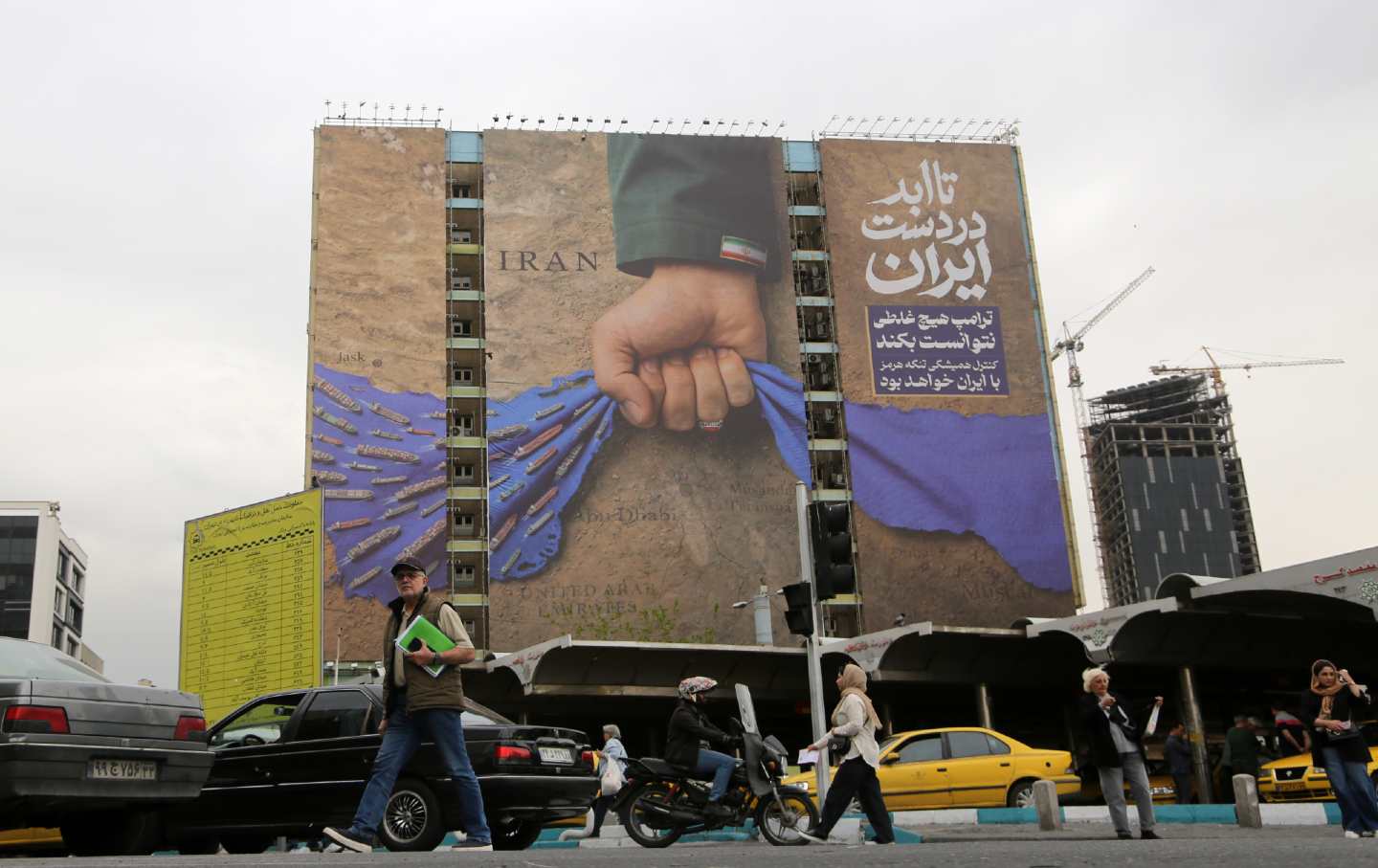
A billboard in Tehran asserts that, despite the threats of President Donald Trump, Iran will retain control over the Strait of Hormuz.
(Fatemeh Bahrami / Anadolu via Getty Images)I recently drove to a gas station in Massachusetts to fill my tank with regular gas, the cheapest around, and, to my surprise, given what’s going on, it was only $4.59 a gallon.
OK, OK, I take back that “only” and admit it. It’s not good to joke about the nightmare of gas prices these days. But in truth, that may indeed still prove to be the good news, since Donald Trump remains at war (or perhaps at chaos) with Iran, a country a mere 6,300 miles or so from Washington, DC, and so crucial to American power on this distinctly overheating planet of ours. (Right?) And even as I was writing this, Iran had indeed again closed the Strait of Hormuz through which about 25 percent of global oil and 20 percent of global natural gas normally passes, and Donald Trump was threatening to take over the Strait himself.
The terrible (even terrifying) logic of what he is now doing is (or at least should be) overwhelmingly obvious to anyone who has even a faint memory of this country’s imperial history since it emerged victorious from World War II in 1945. And yet give Donald Trump credit. People deal with him as if he were a unique figure in American history and in some ways, of course, he couldn’t be more so. But not, it turns out, when it comes to American-style war. There, he seems almost boringly part of a story (now more than three-quarters of a century old) of how the seemingly greatest power on planet Earth in the endless decades after World War II simply couldn’t—no, not ever!—win a war.
After all, Harry S. Truman got us into a major conflict in Korea, almost 7,000 miles from Washington, DC, in 1950, and when it ended three years later, the United States left the North Koreans with approximately half of the Korean peninsula.
In 1961, President John F. Kennedy increased American support for what had been the French colony of Indochina (until its military lost the battle of Dien Bien Phu to Ho Chi Minh’s rebel forces in 1954). He would then oversee what would become a full-scale American war in Vietnam, a mere 8,500 or so miles from this country, as well as a war in Laos (also about 8,500 miles away) and Cambodia (nearly 9,000 miles away) that would last a mere 14 more years, ending in a chaotically disastrous US withdrawal and absolute defeat in 1975.
In 2001, President George W. Bush would launch a war in Afghanistan as part of what he labeled his Global War on Terror, a country a mere 7,000 miles from Washington. It would last just 20 more years before ending in—yes, of course!—a distinct American defeat and the grim withdrawal of the last US troops there by Presidents Donald J. Trump and Joe Biden in 2021. In 2003, Bush would also launch a war in Iraq, a mere 10,000 or so miles from Washington, a conflict that would be ended by President Barack Obama, again in defeat, in 2011 (although Washington would continue to engage in some fighting there in subsequent years).
And that’s not even counting various other American war-making activities on this planet, including a never-ending air war in Somalia, launched by President George H.W. Bush in the early 1990s that continues today and still shows no sign of success.
So, just to make the obvious point, the greatest and—after the Soviet Union fell in 1991—only true imperial power on planet Earth hasn’t had a genuine war-making success to its name from the end of the Second World War in 1945 to the Trumpian moment 80 years later. And, of course, we’re talking about the country that has by far the largest military on planet Earth, puts more money (still called “defense spending,” even if the department that spends it has now been renamed the Department of War) into its military than the next six countries combined, and accounts for 33 percent of all military spending on this planet. And mind you, that’s even before Donald Trump tries to raise this country’s military spending from nearly $1 trillion annually to almost $1.5 trillion. And yet, we’re also talking about the power that hasn’t won a single war of any sort since World War II ended.
Now, given all of that, what should we expect when it comes to Donald Trump’s war against Iran? Don’t, of course, misunderstand me. The American president and his military are clearly capable of creating scenes of utter destruction and devastation there (as was true from Korea and Vietnam to Afghanistan and Iraq). They are also capable of killing staggering numbers of Iranians and turning that region into a potential disaster area. And President Trump is already insisting, of course, that he will reinstall the US blockade of Iranian ports, while calling himself and his country “the guardian” of the Strait of Hormuz.
The one thing that history suggests, however, is that Trump and crew will not actually be capable of winning their war against that country.
When it comes to war and imperial powers on this planet, the United States offers a staggering tale of defeat in our time (one that, it seems, Vladimir Putin may be repeating in Ukraine). And it may suggest why the country that’s clearly the next great imperial power on planet Earth, China, has shown remarkably little desire to head down a similar road. Yes, in 1979, the Chinese did engage in a border war with Vietnam and, from 2020 to 2021, it also engaged in border skirmishes with India. And it certainly has built up both its military and its nuclear forces in these years.
Nonetheless, it seems to have remarkably little interest in heading down the usual imperial path of global war-making, given the lesson that the United States has offered in spending staggering amounts of money on genuinely fruitless wars, decade after decade after decade to this very moment. There may never have been quite such a power and such a story in this planet’s imperial past.
More from The Nation
Why Navi Pillay’s Receiving the Nobel Peace Prize Is So Important Why Navi Pillay’s Receiving the Nobel Peace Prize Is So Important
She believes that human rights and international law are universal principles that must be enforced regardless of violator’s ideology, ethnicity, or geostrategic alignment.
Andy Burnham’s Speech to the Labour Party Conference Could Be the Start of a Positive Social-Democratic Politics Andy Burnham’s Speech to the Labour Party Conference Could Be the Start of a Positive Social-Democratic Politics
But the autumn budget to be released at the end of October will offer needed details.
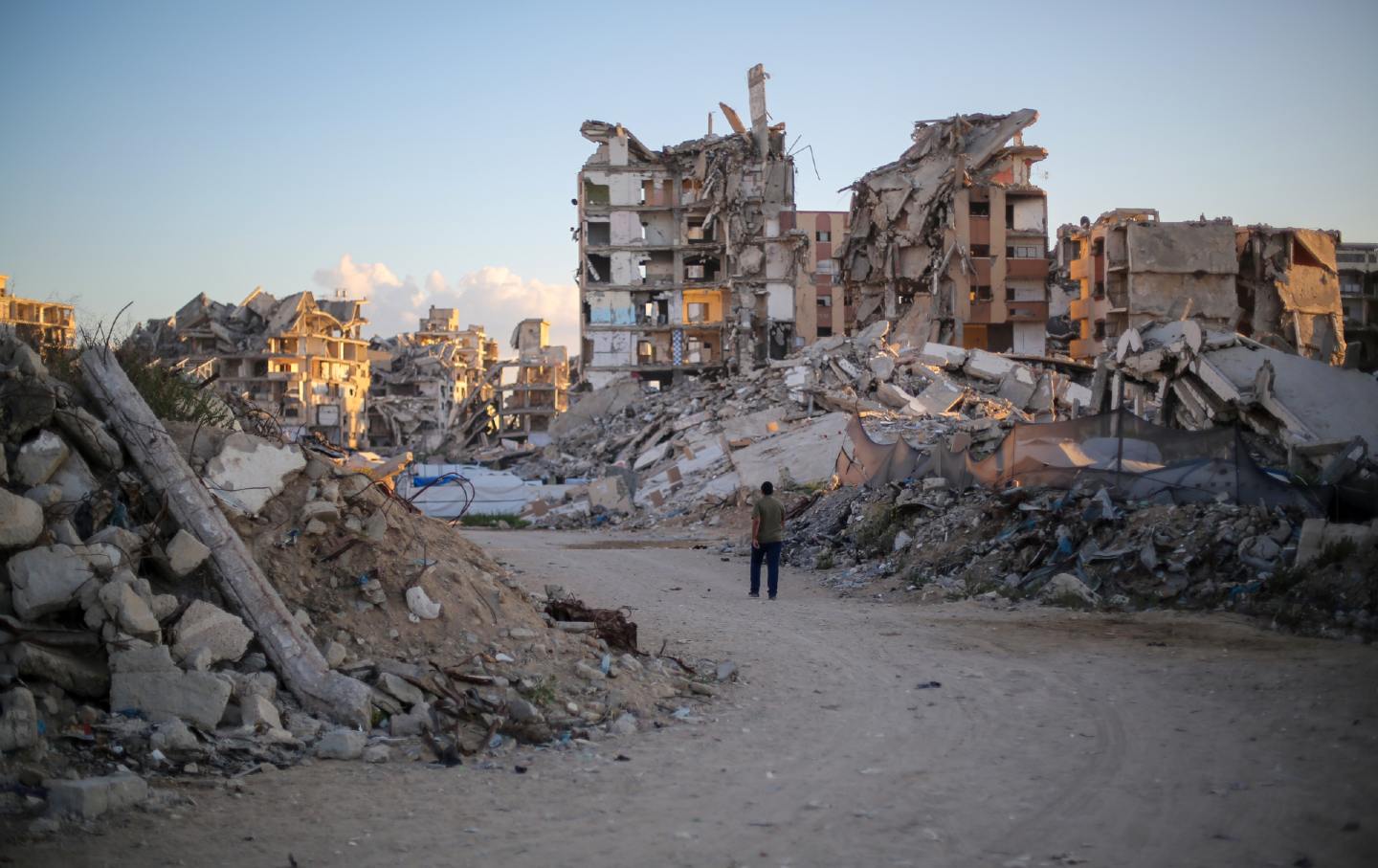
Writing About War as Bombs Fall Writing About War as Bombs Fall
While the Israeli government launched a well-orchestrated offensive of disinformation and hyperbole that would make the illegal permissible in the war on Gaza.
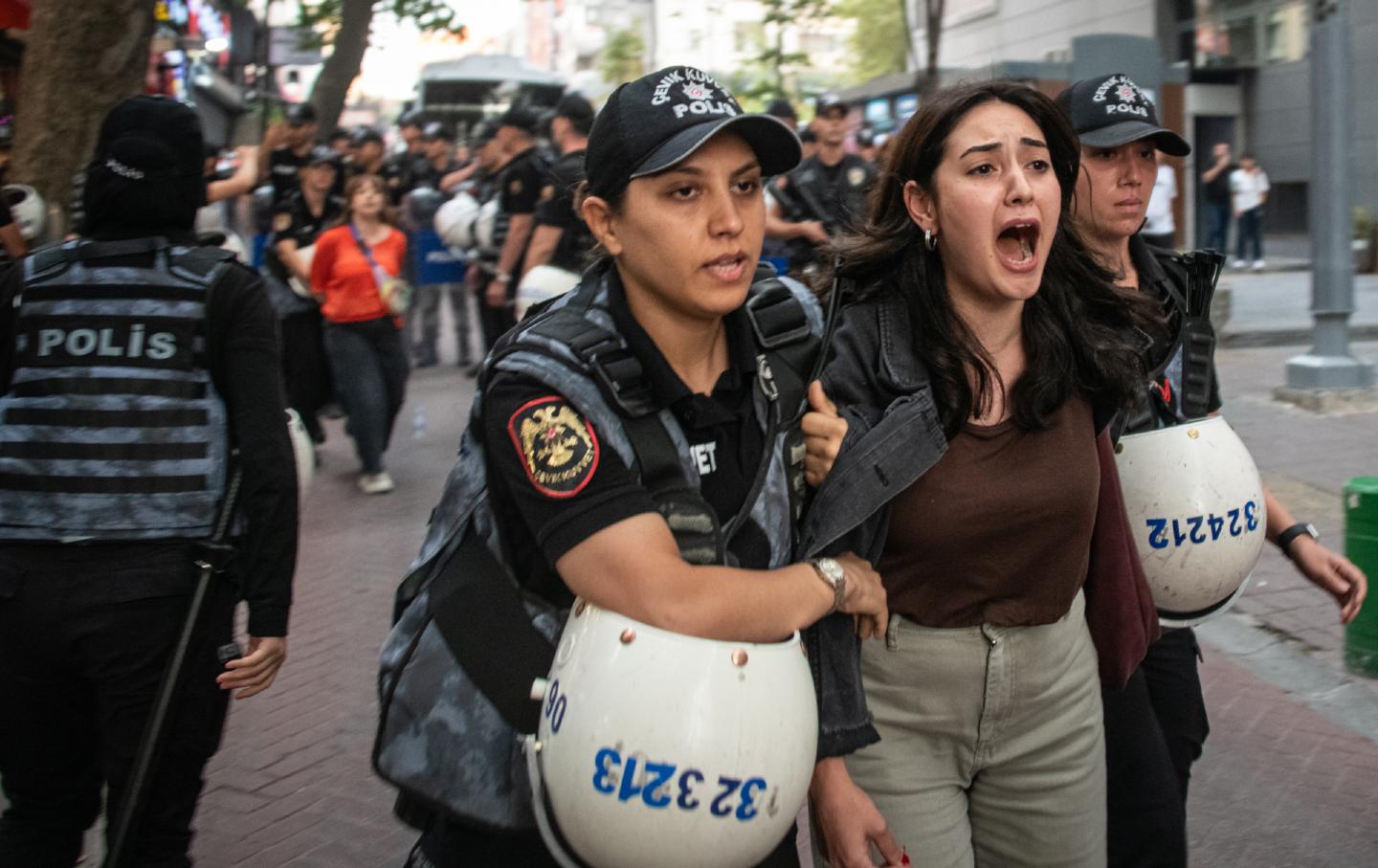
Turkey Is Brutally Oppressing Queer People. Here’s What You Need to Know. Turkey Is Brutally Oppressing Queer People. Here’s What You Need to Know.
The government’s sweeping crackdown on the LGBTQ community is an escalation of a decades-long pattern.
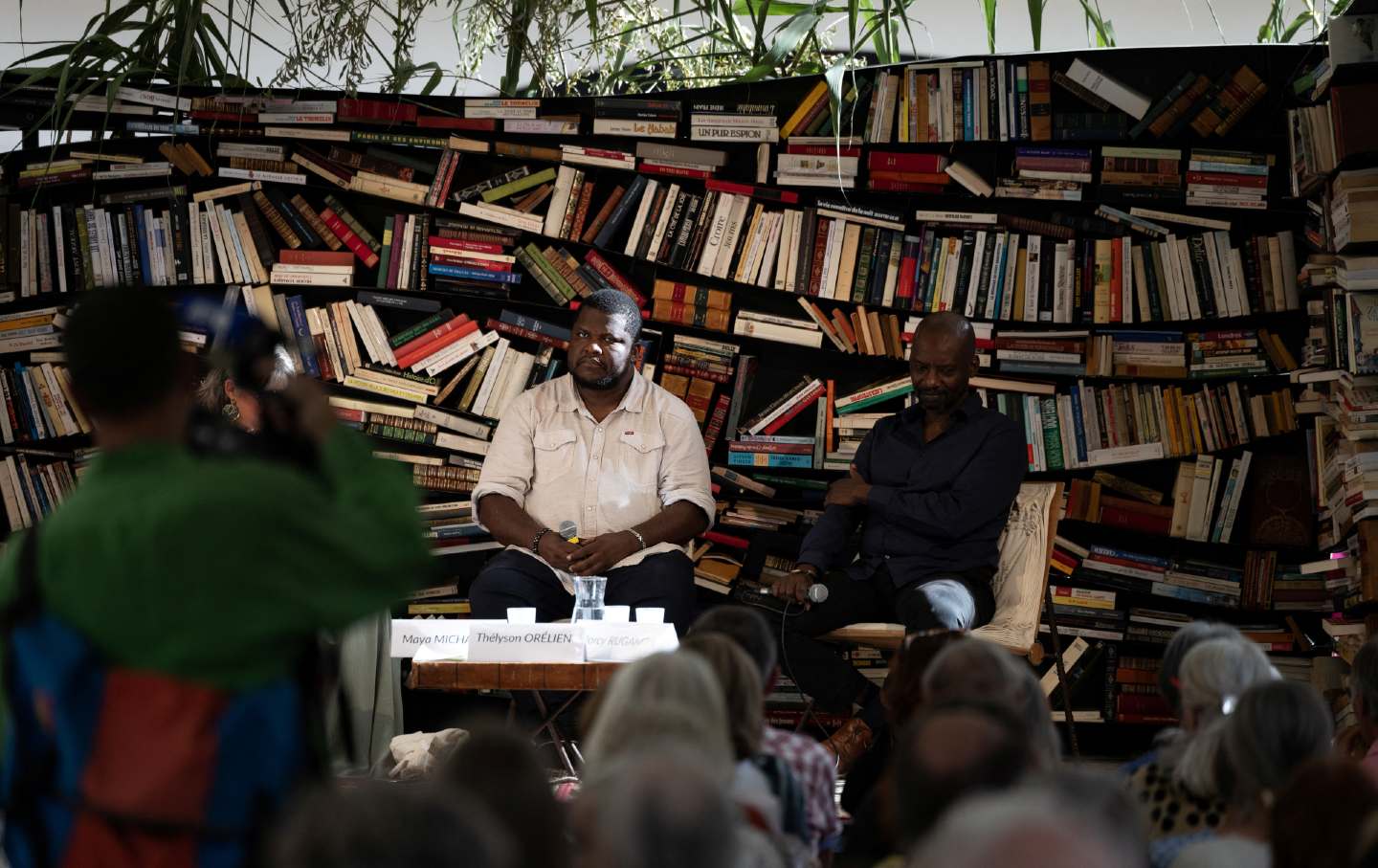
The Anatomy of a Literary Scandal The Anatomy of a Literary Scandal
The pillorying of Canadian-Haitian novelist Thélyson Orélien, accused of using AI to write his new novel, is the latest in a chaotic year for French publishing.

