
For Kids With Autism, Gaza Is Hell Upon Hell
Areej Alkhateab’s four children all have autism. Life during the genocide has been a continual nightmare.
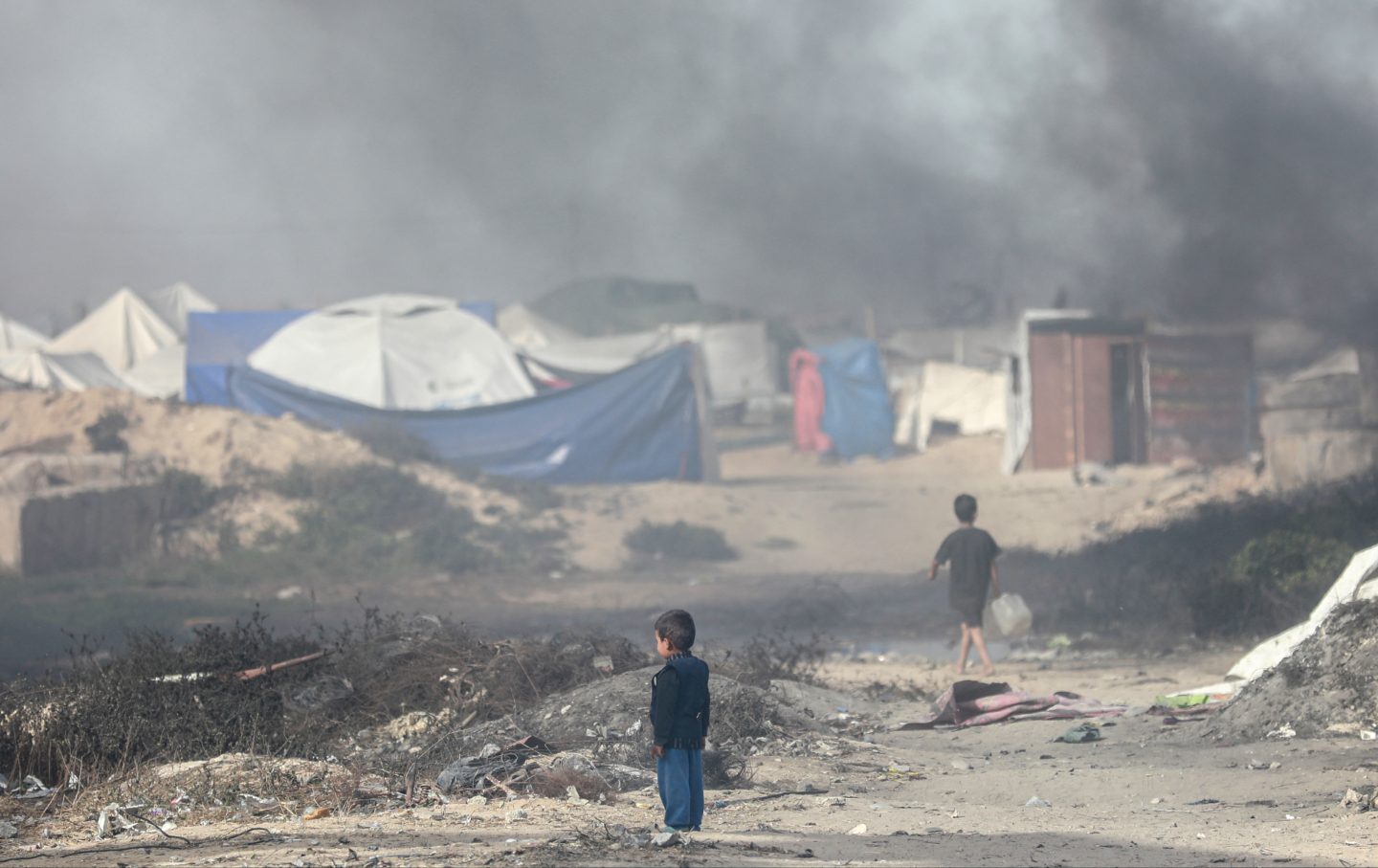
Palestinians, including children, fill and carry water distributed by a water tanker into containers in port area of Gaza City, Gaza, on May 27, 2025.
(Abdalhkem Abu Riash / Anadolu via Getty Images)Even before Israel’s latest war on Gaza, Areej Alkhateab, 40, struggled to meet the needs of her four children, all of whom have autism.
Autism has long been overlooked in Gaza and is often not acknowledged as a condition that requires specialized care and services. In addition, Israel’s suffocating siege and restrictions on medical referrals made it extremely difficult for families to send their children abroad for treatment.
Areej pointed out that there were very few schools and rehabilitation centers in Gaza for children with autism, and that they were extremely costly, making them unaffordable for most. Areej was fortunate enough to enroll her children, who range from ages 6 to 16, in one of these schools, where they received speech therapy, support for managing hyperactivity, emotional regulation training, and motor coordination exercises.
Areej stated that she did not receive any financial assistance from private or governmental institutions to help cover the costs of her children’s treatment. She was forced to sell her car and wedding jewelry to afford their care. Despite the enormous cost, she believed the treatment was worthwhile. “I was so happy to see my children begin to improve,” she said. “They started responding to others, interacting more, and their sense of identity began to change.”
However, the outbreak of the Israeli war on Gaza in 2023 shattered everything Areej had built for her children. Although they had lived through previous wars, she said none compared to this one, as it deteriorated her children condition—physically, mentally, and emotionally—in ways she never anticipated.
And her children are not alone. In Gaza, children with autism are enduring profound suffering—not only because of the challenges associated with their condition, but also due to the ongoing war, which has stripped them of the most basic necessities for survival. These children experience the world in unique ways; many are nonverbal, struggle to comprehend spoken language, and find it difficult to engage with their surroundings. They live in deep isolation—trapped in silence, unable to express their emotions or needs.
Autistic children require intensive care and consistent support. This includes regular psychological therapy, access to a safe and nurturing environment, and the expertise of trained specialists who can help guide their integration into society. In addition, they rely on essential vitamins and neurological supplements to support their development and improve their health. And they are getting almost none of that right now.
Areej explained that the heavy bombardment instilled deep fear in her children. Unable to express their emotions, they internalized their turmoil, which led to severe neurological symptoms, including seizures.
She said that her 14-year-old son, Mohamed, was the one who suffered the most from seizures. He experienced his first episode when Hamad City, Khan Younis, where the family was staying, was besieged by Israeli tanks during a military invasion in March 2024.
Areej recalled the intense artillery shelling and the random gunfire from drones. “People were screaming, crying, and fleeing in a desperate attempt to survive,” she said. “Amid the chaos, Mohamed fell completely silent. Then, he suddenly began to experience uncontrollable convulsions, causing him to choke as his tongue rolled back and blocked his airway.”
“I felt paralyzed,” Areej added. “I couldn’t do anything. If it weren’t for the paramedic who gave him first aid, he might have died.”
Since the onset of Israeli military operations in southern Gaza, Areej and her children have been forced to evacuate more than 11 times. Each displacement unfolded under intense fear and pressure, leaving her with little opportunity to gather essential items for her children—including medications and vitamins. As a result, she often has to repurchase them at highly inflated prices.
Some of the medications her children need are critical to their health and must be taken consistently to prevent life-threatening seizures. Yet at times she finds herself moving from one pharmacy to another in a desperate search—only to discover that these essential drugs are out of stock. Her children are experiencing more frequent seizures as a result.
In addition to the struggle with medication, Areej also worries about her children’s nutrition. They require meals that are fresh, healthy, and rich in vitamins, protein, and minerals. But with Israel closing the border crossings and food supplies rapidly depleting, it has become nearly impossible for her to provide proper meals.
Areej said that canned food lacks the basic nutritional values, and is full of preservatives which is not good for her children; in addition, they refuse to eat it as they are not used to it, leaving her with little choice but to rely on whatever is still grown in Gaza—like tomatoes, cucumbers, and zucchini though these basic vegetables have become unaffordable, with prices soaring to as much as $10 per kilo.
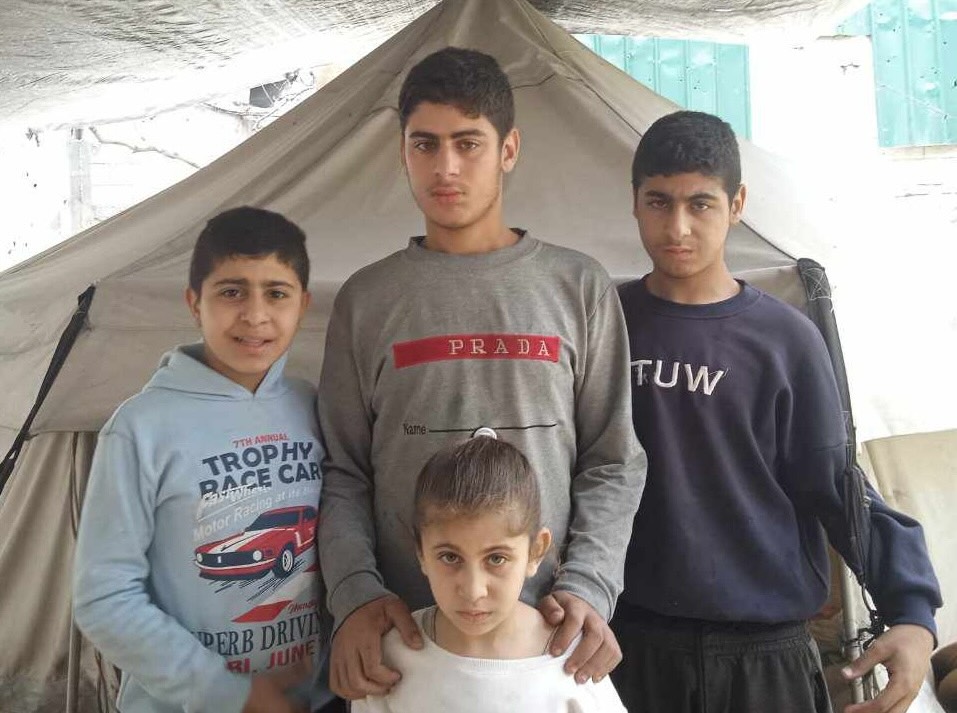
Sometimes, her children keep asking for chicken and eggs—foods that have completely disappeared from the markets, She finds it impossible to explain to them that the food they love is not available because the border crossings are closed.
Popular
“swipe left below to view more authors”Swipe →Areej shared that the situation has become unbearably hard—so dire that even bread has become a luxury she can no longer afford for her children. With her flour nearly gone, she manages to give each of them only a small loaf a day—barely enough to sustain them. The lack of food has left them frail and weak, their faces pale, their bodies thin, and their energy fading a little more each day. Hunger drives them to scream and suffer from severe emotional breakdowns. They cannot understand that they are living through starvation, that every meal must be rationed. Areej said she gives them sedatives to help them sleep—so they can forget, if only for a while, the pain of their empty stomachs.
Areej also mentioned that their new reality of living in tents—deprived of basic necessities after their home in Hamad City was bombed—makes it incredibly difficult for her to care for her children. The small space of the tent offers no control, and she must constantly keep an eye on them, fearing they might wander off and get lost.
Areej explained that her children are struggling deeply with life in the overcrowded camps. They often cry, missing the peace of their home and the routine of school. She noted that this new reality has taken a heavy toll on their mental health—the lack of space to play or move freely, combined with the constant presence of unfamiliar people, has left them feeling anxious and overwhelmed.
Areej expressed a deep sense of helplessness—not only because she is unable to care for her children under such dire conditions but also because she struggles to explain to them the tragic changes the war has forced upon their lives.
“My children are suffering, and there is no help available,” she said. “It feels like everything I did to give them a better life has been undone. I don’t know how to explain why everything has changed—why they can’t go to school, why they are hungry, or why they no longer feel safe. My heart breaks seeing them like this, when they should be learning, laughing, and growing. I am pleading with international organizations to step in—to provide medical care, education, and the basic necessities my children need to survive. They deserve to live full, peaceful lives, like any other child in the world. That is all I ask.”
Support independent journalism that does not fall in line
Even before February 28, the reasons for Donald Trump’s imploding approval rating were abundantly clear: untrammeled corruption and personal enrichment to the tune of billions of dollars during an affordability crisis, a foreign policy guided only by his own derelict sense of morality, and the deployment of a murderous campaign of occupation, detention, and deportation on American streets.
Now an undeclared, unauthorized, unpopular, and unconstitutional war of aggression against Iran has spread like wildfire through the region and into Europe. A new “forever war”—with an ever-increasing likelihood of American troops on the ground—may very well be upon us.
As we’ve seen over and over, this administration uses lies, misdirection, and attempts to flood the zone to justify its abuses of power at home and abroad. Just as Trump, Marco Rubio, and Pete Hegseth offer erratic and contradictory rationales for the attacks on Iran, the administration is also spreading the lie that the upcoming midterm elections are under threat from noncitizens on voter rolls. When these lies go unchecked, they become the basis for further authoritarian encroachment and war.
In these dark times, independent journalism is uniquely able to uncover the falsehoods that threaten our republic—and civilians around the world—and shine a bright light on the truth.
The Nation’s experienced team of writers, editors, and fact-checkers understands the scale of what we’re up against and the urgency with which we have to act. That’s why we’re publishing critical reporting and analysis of the war on Iran, ICE violence at home, new forms of voter suppression emerging in the courts, and much more.
But this journalism is possible only with your support.
This March, The Nation needs to raise $50,000 to ensure that we have the resources for reporting and analysis that sets the record straight and empowers people of conscience to organize. Will you donate today?
More from The Nation

Trump and His Soulless Cronies Have Managed to Suck the Joy Out of the World Cup Trump and His Soulless Cronies Have Managed to Suck the Joy Out of the World Cup
Not even soccer is immune from Trump’s reverse Midas touch.
Garbage In, Carnage Out Garbage In, Carnage Out
The harrowing lessons of the Pentagon’s recently dissolved partnership with Anthropic.
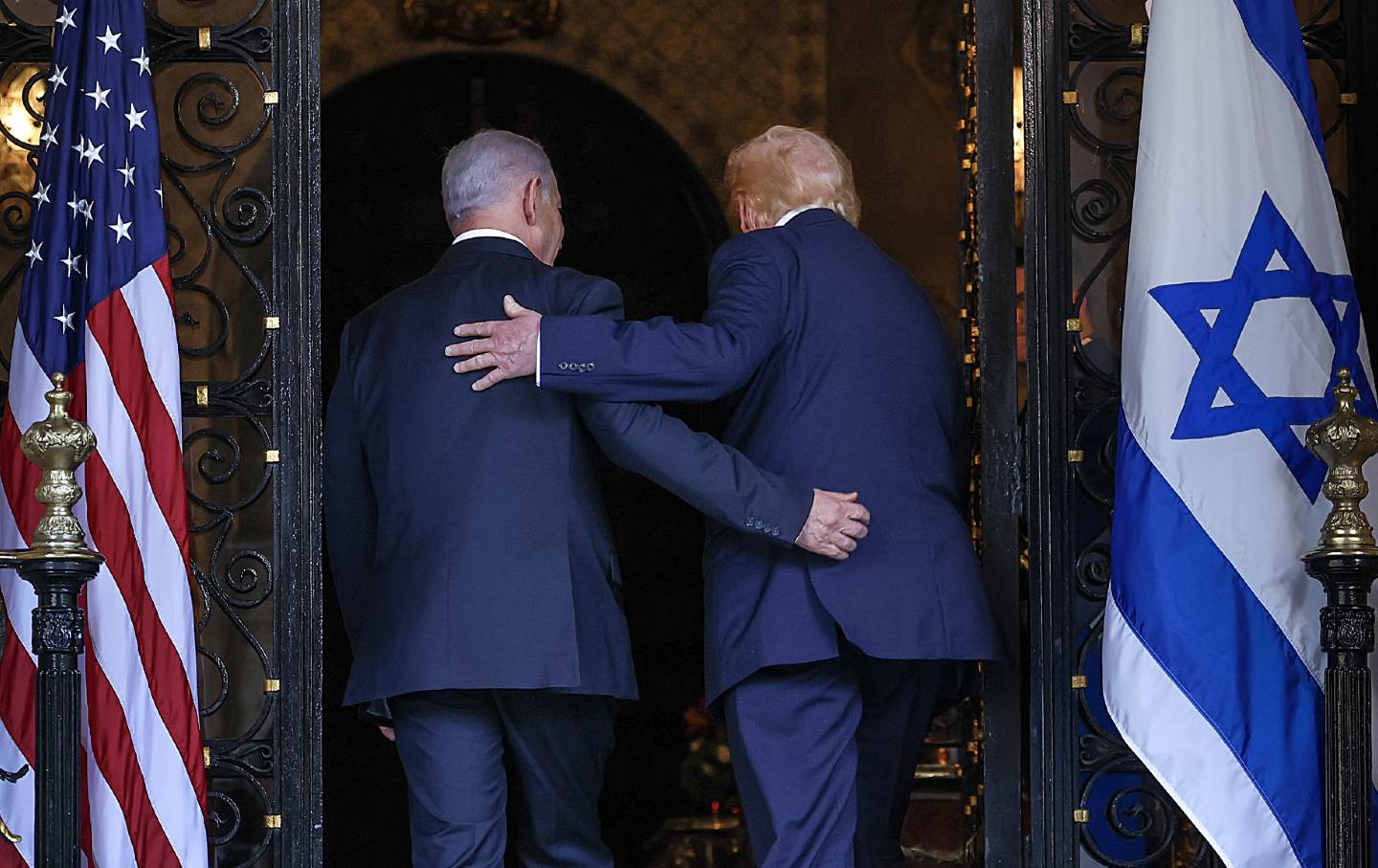
The Iran War Could Be Catastrophic for the US-Israel Alliance. Good. The Iran War Could Be Catastrophic for the US-Israel Alliance. Good.
As Israel’s role in pushing the war with Iran comes into ever sharper focus, it’s up to us to turn outrage into change.
An Unlawful War An Unlawful War
The precedent being set by the US in launching this war of aggression against Iran will long live in infamy.
Trump and Netanyahu Want to Turn Iran Into a Failed State Trump and Netanyahu Want to Turn Iran Into a Failed State
This war looks designed to cause maximum chaos and instability. The world will pay a high price.

The War on Terror Paved the Way for Trump’s Rise—Now He’s Making It His Own The War on Terror Paved the Way for Trump’s Rise—Now He’s Making It His Own
Only the total abolition of the DHS can restore freedom.

