
In Its Fight Against Fascism, Israeli Academia Remains Blind to a Basic Truth
The government’s assault on democratic norms can’t be separated from its oppression of Palestinians—but the Israeli academy keeps trying.
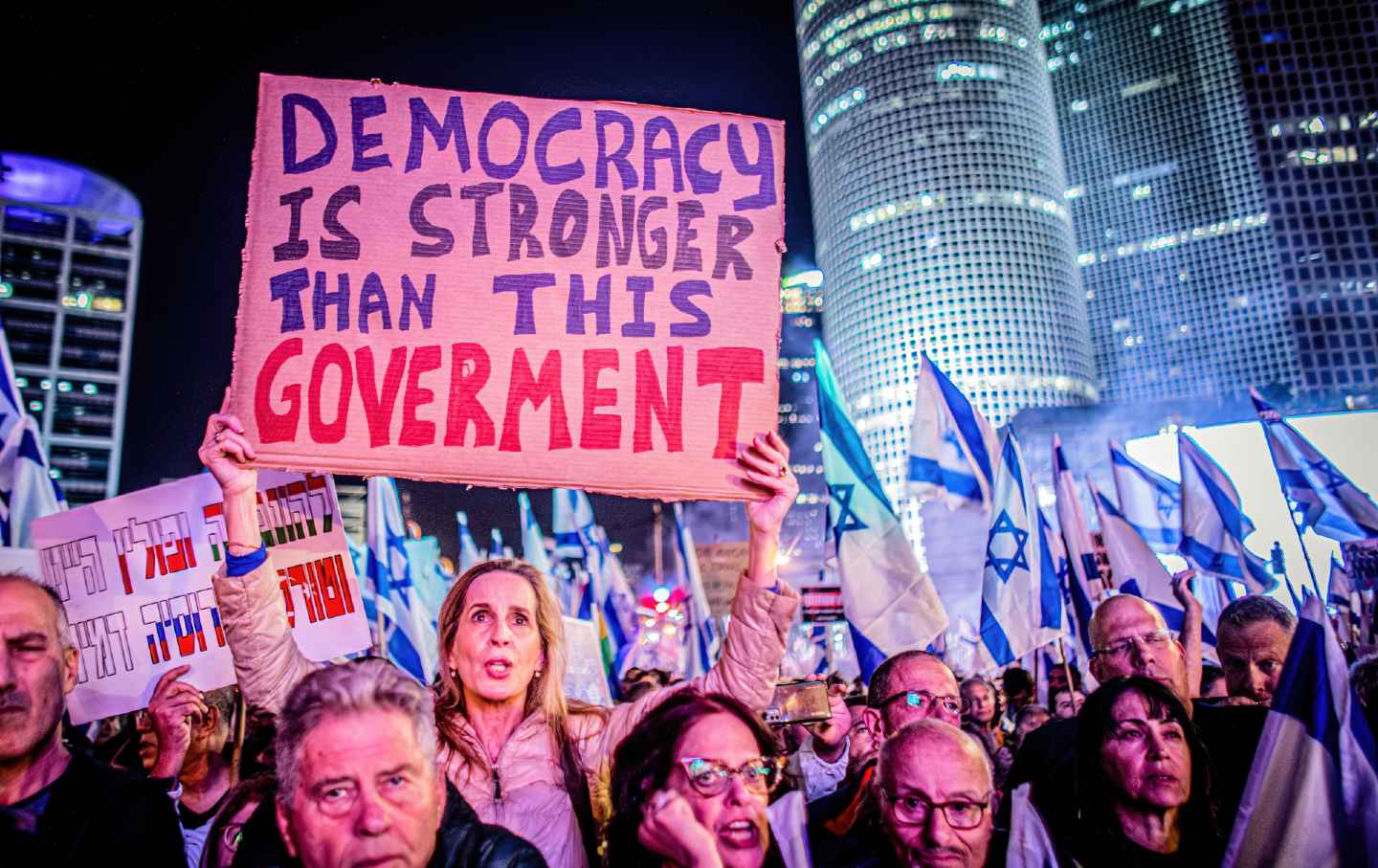
Israeli pro-democracy protester chants slogans while holding a placard during the demonstration.
(Eyal Warshavsky / SOPA Images/LightRocket via Getty Images)
Never before have the two Israeli communities between which I divide most of my time, the academic and the activist, been so estranged from each other—and this, despite both being genuinely concerned about the fascism tightening its grip on Israeli society.
An indication of this abyss is the contrast between both communities’ responses to the blessed ceasefire, which went into effect last month. While we as left-wing activists celebrated the ceasefire, it was clear to us that it should have been reached much sooner. By the second week of October 2023, we understood that Israel’s war on Gaza was motivated purely by feelings of revenge, concealed by a rhetorical facade of “self-defense,” and that it would lead only to immense suffering for both Israelis and Palestinians; we also understood that it would risk the lives of the Israeli hostages.
The response by Israel’s liberal academic camp, on the other hand, has been sentimental rather than political: They talk endlessly about the hostages’ misery but offer hardly any criticism of the war’s initial aims, the army’s conduct in the war, or any attempt to understand how we arrived at this point. This is sadly in line with how they have behaved these last 16 months. After leading the protest movement against the government’s planned judicial overhaul at the beginning of 2023, Israeli academia quickly fell into line after October 7. From militant speeches and op-eds defending a “just war” to the mass enlistment of Israeli students in the reserve service, the academy broadly supported the war in its first months. Hence its reaction to the ceasefire.
What my academic colleagues fail to grasp, but what my activist friends understand clearly, is that the Israeli government’s ongoing assault on democratic norms and institutions cannot be separated from its genocidal oppression of the Palestinian people. They make up the two lobes of the same right-wing brain.
When Prime Minister Benjamin Netanyahu’s coalition government announced its judicial overhaul, just days after its formation at the end of 2022, the liberal academic community burst into action. Professors and students flooded out of the university and into the streets, waving huge blue-and-white Israeli flags and carrying signs that read “No Academia Without Democracy.” Academic leaders, including Tel Aviv University president Ariel Porat, spoke out publicly against what they saw as the dangers the proposed reforms posed to “Israeli democracy,” joining the protests and penning dozens of open letters and op-eds.
The horrors of October 7 silenced some of these voices for a time. Others were recruited into the Israeli propaganda machine, and cheered what they saw as Israel’s justified war against Hamas: as Porat put it in November 2023, “the war against Amalek.” Over time, when the truth that the activist left had perceived already in mid-October became clear—that the government had no interest in rescuing the hostages languishing in Gaza—there were soft murmurs of discontent within academic circles. There was even concern expressed about the “humanitarian crisis” in Gaza and demands to prevent it.
But it was only with the renewal of the government’s assault on state and public institutions that liberal voices began again to speak out en masse. On January 1, 2024, the Israeli High Court of Justice ruled against one of the cornerstones of the judicial reform. Gradually, this step brought the topic back to the attention of both the Israeli Ministry of Justice and the liberal public. For many months the Justice Minister Yariv Levin refused to convene the committee responsible for electing the Supreme Court president—and is now refusing to acknowledge the appointment.
In a recent article for Haaretz, Porat detailed the kinds of “mega-events” that, should they occur, would demand demonstrations and even strikes: the dismissal of the attorney general, the firing of the head of the Shin Bet, and the government’s noncompliance with Supreme Court rulings. Porat’s remarks received widespread support from academic organizations, including BaShaar Academic Community for Israeli Society, the Israeli Academy of Sciences, and faculty unions. These individuals and groups have also strongly opposed several Knesset bills targeting academia, which they have dubbed the “Silencing Laws”: one that would cut state funding for academic institutions that fail to dismiss lecturers who express “support for terror” and another requiring universities to shut down student groups that support “terrorism or armed struggle against the State of Israel.”
There is no doubt that academic leaders’ rage and urgent calls to resist all aspects of the judicial overhaul are completely justified. However, they have exhibited a steadfast refusal to recognize other aspects of the same agenda, implemented by the same abhorrent government long before October 7: the intensification of occupation and Palestinian dispossession; the expansion of settlements and settler outposts, often through force and violence; and the deliberate and total erasure of Palestinian political existence.
Since that dreadful day, the “judicial overhaul” regime has carried out a second Nakba in Gaza, far more brutal than the first. It has killed tens of thousands of Palestinians while displacing and starving 2 million; destroyed the physical landscape of the entire Strip, including all of its universities; and blocked the entry of food, humanitarian aid, and medical supplies—in short, all of the components that constitute genocide.
At the same time, the government has tightened its grip on the occupied West Bank by expanding settlement construction, depriving hundreds of thousands of Palestinians of their livelihoods, launching massive new military operations in refugee camps, and granting its settler proxies free rein to commit systematic abuse.
The same government, the same agenda, the same totalitarian escalation, and the same blatant disregard for human lives. Yet, for two years, the established liberal Jewish elite has persistently denied the connection between these two hemispheres that form the brain of the current regime.
This deliberate disconnection is often made possible by separating the actions of Netanyahu and his government—what former chief of staff Moshe Ya’alon recently described as “the government of messianics, draft-dodgers, and the corrupt”—from those of the military. The former commit horrific war crimes; the latter, which includes innocent soldiers and officers, might find themselves accused in The Hague, through no fault of their own.
This stems in part from the close cooperation between Israeli academia and the Israeli army, through joint research, special programs for soldiers, conferences on “security”—collaboration that has continued apace since October 7. Tel Aviv University, for instance, recently hosted the inaugural DefenseTech Summit showcasing the latest deadly innovations in AI and drone warfare—all while Israeli armed forces destroyed any possibility of life in the Gaza Strip. Among its main speakers was Maj. Gen. (Res.) Eyal Zamir, the director general of the Israeli Defense Ministry and newly appointed chief of staff.
Even while facilitating these links between the university and the military, Israel’s liberal academic leaders do not always tout them; nor, however, do they deny them. In a recent interview, professor Milette Shamir, Tel Aviv University’s vice president for international academic collaboration, appeared entirely unwilling to take responsibility for her university’s complicity in Israel’s war effort. “While it is true that our research sometimes benefits the military effort,” she admitted, “we do not decide for our faculty what they should research.” She also didn’t delve into whether this commitment to academic freedom should allow for faculty to conduct archaeological excavations in the occupied West Bank, in clear violation of international law, or develop dog-mounted cameras to help the army’s canine unit carry out deadly attacks on Palestinian civilians in Gaza.
Popular
“swipe left below to view more authors”Swipe →Nor did Shamir address the contracts the university signs with the military for specialized academic programs, which allow uniformed, gun-toting soldiers to flood the Tel Aviv campus. In the mind of the vice president, like that of the president and many other senior academic faculty members, the government is what they oppose, and it has no real connection to the army, which they are proud to serve. This is how Shamir is able to argue that “it would be wrong to claim that we cooperate with the government.”
This reverence for the Israeli military, guided by a belief in its inherent morality and that of the majority of its soldiers, was also on full display in Porat’s most recent op-ed in Haaretz, published just several days ago. In it, he warned against a Knesset bill, approved last week in a preliminary hearing, that would prohibit Israeli citizens, authorities, and public bodies from cooperating in any way with the International Criminal Court.
As Porat rightly pointed out, this law would severely restrict the work of journalists and academics, who could risk imprisonment for merely publishing articles about the crimes of Israeli soldiers. But for Porat, a no less “serious consequence” of the law would be the threat it poses to Israeli soldiers, whom he believes would be at greater risk of prosecution abroad. Again, we see a genuine care for democracy, alongside total oblivion to the fact that Israel is far from one, and, in his words, a deep faith in the purity of “the vast majority of IDF soldiers”—even “if, God forbid, war crimes were committed” by a few.
The present moment, however, may offer a rare opportunity to remove the blinders from so many liberal Israelis’ eyes. Recent polls consistently point to Israelis’ widespread disillusionment with the course of the war in Gaza, and particularly with Netanyahu’s efforts to hamper a permanent ceasefire deal. After 16 months during which most of my countrymen, among them liberal academics, were consumed by a desire for revenge, it is finally possible to detect a longing for the end of the bloodshed.
It is time for liberal academics to acknowledge that the judicial reform is intimately linked not only with warmongering policies but also with other fundamentally antidemocratic, Jewish-nationalist measures the Israeli government has implemented in recent years, such as the passing of the Nation-State Bill in 2018, and with the unending occupation of the West Bank and the Gaza Strip.
It is time to insist on genuine democracy in Israel and forsake the illusory and inconsistent mantra of a “Jewish Democratic State.” And it is time to promote a civilian culture and demilitarize Israeli society. These crucial steps should indeed include the active participation of a sober, liberal academia—and they must begin by opening their eyes.
Become a Sustaining Donor This September
Between the reemergence of right-wing red-baiting and Donald Trump’s use of the chilling National Security Presidential Memorandum–7 to criminalize left political organizing, we’re seeing McCarthyism reborn before our eyes.
This assault on democracy cannot be ignored or wished away. Resisting it requires bravery in the face of threats and repression, a steadfast commitment to the truth, and the unwavering belief that we can—and will—overcome this darkness.
We must have an independent media that sets the record straight, unearths corruption and abuses of power, and advances a politics of justice and dignity for all if we’re to win this fight.
That’s why I’m writing to you today. This September, The Nation needs to add 100 monthly donors to sustain our progressive journalism. Your contribution makes the next investigative report, the next truth-speaking column, and the next pathbreaking essay all possible.
I hope you’ll support our work with a recurring donation today. If you donate $10 or more a month, we’ll send you a brand new “Hands Off the Free Press!” sticker to recognise your commitment to our cause. Please, donate today.
Onward,
Katrina vanden Heuvel
Editor and Publisher, The Nation
More from The Nation
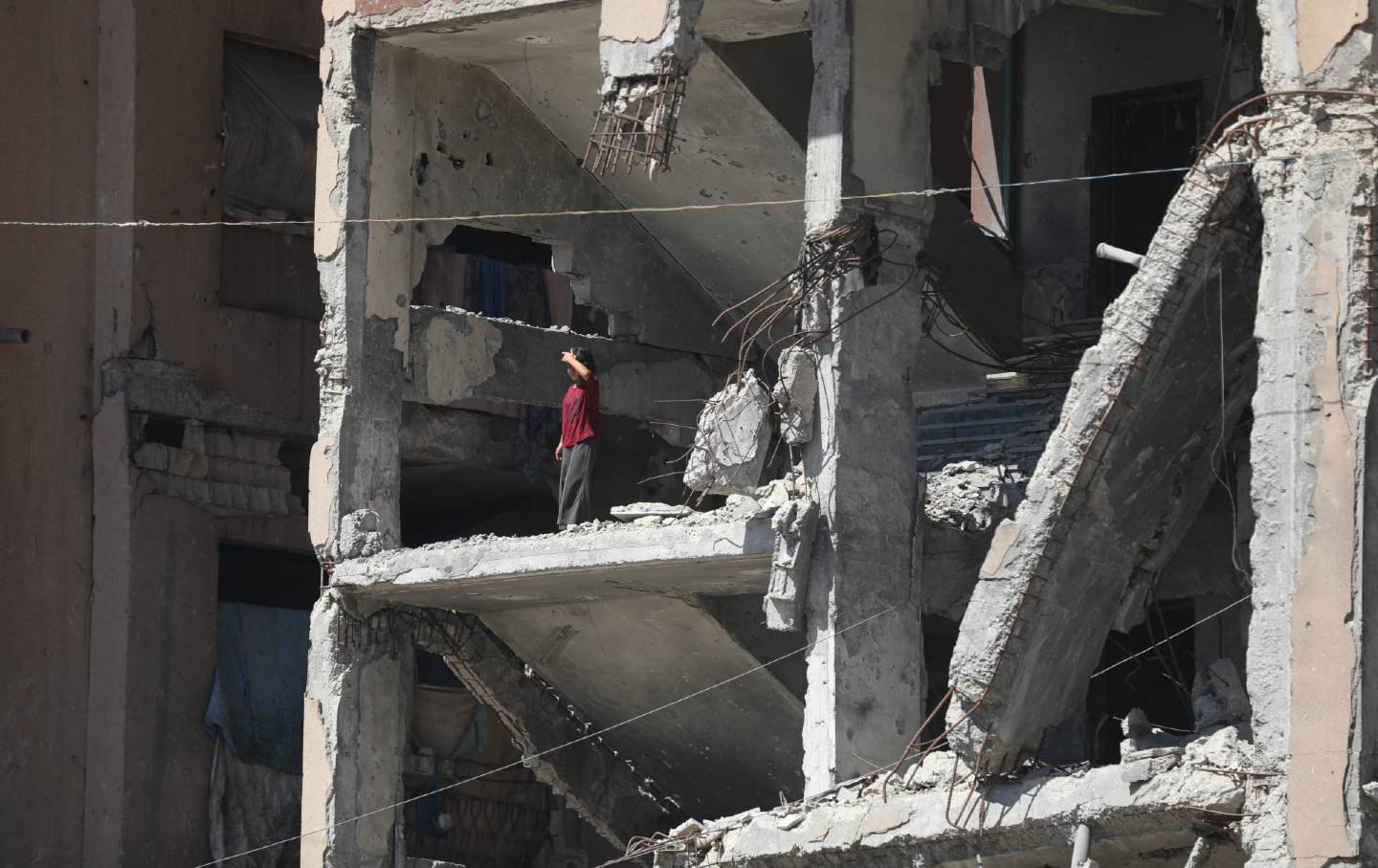
Israel’s Election Can’t Fix What Netanyahu Broke Israel’s Election Can’t Fix What Netanyahu Broke
The fundamental problem is not the name of the prime minister, but rather the actions of the Israeli government and the urgent issues that need to be addressed.
The AfD’s Rise Isn’t Just About East Germany The AfD’s Rise Isn’t Just About East Germany
The Alternative für Deutschland has a stable national poll lead, including in the former West Germany. Its rise owes to much more than Eastern grievances.
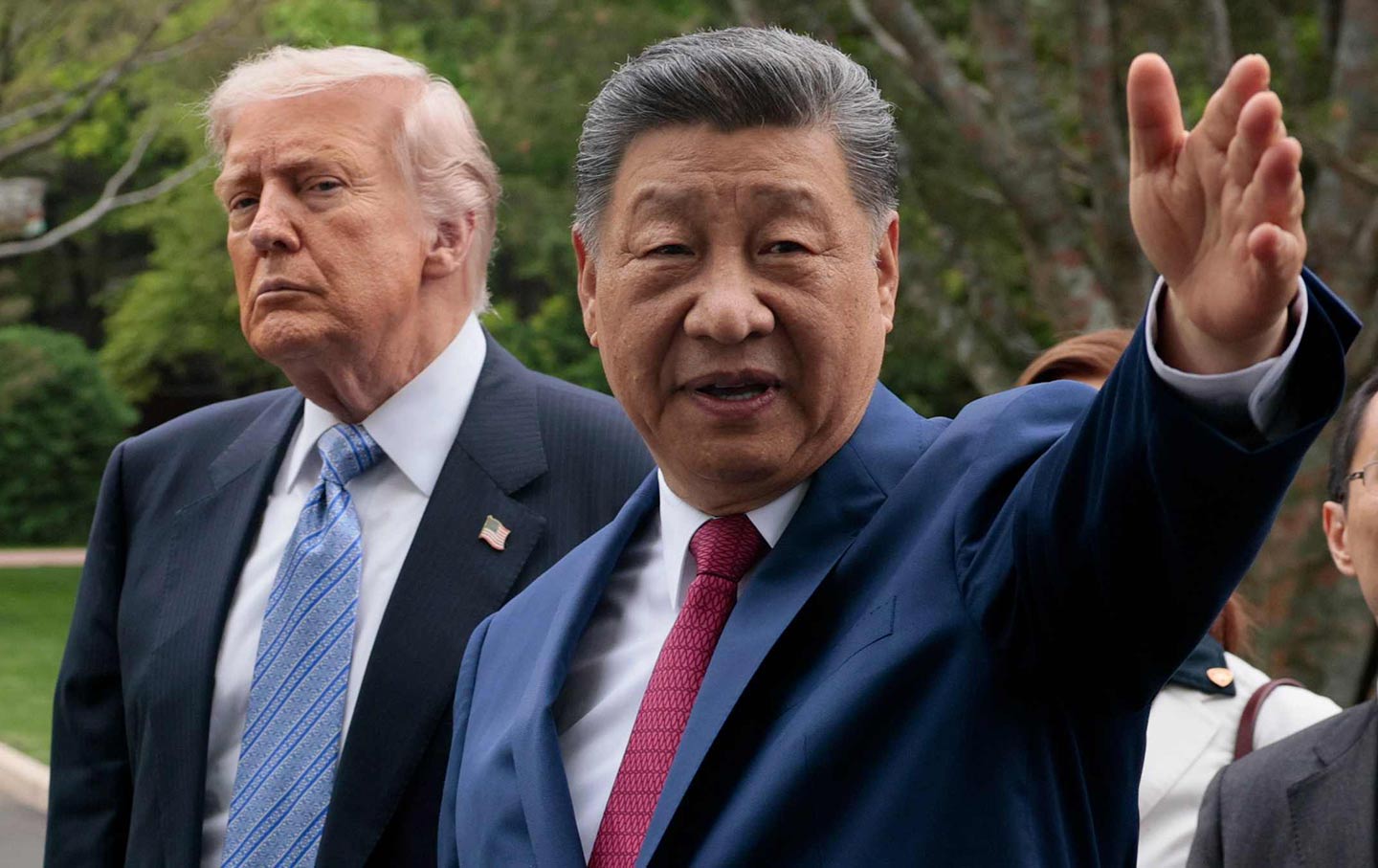
Chinese Development Is the Betrayal Washington Cannot Forgive Chinese Development Is the Betrayal Washington Cannot Forgive
The prospects for Xi Jinping’s visit are dim because American leaders are blaming China for the failures of globalization.
Pinochet: The Verdict of History in the Letelier-Moffitt Case Pinochet: The Verdict of History in the Letelier-Moffitt Case
An act of international terrorism on the streets of Washington, DC, still reverberates 50 years later.
How to Arrest Benjamin Netanyahu How to Arrest Benjamin Netanyahu
Make no mistake: The United States can seize Netanyahu for crimes under US law and prosecute him in US courts when he is in New York City this week.

In the Age of AI, Nuclear Weapons Abolition Is a Renewed Imperative In the Age of AI, Nuclear Weapons Abolition Is a Renewed Imperative
As long as we have nuclear weapons, the job of ending humanity will continue to be as easy as the push of a button—or an AI agent hacking into a nuclear command-and-control system...

