Israel Is Spiraling
The government’s genocidal fervor is ripping through the carefully constructed layers of self-delusion that power this country.
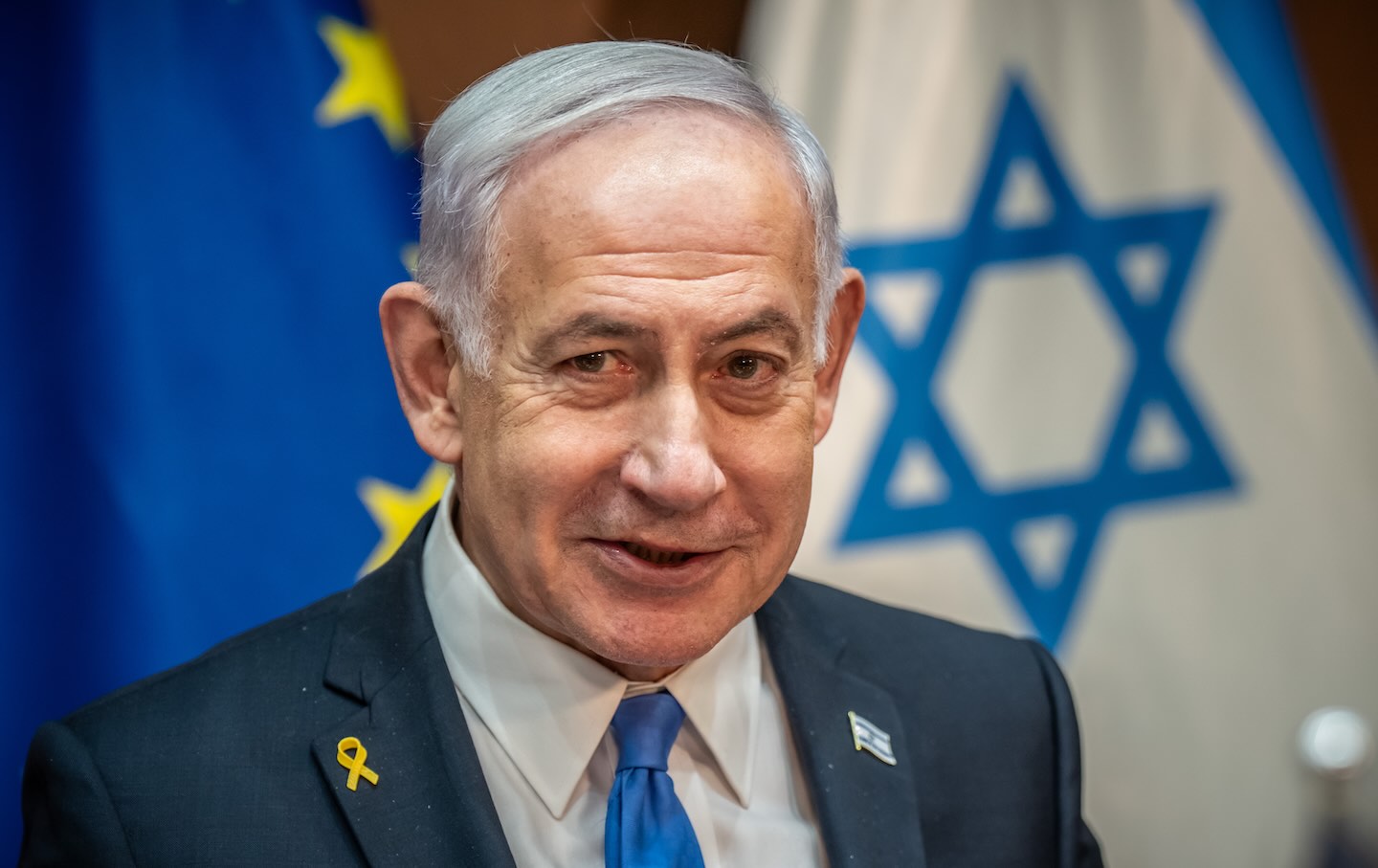
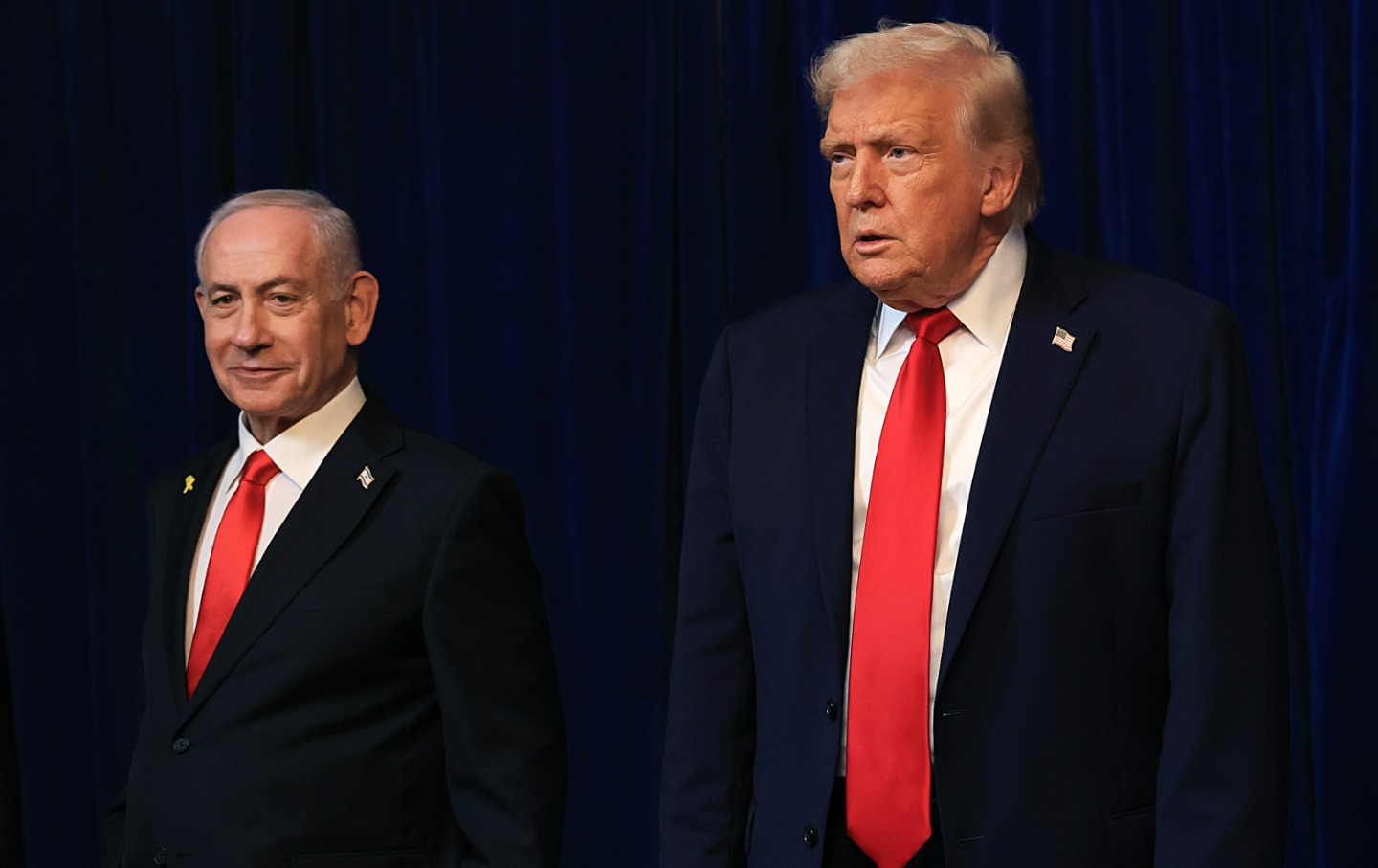
Benjamin Netanyahu speaks during a meeting in Jerusalem on May 11, 2025.
(Michael Kappeler / picture alliance via Getty Images)Israel is spiraling. The bombardment, siege, and starvation of Gaza continue unrelentingly, and the direct genocidal incitement coming from senior members of the country’s government toward the people of Gaza is, somehow, getting worse. Betzalel Smotrich, minister of finance and minister for West Bank affairs at the Ministry of Defense, says that the plan is clear: move forward, occupy territory (not just in Gaza but in Lebanon and Syria as well), remove “enemy subjects” and hold that territory indefinitely. What could “removal” mean but genocide? Why does Israel consider itself above all existing international law? Why doesn’t “the world” stop Israel when this “world” is fully cognizant of what is happening? Rage and frustration are the order of the day.
Still, the choice to remain in the realms of rage and frustration misses the fact that Israel is spiraling. The country is caught up in various negative momentums, both foreign and domestic.
The first and most obvious one is the adoption of overtly genocidal discourse by the Netanyahu government, as articulated by its hard-right and settler members. While expressions of genocidal glee receive much venomous support on Israeli media (social and mainstream), the gap is widening between two sides. One side includes two main camps. The first is the settlers, who have long entertained notions of “returning” to Gaza and undoing the unilateral removal of Jewish settlements from the Strip in 2005 (the so-called “disengagement”). The second is the populist camp, led by Itamar Ben Gvir, minister for national security. He doesn’t care about “settling” Gaza as much as he does about securing the surrender of the “enemy” by all means possible, including the bombing of food and water deposits in the Strip.
The second side consists of, well, everyone else. The great majority of Israelis do not oppose the genocide, but it is important for them to justify it through the prism of “security,” the most sacrosanct of Israeli values. Security, in this context, means that Israelis are allowed to kill as many people as deemed necessary (including civilians) to keep their own lives safe. As long as Israel’s actions in Gaza are meant to “destroy Hamas,” it may be possible to think of the devastation of the genocide in terms of “we’re not starving Gaza; it’s Hamas that steals all the food from the population” or “in war, bad things happen to good people.” If one ends up with the insight that “there are no bystanders in Gaza,” that is semi-legitimate as well, as long as it is derived through security-oriented deductive chains.
Smotrich and Ben Gvir pierce through these carefully constructed layers of self-delusion. Their agendas are either too sectorial (Smotrich) or too distrustful of the current Israeli power structure (Ben Gvir). The two are also united by what is perceived as disregard for the Israeli hostages, 21 of them presumed living at the latest count. The return of the hostages represents, for many Israelis, the idea of a compassionate society (compassionate toward certain people, in any case) and one that relies on solidarity. Consciously sacrificing the lives of the hostages is seen as a repudiation of this ideal.
Smotrich and Ben Gvir are also defined by their anger and sense of entitlement. They see their constituencies as having been denied effective power (Ben Gvir) or elite status (Smotrich) for too long. The populists are known for their greedy sense of urgency the world over, applying pressure to the state and leveraging every crack in the latter’s armor. The settlers, who view the establishment of the Israeli state as the beginning of Israel’s divinely promised redemption, are just as greedy. Their reality has been one of constant bamboozling for decades, stealing Palestinian land seemingly on their own but with the discreet help of the Israeli state. But the era of discretion is over. As conditions appear more and more favorable, zeal and cupidity complement each other into a sense of “now or never.”
Netanyahu’s government is now completely under the sway of these two movements, including ministers who ascribe to neither. The reason? Settler and populist votes are the only foolproof assurances of the government’s continued survival. While Israelis, as I suggested above, mostly support the government and its genocide, many of them grow more and more irate at the justifications and proposed endgames—whether to cement an apartheid empire or complete the genocide in Gaza, or both. More and more Israelis trust the Israeli state less and less. Even among those potential reservists who claim they will report for duty if called up, the main reason is “being there for their friends,” not upholding security.
The IDF is also attempting to flee from the sinking ship, presenting operational plans full of disclaimers. The most important one is IDF Chief of Staff Eyal Zamir’s warning that an “expanded maneuver [in Gaza] will endanger the hostages.” The most politically charged disclaimer is Zamir’s insistence on the immediate draft of thousands of young ultra-Orthodox men to shoulder the “forever war” burden. Israel has been struggling with drafting the ultra-Orthodox since its creation. Zamir’s demand that this be carried out posthaste is an indication of how little trust he has in the current government. He is presenting the politicians with a “professional minimum.” If they can’t produce it, the implication goes, impending defeat will be their fault.
Israel also appears to be in some trouble with the Trump administration. Trump has distrusted Netanyahu ever since the latter’s attempt to cast himself as Trump’s mastermind. While he has not intervened on behalf of the Palestinians and has provided Israel with arms, Trump has refrained from weighing in too much on Gaza’s present and future. True, the “Trump Plan for Voluntary Relocation” enjoyed a particularly brief heyday, but since then, Trump has clearly demonstrated his lack of interest. In fact, Trump has given Netanyahu free rein, which is the worst outcome for a leader whose hedging and reticence to act have become legendary. Trump is rearranging the Middle East, from negotiations with Iran to a ceasefire with the Houthis, but Israel is not consulted in the process. Trump’s upcoming visit to the Middle East will not include Israel.
The EU has now officially condemned Israel’s planned occupation of Gaza. The Netherlands has called for a reexamination of the EU-Israel partnership agreement, the main instrument ensuring billions in trade and R&D collaborations. While powerful members of the EU, like Germany, stand firmly alongside Israel, the momentum is shifting here as well. It is assisted by most international institutions’—the UN, ICJ/ICC, and many others—having long since offered vocal criticism of Israel. The Israeli response has been brash, at best. At worst, it has been perceived as dissociative and full of hubris.
These processes are slow, but once they reach critical mass, they will move quicker than they may seem to at first. They are speeding up not necessarily because of Israel’s egregious crimes but because Israel is losing control of its own structural integrity. Israel’s actions seem like the fruition of a plan hatched and elaborated over a long time. In many ways, they are the absolute opposite. Israel is spiraling.