
Israel’s Election Can’t Fix What Netanyahu Broke
The fundamental problem is not the name of the prime minister, but rather the actions of the Israeli government and the urgent issues that need to be addressed.
In 1996, a brash right-wing politician was sworn in as Israel’s youngest prime minister. He had led the right-wing Likud party back to power just months after an assassin killed Prime Minister Yitzhak Rabin, whose pursuit of peace included recognizing the Palestinian national liberation movement and establishing what seemed at the time to be a path to ending the occupation.
That fresh-faced prime minister was Benjamin Netanyahu, and 30 years later, he leads an Israeli government that has abandoned even the pretense of being grounded in liberal democratic ideals. His government has embraced Orbán-style neoauthoritarianism and the dehumanization of Palestinians. We see the changes in the weakening of Israel’s always-flawed democracy, the political attacks on the media and the courts, and the shrinking space for dissent for Israel’s own citizens. Most disturbingly, we see it in the Israeli government’s increasingly belligerent conduct toward Palestinians in the West Bank and Gaza.
For Americans who have long understood the US-Israel relationship as a partnership between two democracies with shared liberal values, that transformation is not abstract. It raises a basic question: What does Israel’s transformation mean for the relationship between our two countries?
Some of the most devastatingly consequential actions by Netanyahu’s current government have to do with the Gaza war. Consider, for example, the allegations in the new documentary NAZA, based on testimony from Israeli military personnel, about the high level of collateral damage and civilian casualties that were anticipated and accepted in planning strikes throughout Gaza.
Or consider the government’s decision from March 2025 to block all food, fuel, and medicine from reaching Gaza. This was official policy, justified as an effort to gain leverage, to use humanitarian aid as a weapon of war. This sort of collective punishment is a war crime.
These decisions are anathema to Americans’ basic sensibilities about the sacredness of human life. The Israeli government’s embrace of these policies is the best explanation for the dramatic drop in sympathy for Israel among the American public. For decades Americans, by and large, had supported Israel because we saw it as a democracy that shared our liberal values and was seeking, however imperfectly, to find a way to live alongside the Palestinians. The actions of the Netanyahu government are not reconcilable with that vision of Israel.
The decline is dramatic. In a Quinnipiac poll released last week, for the first time more registered voters said that their sympathies lie with the Palestinians than with the Israelis—38 percent to 35. That is an all-time high for the Palestinians and an all-time low for the Israelis since Quinnipiac began asking the question 25 years ago. And nearly half of all voters, 48 percent, now say the United States is too supportive of Israel. Only 8 percent say it is not supportive enough.
The question is what happens next. Israeli elections are scheduled for October 27, and polls show that Netanyahu could lose the election. There is an understandable temptation, even a desire among many, to see Netanyahu as the aberration, allowing the relationship to jump back to a status quo ante were he to lose the election.
The fundamental problem, however, is not the name of the prime minister but rather the actions of the Israeli government and the urgent issues that need to be addressed. To regain the trust of the American public, any new prime minister must demonstrate that they are breaking from Netanyahu’s approach of endless occupation and forever wars to embrace a genuinely liberal agenda.
If and when a new prime minister takes office, Americans should watch for three things.
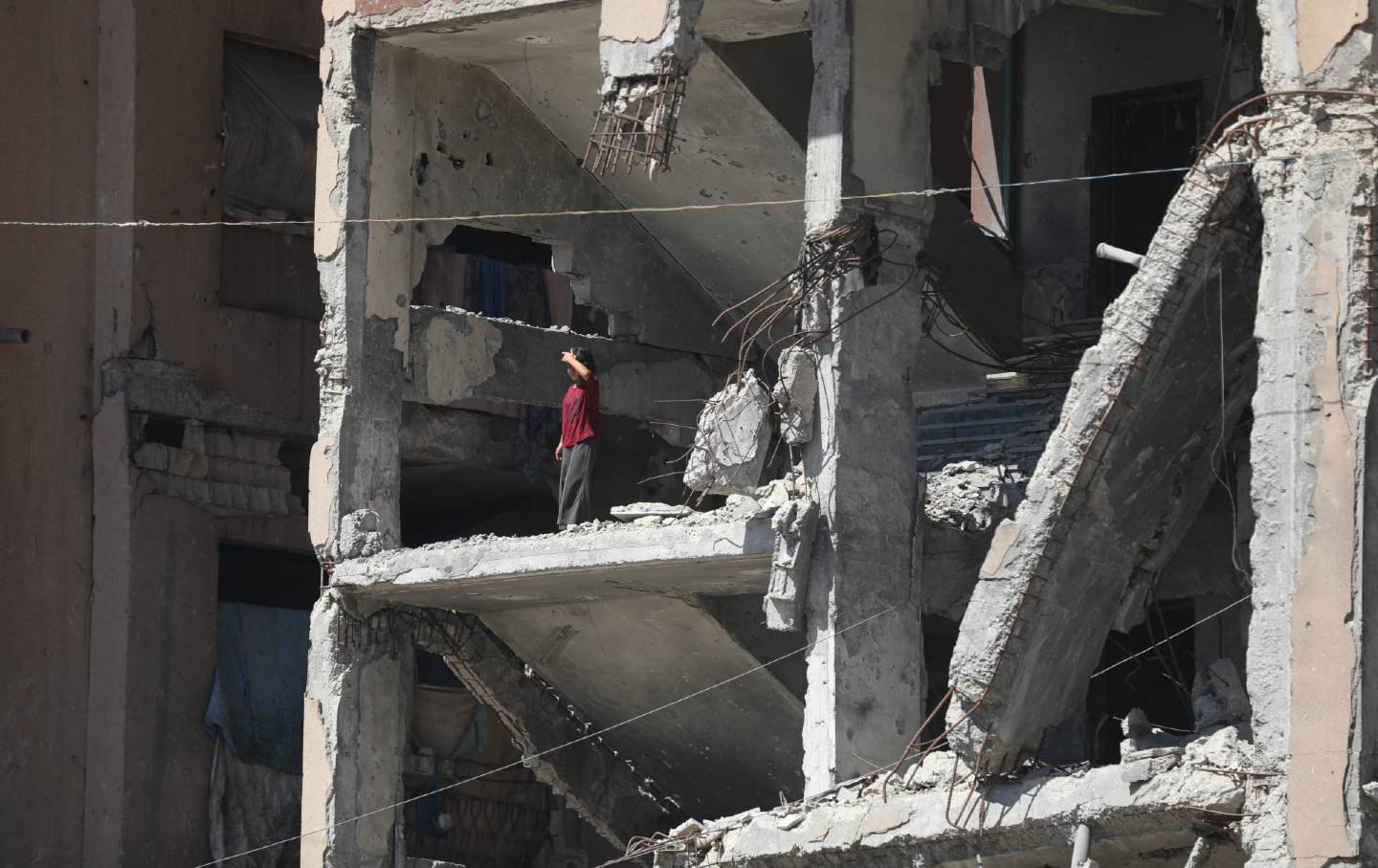
Will Israel help Gaza rebuild quickly? Nearly a year into the announced ceasefire, we’ve seen limited humanitarian relief, but Gaza’s recovery and reconstruction remain largely stalled. Two million people continue to live amid extraordinary destruction and deprivation. The Netanyahu government has treated reconstruction as a bargaining chip for negotiations. An Israeli government serious about setting a new path would understand that those Palestinian lives matter and speed up the process of reconstruction.
Will Israel work to end the occupation? This government has expanded settlements and displaced West Bank Palestinians at an unprecedented pace, and it has been explicit about why: It wants to foreclose the possibility of a Palestinian state and to annex the West Bank to Israel. A new government cannot simply promise to manage the status quo more gracefully. It has to make clear that ending Israel’s control over Palestinian lives is its policy objective. That means stopping, and then reversing, settlement activity while taking steps to improve the lives of the Palestinians who live in the territory.
Popular
“swipe left below to view more authors”Swipe →Will Israel establish a process for accountability? In the aftermath of the horrors of October 7, there was near-consensus in Israel that a state commission of inquiry must be formed to identify what went wrong. Netanyahu refused to create one, out of fear that such a commission would point to his own failures. If a new government takes hold and establishes a commission of inquiry, it must charge the commission not only with examining the strategic and tactical failures that led to October 7 but also with examining how the war was conducted: what decisions were made, what alternatives were available, whether Israeli officials took the necessary steps to minimize civilian deaths and suffering, and whether individual accountability is warranted.
A commission with such a mandate might be the single most persuasive thing a new Israeli government could do. It would be the first evidence in a very long time that Israel is capable of holding itself to account. It would also indicate that the Israeli government understood that the extensive loss of life in Gaza is worthy of investigation.
Should Netanyahu be ousted in this fall’s elections, it would open the door for a reset in the US-Israel relationship. But Israel cannot get there with another PR campaign to convince Americans that Israel is misunderstood. Nor can it succeed by finding the right combination of messaging, lobbying, and political alliances in order to try to breathe new life into the old consensus. Israel’s standing is on a precipice because of the Israeli government’s decision to adopt a policy agenda at odds with the liberal values Americans hold—and with the simple idea that Palestinian lives matter. A new Israeli government—if it wants to repair its relationship with America—will need to show us that Israel and America still have something in common.
Become a Sustaining Donor This September
Between the reemergence of right-wing red-baiting and Donald Trump’s use of the chilling National Security Presidential Memorandum–7 to criminalize left political organizing, we’re seeing McCarthyism reborn before our eyes.
This assault on democracy cannot be ignored or wished away. Resisting it requires bravery in the face of threats and repression, a steadfast commitment to the truth, and the unwavering belief that we can—and will—overcome this darkness.
We must have an independent media that sets the record straight, unearths corruption and abuses of power, and advances a politics of justice and dignity for all if we’re to win this fight.
That’s why I’m writing to you today. This September, The Nation needs to add 100 monthly donors to sustain our progressive journalism. Your contribution makes the next investigative report, the next truth-speaking column, and the next pathbreaking essay all possible.
I hope you’ll support our work with a recurring donation today. If you donate $10 or more a month, we’ll send you a brand new “Hands Off the Free Press!” sticker to recognise your commitment to our cause. Please, donate today.
Onward,
Katrina vanden Heuvel
Editor and Publisher, The Nation
More from The Nation

The AfD’s Rise Isn’t Just About East Germany The AfD’s Rise Isn’t Just About East Germany
The Alternative für Deutschland has a stable national poll lead, including in the former West Germany. Its rise owes to much more than Eastern grievances.
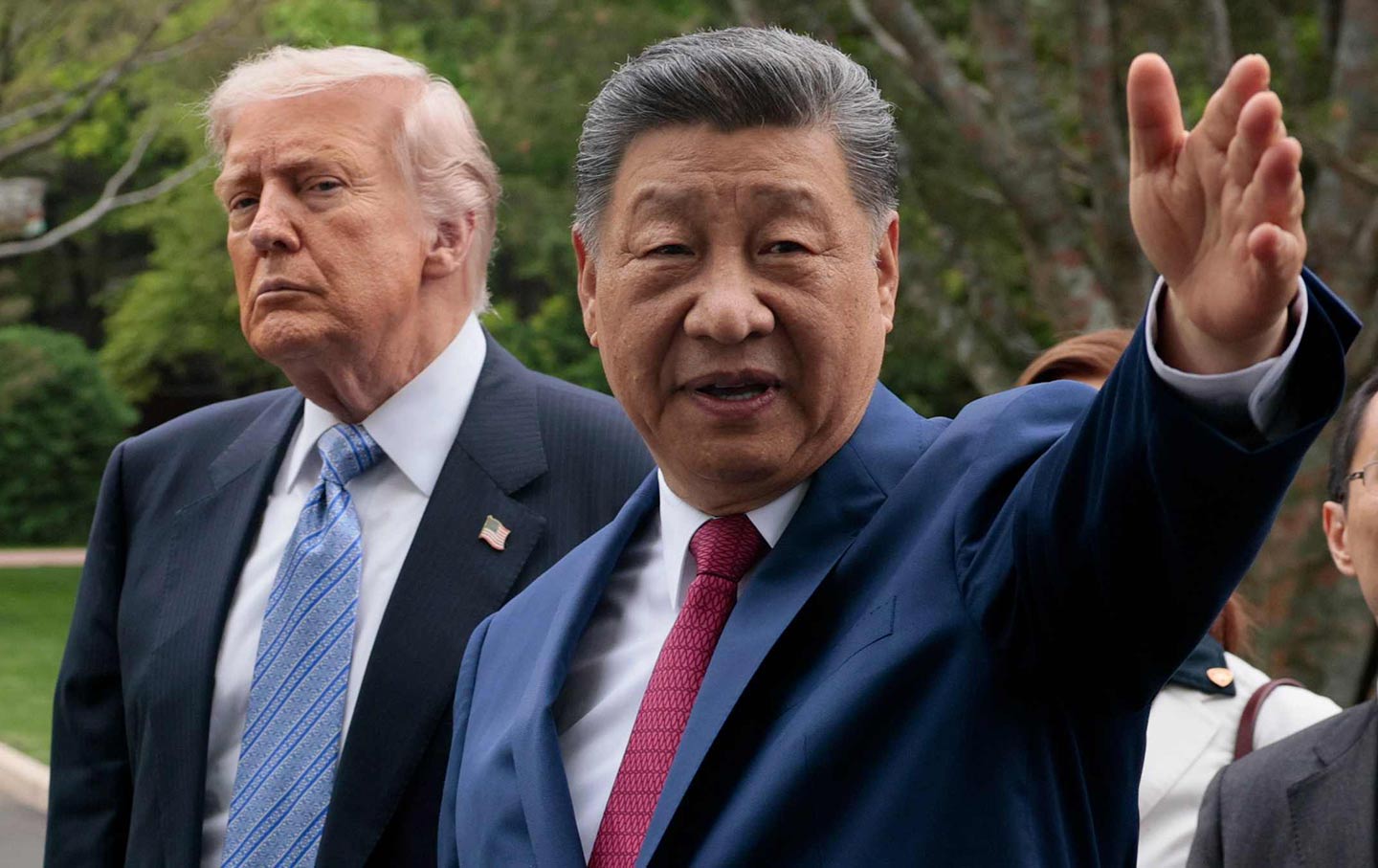
Chinese Development Is the Betrayal Washington Cannot Forgive Chinese Development Is the Betrayal Washington Cannot Forgive
The prospects for Xi Jinping’s visit are dim because American leaders are blaming China for the failures of globalization.

Pinochet: The Verdict of History in the Letelier-Moffitt Case Pinochet: The Verdict of History in the Letelier-Moffitt Case
An act of international terrorism on the streets of Washington, DC, still reverberates 50 years later.
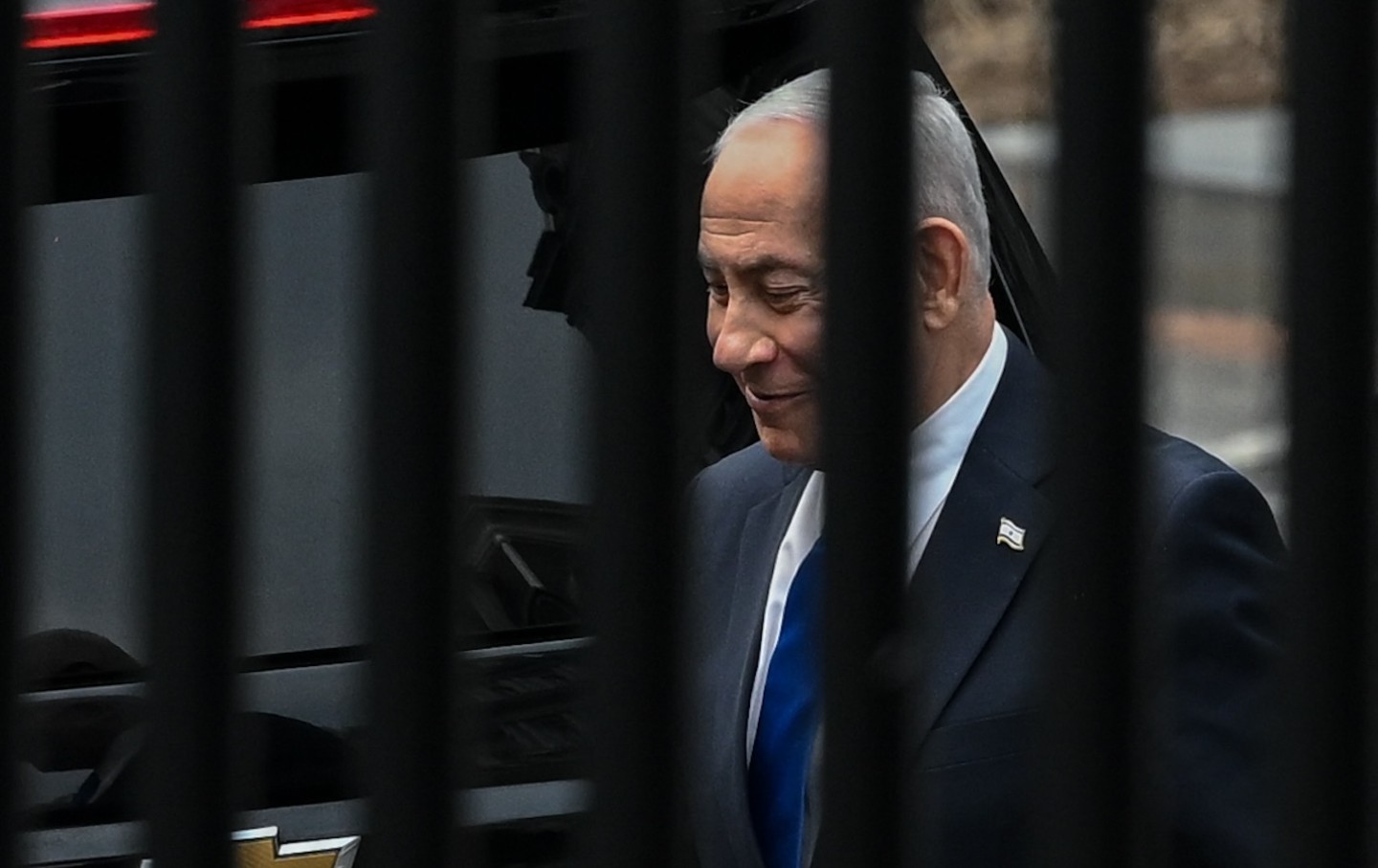
How to Arrest Benjamin Netanyahu How to Arrest Benjamin Netanyahu
Make no mistake: The United States can seize Netanyahu for crimes under US law and prosecute him in US courts when he is in New York City this week.

In the Age of AI, Nuclear Weapons Abolition Is a Renewed Imperative In the Age of AI, Nuclear Weapons Abolition Is a Renewed Imperative
As long as we have nuclear weapons, the job of ending humanity will continue to be as easy as the push of a button—or an AI agent hacking into a nuclear command-and-control system...

These Students Are Shaping UN Human Rights Policy These Students Are Shaping UN Human Rights Policy
Princeton undergraduates are helping the organization develop standards for post-mortem digital privacy and death in custody.

