The Ceasefire Just Showed the World That US Military Power Is Obsolete
With the illusion shattered, now is the chance for the US to liberate itself from a broken imperial model.
As of 10 pm Washington time on April 7, 2026, the war may be ending on the basis of Iran’s 10 points.
These include: Iran’s control (with Oman) of the Strait of Hormuz, “agreement on uranium enrichment,” the lifting of all sanctions, withdrawal of American forces, and an end to all military attacks on Iran, as well as on “Lebanon and elsewhere,” according to the prime minister of Pakistan. In return, Iran agrees to cease defensive actions. By implication, it reserves the right to retaliate against ceasefire violations, including in “Lebanon and elsewhere.”
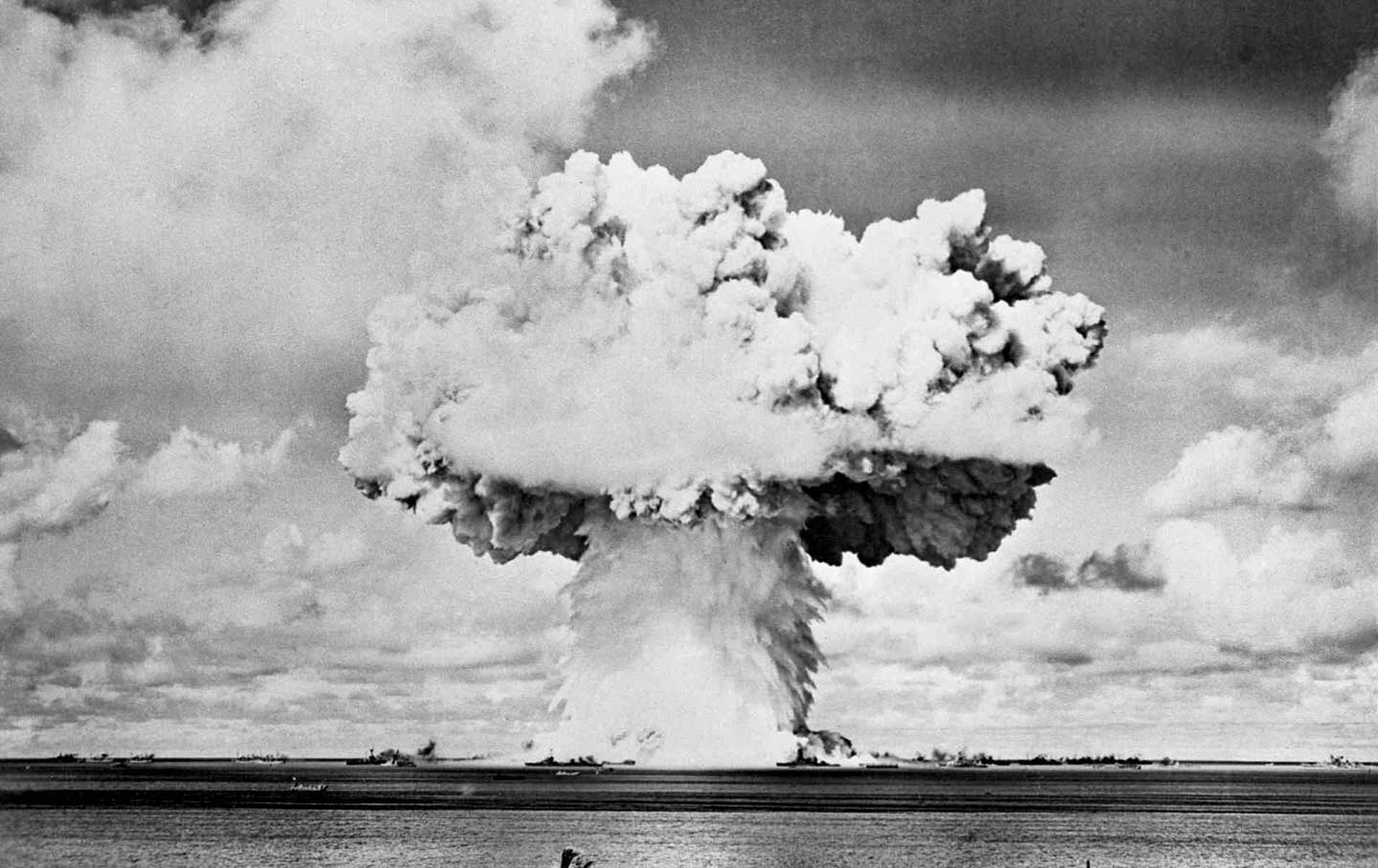
If the ceasefire holds, the vicious attack launched by the United States and Israel on February 28, 2026, will have exposed, for all to see, the obsolescence of US military power. That power consisted mostly of surface ships and bases, both of them impossible to protect from missiles and drones. The entire model, built up in World War II and the Cold War, is finished.
Acknowledgment of this reality around the world will have vast effects. It may hasten settlement of the other major conflict and tension zones: Ukraine on terms agreed with Russia, and Taiwan on terms agreed with the PRC. If so, a course should be set to avoid the worst for food and fuel and other resources in the near term and for a general economic improvements worldwide over a year or two and perhaps sooner.
Two weeks of uncertainty lie ahead. Forces within the United States and in Israel could destroy the tentative settlement, resume the war, and deepen the damage. They will certainly try. Israel is still savagely bombing Beirut, inviting retaliation from Tehran. A deep and irreversible economic disaster, based on the final ruin of the Persian Gulf states, remains possible. It may be in Israel’s perceived interest to provoke that calamity. The military and ultimate political outcome will not be different if it happens.
Perfidy is also possible. A crime under the Geneva Conventions, perfidy is standard practice for American rulers, whom no one trusts any more. But the depletion of offensive and air defense weapons makes an early resumption of the war unlikely. Therefore, the political effects of this deal may play out before military stockpiles could be rebuilt. And Iran also can replenish its arsenals, so a renewed attack would not mean a different result. Israeli media headlines calling the ceasefire a “huge victory” for Iran appear to be correct.
Within the United States, a reckoning is overdue. At least since Clinton’s attack on Serbia in 1999, the US has been trapped in a web of delusions about its own power. In Afghanistan, Iraq, Ukraine, and the South China Sea, the US has come up against forces it could not (in the end) defeat. None of these have, so far, dented the psychological carapace of the American elite. Iran’s 10 points should, finally, force reality down their throats. It is a defeat at the very core of the oil-dollar system, on which American power has rested for 50 years.
Can America adapt? The present political class can hardly do anything except bluster on. They may just deny reality. Or they may try to foster, as in France after 1870 or Germany in the 1930s, a spirit of revanche and another round of extreme militarization. This course would lead to further humiliations and defeats, and to the final physical and moral decay of the country. But the people are tired of their so-called elites, and in the force of circumstances, perhaps a new political class will emerge.
In my dreams, this defeat could liberate the US from a broken imperial model. The US could demilitarize, mothball its nuclear weapons, decommission its aircraft carriers, and close bases, even beyond those now abandoned in the Middle East. It could shrink its financial sector and devote its real resources to domestic physical, social and industrial renewal. It could revive, retrain and reenergize its worn-down population, with useful jobs doing worthwhile tasks. It could join the concert of great powers on equal terms, accepting the fact that none of the other powers—not China, not Russia, and not Iran—has any interest in taking over the world. And that therefore, for effective management of the world commonwealth, cooperative solutions must be found.
And the markets? From the news on April 7, as oil prices tumbled, the stock market was happy. Is this the first time stocks boomed to the tune of a colossal defeat? That would speak well of the markets, which I do rarely. But don’t count on it over the longer term. From the American perspective, the foundations of world power just shifted—an astonishing result. What we make of it remains ahead.
Become a Sustaining Donor This September
Between the reemergence of right-wing red-baiting and Donald Trump’s use of the chilling National Security Presidential Memorandum–7 to criminalize left political organizing, we’re seeing McCarthyism reborn before our eyes.
This assault on democracy cannot be ignored or wished away. Resisting it requires bravery in the face of threats and repression, a steadfast commitment to the truth, and the unwavering belief that we can—and will—overcome this darkness.
We must have an independent media that sets the record straight, unearths corruption and abuses of power, and advances a politics of justice and dignity for all if we’re to win this fight.
That’s why I’m writing to you today. This September, The Nation needs to add 100 monthly donors to sustain our progressive journalism. Your contribution makes the next investigative report, the next truth-speaking column, and the next pathbreaking essay all possible.
I hope you’ll support our work with a recurring donation today. If you donate $10 or more a month, we’ll send you a brand new “Hands Off the Free Press!” sticker to recognise your commitment to our cause. Please, donate today.
Onward,
Katrina vanden Heuvel
Editor and Publisher, The Nation