Orbán Is a Loser
Hungary shows how to beat an autocrat at the ballot box.
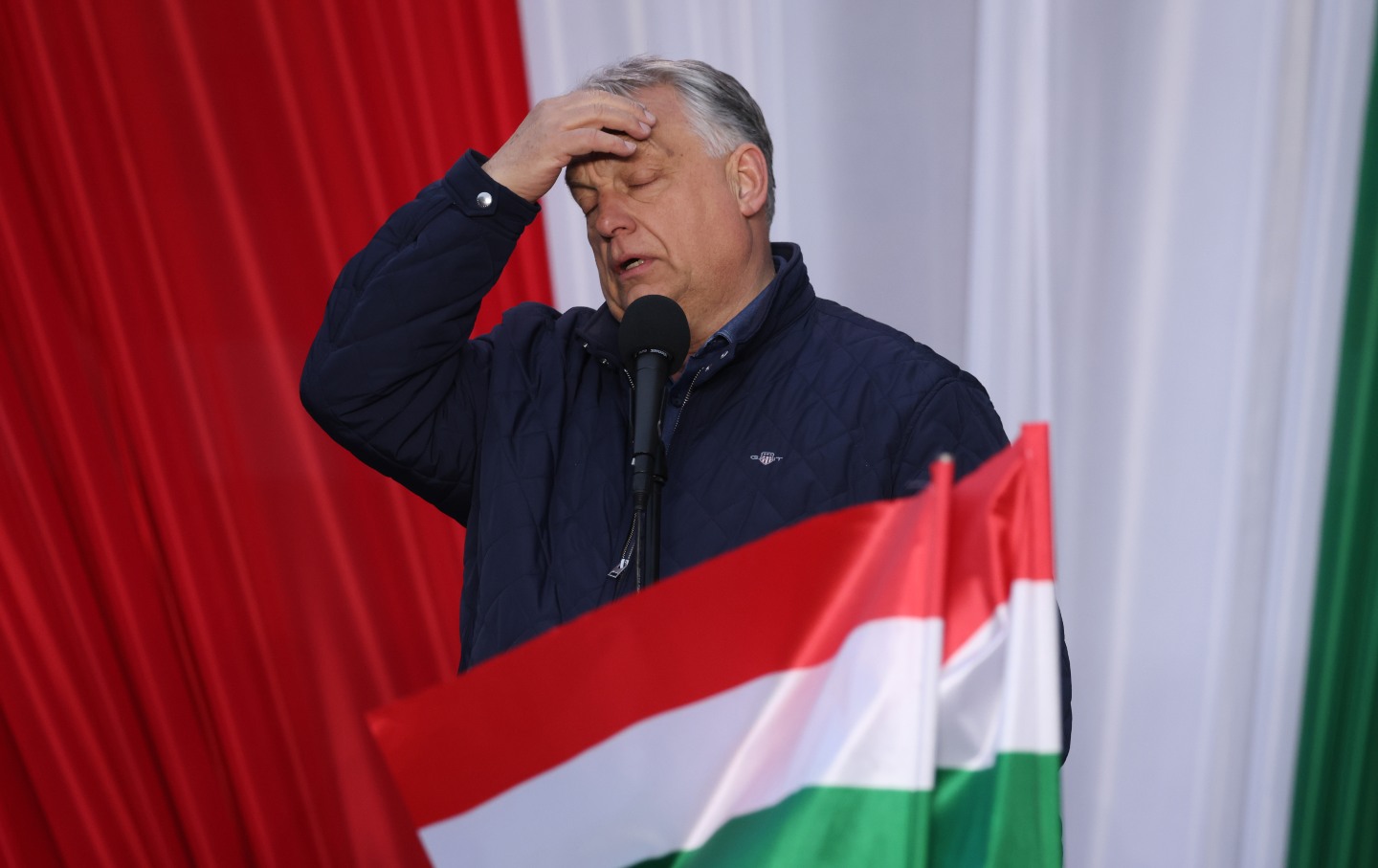
The astounding landslide victory of the opposition Tisza party in Hungary on April 12 over the far-right, Trump-backed Fidesz party of strongman Viktor Orbán is stunning news for Hungarians, the European Union, Ukraine, and democratic forces around the world. Orbán’s Fidesz party functioned as a self-perpetuating machine designed to enrich its elite that many—including myself—couldn’t see the end to. It took a defector from within the party, namely Peter Magyar, a Fidesz member for years and second tier administrator, to unite the bickering tiny opposition parties and ride dissatisfaction with the “embedded autocracy” to victory. The lopsided win handed Magyar a two-thirds supermajority thus granting it sweeping power to change the constitution. Magyar has the way open to dismantle the Fidesz state and replace it with a European democracy.
Hungarians rushed into the streets and partied in neighborhood bars relishing the moment. “Boldog új évet!” or “Happy New Year” they greeted one another. “Hungary has made its choice—this is a moment for history,” posted filmmaker Kornél Mundruczó on Instagram. “After years of tireless work and unwavering belief, we have arrived here together. God bless Hungary.” “Back together! Glorious victory, dear friends!” Polish prime minister Donald Tusk wrote on X, adding in Hungarian: “Russians, go home!” “The result is beyond expectation,” economist Laszlo Andor gushed to The Nation. “A massive Gen Z dynamic in play.”
Indeed, the largest turnout in democratic Hungary’s short history included droves of young people, types who never knew anything but Orbán and Fidesz: the corruption, the heavy-handed propaganda, the hate campaigns against “enemies,” the neglected state services, the pro-Russian fawning. Fidesz’ second run in office began in 2014, making only Belarus’s Lukashenko a longer-tenured leader in Europe.
It is a slap, too—and perhaps writing on the wall—to the Trump administration as Vice President JD Vance campaigned openly for Orbán in Hungary, displaying yet again that Trump’s sympathies lie with the far-right politicos across Europe: those who aim to bring down the EU and lord over a new authoritarian era in Europe. Hungarians rose up and voted sensibly. Perhaps US Americans, Italians, the Netherlands, Finland, Slovakia, and Croatia will do the same. Both Washington and Moscow (and, to a lesser extent, China too) weighed in for Orbán—but it didn’t save his skin, on the contrary. Theirs was the kiss of death. Their lack of clout underscored again that the far right isn’t a single transnational movement but rather national and nationalist phenomena that may treat certain topics similarly but whose fate is tied to domestic and other factors, not the actions of their cousins in other countries. They can copy from one another but they’re largely powerless to help ideological allies.
The good news should not be sullied with the long list of reforms that Tisza has to make to coax democracy back to life. But the Orbán era has changed Hungary much for the worse by latching onto a political culture that has deep roots in Hungary, traditions much stronger than the country’s thin democratic credentials—those limited largely to the first post-communist decade when diverse political parties competed for power in an open society.
In deconstructing Hungary’s political culture, most observers look back to the arch conservative and fascist dictatorships that allied with the Nazis. And, of course, this source of the toxic nationalism was integral to Orbán’s repertoire. But just as important is the political legacy of late Soviet communism, the decades associated with the Soviet-picked leader János Kádár. Kadar took the reigns in Hungary after Soviet tanks squashed a popular uprising in 1956 against the Stalinist Hungarian regime. Hungarians, he understood, weren’t going to tolerate a suffocating Stalinist dictatorship—so he sweetened the pot. In exchange for political passivity, Hungarians received more room to live according to their individual choice and more goods to buy in department stores than their more orthodox bloc neighbors. The mix of communist and market economics won the label “goulash communism” and the faint praise as the “cheeriest barracks” in Eastern Europe.
Hungarian philosopher Agnes Heller’s critique of “Kadarism” focused on its “dictatorship over needs,” where consumerism replaced political freedom. Heller argued that the Kádár regime operated by monopolizing the definition of citizens’ needs, offering increased living standards and consumer goods in exchange for political compliance. While Kadarism improved living standards, it stifled political activity and created a state-dependent population, opposing her vision of active citizenship.
Fidesz functioned much the same way, though with regular elections. Citizens nodded mechanically to the Fidesz machine and were rewarded with perceived security won by shielding it from EU norms while cashing in bigtime of EU structural and other funds. Orbán told them that only he had Hungarian interests in mind and he would act to protect them, as he did by maintaining Hungarian access to cheap Russian energy when the rest of Europe was sanctioning Moscow. He convinced them that neutrality on the war in Ukraine—or even pro-Russian overtures—would keep Hungary out of the fight. Insiders say that he expected to be rewarded with a chunk of Ukraine’s Carpathian mountains (a Hungarian minority of 150,000 lives there) should Russia occupy the entire country and call the shots.
Hungarians gave up on democracy sooner than any of their neighbors, unhappy with its arduous processes and unsatisfying compromises. Like everywhere in post-Soviet space, the market economy delivered much less than they had imagined, but instead of replacing it or reforming it with progressive alternatives, they threw in their lot with the strongman who promised them Hungary for Hungarians.
It is unlikely that Magyar, a Christian democratic lawyer, will undertake to address the rot at the center of Hungary’s political culture. Surely, he doesn’t see it and wants Hungary to become a law-abiding conservative Christian country rather than a criminal one. His promises on the campaign trail were vague: zero tolerance for corruption, a new public media law, a new state budget, and a wealth tax for billionaires. These are nice places to start but he has no vision for a Hungary different to its core. Nor do most Hungarians: They ousted Orbán because of the sky-high prices and corruption, not the shmoozing with Putin, disgusting propaganda, or nationalist hyperbole.
In fact, Magyar’s position on Ukraine isn’t that different from Orbán’s: Hungary stays out, keeps its head low. But he wants the EU’s frozen moneys to flow and will surely not block the EU the way Orbán did. But he’ll be in a bind as Hungary, thanks to Orbán, is uniquely reliant on Russian gas. Nevertheless, it is a blow for Russia as it has lost its best ally within the EU: “The Orbán government believed it could build a ‘little Russia’ inside Hungary with the help of Russian political strategists,” opined Ukrainian MP Mykola Kniazhytskyi on Facebook, “but surprise, surprise, it has failed. Russia has lost its grip on Hungary: it will no longer be able to secure places for its oligarchs on sanctions exemption lists, buy off politicians with oil discounts, or obtain sensitive information from confidential sources.”
Popular
“swipe left below to view more authors”Swipe →Moreover, Hungary has to return itself to a multiparty democracy. The next parliament will only include Tisza, Fidesz, and a tiny ultranationalist party. Proper social democratic, green, and leftist parties will have to be pieced together in a way that Hungarians have found very frustrating in the post-communist decades. This isn’t up to Magyar but ordinary Hungarians. Only their civic engagement can break the long-term spell of the autocratic temptation.
But let’s enjoy the jubilation and credit Hungarians with showing how an autocrat can be beat: at the ballot box and in droves.
More from The Nation
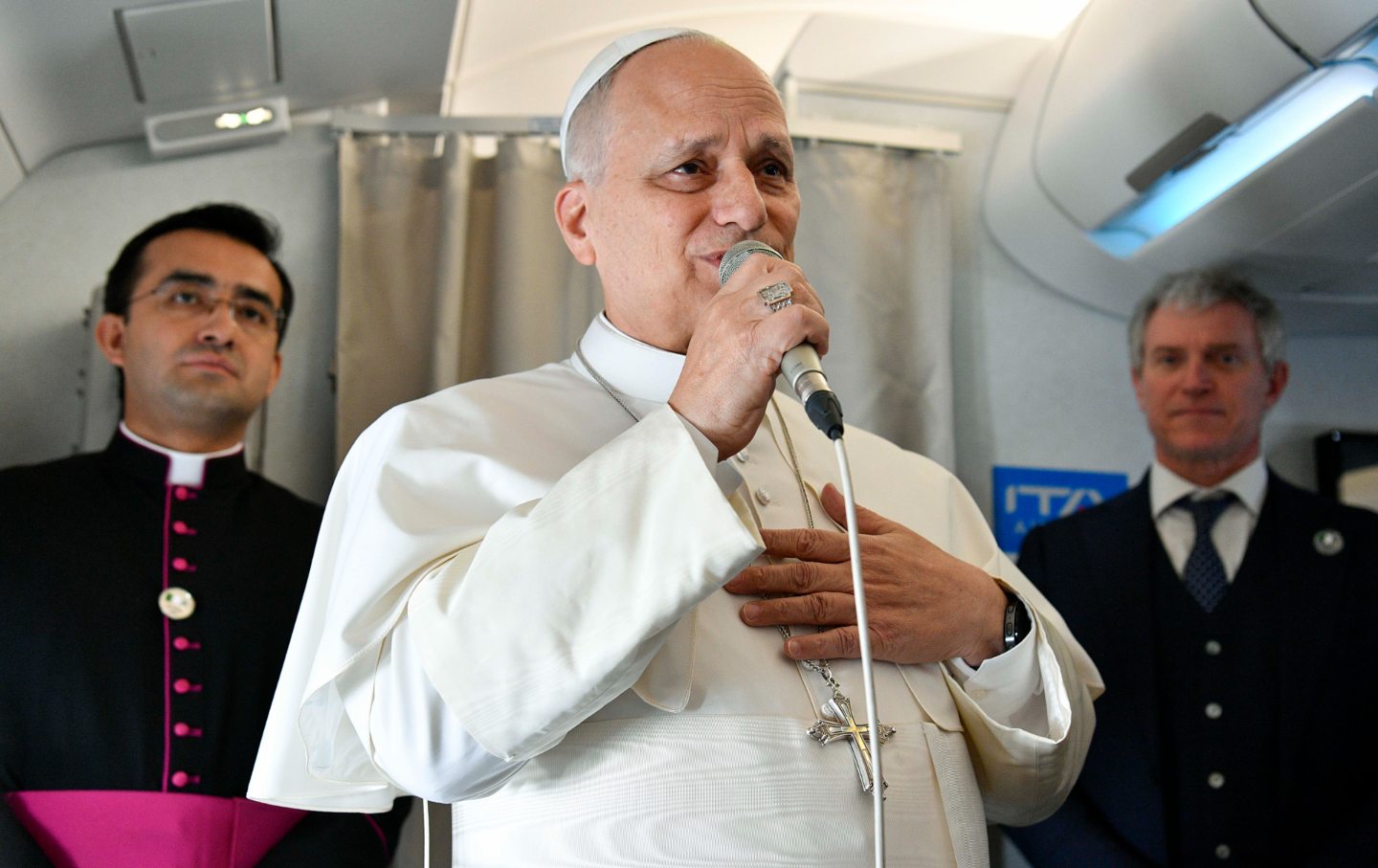
Trump’s Deranged, One-Way Feud With Pope Leo Trump’s Deranged, One-Way Feud With Pope Leo
He’s finally met someone he can’t bully.

How Iran Won the Meme Wars How Iran Won the Meme Wars
While Donald Trump panders to MAGA, Iranian satire is reaching a global audience.
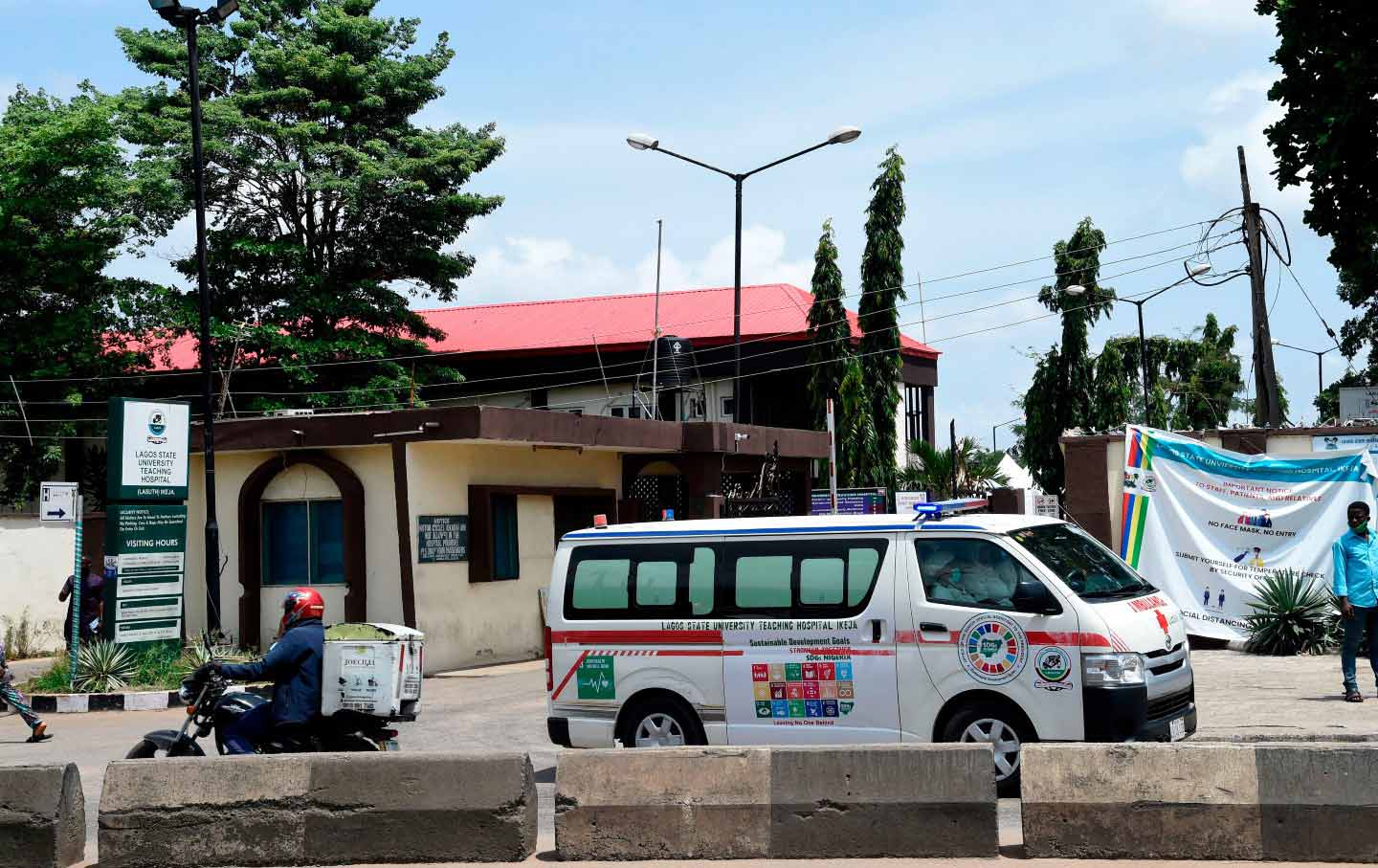
The Deadly Labyrinth of Nigerian Healthcare The Deadly Labyrinth of Nigerian Healthcare
My mother miraculously survived a series of health scares—but she barely survived our country’s hospitals.
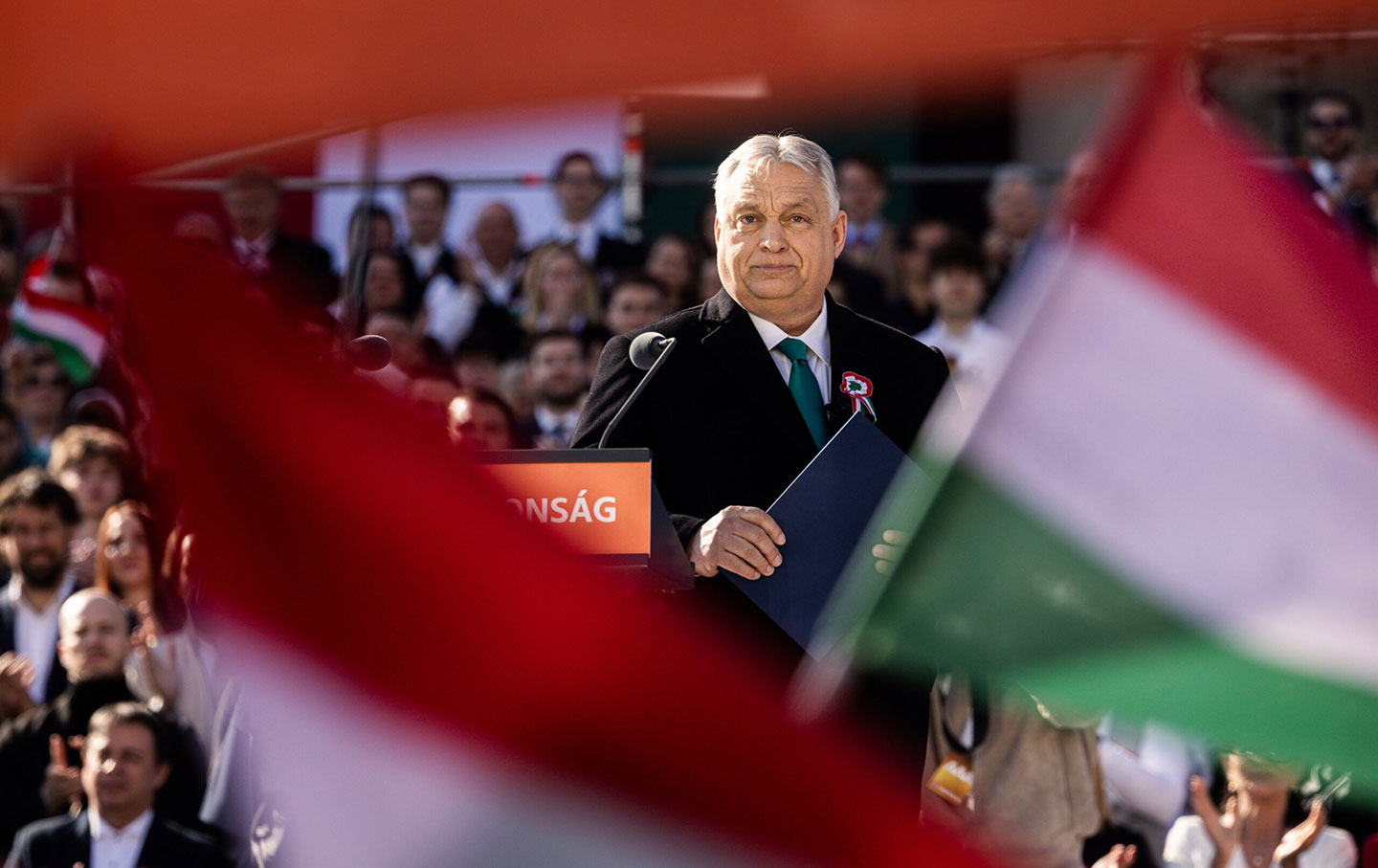
In Hungary’s Steel City, Layoffs Hurt Orbán’s Appeal In Hungary’s Steel City, Layoffs Hurt Orbán’s Appeal
Why didn’t Orbán’s government, once a critic of what it called a “bad privatization,” save jobs?
The Ceasefire Just Showed the World That US Military Power Is Obsolete The Ceasefire Just Showed the World That US Military Power Is Obsolete
With the illusion shattered, now is the chance for the US to liberate itself from a broken imperial model.
How the Saudis Keep Sidestepping a Costly Role in the Iran War How the Saudis Keep Sidestepping a Costly Role in the Iran War
The brutal Gulf monarchy has been cheerleading Trump’s insane war off-stage but won’t commit to any direct role in the conflict

