
A New Report Exposes How Major American Corporations Have Been All Too Eager to Aid Israeli’s Atrocities in Gaza
It also reveals our nation’s now undeniable complicity in what has been described as the worst humanitarian crisis of the 21st century.

Thousands of famished people waiting for hours in 90-degree heat to secure bags of flour that run out after 10 minutes—this is a typical scene at the four aid distribution centers remaining in Gaza. The cause of this desperation isn’t shortages per se, because the World Food Programme has 116,000 metric tons of food waiting to be delivered to malnourished Palestinians.
Instead, the problem is Israel’s monthslong blockade of aid, which over 100 humanitarian organizations have stated is causing “chaos, starvation, and death.” And though Israeli authorities began allowing a trickle of convoys to resume deliveries over the weekend, the face-saving gesture is too little for the one in three Gazans who hasn’t eaten in days, and too late for the dozens who have already starved to death.
Amid this manufactured famine, however, Israel has permitted another kind of shipment to flow freely. Weapons imports have continued unabated, with thousands of pounds of bombs, guns, and ammunition pouring into the Israeli Defense Force. A new report by Francesca Albanese, the United Nations special rapporteur on the occupied Palestinian territories, has uncovered the major supplier of this fatal equipment: the United States.
Titled “From Economy of Occupation to Economy of Genocide,” the exposé lays bare how major American corporations have been all too eager to facilitate Israel’s atrocities in Gaza in exchange for billions of dollars in revenue. It also reveals our nation’s now undeniable complicity in what has been described as the worst humanitarian crisis of the 21st century.
War profiteering is a phenomenon as ancient as war itself, but Albanese’s investigation shows that the military-industrial-technological complex is reaping uniquely horrible payoffs in Palestine. Albanese describes how Lockheed Martin has built fighter jets for Israel that have carried out bombings that have killed or wounded almost 200,000 Palestinians. She details how Palantir inked a deal with the Israeli military to provide AI-generated target lists, then consummated that partnership by holding a sycophantic board meeting in Tel Aviv. And she brings to light how Caterpillar Inc. has provided equipment to demolish homes and hospitals, crushing to death civilians stuck inside those structures.
Perhaps the most hypocritical offenders are the members of the Magnificent Seven. Google’s unofficial motto was once “Don’t be evil,” but now the company has joined Amazon to provide cloud computing services to the IDF for a persuasive $1.2 billion. Albanese quotes an Israeli colonel who calls this technology “a weapon in every sense of the word,” a cloud as deadly as any poison gas.
The Trump administration has responded to Albanese’s research with its classic combination of denial and retribution. Secretary of State Marco Rubio has sanctioned her, calling her work “political and economic warfare.”
But Albanese’s conclusions align with those of several prominent Jewish and Israeli figures. Former IDF soldier and leading genocide historian Omer Bartov defended Albanese by writing, “I have been teaching classes on genocide for a quarter of a century. I can recognize one when I see one.” On Monday, two major Israeli human rights groups announced that they agree with that description. Journalist Peter Beinart, editor at large of Jewish Currents, has called Israel an apartheid state, and recently condemned the crisis in Gaza as “an astonishing level of death and suffering that has been normalized.” A simple scan of the Israeli newspaper Haaretz turns up recent headlines like “The Mathematics of Starvation” and “Israel’s Destruction of Gaza.”
In the US Capitol, progressive lawmakers such as Representative Rashida Tlaib and Senator Bernie Sanders have repeatedly called for ending the transfer of US arms to Israel. A handful of other Democrats have also introduced the Block the Bombs Act, which would prohibit the sale of certain weapons without congressional approval, including those made by American companies like Boeing and General Dynamics.
While the bill has gained little traction, outrage over Gaza has become a bipartisan consensus among voters. Only 23 percent of Americans deem Israel’s military actions to be justified. But with activists like Mahmoud Khalil facing deportation over their pro-Palestinian advocacy, and with other protests worldwide being met with brutal and even deadly repression, crystallizing sentiment into a social movement seems an increasingly daunting task.
Amid so much pushback, though, grassroots organizing against weapons exports to Israel still represents a concrete if challenging opportunity for change. Students in Israel, the United States, and across the globe have already been providing a moral witness on this front, despite the threat of retaliation, expulsion, and blacklisting. Now, a broader coalition will be necessary to convince lawmakers that they should fear constituent backlash more than a primary challenge bankrolled by AIPAC.
Beyond pouring into the streets, Americans can also boycott the corporations living large while the population of Palestine dwindles. The employees of those very companies can do the same, like the 50 now-terminated workers at Google who led “No Tech for Apartheid” protests last year. Otherwise, the warning recently issued by Peter Beinart will remain true: “Blood is on our hands as Americans because it is our weapons that are responsible for those children starving to death.”
In the meantime, the thirsty toddlers of Khan Younis will continue to wait for some drops of salt water to drink, and the emaciated doctors of Gaza City will continue to scrounge for a few cans of expired food to eat.
More from The Nation
Garbage In, Carnage Out Garbage In, Carnage Out
The harrowing lessons of the Pentagon’s recently dissolved partnership with Anthropic.
The Iran War Could Be Catastrophic for the US-Israel Alliance. Good. The Iran War Could Be Catastrophic for the US-Israel Alliance. Good.
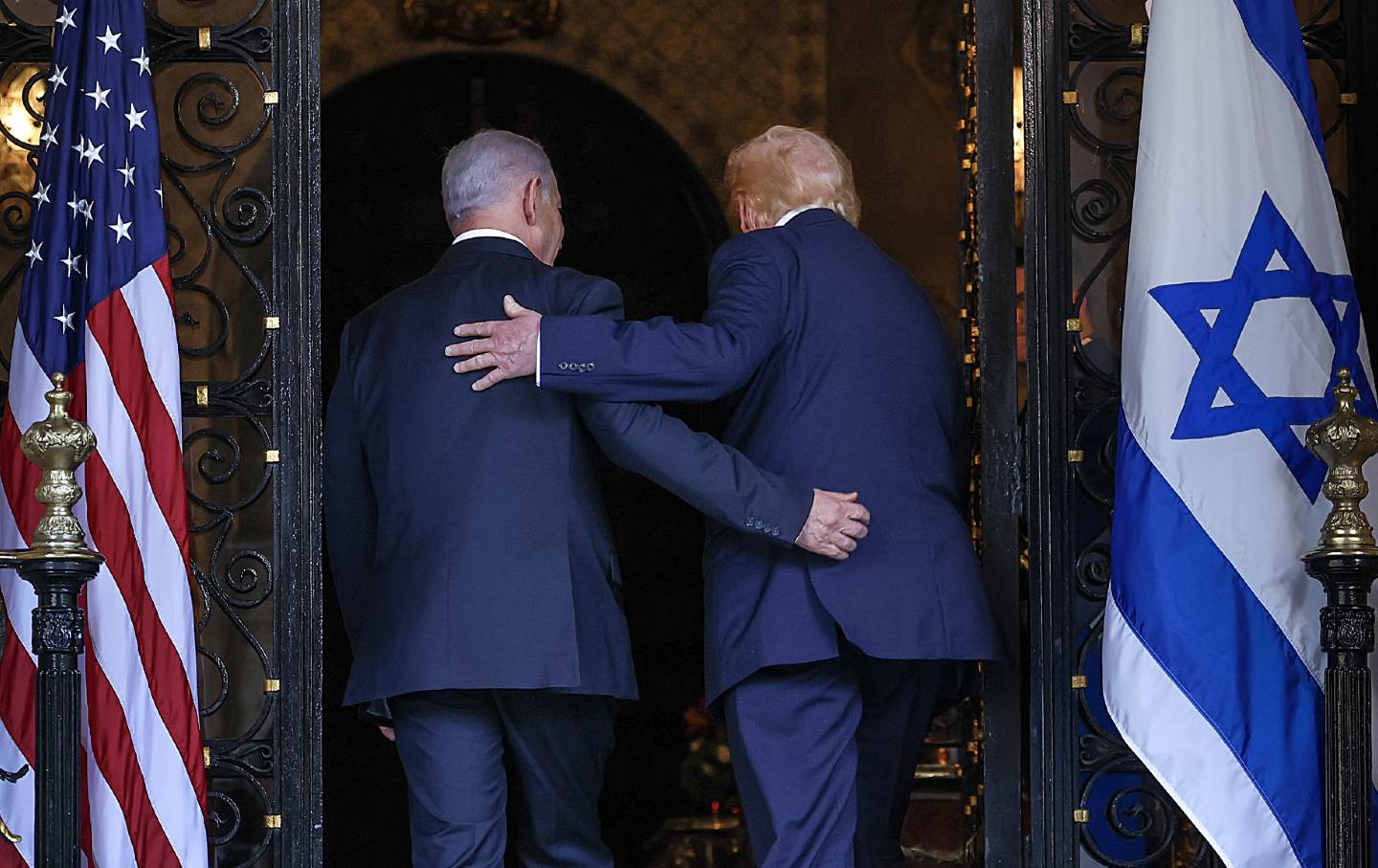
As Israel’s role in pushing the war with Iran comes into ever sharper focus, it’s up to us to turn outrage into change.

An Unlawful War An Unlawful War
The precedent being set by the US in launching this war of aggression against Iran will long live in infamy.
Trump and Netanyahu Want to Turn Iran Into a Failed State Trump and Netanyahu Want to Turn Iran Into a Failed State
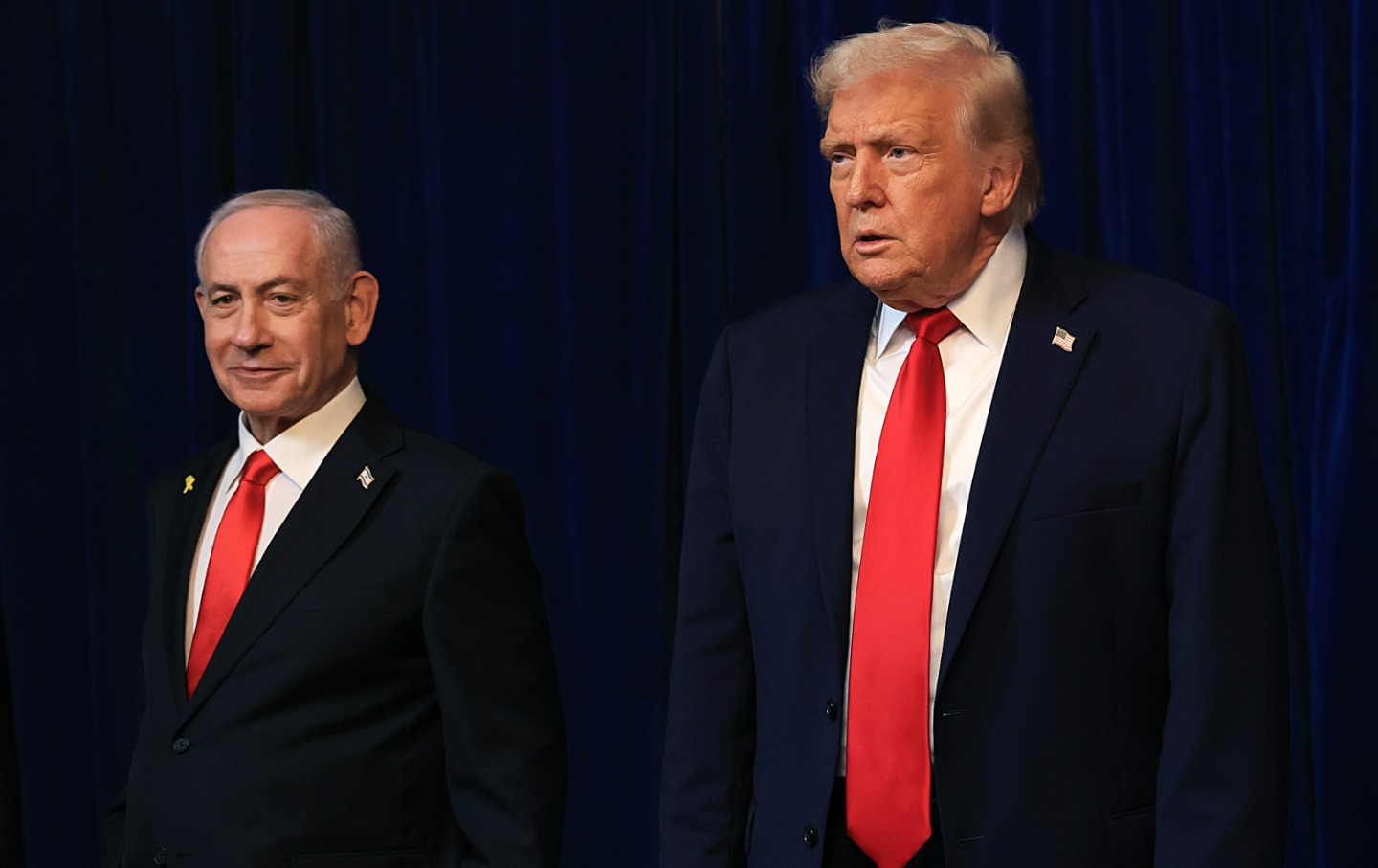
This war looks designed to cause maximum chaos and instability. The world will pay a high price.

The War on Terror Paved the Way for Trump’s Rise—Now He’s Making It His Own The War on Terror Paved the Way for Trump’s Rise—Now He’s Making It His Own
Only the total abolition of the DHS can restore freedom.

The Iranian Voices America Isn’t Hearing The Iranian Voices America Isn’t Hearing
We need to listen to those who oppose both the Islamic Republic’s authoritarianism and foreign military escalation.

