
When Will Cancer Stop Being “Our Fault”?
By placing the burden of maintaining one’s health on individuals, we obscure the broader environmental, political, genetic, and social forces that affect our well-being.
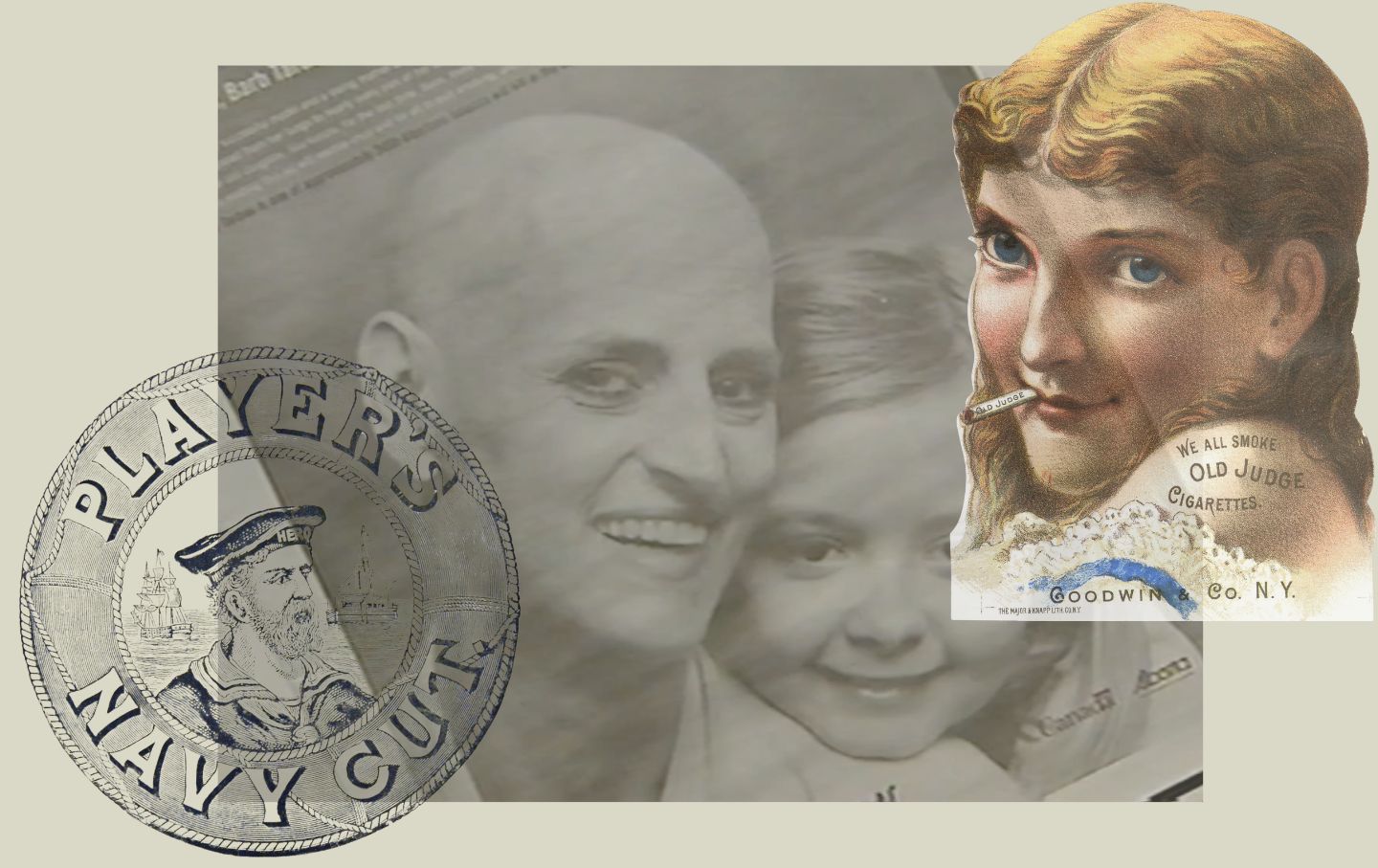
Barb Tarbox.
(Alana Pockros)My father stopped seeing doctors after his mother died from breast cancer. No yearly physicals. No checkups. No emergency-room visits. It was as though avoiding them could shield him from a similar fate.
By the time he was dying of lung cancer, he had more than made up for lost time. The man who never had a blood test now had a team of specialists, regular scans, weekly chemo and radiation treatments. His diagnosis changed everything for him. In turn, he tried to renegotiate its terms: He took vitamins, asked doctors questions, and stopped drinking. The most jarring change was when he quit smoking. It was strange to see him without a pack of Player’s Navy Cut in hand. If he didn’t already have a cigarette lit, then the pack was never far away, either in his pocket, in the car, or on the dinner table.
I remember the warning labels on every pack, some variation of “smoking kills.” They were unique in that they never cut off the branding or interfered with the packaging itself. It was as though the messaging was there to be seen but not absorbed, which of course was the case. Legally, tobacco companies had to disclose the long-term health risks of their products. But they also needed people to buy them, for their own financial gain. Ironically, Canada’s government needs those profits to nearly break even: While tobacco is the leading cause of preventable death and disease in Canada, costing the healthcare system $6 billion per year, it also brings in an additional $5.8 billion in federal revenue, thanks to tobacco taxes.
Eventually, as the public attitudes toward smoking and regulations started to change in Canada and the United States, the warnings shifted in tone, turning more graphic. By the early 2000s, they included images depicting cigarettes’ toll on the body: tarred lungs, smoke escaping from tracheotomy holes, rotting teeth, and a corpse with a sewn-up chest. One in particular always caught my eye. It was of a woman named Barb Tarbox on her deathbed. The caption read: “This is what dying of lung cancer looks like.”
The story of Barb Tarbox starts as soon as it ends. When the former model was diagnosed with terminal lung cancer in 2002, she wanted everyone to know what it did to her. “People have to see what happens,” she told the photographer Greg Southam when they first met that year. “It’s eating everything inside me.” And so, for the last few months of her life, Tarbox planned her funeral and visited schools across Canada to show students what smoking and cancer did to the body. She cradled a cigarette in one hand and ripped off her hat with the other. As she exposed her bare head to 500 teens, she implored them to look at her. Her speeches were compelling because she embodied her own moral failing: dying by her own hand but unable to tear it away from what was killing her.
After the veins in her legs turned black and tumors had overridden her brain, Tarbox could no longer lament the deadly disease growing inside her. It was then that she tasked Southam with capturing her final days. One of the last pictures he took of her was on her deathbed, and for nearly a decade that was the photo distributed in the US and Canada on cigarette packages like my father’s.
If awareness relied solely on reach, then those graphic images of Tarbox might have been enough to dissuade prospective smokers from buying a pack. But Tarbox living on in the cultural imagination as a warning label has been about as effective as it is legally binding. Awareness and stringent marketing regulations could never compete with the billions of dollars that tobacco companies invest in advertising and loopholes every year, including flavored tobacco products that mask its taste in order to appeal to younger consumers. The cigarette warning becomes useful then as an ideological smokescreen. There is an implication that illness is tied to an individual’s choices rather than to the manufacturers of hazardous and addictive products, their advertisers, or the governing bodies that still allow them to be sold.
Tarbox displayed her body as a public-health warning, but the current use of her likeness is incongruous considering her earliest intentions. Her disintegrating body never discourages smoking but rather warns you that the product is linked to death. Once that risk is disclosed, the responsibility to avoid it is yours.
Cancer is an illness often mythologized as a great equalizer, one that doesn’t discriminate between rich and poor, young and old, healthy and ill. That narrative keeps us in a particular bind where the fortunes of our health are dealt by an invisible hand and yet, in some cases, firmly within our grasp. That tension ultimately structures awareness campaigns: We are told that while anyone can get sick, illness can still be prevented, or caught early, if we remain vigilant and book an appointment. This culture of bodily surveillance promises peace of mind. But while preventive care is undeniably important, an overly individualistic approach is detrimental. By placing the burden of maintaining one’s health on individuals, we obscure the broader environmental, political, genetic, and social forces that affect our well-being, while also turning illness into a moral failing. If we’re taught that our vigilance, discipline, and lifestyle choices dictate our overall health, then a diagnosis becomes an indictment, allowing us to blame individuals for conditions that are, in fact, swayed by forces beyond their control.
Advocates and writers have tried for ages to raise public awareness about the environmental causes of disease. One of the earliest people to do this was Rachel Carson, who, in publishing Silent Spring in 1962, exposed the world to the toxic and carcinogenic effects of DDT, an insecticide that was widely used in the United States and worldwide on food crops like tomatoes, beans, and corn. A former marine biologist with the US Fish and Wildlife Service, Carson homed in on the resilience of ecosystems and the ways that environmental and human health are interconnected. DDT, she observed, could silence this natural harmony and wipe out species and humans by entering the food chain. Deposits stored in fatty tissue could, over time, lead to genetic damage and eventually cancer. The book prompted a national controversy, and the chemical industry spent $2.5 million trying to discredit Carson’s work. Eventually, Silent Spring would lead to the banning of DDT and all of the other pesticides named in her report, along with the creation of the US Environmental Protection Agency.
In 1960, just two years before she kicked the hornet’s nest of environmental ethics, Carson suddenly got too sick to get out of bed. As Sandra Steingraber recounted in an essay in Orion called “The Fracking of Rachel Carson,” after she underwent a radical mastectomy, Carson concluded that her doctor had been negligently withholding her biopsy results. By the time she sought out a new surgeon, the breast cancer had already spread. Carson never publicly disclosed the diagnosis, fearing, as Jill Lepore explained in The New Yorker in 2018, that the chemical companies would “dismiss her work as having been motivated by her illness.” When Carson testified on the long-term effects of DDT before Congress in 1963, the cancer had begun migrating to her pelvic bones. She died a year later.
While cancer is deemed a great equalizer, survival doesn’t favor the bold; it favors the wealthy. As the investigative reporter Alex Kotch pointed out in a Guardian article titled “Death and Destruction: This Is David Koch’s Sad Legacy,” the “billionaire industrialist” not only bought the best care possible after he was diagnosed with advanced prostate cancer but managed to survive 27 years as a result. The irony, of course, is that Koch Industries is a major producer of carcinogens and toxic pollutants. According to Kotch’s reporting, “The dangerous methane leakage, carbon emissions, chemical spills and other environmental injustices enacted by Koch’s companies have imperiled the planet and allegedly brought cancer to many people.” David Koch was also a major fundraiser for cancer research and therapies, his own medical experience apparently having no impact on his business and environmental practices. Cancer is, after all, a thriving, multibillion-dollar industry that’s increasingly profitable without ever engineering a cure.
After his sister was diagnosed with breast cancer in 2017, my father asked if I would ever consider genetic testing for the BRCA gene. At that point, I was already in remission for thyroid cancer and had already had a biopsy after a different cancer scare. I had never smoked, but the cancer, according to my oncologist, was not linked to lifestyle choices or genetics but likely something environmental. So what was the point of genetic testing? All I could see it doing was prognosticating, and after being in remission I didn’t want to take on any other label.
The word “cancer” will do a lot of talking for you. No matter the prognosis, people will ultimately relate to a cancer patient as if they’re data or dying. And although your humanity will have been stripped by the word, the conversations that follow, whether solicited or not, rarely restore it. The language it inspires is often prescriptive (depending on the person’s views on health and disability), gendered (depending on the location of the cancer), fatalistic (depending on the stage and grade of the cancer), racist (depending on who is believed in medical settings and other racial disparities in medicine), or aphoristic (depending on the person’s predilection for war metaphors). Surviving cancer doesn’t exempt anyone from this treatment, because their story is instantly canonized: It reinforces the neat, feel-good cancer narratives that seemingly end well. To that end, those stories burden patients with more expectations: In addition to surviving and paying for it, they’ll have to impart wisdom or search for meaning.
I told people that I had cancer only when my hand was forced—when the treatment interfered with classes, a relationship, or my memory. I opened up whenever I had to explain myself. Like most instincts tending toward prevarication, I wanted to control the story and how I was perceived. Diagnosis had abstracted me into a patient, and I saw my body only through the eyes of those treating me, as something dysfunctional that needed to be corrected.
Being sick forces you into the role of patient, and that comes with a script. You are meant to be observed, prodded, even pitied, but never really heard. You rarely reclaim agency over your body because it is constantly surveilled. Genetic testing felt like an extension of that, only worse: It could tell me I was prone to developing cancer again, but it couldn’t tell me when, or how, or what the outcome would be. In her 1978 book Illness as a Metaphor, Susan Sontag argued that “everyone who is born holds dual citizenship, in the kingdom of the well and in the kingdom of the sick.” What kind of citizenship falls between the two, in a limbo with a doomsday clock and no end in sight?
Eventually, my time came. Nearly 15 years after my first cancer diagnosis, I was diagnosed with a rare and aggressive form of appendix cancer. While I was recovering from back-to-back surgeries, one of the surgeons mentioned genetic testing, because both of my cancers, though unrelated, were rare and occurred only in older populations. Here, personal responsibility enters the narrative again. What was implied, through that advice, was that no matter what lifestyle decisions I made—what I ate, whether I smoked, exercised, or whatever—something within me couldn’t adapt to my environment, couldn’t correct whatever small mutations would accumulate into a malignant tumor. It was out of my control, something I couldn’t change. But I could get ahead of a surprise by getting preventive screening.
Before Rachel Carson died of breast cancer in 1964, she noted, in a CBS documentary on the making of Silent Spring, that “man’s attitude toward nature is today critically important simply because we have now acquired a fateful power to alter and destroy nature. But man is a part of nature, and his war against nature is inevitably a war against himself.” Capitalism has trapped us in a paradox, in that we’ve created an environment we’re no longer welcome in. We temper that cognitive dissonance by perpetuating devastating myths about diseases and their cures.
What we need to understand is that, on some level, cancer reflects the world we’ve created: It’s an industrial disease shaped by many forces outside our control. It’s made of us, but it also mimics how we wreak havoc on our surroundings for profit and progress. It’s a disease of unmitigated and unsustainable growth that goes unregulated and depletes the resources of the body until it cuts someone’s future short.
This body was mapped out by anatomists for collective empiricism; it is something medicine wants to conquer. But cancer challenges that oath, defying what it means to heal someone, what it means to be sick. To understand the history of illness is to realize that we’ve inherited and created a world that is no longer hospitable to us.
I did eventually follow through with genetic testing, despite my hesitance to give respect to the idea that I should be trying to control my own health. I wanted to see if there was some missing link. After I’d made a few calls to various genetic counselors, my blood was tested for every known cancer gene at the time. The results were simple: I didn’t test positive for anything. In fact, I was no more likely to develop cancer than the rest of the population. One of the counselors had explained that perhaps something in my body couldn’t correct the mutations that I could develop. And that did give me some peace of mind. It was a better way of understanding my situation, in one of two ways: Maybe it was a biological stutter in a string of my DNA, or maybe my body refused to adapt to a world that’s trying to kill us anyway.
Popular
“swipe left below to view more authors”Swipe →But there was no simple answer waiting for me. There was no gene to isolate and name, no clear answer to hold on to. I’m left with the same ambiguity that had followed my father to his diagnosis, and Barb Tarbox to her deathbed. There is, however, an implicit understanding, thanks in part to Carson’s research and advocacy: that whatever was happening inside the body could not be separated from everything outside of it. The cigarettes my father and Barb smoked, the environments we lived in and moved through, the systems that dictated what was available, affordable, and normal—none of it could be reduced to a simple choice.
And yet it is still how illness will be framed and explained to us. Even as tobacco is phased out through generational bans in the United Kingdom, and potentially in Canada, the burden of risk continues to be repackaged to us. The MAHA movement is rebranding nicotine products like Zyn as “focus aids” and their dangers as “manageable.” The language and products may change, but accountability still ends with the user. Risks will be disclosed and all responsibility transferred to the individual. What is ultimately excised isn’t just the fine print but the long list of industries that engineer dependence and harm, the policies that enable them, and the masses who foot the bill.
If cancer mirrors the world we’ve created, right down to its excesses, inequities, and tolerance for harm, then no amount of individual blame will ever outmaneuver it. We can ban a product, rebrand a dangerous chemical, and print more warning labels, but if we refuse to confront the conditions that make illness so pervasive, we’ll simply repeat the same pattern: reframe the danger, redistribute the blame, and call it progress.
More from The Nation
“I Had to Get My Mind Right”: The Challenges to Loving Relationships After Being Laid Off by DOGE “I Had to Get My Mind Right”: The Challenges to Loving Relationships After Being Laid Off by DOGE
After the federal firings, Black women felt betrayed and disillusioned. One longtime federal worker learned from experience the importance of community.
The Violent, Militaristic Ideology that Undergirds Fraternities The Violent, Militaristic Ideology that Undergirds Fraternities
The first major hazing scandal in American history occurred at West Point in 1900. There are eerie parallels to what happened at Cornell’s Chi Phi.
Northeastern’s Lack of Transparency Undermines Student Journalists Northeastern’s Lack of Transparency Undermines Student Journalists
The lack of access to university administration makes it hard for student reporters to report fully on campus affairs.
Seeing My Mother in Prison: A Conversation With Author Harriet Clark Seeing My Mother in Prison: A Conversation With Author Harriet Clark
An interview with the author of The Hill about her debut novel and the artist’s role in documenting atrocities.
Recovering From a “Gut Punch”: Black Women Fired by Trump and Musk Work to Overcome Shame and Self-Blame Recovering From a “Gut Punch”: Black Women Fired by Trump and Musk Work to Overcome Shame and Self-Blame
Black women working for the federal government did what they were supposed to do. Yet their achievements could not protect them from the political winds.
How the Skydance Merger Will Remake Hollywood and the News Business How the Skydance Merger Will Remake Hollywood and the News Business
The Ellison family’s $110 billion deal to acquire Warner Bros. Discovery means more top-down control, and less room for dissent.

