
As Universities Fold to Trump, This Union Is Still Fighting for International Students
While the University of California has often followed Trump’s demands, union organizers have made protecting immigrants a top priority during contract negotiations.
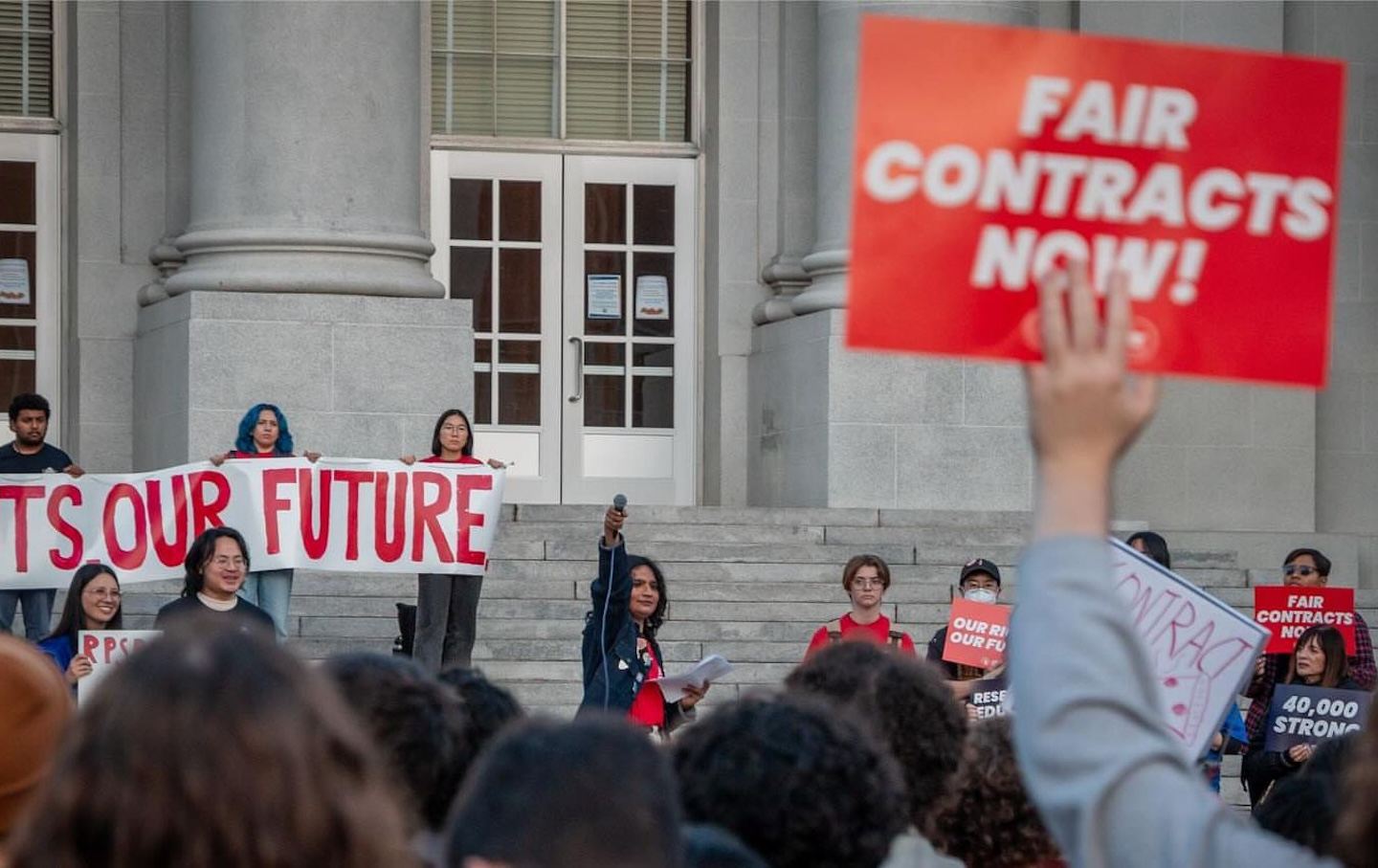
University of California workers rallying at UC Berkeley in November 2025.
(UAW 4811)During its current contract bargaining process, the United Auto Workers Local 4811—the union that University of California academic student employees are eligible to join—has made protecting immigrants a top organizing priority. It’s no wonder: As the Trump administration seeks to terminate student and work visas, international students represent around 40 percent of people in graduate programs across the UC system.
When members of the UAW 4811 bargaining team met with university officials last August, the counterproposal was amenable to some of the union’s terms, including agreements to not cooperate with or disclose worker information to federal immigration enforcement agencies, such as Immigration and Customs Enforcement; providing job security for employees whose visas have been terminated; and establishing a legal fund of $750,000 for individuals seeking to reinstate their work authorization.
For the union, protecting student activism and free speech has been essential. As UC Berkeley and UC San Diego fold under pressure from the federal government to target—and in some cases, prosecute—students involved in pro-Palestinian action, unions have shouldered the task of including free speech protections for international student workers’ into contract language.
But while the union has reached tentative agreements with the UC on other issues, progress on international student protections have stalled. Representatives from the administration’s labor relations team did not respond to interview requests.
For the past few months, the University of California system had seemed poised to meaningfully support international and undocumented students, faculty, and staff. In January, the UC had reaffirmed its “Statement of Principles in Support of Undocumented Members of the UC Community,” originally issued during Trump’s first term. And ahead of the Bay Area immigration enforcement “surge” in late October, UC Berkeley Chancellor Rich Lyons sent an e-mail to the university community: “Our mission and legal obligation drive us to ensure that the university remains safe and accessible to all our community members regardless of immigration status.”
Recent legislative wins also suggested that the university would be receptive to the union’s immigration demands. On September 20, California Governor Gavin Newsom signed Senate Bill 98, requiring California State University and community college campuses to notify students and employees whenever ICE agents are present. Just days earlier, a federal judge in Massachusetts ruled that the Trump administration had unlawfully used the threat of deportation to silence noncitizen academics who spoke out in support of Palestinians, calling it a violation of the First Amendment and part of a broader strategy to suppress campus activism.
Despite these developments—which codify dissent against federal policy—the UC has often been quick to acquiesce to the Trump administration’s demands.
In September, UC Berkeley released 160 student and faculty names to the Department of Education as part of a federal investigation into antisemitism on university campuses, a move critics said was a ploy to silence pro-Palestinian advocates. The next month, UC San Diego followed suit. Neither campus administration informed anyone of their presence on the list ahead of time, nor was it required to release the names under subpoena or court order.
The name releases foreground another central tension of the bargaining process: the possibility that the UC could violate or maneuver around many of the noncompliance agreements. And the possibility is partly why UAW 4811 has campaigned for stronger job security and increased legal aid. “I think they’re pretty commonsense measures,” said Tanzil Chowdhury, the statewide chair for the academic student employees and a researcher in the materials science and engineering department at Berkeley.
Last April, several thousand international students and student workers had their legal status changed in the Student and Exchange Visitor Information System on the basis of minor offenses, sometimes without explanation. Later that month, the federal government reversed the decision, after multiple judges issued temporary orders to restore the legal statuses of students.
“The chief negotiator argued that some students [facing legal fees] could be felons,” said a member of the UAW 4811 bargaining team when asked why the university continues to oppose setting aside funds for international students’ legal defense. “So this very improbable scenario became one of his arguments for not accepting this in the contract.”
Beyond the union’s material demands, such as the creation of a legal defense fund for international students facing deportation, it is putting a broader, ideological pressure on the UC to, as Chowdhury puts it, “pick a side.” He maintained that “there is precedent” for fighting back against executive overreach. “During the first Trump administration, the university took quite a few bold stances,” said Chowdhury.
But defining what counts as “protected speech” when universities face political scrutiny and threats of funding cuts has become a point of contention, which the union’s leaders acknowledge. “What we recommend right now to international workers is to be very, very careful, at least,” said a member of the bargaining team. “That’s what I do, especially because I’m a single father here with my daughter. We don’t have any family here in the States.” The union, he added, doesn’t officially encourage international members to take political action outside of the context of organized labor activity, where collective action offers a crucial layer of safety.
Representing 48,000 workers, UAW 4811 has a track record of winning tough battles against the UC. In 2022, after a six-week strike, the union secured a 46 percent raise in minimum pay for academic student employees. With their contract set to expire at the end of the year, the union is similarly focused on bolstering “mass worker action,” said Udayan Tandon, the unit chair for UC San Diego. “We as workers have to continue escalating and continue pushing the university to get them to seriously engage with these demands.”
On October 22, members at all eight campuses delivered a 20-foot scroll to administrators, containing over 13,000 member signatures on a petition for the UC to accept the union’s proposed international student protections. Administrators at all locations declined to speak with UAW 4811 representatives. The same week, the union announced its plan to rally at all campuses in late November. “We’re able to set an example for higher education on how universities should respond in the current moment,” Tandon said. “There’s broad recognition that this current campaign, with these international worker protections at the table, are really, really important.”
For the union, the university’s collusion and complacency in the face of federal efforts to limit international students’ rights is part of higher education’s broader conservative trajectory—not unlike the financialization of universities in the 1980s or the free speech panic incited by Turning Point USA and conservative debate culture in the 2010s.
The union’s criticisms question whether the university’s capitulation to the Trump administration is politically advantageous for the institution, and if this advantage will matter once an institution is stripped of much of its capability and workforce. The research reputation of the UC has long been contingent on its ability to provide a secure work environment for international scholars. In 2025, for example, five UC researchers were recipients of a Nobel Prize, and two of them are immigrants.
“For the last several months, I’ve been terrified of having my immigration status mysteriously revoked, when I don’t know if I’ll be let back into the country next year,” said Rahoul Banerjee Ghosh, an academic student employee at UC Berkeley, during a speech at the November rally. Ghosh is choosing not to renew their contract when it expires in December, citing the fact that the renewal process would likely result in delays or cancellation. “That means I won’t be able to go to international conferences to learn and grow as a scientist, and I won’t be able to travel home to my family.”
On December 8, the UAW 4811 bargaining team will begin four consecutive days of contract negotiations in Berkeley. With less than a month until the contract expires, workers have made clear that they are prepared to authorize a strike. One way or another, as Chowdhury said in his rally speech, the university will “learn this lesson that their—and our—collective survival depends on.”
Popular
“swipe left below to view more authors”Swipe →Support independent journalism that does not fall in line
Even before February 28, the reasons for Donald Trump’s imploding approval rating were abundantly clear: untrammeled corruption and personal enrichment to the tune of billions of dollars during an affordability crisis, a foreign policy guided only by his own derelict sense of morality, and the deployment of a murderous campaign of occupation, detention, and deportation on American streets.
Now an undeclared, unauthorized, unpopular, and unconstitutional war of aggression against Iran has spread like wildfire through the region and into Europe. A new “forever war”—with an ever-increasing likelihood of American troops on the ground—may very well be upon us.
As we’ve seen over and over, this administration uses lies, misdirection, and attempts to flood the zone to justify its abuses of power at home and abroad. Just as Trump, Marco Rubio, and Pete Hegseth offer erratic and contradictory rationales for the attacks on Iran, the administration is also spreading the lie that the upcoming midterm elections are under threat from noncitizens on voter rolls. When these lies go unchecked, they become the basis for further authoritarian encroachment and war.
In these dark times, independent journalism is uniquely able to uncover the falsehoods that threaten our republic—and civilians around the world—and shine a bright light on the truth.
The Nation’s experienced team of writers, editors, and fact-checkers understands the scale of what we’re up against and the urgency with which we have to act. That’s why we’re publishing critical reporting and analysis of the war on Iran, ICE violence at home, new forms of voter suppression emerging in the courts, and much more.
But this journalism is possible only with your support.
This March, The Nation needs to raise $50,000 to ensure that we have the resources for reporting and analysis that sets the record straight and empowers people of conscience to organize. Will you donate today?
More from The Nation
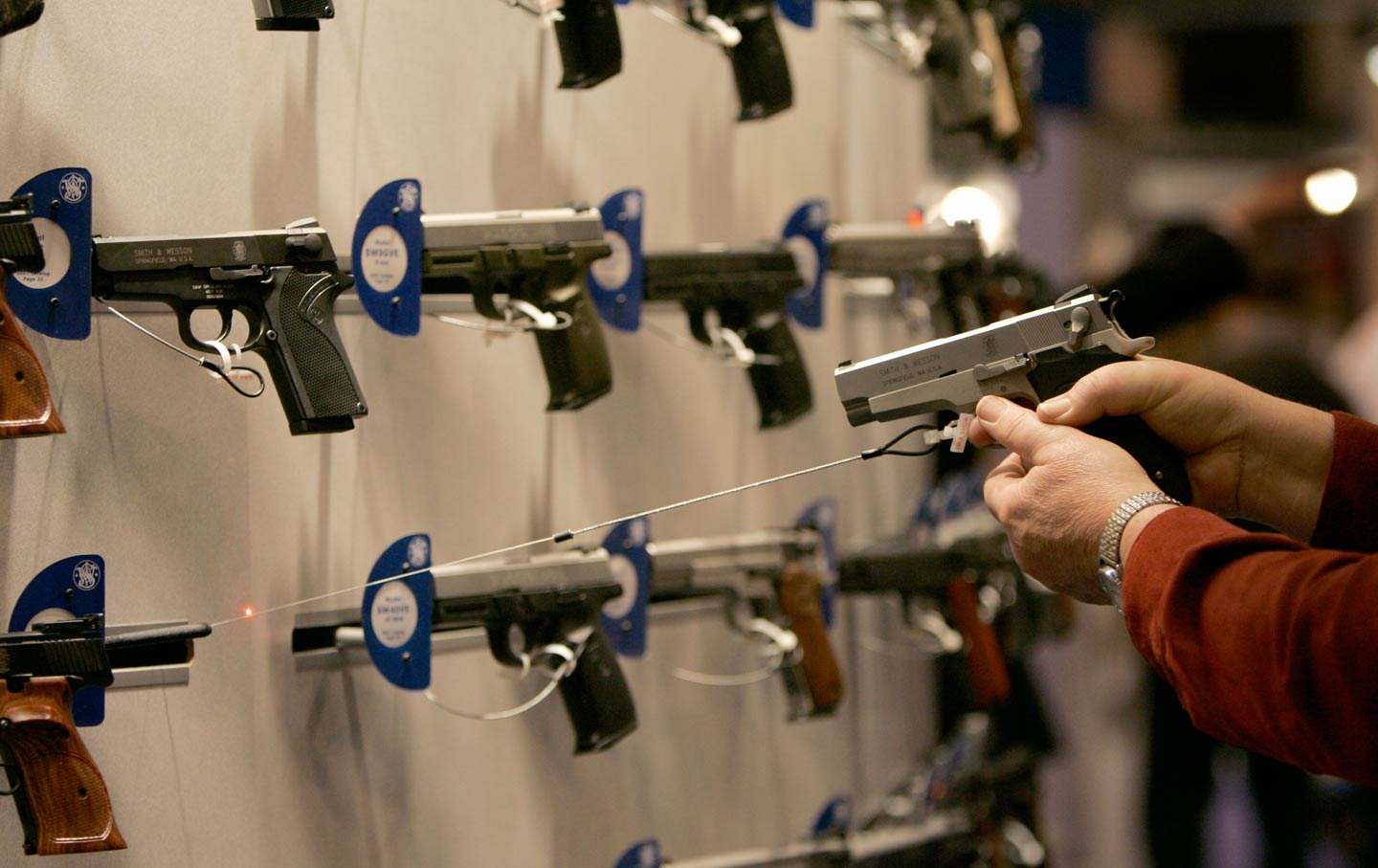
The Real Reason Americans Love Guns The Real Reason Americans Love Guns
With a weak social safety net, a gun offers a false sense of personal power and security.

The Endless Hypocrisy of Bari Weiss The Endless Hypocrisy of Bari Weiss
She claims to be a free speech champion. But as her actions at CBS News keep showing, she seems to think free speech should run only in a rightward direction.
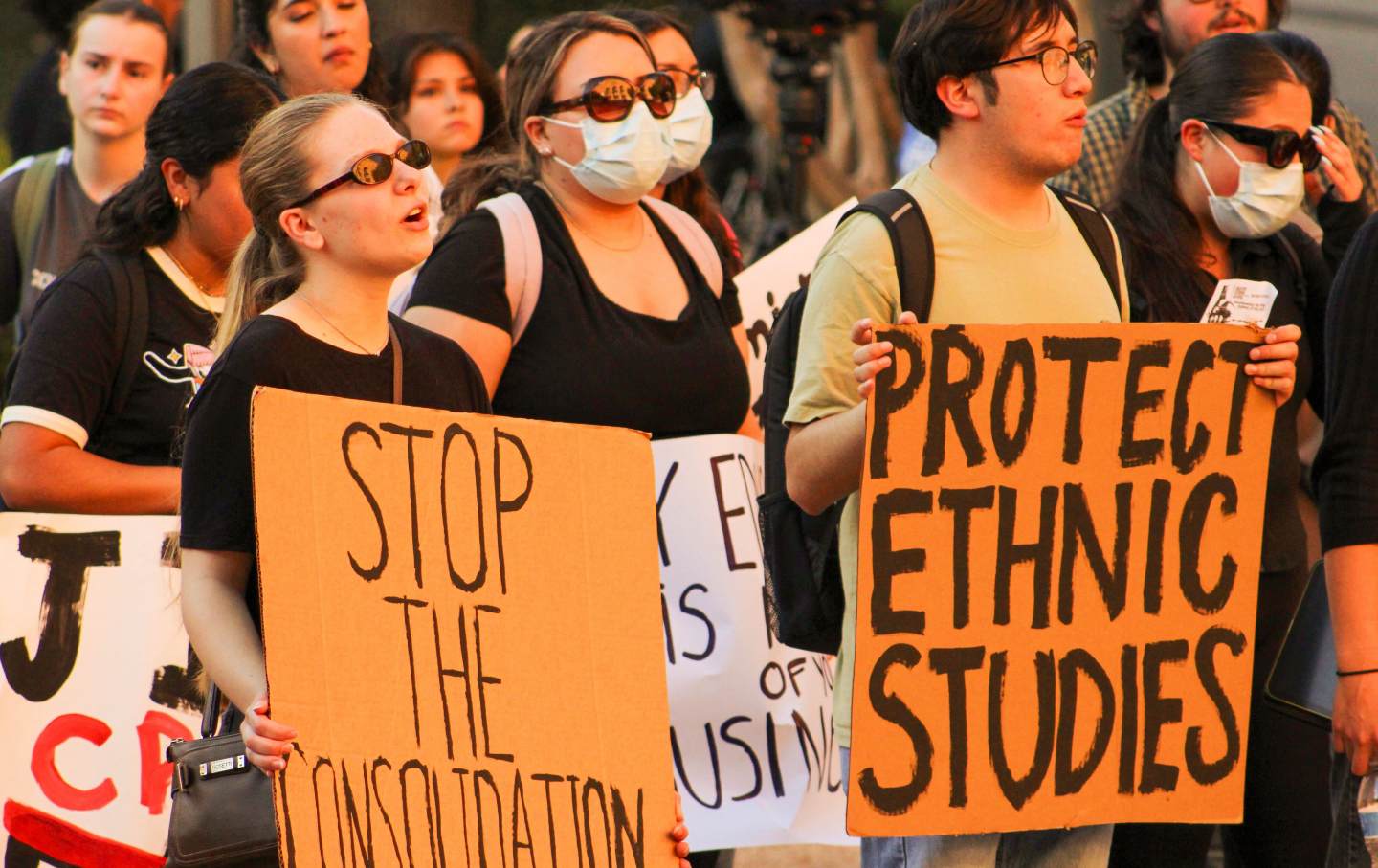
What Will Be Left After the University of Texas Destroys Itself? What Will Be Left After the University of Texas Destroys Itself?
UT-Austin has collapsed its race, ethnic, and gender studies into a single program while a new policy asks faculty to avoid “controversial” topics. But the attacks won’t end there...
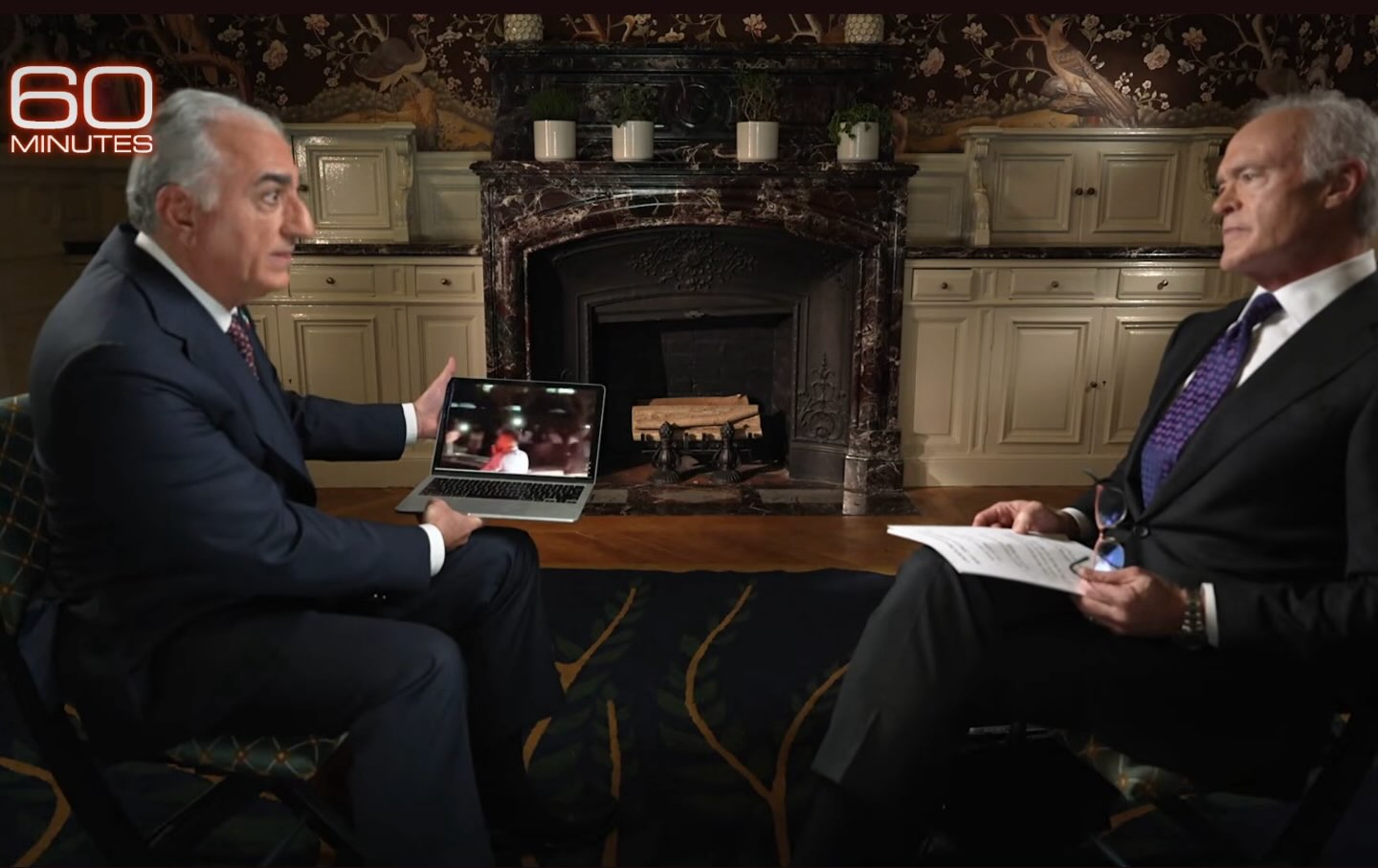
The Corporate Media Is Head Over Heels for the Iran War The Corporate Media Is Head Over Heels for the Iran War
Donald Trump’s attack may be surreal, unjustified, and illegal. But that’s not stopping the press from turning the propaganda dial way up.
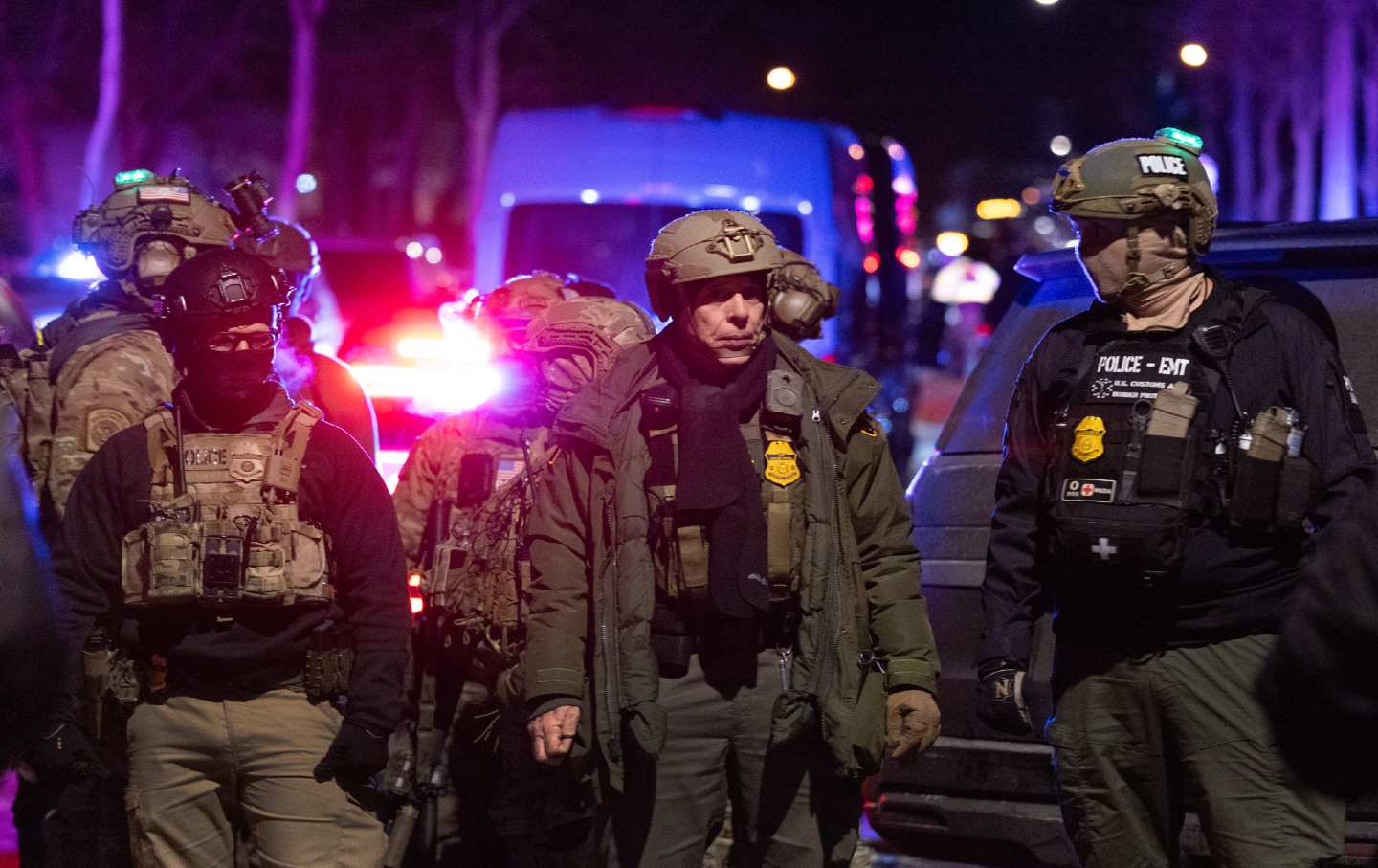
The Disturbing History of ICE’s “Death Cards” The Disturbing History of ICE’s “Death Cards”
The Vietnam-era practice is yet another example of ICE agents thrilling to the brutality they have been encouraged to cultivate.
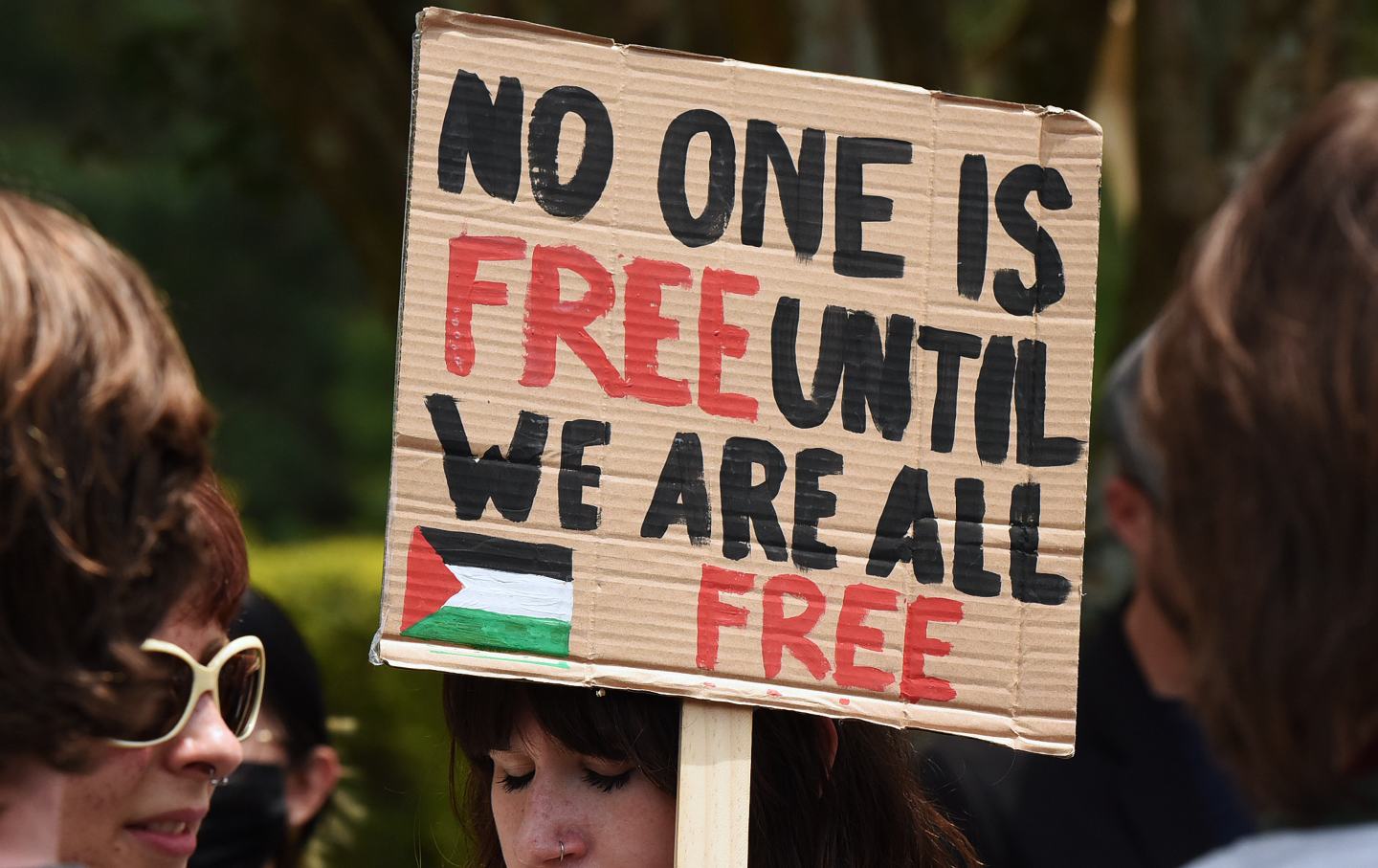
The American Universities Programming Israel’s Killer Drones The American Universities Programming Israel’s Killer Drones
Industry partnerships in higher education are pushing STEM graduates into the business of weapons manufacturing and genocide profiteering.

