Student Journalists Are Needed Now More Than Ever
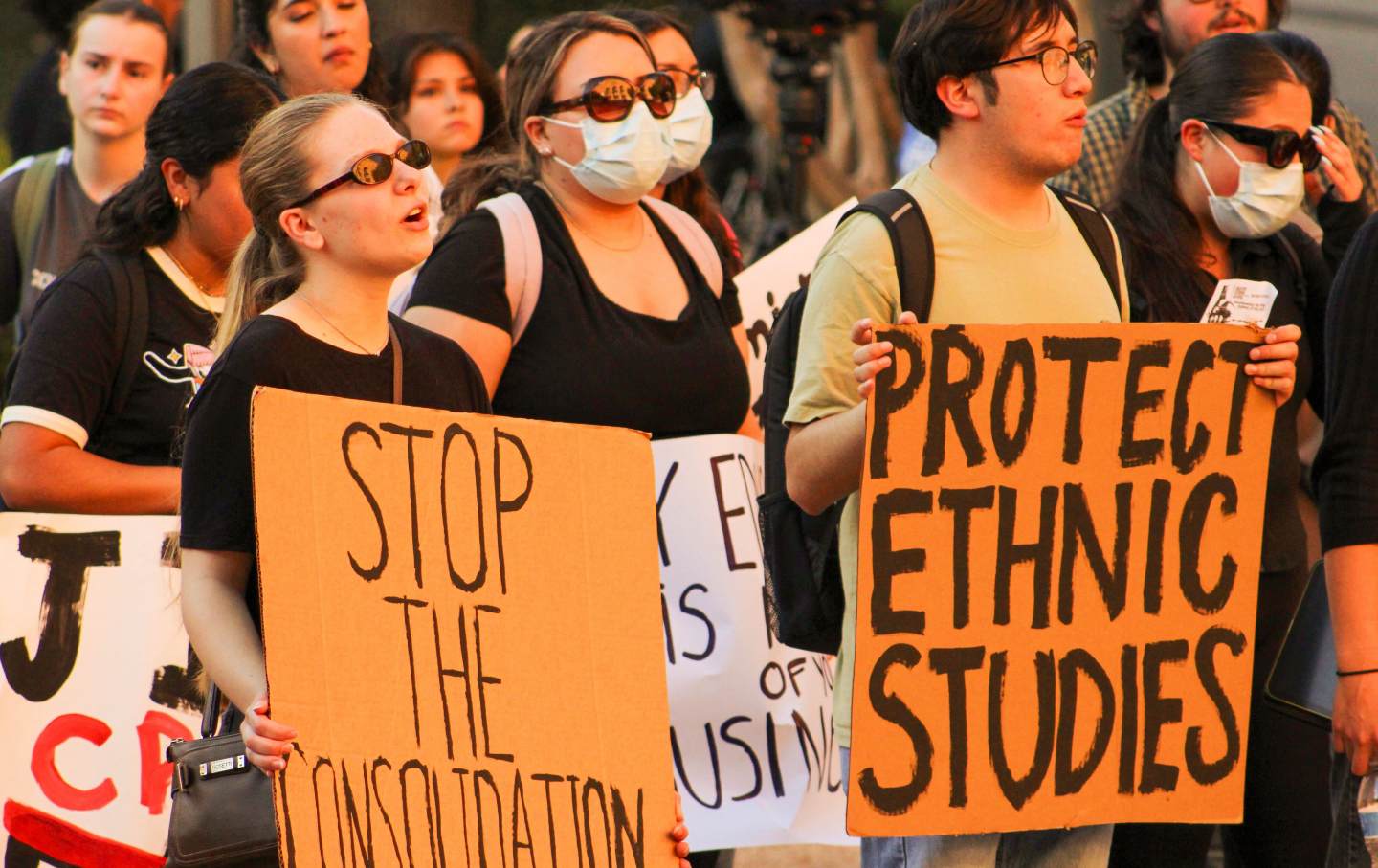
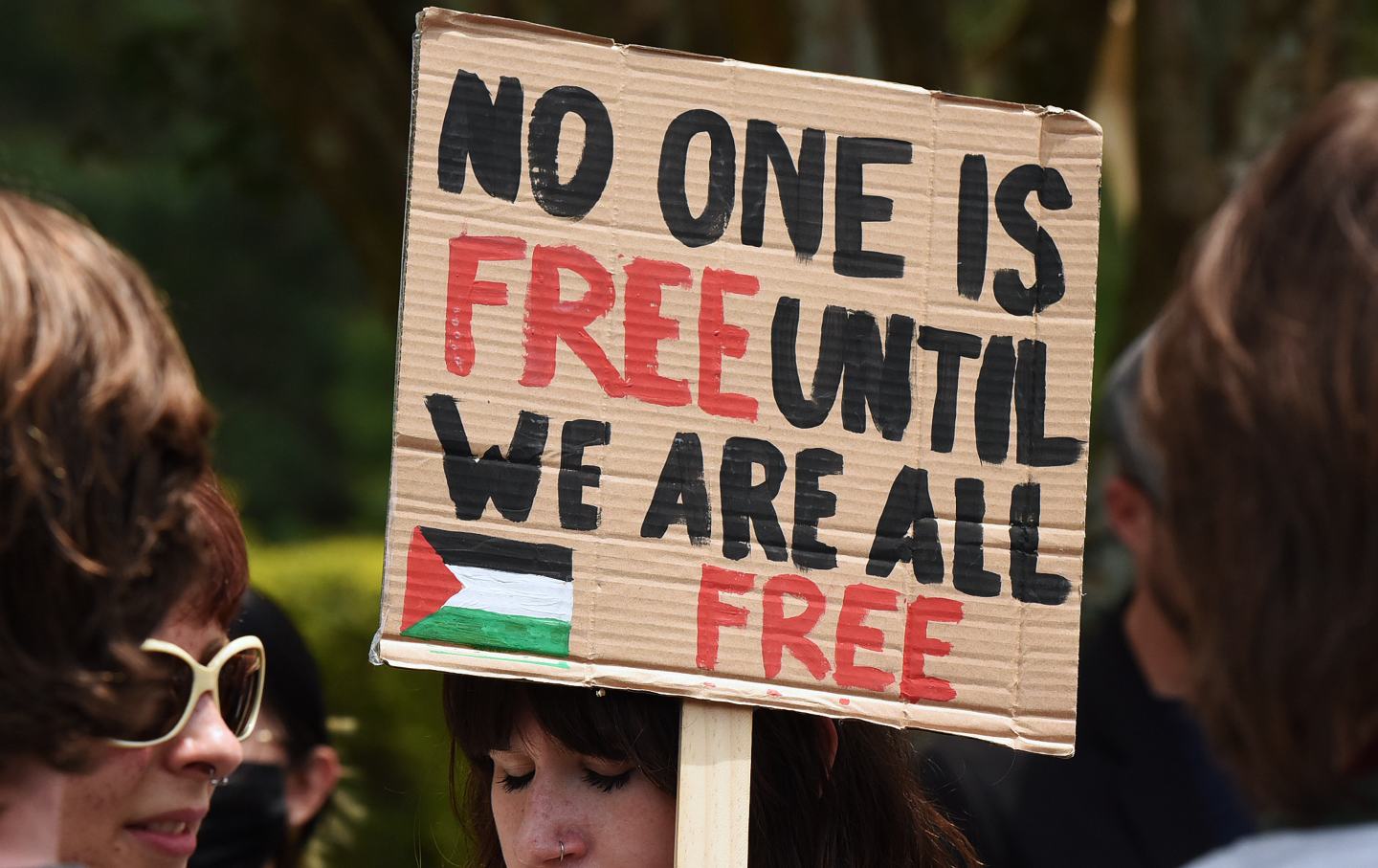
While the mainstream media repeatedly mischaracterizes pro-Palestine protests on campus, police and university administrations are attempting to repress the student press.
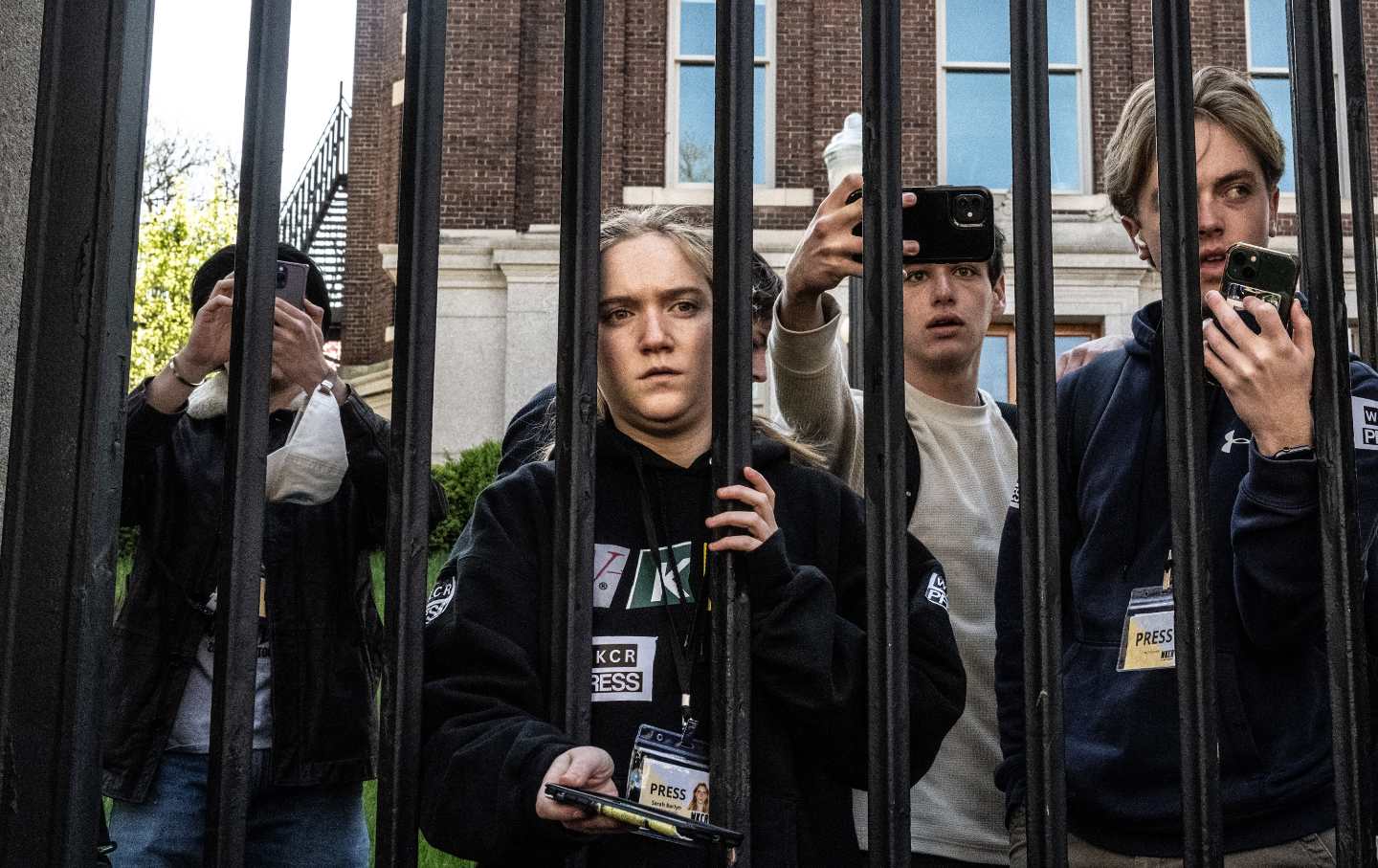
Student journalists report on a protest outside of Columbia University.
(Stephanie Keith / Getty)On May 3, we celebrated World Press Freedom Day, an international holiday dedicated to the importance of journalism and a free press. And, as of May 3, more than 140 journalists have been killed in Gaza since October 7—an average of five per week. In fact, in Gaza, more journalists have been killed in the first three months of the war than in all of World War II and the Vietnam War combined.
On May 5, the Israeli government raided and shut down Al Jazeera’s offices in Jerusalem. Meanwhile, in the United States—where the freedom of the press is enshrined in our Constitution’s First Amendment—law enforcement and university administrations have routinely disregarded the rights of student journalists who have been working tirelessly to cover the ongoing pro-Palestine campus protests.
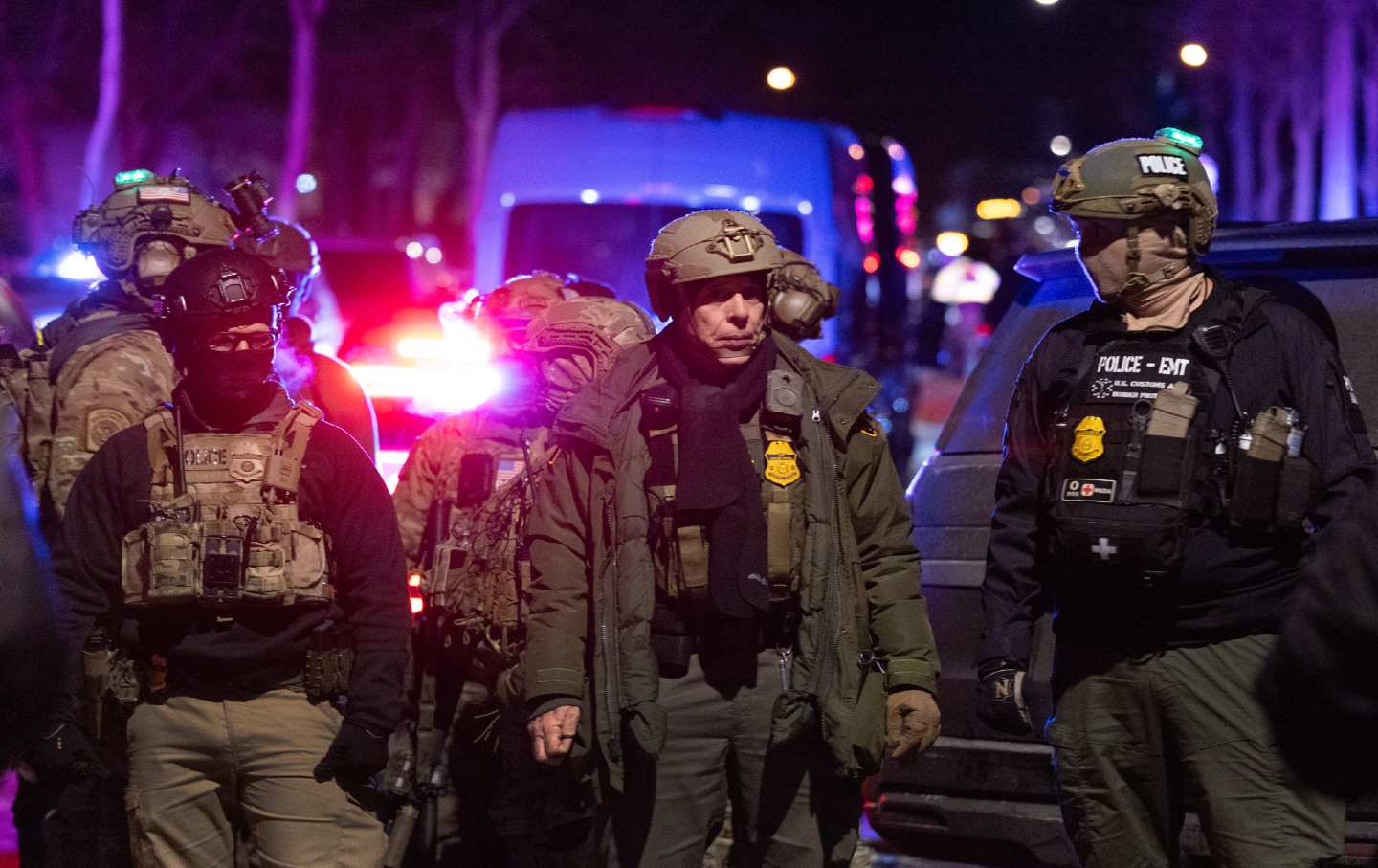
At UCLA, Daily Bruin reporters were gassed, assaulted, and threatened with arrest. Four Daily Bruin reporters were also directly targeted and assaulted by pro-Israel counterprotesters—while the LAPD took nearly four hours to intervene. At Dartmouth, two student journalists were arrested for criminal trespass despite repeatedly identifying themselves as members of the press. Their charges have yet to be dropped. At Columbia, student journalists at the Columbia Daily Spectator and WKCR were threatened with arrest by the NYPD, mocked, pushed, and shoved, and then barred from their own campus. And just this past weekend, student reporters with USC’s Annenberg Media and the Daily Trojan were denied critical access to cover the LAPD’s predawn raid—a direct violation of California Penal Code, which grants student journalists the right to freely cover any campus activities. .
As the mainstream media has repeatedly mischaracterized pro-Palestine groups on campus, the work of student journalists is more critical than ever. Student journalists are those best equipped to tell the stories on university campuses because they are a part of the community. “The job of reporters is that they’re trying to tell stories that people don’t want told. So by nature, conflict is at the heart of journalism or the act of journalism,” said Geeta Anand, a Pulitzer Prize–winning journalist and the dean of Berkeley Journalism. “But in the US, where the freedom of the press is supposed to be protected, we as citizens really believe that our government and our law enforcement should not be trying to prevent journalists from doing their jobs. It’s appalling that journalists are being killed in the line of duty, and it’s really upsetting to see student journalists trying to cover the protests being arrested.”
The repression of student journalists is not unique to the university protest movement. For Leon Orlov-Sullivan, the editor in chief of The Campus at the City College of New York, covering student protests has shown him the extent to which the media is forced to work within police orders. “If they don’t want members of the press present, then members of the press will not be present,” he said. Orlov-Sullivan was told by an NYPD officer that he could not livestream the raid of CUNY’s encampment. He was wearing a press pass at the time.
“I don’t think [police] care. Even on April 24, they arrested a FOX 7 cameraman and his charges haven’t been dropped; they injured a New York Times journalist. So forget student journalists. They don’t even care about higher-level journalists,” said Maryam Ahmed, a student reporter with The Daily Texan. “They’ve arrested or brutalized anyone they could get their hands on. I don’t think I as a student journalist feel any safer than just the average protester.”
This same sentiment rang true at USC. During their predawn raid on May 5, the LAPD corralled student journalists into a media area, which Henry Kofman—deputy news photo editor of The Daily Trojan—described as an area enclosed by “black fences the height of a person” that blocked the sight of police activities. Kofman noted that the LAPD and USC’s Department of Public Safety failed to provide a public information officer, and Annenberg Media also reported that “DPS officers threatened to ‘take’ Annenberg Media reporters’ press passes.”
“To my knowledge there was not a specific protocol or document in place protecting us as journalists,” said Alesandra “Dre” Gonzales, a reporter, photographer, and videographer for The Dartmouth who was arrested alongside Dartmouth managing editor Charlotte Hampton while covering campus protesters’ clash with police. “I identified myself as press multiple times,” said Gonzales. “And something that I keep going back to when I think about the night of May 1 and being arrested is that he took a picture of my press pass, and there was still such a large disregard for my identity as a journalist.”
While it’s important for student reporters to be identified as journalists, the targeted assault of four Daily Bruin reporters is a stark reminder that student journalists can be targeted for simply being members of the press. “We have to face the reality that there is an antagonism among some sectors of society against the media, blaming the messenger,” Anand added. “What happened at UCLA was appalling…. It means [that] your safety is something you have to be constantly thinking about. It’s terrible that we have to do this, but it doesn’t mean that you stop covering the story.”
But student journalists have made it abundantly clear that they have no plans of stopping their coverage anytime soon. “Actually, if anything, [my arrest] has made me love the field more,” Gonzales said. “Journalism is so important. It’s such a fundamental thing within our lives to be able to report on issues big, small, local, national, or global so that people can be informed.”