
Slavery Was Not Just Forced Labor but Sexual Violence Too
Calls to attenuate the brutality of slavery in museum depictions is absurd when our institutions already downplay one of its most horrific features.
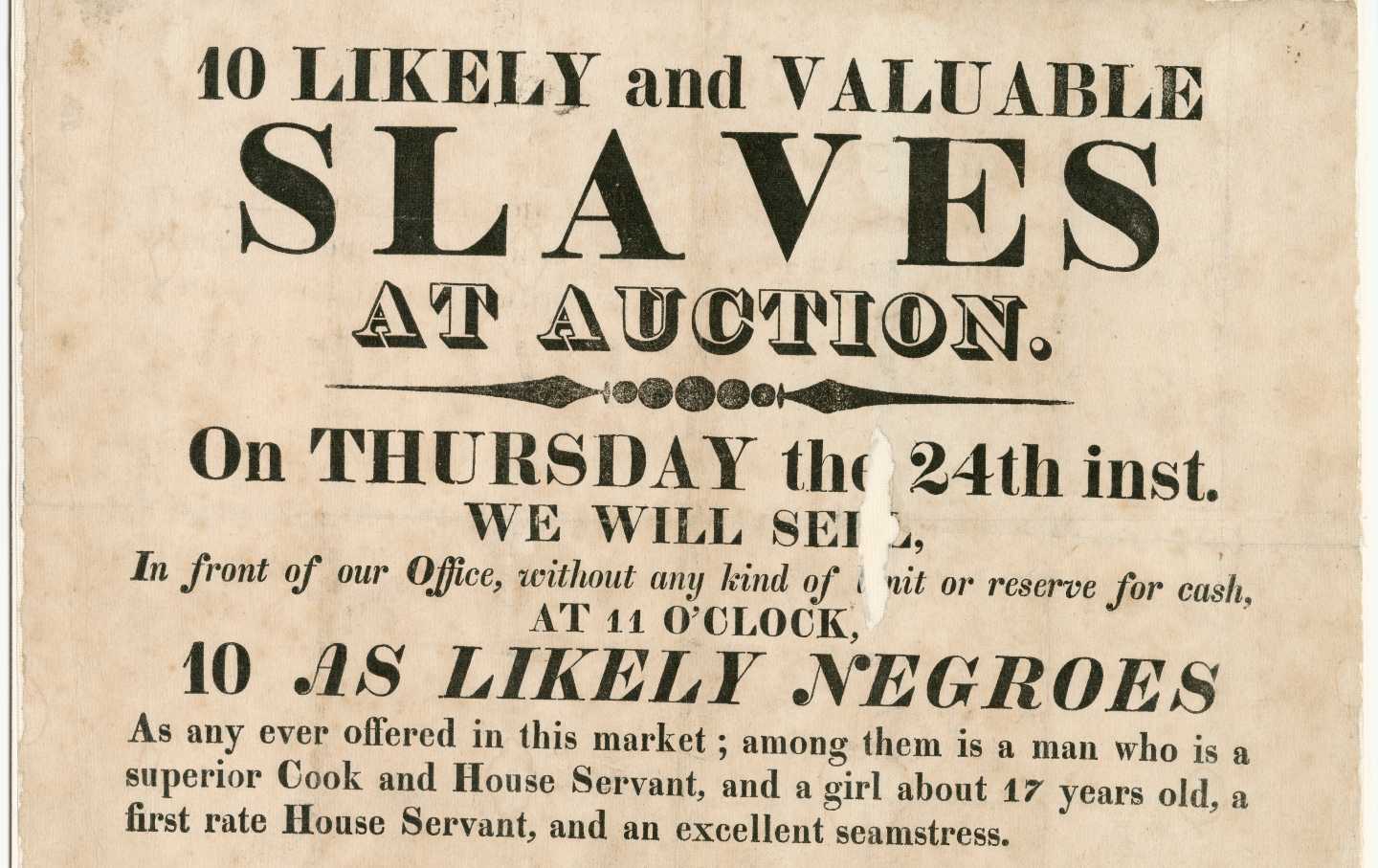
Broadside advertising a slave auction outside of Brooke and Hubbard Auctioneers office, Richmond, Virginia, July 23, 1823.
(Chicago History Museum / Getty)
It’s time that we finally speak clearly and plainly: Slavery was not only unpaid labor. It was horrific sexual violence—violence far beyond anything most of us have been taught in school, and far beyond what is depicted in our national museums.
For example, in classified ads published in 19th-century newspapers, we find strong evidence for sadistic abuse targeting enslaved children. The perpetrators of this violence acted with total impunity and clearly felt no shame for what they did.
A white resident of Washington, DC, took out the following classified ad on the front page of The Daily National Intelligencer in February 1835: “A GENTLEMAN residing in this city,” he boldly declared, “wishes to purchase for his own use, a negro Girl, slave for life, from 12 to 16 years of age, active, intelligent, healthy.” He added: “Any person having such a one to sell, will hear of a purchaser willing to give a good price in cash.”
President Trump recently said he believes that the Smithsonian Institution focuses too heavily on “how bad Slavery was,” and he has ordered a review of all current and future exhibits. Museum officials have been given 120 days to replace “divisive or ideologically driven language with unifying, historically accurate, and constructive descriptions.”
The truth, however, is that US museums, historical monuments, and history courses routinely downplay the sexual horrors of slavery, leaving the vast majority of Americans with the false impression that slavery was merely unpaid labor.
What made the era of chattel slavery unique—and truly monstrous—was not that enslaved Black people were compelled to work without pay; even in 2025, involuntary servitude is still legal if it’s imposed as “punishment for a crime.” As many as 800,000 prisoners across the United States are forced to work for nothing (or for very low pay), in dangerous jobs like asbestos removal and disaster response. (California relies on incarcerated people to “voluntarily” battle wildfires for as little as $10 a day, but, according to a former inmate, “the decision to take part is largely made under duress.”)
What honest exhibits and displays would not omit is that what set this era of slavery apart was not only its imposition of unpaid labor but also its control of human bodies and its institutionalization of race-based sexual exploitation. In fact, as horrific as it was for enslaved people to endure a lifetime of work without pay, they were also made to suffer the daily fear of sexual abuse. Black men were frequently compelled to father children against their will, and Black women and girls were regularly forced to give birth to the children of their rapists. It is also worth noting that early gynecologists, like James Marion Sims, regularly conducted excruciating experimental surgeries on the genitalia and reproductive organs of female slaves.
In all the recent discussions of slavery that I have heard in the media, I am struck by how rarely these aspects of the history have been emphasized. After all, this abuse was not incidental or occasional. It was a central and pervasive feature of American enslavement. And no, our national museums do not present it that way.
Although I have no official ties to the Smithsonian, I have had the honor of presenting my original research at both the Smithsonian National Museum of American History and the Smithsonian National Museum of African American History and Culture. As a result, I can offer some insight into the deliberations curators make when deciding what does or does not go into an exhibit.
As competent—and moving—as the exhibits often are, they also tend to omit the more difficult aspects of the slavery era, like the pedophilia, the sadism, and the literal cannibalism of Black flesh. Curators are, for the most part, seeking to present a family-friendly history that can be comfortably discussed by teachers and parent chaperones on a school field trip.
Smithsonian visitors will therefore be forgiven if they return home without knowing that slaves, including children, often went completely naked, no matter the weather—leaving their bodies exposed not only to the elements but to the whims and impulses of their masters, overseers, and neighbors.
Ben Simpson, formerly enslaved in Georgia and Texas, testified to this treatment by his master Earl Stielszen. “We went naked, that [was] the way he worked us,” he told interviewers from the Works Progress Administration (WPA) in the 1930s, at the age of 90. “We never had any clothes.”
The conditions he described were worse than the treatment of modern farm animals: “We never had no quarters” either, Simpson added. “When night-time come he locks the chain round our necks and then locks it round a tree. Boss, our bed were the ground.”
The great Frederick Douglass detailed similar conditions on his plantation in Maryland, writing: “The children unable to work in the field had neither shoes, stockings, jackets, nor trousers, given to them; their clothing consisted of two coarse linen shirts per year. When these failed them, they went naked until the next allowance‐day. Children from seven to ten years old, of both sexes, almost naked, might be seen at all seasons of the year.”
After seeing the Smithsonian’s current exhibitions on slavery, visitors are also likely to go home without clearly understanding that both female and male slaves were purposely and systematically forced to reproduce without their consent, and that because each child would also be born into bondage, the greater the number of offspring produced, the wealthier their masters would become.
Barney Stone, born in Kentucky in 1847, told WPA interviewers that his own parents had been abused in this way. “My Mammy was mother to ten children, all slaves,” he reported, “and my Pappy, Buck Grant, was a buck slave on the plantation of John Grant, his Mastah.”
Stone even compared his father’s situation to that of a bull reared to sire cattle: “My pappy was used much as a male cow is used on the stock farm and was hired out to other plantation owners for that purpose and was regarded as a valuable slave.”
Ned and Constance Sublette offer the following explanation in their book American Slave Coast: A History of the Slave-Breeding Industry: “Every farm where the enslaved had children was a slave-breeding farm, if only because every newborn slave child increased an estate’s net worth…. Slaves, whose legal status was comparable to that of livestock, were expected to provide a farm owner with marketable children.”
It is crucial to note, however, that the financial incentive was only part of what made slavery so appealing. The other part was emotional and psychological. When Europeans arrived on the shores of the New World, they needed workers not only to till fields and cook meals but also for sex and companionship. This was all the easier to obtain if there was a whole class of people who were not permitted to refuse.
This power to control Black bodies with impunity led to myriad forms of sadistic torture.
Harriet Jacobs, writing in her famed 1861 narrative, Incidents in the Life of a Slave Girl, described how she endured this kind of torture at the hands of her female master, Mrs. Flint, who would wake Jacobs in the middle of the night by standing over her bed and whispering crude sexual propositions “as though it were her husband who was speaking to me.”
Jacobs’s account also details the treatment of a young Black man named Luke, who was chained to his master’s bed, flogged on his rear end daily, and subjected to sexual indignities that were, she wrote, “of a nature too filthy to be repeated.”
Popular
“swipe left below to view more authors”Swipe →Perhaps understandably, the Smithsonian’s curators do not emphasize the pervasiveness of the sexual torture that many enslaved people endured. But in downplaying (or omitting) this component of slavery, they themselves are twisting the historical record.
If White House officials and museum curators want to present a fuller picture of the era—including, perhaps, the perspectives of white, pro-slavery contemporaries—I would point them to the hundreds of thousands (or even millions) of paid advertisements published in daily newspapers, which remain some of the richest sources of information about enslaved people and their masters. These notices, which appeared across the nation in cities big and small, include announcements for slave sales, want ads written by those seeking to purchase slaves, and requests by individual enslavers for help in recapturing runaways.
When we examine these want ads, we see that the writers often tell us why they want to acquire a slave: as a waiter, for example, or a seamstress, or a house servant. Some, however, leave the reader to speculate about the abominable reasons (there are no innocent ones) that a single adult man would seek to purchase “a young likely negro wench, about eight years old,” “a negro boy, from 10 to 15 years of age,” or “a handsome boy” from “12 to 15.” These brief notices provide confirmatory evidence for what we know already: that enslaved Black children were frequent targets for sexual abuse by grown white men, abuse legally sanctioned by the US government.
The runaway ads are intriguing in a different way: They provide some of the only surviving descriptions of the physical appearances and personalities of specific enslaved people. Of course, such descriptions were a necessity in an era before photography was widespread, and they reveal and memorialize the humanity of the enslaved while also offering a glimpse into the enslavers’ complex feelings about their human property.
It is clear that white enslavers felt a mixture of loss, longing, and desire as they pined for their missing Black slaves. We know this because they described their captives (or ex-captives) in such glowing terms, using words like “pretty,” “well formed,” “well muscled,”and “remarkably handsome.” They also routinely cited specific body parts, noting when a slave had “a good countenance,” a “beautiful set of teeth,” “a fine breast of milch [milk],” or “big buttocks.”
In 1804, a white man by the name of John W. Bronaugh offered a $100 reward for the return of Henry Brent, who had run away as a teenager five years prior. Even after so much time, Bronaugh still desperately missed Brent, gushing,“Henry was a remarkable handsome mulatto, and had a fine countenance.”
These feelings of longing were rarely reciprocated by the enslaved, and as the newspaper ads show, runaways were regularly the victims of injuries to intimate areas of their bodies. When James Henry Carter, “about 40 years of age,” escaped his master in 1785, he had scars “about his private parts.” And when Dilcey Ann, “about 22 years old, 5 feet 3 ½ inches high,” ran away in 1852, she had a scar from a burn to her breast.
Black women, men, and children were humiliated and dehumanized in this way for generations. The Smithsonian’s choice to present a more palatable version of US history for mass consumption may be understandable, but it ultimately fails to prevent the very criticism it tries to avoid in leaving some of the most horrific parts of the story untold.
The true history of US slavery may be difficult to face, but we must. For many descendants of enslaved people in the United States, the trauma still lives in our bones, and denying the truth won’t change that.
Support independent journalism that does not fall in line
Even before February 28, the reasons for Donald Trump’s imploding approval rating were abundantly clear: untrammeled corruption and personal enrichment to the tune of billions of dollars during an affordability crisis, a foreign policy guided only by his own derelict sense of morality, and the deployment of a murderous campaign of occupation, detention, and deportation on American streets.
Now an undeclared, unauthorized, unpopular, and unconstitutional war of aggression against Iran has spread like wildfire through the region and into Europe. A new “forever war”—with an ever-increasing likelihood of American troops on the ground—may very well be upon us.
As we’ve seen over and over, this administration uses lies, misdirection, and attempts to flood the zone to justify its abuses of power at home and abroad. Just as Trump, Marco Rubio, and Pete Hegseth offer erratic and contradictory rationales for the attacks on Iran, the administration is also spreading the lie that the upcoming midterm elections are under threat from noncitizens on voter rolls. When these lies go unchecked, they become the basis for further authoritarian encroachment and war.
In these dark times, independent journalism is uniquely able to uncover the falsehoods that threaten our republic—and civilians around the world—and shine a bright light on the truth.
The Nation’s experienced team of writers, editors, and fact-checkers understands the scale of what we’re up against and the urgency with which we have to act. That’s why we’re publishing critical reporting and analysis of the war on Iran, ICE violence at home, new forms of voter suppression emerging in the courts, and much more.
But this journalism is possible only with your support.
This March, The Nation needs to raise $50,000 to ensure that we have the resources for reporting and analysis that sets the record straight and empowers people of conscience to organize. Will you donate today?
More from The Nation

The Real Reason Americans Love Guns The Real Reason Americans Love Guns
With a weak social safety net, a gun offers a false sense of personal power and security.

The Endless Hypocrisy of Bari Weiss The Endless Hypocrisy of Bari Weiss
She claims to be a free speech champion. But as her actions at CBS News keep showing, she seems to think free speech should run only in a rightward direction.
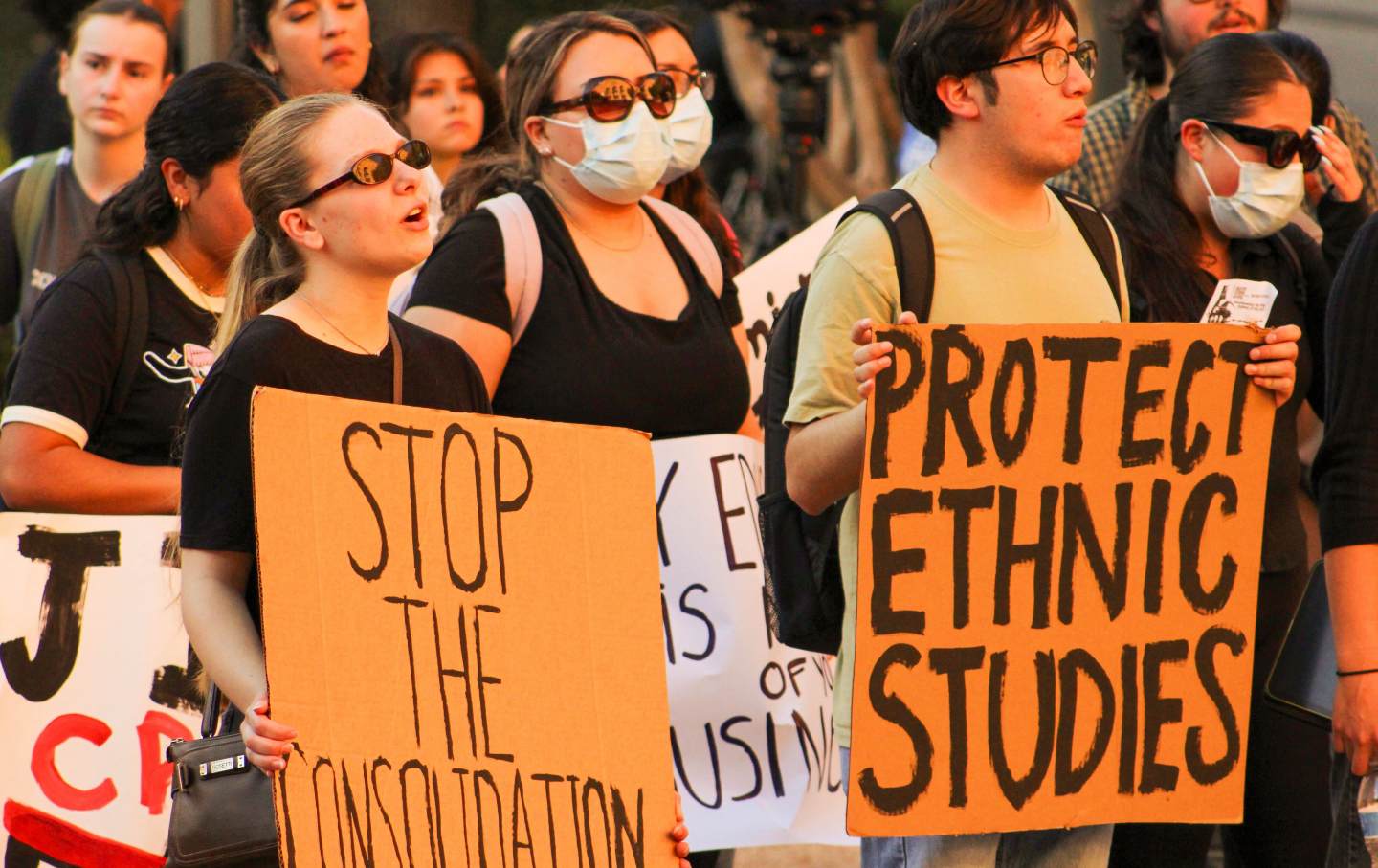
What Will Be Left After the University of Texas Destroys Itself? What Will Be Left After the University of Texas Destroys Itself?
UT-Austin has collapsed its race, ethnic, and gender studies into a single program while a new policy asks faculty to avoid “controversial” topics. But the attacks won’t end there...
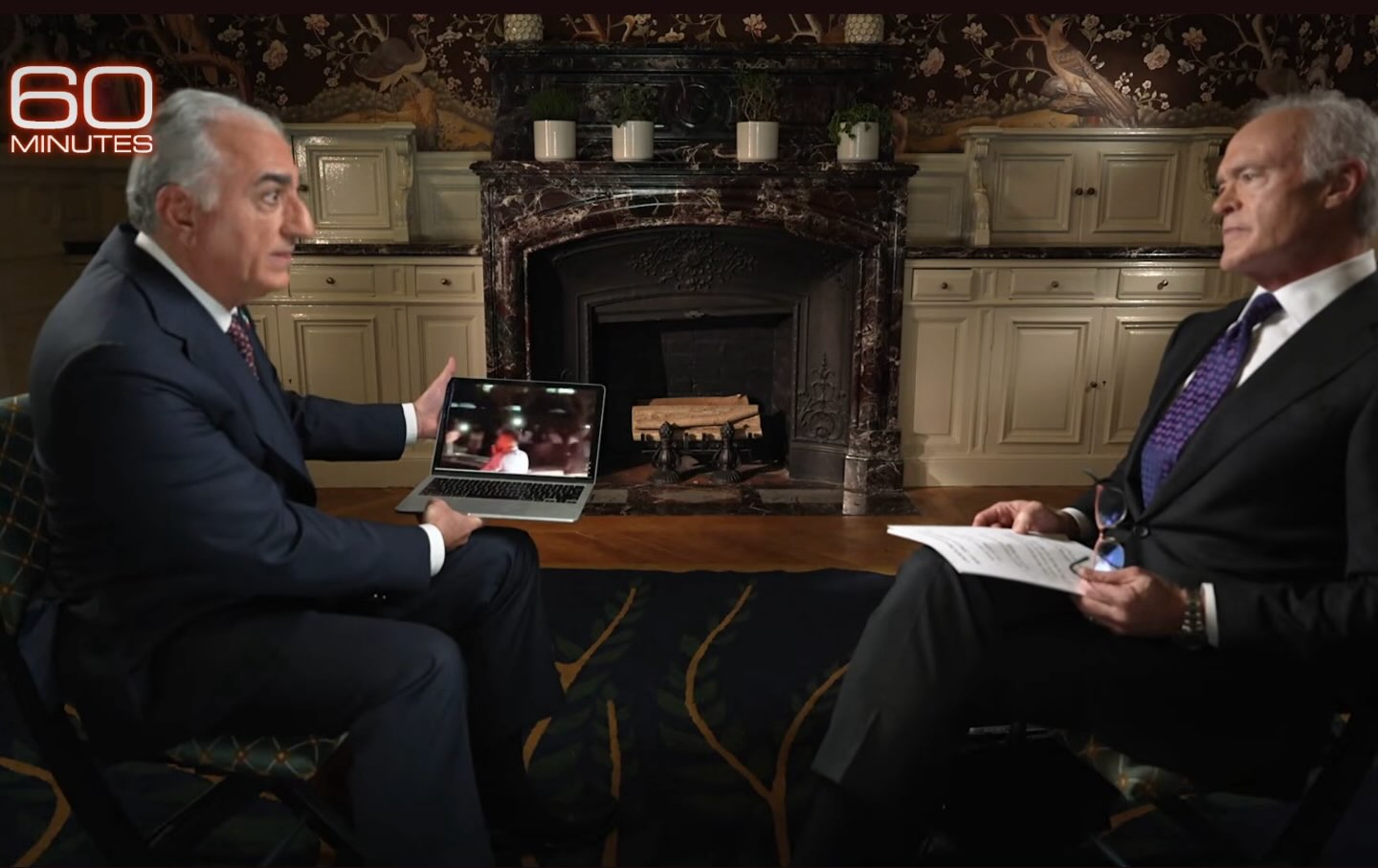
The Corporate Media Is Head Over Heels for the Iran War The Corporate Media Is Head Over Heels for the Iran War
Donald Trump’s attack may be surreal, unjustified, and illegal. But that’s not stopping the press from turning the propaganda dial way up.

The Disturbing History of ICE’s “Death Cards” The Disturbing History of ICE’s “Death Cards”
The Vietnam-era practice is yet another example of ICE agents thrilling to the brutality they have been encouraged to cultivate.
The American Universities Programming Israel’s Killer Drones The American Universities Programming Israel’s Killer Drones
Industry partnerships in higher education are pushing STEM graduates into the business of weapons manufacturing and genocide profiteering.

