Patrisse Cullors: Art Is Liberation
Black Lives Matter cofounder Patrisse Cullors says cultural work will be the key to shifting the system and imagining a world after MAGA.
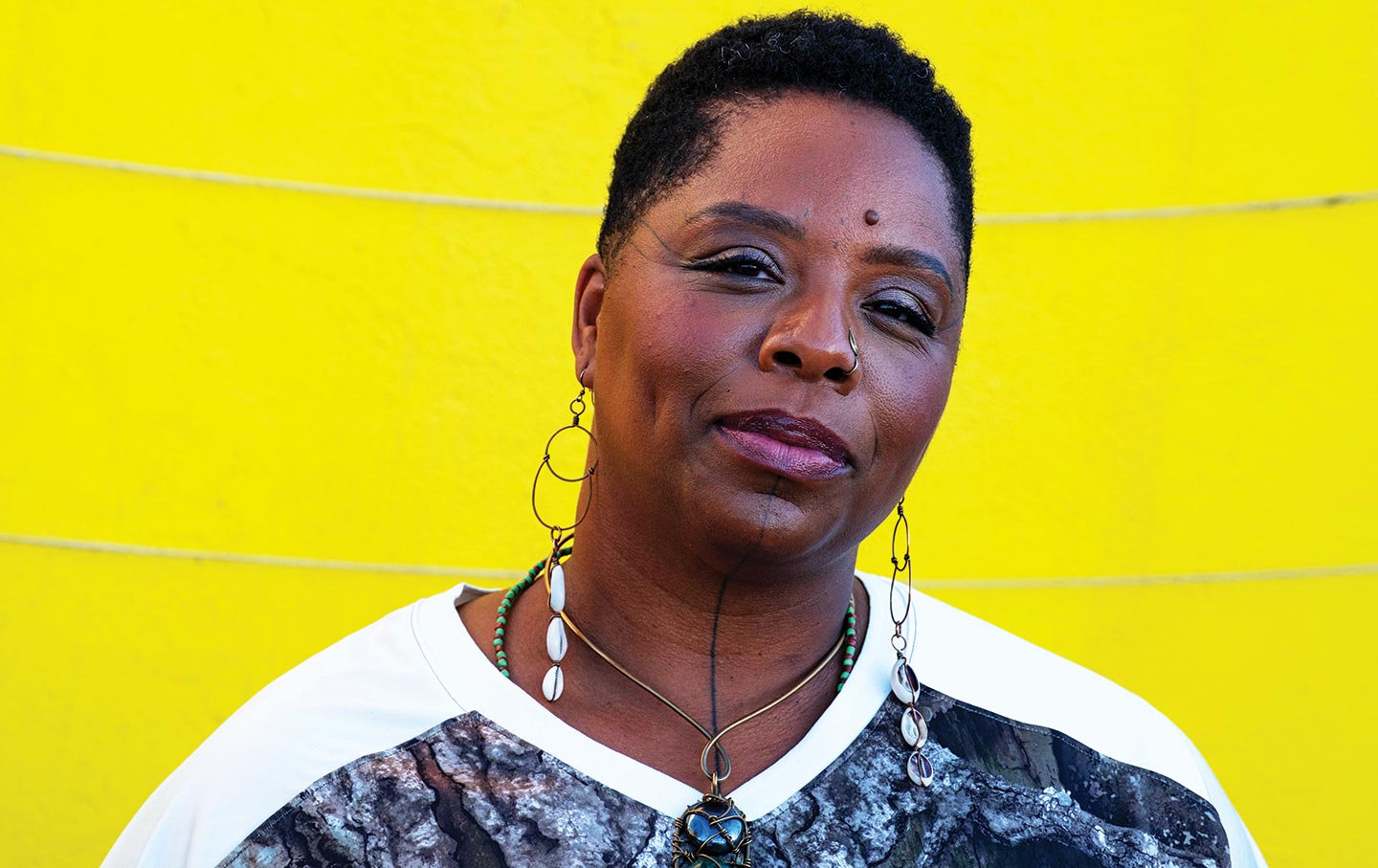
After BLM: Since leaving the abolition movement she cofounded, Patrisse Cullors is using her work as a performance and visual artist to imagine a post-Trump world.
(Roger Fountain)
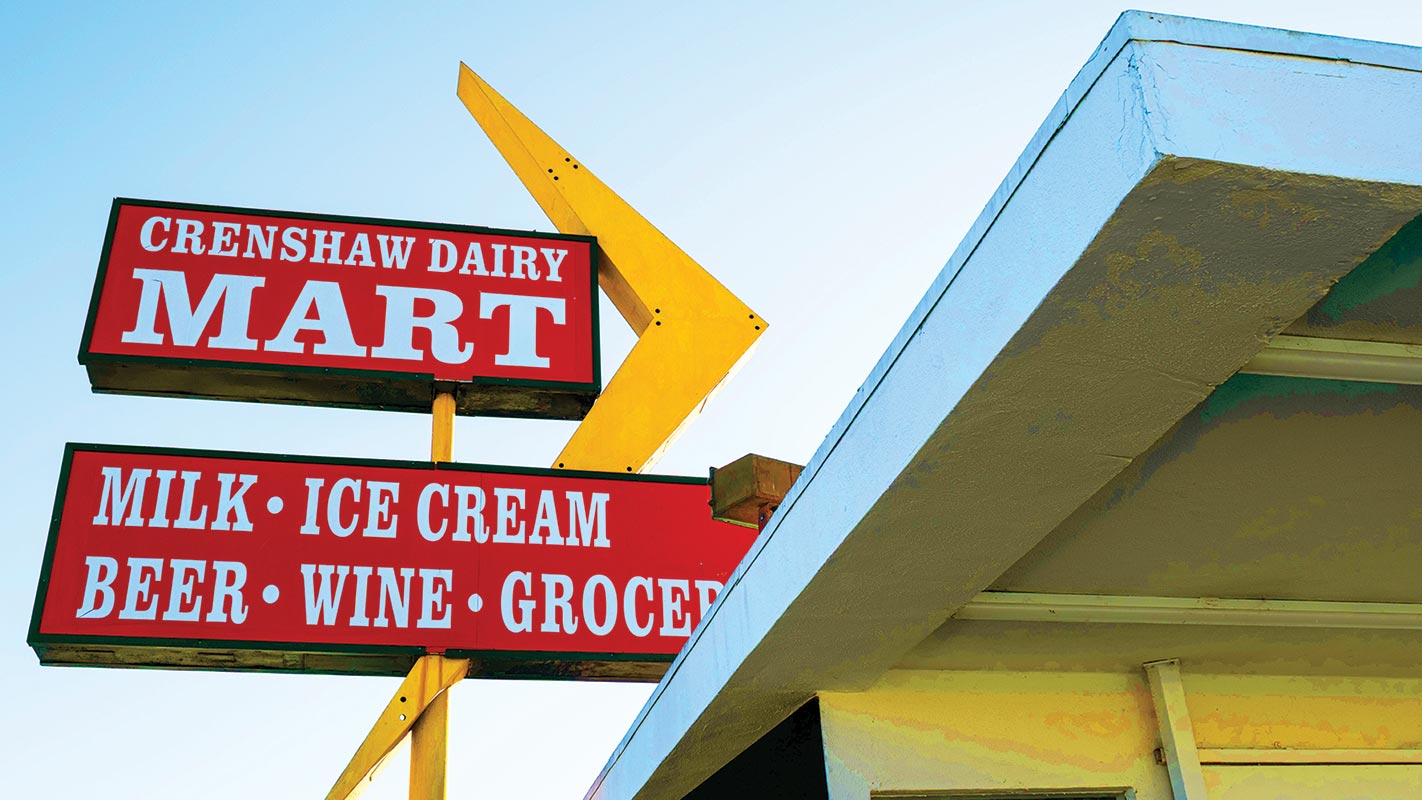
Patrisse Cullors’s art studio is one of five nestled inside the crenshaw Dairy Mart in Inglewood, California, a building that opened in 1965, a day after the Watts Riots, and once served as a convenience store. To reach her studio, I had to get past a six-foot-high steel picket fence encircling a community garden, the other studios, a gallery—all part of a quiet perimeter between the noise of the busy street and the sanctuary inside—and a brawny security guard.
Surrounded by clothing racks of voluminous white gowns and the large textile sculptures streaming across the walls, Cullors sits in a mid-century-style brown-leather swivel chair. The cofounder of Black Lives Matter is arguably one of the most notable figures in the contemporary Black liberation movement, but since 2021, she has retreated from the spotlight of BLM to refocus her work on the performing arts and culture. Cullors explained to me that she cofounded the Dairy Mart in 2020 as an artists’ collective where members of the community and the artists in residence could safely come and create art centered on abolition, healing, and ancestry. The collective hosts workshops, events, and programs in collaboration with other local organizations. In the weeks following the July 2025 raids by Immigration and Customs Enforcement officers in Los Angeles, the space opened its doors to honor anyone affected by the agency. People brought flowers and arranged them in a large “500,” representing the number of those “kidnapped” by ICE in LA since the start of federal immigration raids on June 6.
“Those first few weeks, witnessing ICE and the National Guard in LA, I had straight-up PTSD,” says Cullors, who is 42. “Watching them run after brown people, I was like, ‘Oh, I lived through this already.’ It was so overwhelming and deeply infuriating, because I was like, ‘We said this already. We warned you that this [overpolicing] was going to come, because it happens to Black people first in this country. We are the tests. And if you don’t fix what’s happening to Black people, then it’s coming for everybody else.’ And now here we are,” she says.
I first spoke with Cullors a little over a month before Renée Nicole Good and Alex Pretti, both of whom were 37 years old and white, were executed by masked federal agents in Minneapolis just blocks from where George Floyd, a 46-year-old Black man, was murdered by a police officer five years earlier. When I reached out to Cullors after the shootings, she simply said, “This country doesn’t listen to Black people.” I would add that it especially doesn’t listen to Black women.
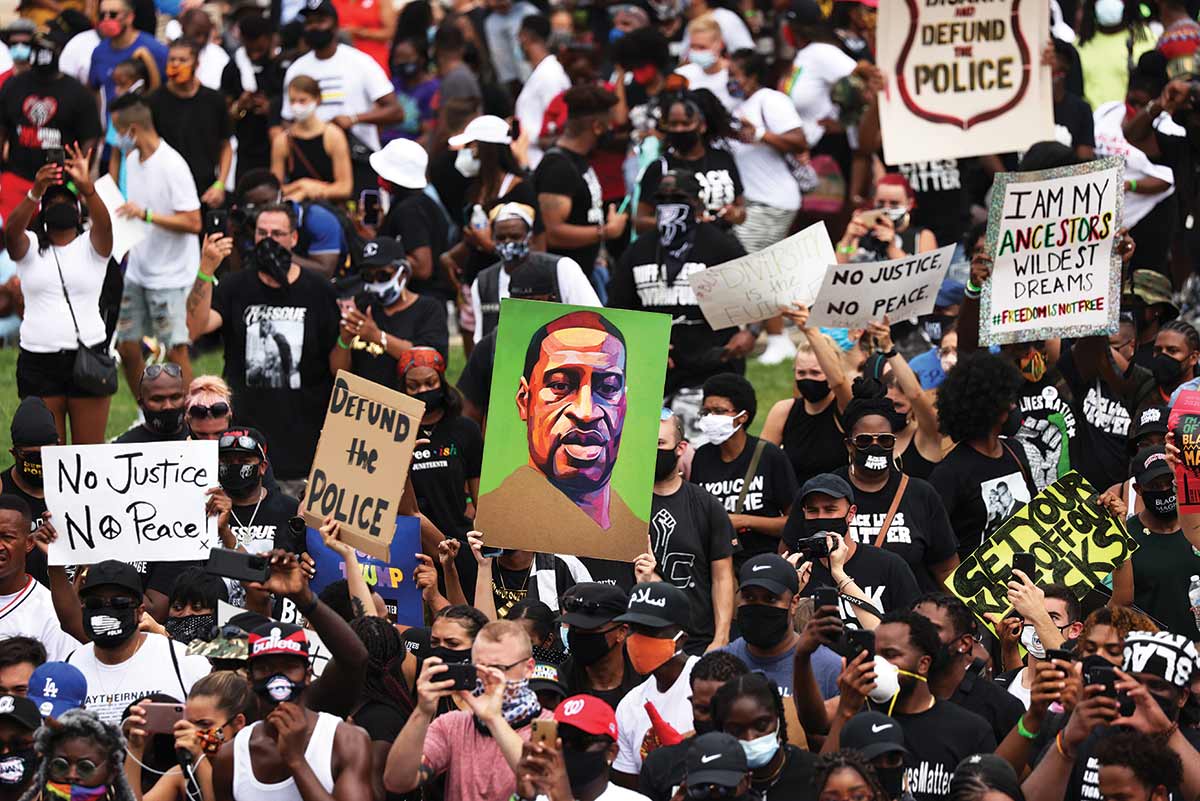
If you were someone who protested the murder of Floyd in the summer of 2020 and felt the energy of those around you as you stood among millions chanting “Black lives matter,” you might have thought that maybe, just maybe, you were witnessing real change in America.
Fast-forward to Donald Trump’s second term, and everything BLM warned about is now a full-fledged, horrifying reality.
The United States has become a police state, one that not only continues to murder and lock up Black people but also operates a mass-deportation machine that has deployed federal troops in cities across the country, instilling fear in communities and decimating local economies. Further, thanks to bloated budgets under Trump’s so-called One Big Beautiful Bill, the Department of Homeland Security and the Department of Justice are weaponizing the very laws meant to protect American citizens against them by, for example, conducting unlawful home raids or using administrative subpoenas to suppress free speech.
At the same time, in May 2025, the Justice Department dropped the consent decree that had overseen the federal regulation of police departments like the Minneapolis PD, which had employed Derek Chauvin, Floyd’s killer. And a presidential memorandum in September 2025 came with an order to “investigate” and “disrupt” groups labeled as “domestic terrorists,” defined as those promoting “anti-Americanism, anti-capitalism, and anti-Christianity.”
When I ask Cullors why she thinks so many Americans didn’t heed the warnings of BLM, she explains that it is because white people have historically found it difficult to “take seriously or listen or pay attention to or have sympathy or even empathy for marginalized communities.”
“Listening to us [Black people] means that they have to agree and believe that white supremacy first and foremost exists, that it’s a danger to all of us, and then they have to do something about it. They have to relinquish power, then perceived safety. And so this takes a lot of work—psychologically, spiritually, culturally. You have to undo hundreds of years of training that whiteness ultimately will bring you safety. And that the power structures that currently exist won’t ever throw you under the bus, and what happens to Black people is their problem.”
“But now we’re living in MAGA’s America,” she adds, where the violence once inflicted predominantly on Black and brown communities is now an issue for every American, no matter their race.
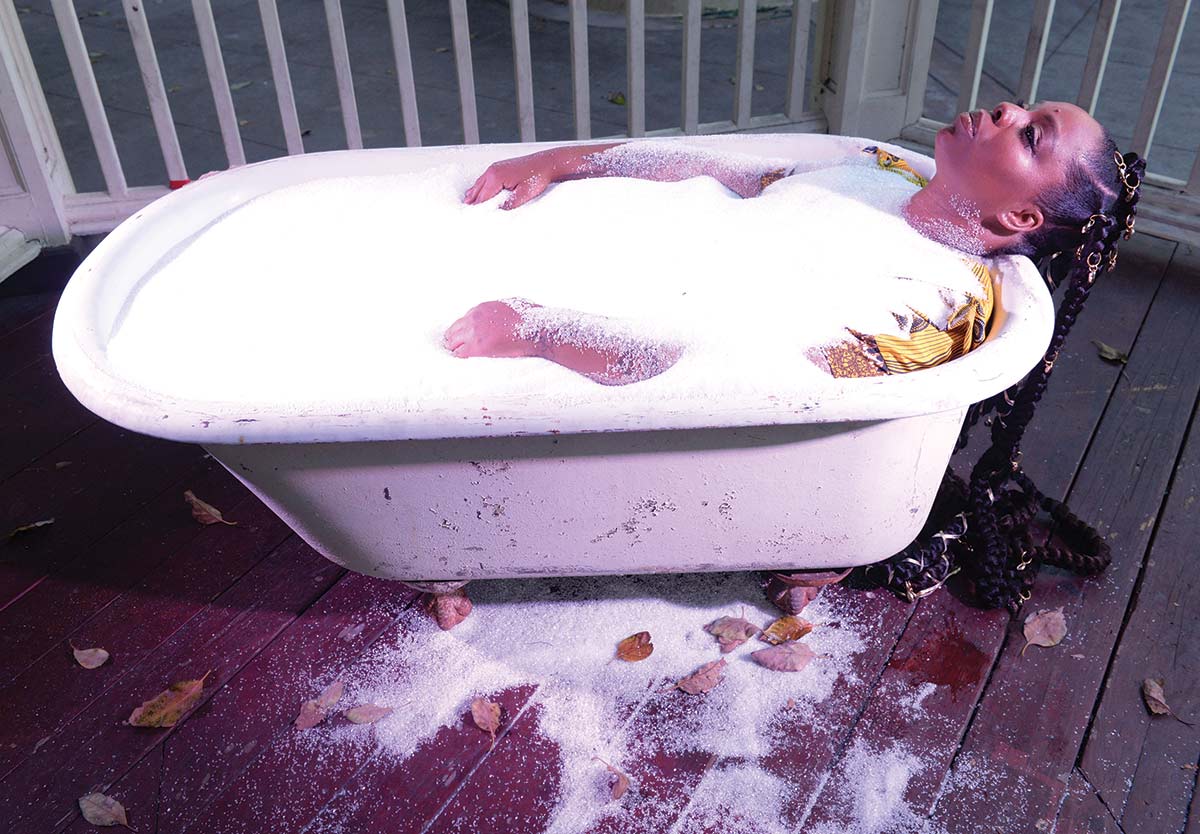
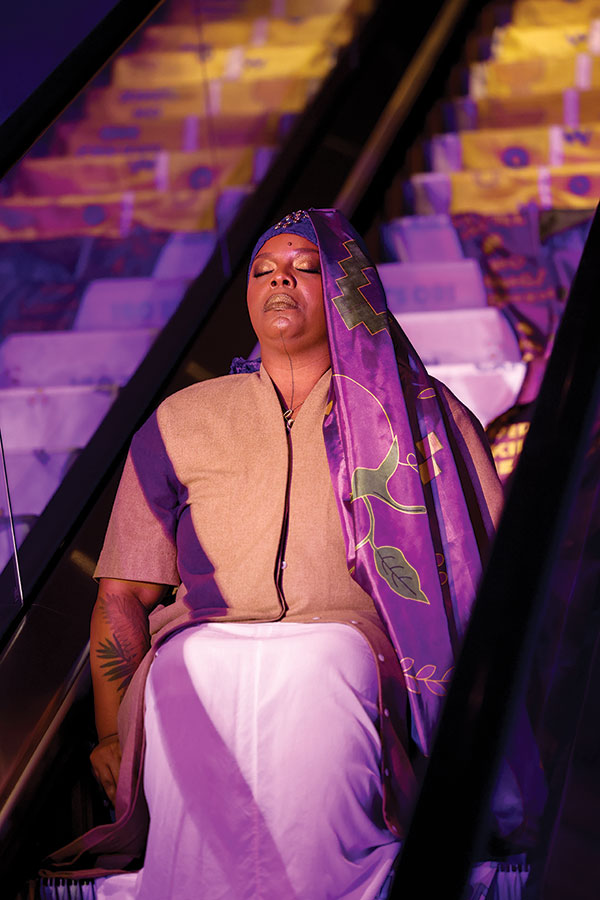
The walls of Cullors’s small studio are layered with images that trace the arc of her performance-art exhibits. In several, people are wearing white robes: a motif in her work, representing healing, spiritual reclamation, and ancestral return. Another photo shows Cullors immersed in a bathtub of salt, and nearby hangs a portrait of her father at age 17, taken for his entrance into the military.
Although Cullors has not completely given up her resistance work, she decided in 2021 to step down from her role as executive director of the Black Lives Matter Global Network Foundation, the charity behind the BLM movement, and embrace her art practice more wholly. As a leader of a mass movement, Cullors has been the target of attacks and became embroiled in drama and accusations that she says were trumped up.
“This chapter of my life is really amplifying the art-cultural work, trying to remind people that art and culture actually is what shifts the whole system,” she says. She’s in the midst of preparing for a new show in February 2027 centered on diversity, equity, and inclusion—a direct response to the administration’s efforts to dismantle the DEI programs that sprang up following the 2020 uprisings.
Cullors, who earned an MFA degree from the University of Southern California’s Roski School of Art and Design in 2019, sees her work as countering the second Trump administration’s attacks on cultural institutions, such as the Kennedy Center and the Smithsonian, in the way that the Black Arts Movement did in the 1960s and beyond. That movement included groups and people like the Negro Ensemble Company, which created a space for Black playwrights and actors excluded from mainstream theater; the writer Amiri Baraka (LeRoi Jones), who wrote the one-act play Dutchman (1964) confronting racism, white liberalism, and Black rage; and the painter Romare Bearden, best known for his vibrant depictions of Black American life, often weaving in the themes of jazz and the American South.
Cullors is clear, however, that she isn’t saying that protests and policy changes aren’t vitally important, but rather that in the absence of cultural shifts, racism cannot be fully curtailed. And those shifts can come only through the arts, she says. “If we just legally force people to do something different, we aren’t actually shifting what’s at the root of why they hate us to begin with,” Cullors says, adding that while DEI may not have materialized without the protests and policy momentum, she believes it is art and culture that will ultimately recover what was lost when DEI and other racial-justice initiatives were rolled back.
Cullors’s solo show, titled “Don’t Ever Integrate,” is a radical reimagining of the meaning of DEI—one that challenges “the idea of integration not in the traditional sense of integration, but in the sense that we should not integrate with white supremacy,” she says. “We should not integrate with patriarchy. We should not integrate with all these systems that don’t want us. And so it’s a new movement around a counter-integration movement.”
The show, inspired by the work of the Black mixed-media artist Faith Ringgold, who incorporated themes from Black liberation, feminism, and the anti-war movement, will feature quilt-making, Cullors says, highlighting the historic use of quilts during the Underground Railroad as portals with messages and markers for those escaping slavery.
And she has a new book, We Make the World: Guided Aesthetics Practices for Art, Power and Healing, due out on November 10. Cullors hopes it will inspire people to “make this world together, to build this world together.” The book explores the role that artists have played during traumatic historical periods.
“Art and culture is not some hobby that I’ve stumbled upon; there’s a strategy behind it. It’s a cultural strategy that many of us are leading, and it’s abolitionists who are mostly leading it,” she says. “It’s reframing our relationship to this country.”
Using art to express herself is not something new to Cullors. As a child, she studied dance, which she says inspired her passion for performance art. But it was her firsthand experience witnessing the state violence inflicted on members of her family that catapulted her into activism.
Her father, Gabriel Brignac, was imprisoned for most of her childhood and died of a heart attack in a homeless shelter nine months after his release. Her brother, Monte, was first arrested at 19 for evading arrest. While in prison, he was diagnosed with schizoaffective disorder and has spent most of his life in lockdown facilities, whether it be a prison or a psychiatric ward. In 1999, he was arrested and sentenced to three years and four months. While he was incarcerated, both before and after his trial, he was severely beaten, Cullors says. It was her brother’s subjection to what she calls “torture” at the hands of the LA County Sheriff’s Department, and her experience filing a complaint against the department with the ACLU, that inspired her to create a performance-art piece, Stained: An Intimate Portrayal of State Violence, which in turn led her to found Dignity and Power Now, a group that fights for the rights of incarcerated people.
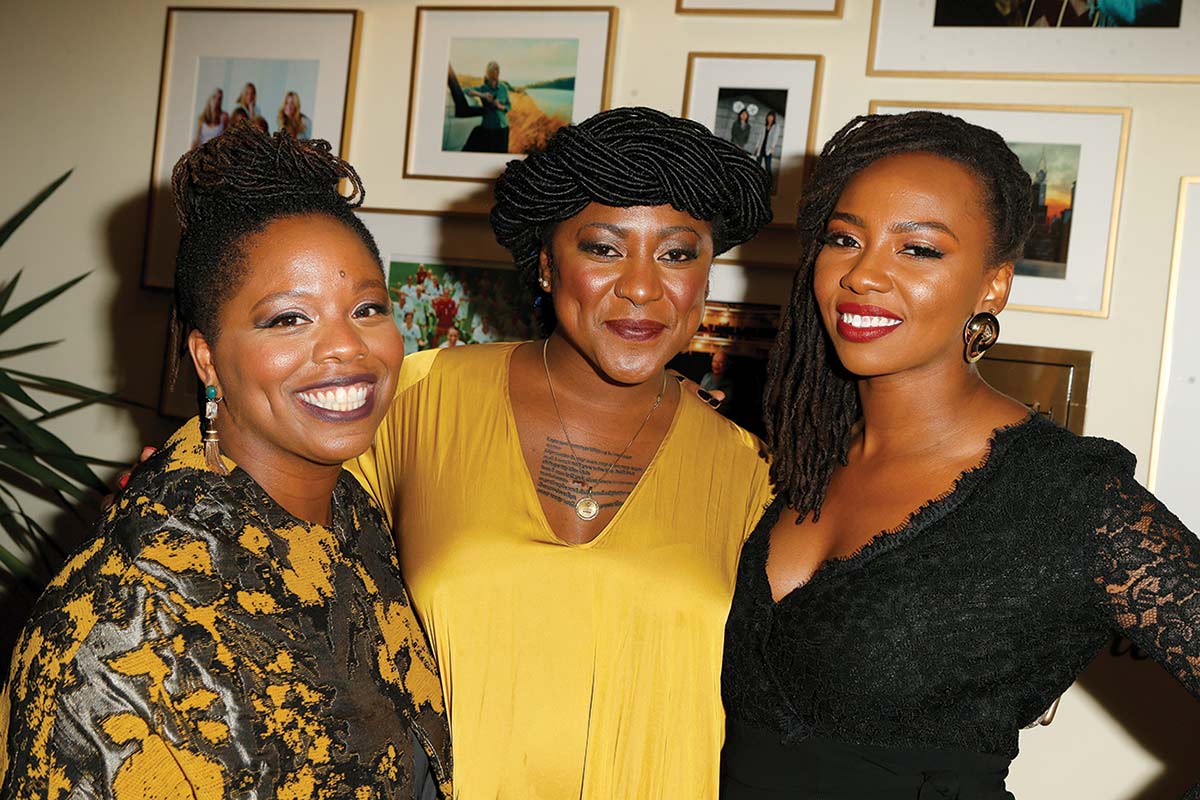
She was running that organization when she cofounded Black Lives Matter with Alicia Garza and Ayo Tometi in 2013, after George Zimmerman was acquitted in the shooting death of 17-year-old Trayvon Martin. Garza, an organizer for workers’ rights in San Francisco, had posted about the acquittal on Facebook. Cullors, who had met Garza a decade earlier, saw the post while she was sitting in a motel room near where she had been doing prison-reform work that day and then shared it, adding the now-iconic “#BlackLivesMatter.” The pair decided to create a campaign around the hashtag, looping in Tometi, whom they knew through her advocacy for immigrants’ rights. “And the rest,” Cullors says, “is history.”
From its inception, BLM organized protests and vigils to shine a light on the police killings of Black people. The movement drew attention to inflated police budgets at the local level, established civilian oversight commissions, and pushed to topple Confederate and other slavery-related statues around the country.
At its height, BLM changed the national conversation about how federal and local funds are spent to supposedly keep communities safe. The organization condemned the country’s long history of police brutality and murder, not as isolated events but as part and parcel of how American society is structured. It put pressure on cities and states to hold law-enforcement agencies accountable, and in many places, it changed policing budgets. BLM didn’t end police violence, but it exposed its underbelly, inspiring millions of Americans in all 50 states to demonstrate against the inequities.
But after her cofounders left BLM—Tometi stepped away from direct involvement around 2015 and Garza left in 2017—Cullors became the face of the organization and a target of right-wing media personalities like Fox News’ Bill O’Reilly and far-right outlets like Breitbart, where it was first implied that she was a “domestic terrorist.”
“I’ve been living under threat as a Black person for my whole life,” Cullors says. “I’ve been living under a specific threat as a Black person who’s exercised my First Amendment rights since I’ve been seen as a public figure,” a role she says she never wanted.
In her 2018 book When They Call You a Terrorist: A Black Lives Matter Memoir, cowritten with Asha Bandele, Cullors chronicles the death threats and attacks against her and the movement. “I was swatted by LAPD—coming to my house in riot gear, pulled guns on me,” she tells me. After the book was published, Cullors says the FBI contacted her “multiple times that there were credible threats against my life, that they had found my name on the list of someone who was a known white supremacist.” Cullors believes she was “used in Trump’s 2020 campaign ads” as part of “a concerted attack against me by the right.”
Charles W. McKinney Jr., a professor of history at Rhodes College in Memphis and the author of Greater Freedom: The Evolution of the Civil Rights Struggle in Wilson, North Carolina, says this type of harassment has a long history. “The evidence is clear,” he notes. “When Black activists rise to particular levels of prominence, local and state and federal structures are aligned against them in some very profound ways.”
But that didn’t stop Cullors from organizing for Black liberation; it only made her more cautious about her security. “I’m a student of history, so Assata [Olugbala Shakur], Angela [Davis], all the [Black] Panthers, James Baldwin, Dr. Martin Luther King Jr., Ella Baker—these are all my ancestors,” she says. “I learned a lot, and so I was maybe always preparing myself for the journey of being a target of our government’s.”
It wasn’t until the summer of 2020 that the call to “defund the police” became inseparable from the BLM movement. The slogan gained broader public support after the killing of Floyd, which sparked mass protests and calls for more oversight of law enforcement. In spite of record-breaking protest turnouts in the summer of 2020, a 2021 poll showed that most Americans actually wanted more funding for police, not less.
When I asked Cullors whether “Defund the police” gave conservatives ammunition to attack BLM, she pointed to the shooting death of Renée Good. “The right will use the death of a 37-year-old unarmed white woman as ammunition,” she says, explaining that conservatives have framed Good’s murder as her own fault for interfering with officers trying to do their jobs. “As organizers and artists, [we have] to center folks most impacted by the harm, and the community called for defunding the police.”
In the wake of the killings of Good and Pretti, as well as the violent separation of migrant families, third-country deportations, and the placement of migrants in ICE custody—including children—in abusive and inhumane facilities, the movement to “abolish ICE” is growing. But once again, the traditional establishment forces are pushing back. With the 2026 midterms just around the corner, David Axelrod, the chief strategist for Barack Obama’s 2008 and 2012 presidential campaigns, gave a stark warning to Democrats about using the slogan as a campaign message. “Well, you know, the problem that we’ve seen before when people said ‘Abolish the police’ or ‘Defund police’…I don’t think most people who said it believe that there should be no policing function in cities,” Axelrod said in a January interview. “But the implication was that there could be. So I don’t think Democrats want to get into that again.”
The Democrats may not want to, but everyday Americans continue to protest against ICE’s operations, and those protests continue to evolve. From the lapel pins worn by Hollywood actors and Grammy Award–winning performers to the thousands of Minnesotans who bravely stood in below-freezing temperatures with whistles and bullhorns, the citizens of this country have not stopped demanding justice.
McKinney says the pushback against BLM and the demands for reallocating funds away from bloated law-enforcement budgets need to be seen in a larger context. “There are institutions in American life that are foundationally broken, wounded because of their investment in whiteness, because of their investment in white supremacy,” he says. “Policing is one of those institutions.”
In 2022, BLM was rocked by a major scandal when a scorching report in New York magazine revealed that a 6,500-square-foot house in Studio City, California, had been purchased in 2020 using $5.8 million in cash donated to the Black Lives Matter Global Network Foundation. The foundation served as the fundraising entity of the national movement, independent of local chapters, and the house was acquired in the name of a private LLC. The story implied that Cullors, who was the executive director of the foundation at the time the home was bought, was personally benefiting from the millions in donations that the organization had received.
The pressure on BLM and Cullors only intensified. BLM activists and chapters called for clearer financial disclosures after concerns and questions grew about the decision to purchase the house through an LLC and the absence of a public announcement explaining the decision. In a subsequent interview, Cullors admitted that she’d used the property several times for personal events—a birthday party for her son and a party to celebrate the inauguration of Joe Biden and Kamala Harris—saying that it “probably wasn’t the best idea,” but she has stated that she did not misuse donations made to the organization, nor did any of the other leaders. BLM has maintained that the property serves as a “Creator’s House,” a space for content creation, meetings, retreats, and visiting fellows; it has also served as a haven both for BLM activists and Black artists and for the families of people killed by police. But that hasn’t stopped the Trump administration, which frequently uses the Justice Department against perceived enemies, from investigating BLM. In October 2025, the Associated Press reported that the department had issued subpoenas as part of an investigation initiated under the Biden administration that was “getting renewed attention.”
Looking back on what has taken place since the BLM-inspired uprisings, Cullors is somewhat disillusioned. She says that, ultimately, there was nothing she or the movement could have done that would have stopped the attacks against them.
“I don’t think Black liberation is fated for this country, and that has nothing to do with me or my choices individually and the collective choice of our movement,” she says. “Could we have done some things differently? Probably and maybe. But would that have stopped white supremacists and the long legacy of white supremacy and terror against us? I wholeheartedly doubt it.”
Since stepping down as the head of the Black Lives Matter Global Network Foundation, Cullors no longer considers herself a frontline organizer. She has embraced mentoring and supporting the next generation of “cultural organizer-artists,” as she calls them.
One of her many mentees is Richard Edmond-Vargas, who goes by the name Richie Reseda, after the Los Angeles neighborhood where he grew up. Cullors and Mark-Anthony Clayton-Johnson, another prominent activist and founding member of Dignity and Power Now, met Reseda when he was a failing ninth-grader at Cleveland High School in the San Fernando Valley. “They came in, and Mark-Anthony wrote ‘mass incarceration’ on the board and said, ‘Who in here knows you have a higher chance of going to prison than going to college?’ And I just started paying attention,” Reseda says. “At that point, I had already been arrested more times than I could count. It was not far-fetched to me that I would be going to prison.”
At 19, Reseda was arrested and charged with armed robbery. He was sentenced to 10 years and served seven behind bars. While he was incarcerated, he began producing music, which led him to produce Songs From the Hole, an award-winning “documentary-visual album” that was acquired by Netflix. The film chronicles the life of a formerly incarcerated musician, James “JJ’88” Jacobs, who served nearly 20 years of a double life sentence for murder.
Around three years before his own release, Reseda produced his first single, “28 Hours.” It was based on a 2014 report by the Malcolm X Grassroots Movement titled “Operation Ghetto Storm,” which found that a Black person in the United States is killed by police, security forces, or vigilantes every 28 hours. “When I showed [the song] to Patrisse [who had remained closely connected to him while he was inside], she and the Black Lives Matter cultural team were like, ‘We’re going to help you put this out and make it a rallying cry for the movement,’” Reseda says. “And that was my entrance into working with Black Lives Matter, really more through that cultural lens.”
“I would say all of these folks are working through an abolitionist lens, from a cultural angle, from a political angle, the healing angle,” Cullors says of her mentees. “And we all believe that collective accountability and healing are necessary for our way forward.”
In a nation with a long and dark history of systemic oppression, now led by an administration that can only be viewed as chaotic, terrifying, infuriating, and cruel toward its own citizens, Cullors says we all need to begin to “imagine the country anew,” adding: “No other group of people, especially Black people, has survived this country by stewing in hate. We always imagined something else. We sang about it, we grieved through our art, we painted something that didn’t exist yet.”
For Cullors, BLM gave people hope and inspiration, inviting folks to imagine “all Black people deserving of life. We didn’t exclude or choose—we said all Black life must be seen and felt.” And now the country needs to envision “something beyond the hell of MAGA,” she says. “It’s possible. And they have tried to erase us and our vision over and over again, but that’s simply impossible. You can’t get rid of us. We are the fabric of this nation.”
More from The Nation

Letters From the May 2026 Issue Letters From the May 2026 Issue
Voting for vets… The meaning of evangelical… Billionaire ball clubs…
Why Fascists Fear Free Speech Why Fascists Fear Free Speech
The White House is following an old authoritarian playbook to suppress dissent.
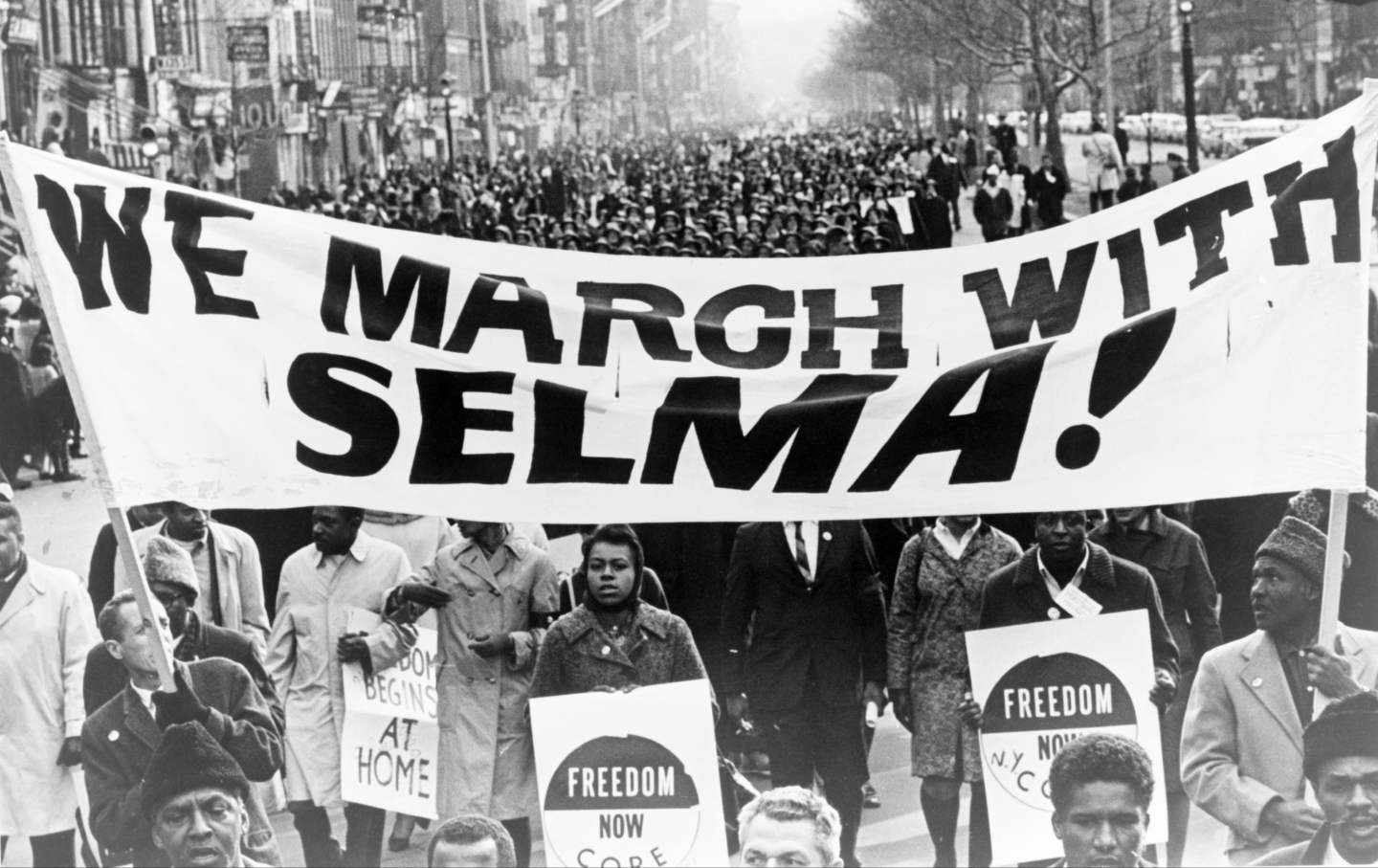
Selma Still Matters Selma Still Matters
What was born there was a new definition of who gets to be an American. And that legacy is under threat.
What Happens When “Your Honor” Is a Robot? What Happens When “Your Honor” Is a Robot?
The age of artificial judges is fast approaching. What will that mean for justice?
What We Need to Ask Ourselves About AI What We Need to Ask Ourselves About AI
Seven questions to resolve before we let this fast-moving technology run rampant.
San Diego’s AI Battlefield Heats Up San Diego’s AI Battlefield Heats Up
The city is at the forefront of the fight against using big tech to surveill residents. But AI poses new threats.

