
Why Fascists Fear Free Speech
The White House is following an old authoritarian playbook to suppress dissent.
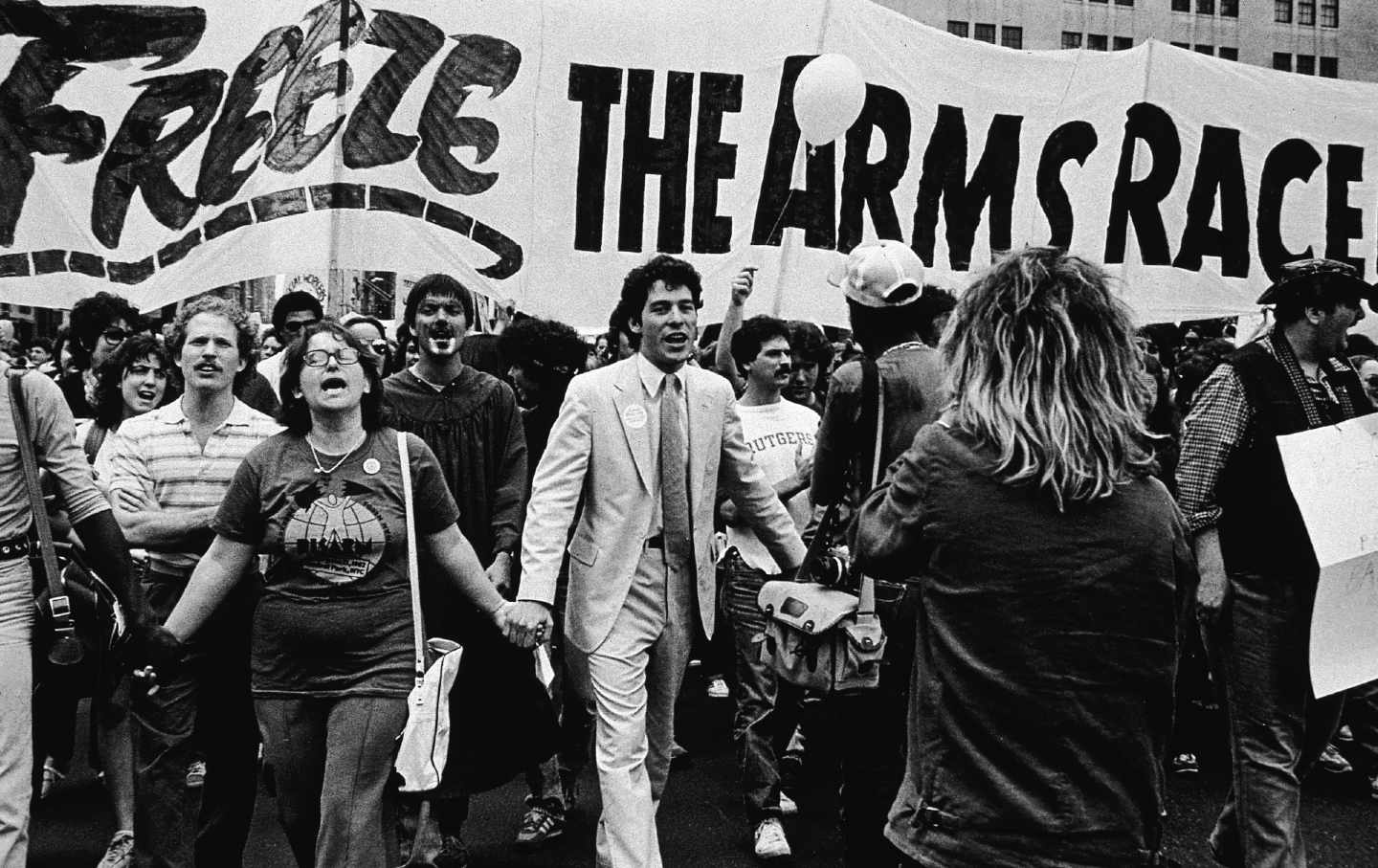
In his previously unreleased preface to Animal Farm, discovered by Ian Angus in 1972 and published later that year by the Times Literary Supplement, George Orwell wrote: “If liberty means anything at all, it means the right to tell people what they do not want to hear.”
As an anti-fascist, Orwell most likely meant that liberty means the right to tell people in power what they do not want to hear. Most Americans would agree that the right to question authority is a nonnegotiable premise of democracy, but one that has met with repression throughout our history and even more so now, during wartime.
Evidence of that repression is quietly mounting all around us. Among the more alarming examples is the federal government’s recent threat to revoke broadcasting licenses if the administration finds content displeasing.
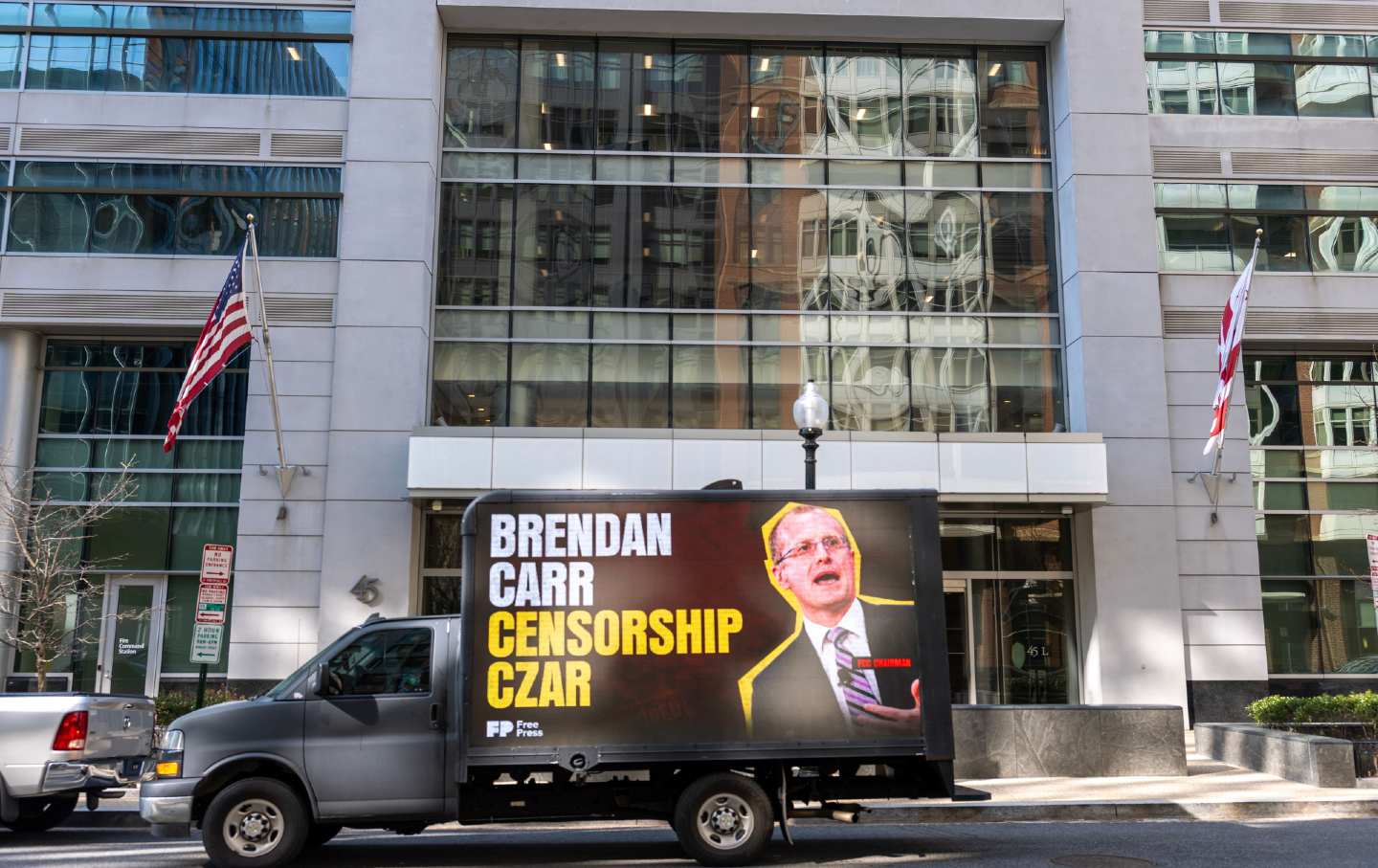
In March, Brendan Carr, the head of the Federal Communications Commission (FCC), warned that broadcasters could lose their licenses if their reporting fails to comply with MAGA doctrine. “Broadcasters that are running hoaxes and news distortions—also known as the fake news—have a chance now to correct course before their license renewals come up,” Carr posted on X. “The law is clear. Broadcasters must operate in the public interest, and they will lose their licenses if they do not.”
On Truth Social, the president seconded that threat, accusing some media organizations of being “Corrupt and Highly Unpatriotic” and whining that they “get Billions of Dollars of FREE American Airwaves, and use it to perpetuate LIES.” Trump concluded by referencing the reality series he once hosted: “As I used to say in The Apprentice, ‘FIRED.’”
These comments suggest that MAGA officials now fear free speech and may consider those who use it as potential criminals or enemies.
As the late great Bob McChesney would often remind us, the Federal Communications Commission has a mandate to manage the airwaves in the people’s interest, not those of big business or the president. The “No Kings” purpose of the Declaration of Independence and Constitution is to distribute power, not concentrate it, a mission augmented by independent media.
The Supreme Court has consistently ruled that the federal government cannot punish news organizations—or anyone else—for oppositional viewpoints. The First Amendment’s protection of press freedoms would be little more than ink on the page if officials could cancel broadcasting licenses whenever coverage aimed to keep them in check.
Fascists fear free speech, and fear is the source of Carr’s demand that broadcasters “correct course.” Such language echoes a familiar pattern in systems that treat democracy as the enemy: First, authorities insist that the media must align with official narratives; then they demand the same obeisance from the general population.
Press freedom advocates recognized the danger immediately. Will Creeley wrote: “Brendan Carr’s authoritarian warning—that networks risk their broadcasting licenses for Iran war reporting that the government doesn’t like—is outrageous.” When government demands the press “become a state mouthpiece under the threat of punishment,” he said, “something has gone very wrong.”
California’s Governor Gavin Newsom warned that “if Trump doesn’t like your coverage of the war, his FCC will pull your broadcast license. That is flagrantly unconstitutional.”
Hawaii Senator Brian Schatz described Carr’s statement as “a clear directive to provide positive war coverage or else licenses may not be renewed.”
Democratic Senator Edward J. Markey of Massachusetts immediately wrote a public letter to Carr saying his threat to revoke licenses is “your latest authoritarian attempt to weaponize the FCC’s statutory authority to censor the media. It is a stain on the FCC’s storied history, and you should resign.”
Their concerns were preceded by a bipartisan group of FCC commissioners who warned in November 2025 that the mere “specter of government interference alone chills broadcasters’ speech.”
As a former pamphleteer, pirate radio broadcaster, and low-power FM advocate who took the FCC to court to preserve the public’s right to access the airwaves at the community level, I believe deeply in the free and unfettered use of radio, libraries, streets, and public parks as spaces for challenging power and imagining new ways of being, learning, and loving. We are now gradually losing ground in many of these spaces.
Existential threats to democracy emerge not only through attempted coups like the one staged on January 6, 2021, but also through smaller, incremental acts: a few unjustified arrests here, a few ICE killings there, along with the quiet criminalization of those who, like the UN Special Rapporteur Francesca Albanese, dare to expose the atrocities caused by our policies. No one act may irrefutably prove full-blown fascism has arrived, but what does that really matter if you or your loved ones are among those who have been threatened, disappeared, silenced, or killed?
The president’s propagandists insist that the FCC simply expects broadcasters to serve the public interest. But in a constitutional democracy, the public interest cannot mean blind obedience to the boss. Challenging official narratives serves the public interest—especially in wartime, when governments feel compelled to control information and deflect public outrage from horrors like the killing of 165 Iranian schoolgirls in a war that was not authorized by the people’s representatives in Congress.
The tilt toward Orwellian censorship underscores a broader shift concerning the meaning of trust in the media. Carr suggests that tighter control is the solution for broadcasters’ straying from the administration’s version of events. But conforming to official doctrine can never render journalism credible. If anything, the opposite is true: Credibility depends on the public knowing that reporters are free to pursue investigations wherever they lead—particularly during wartime—without the fear of death threats, losing one’s job, or worse.
Threatening to silence broadcasters—or anyone else—for critiquing the atrocities being committed in our name erases democratic accountability and replaces it with a demand for obedience.
It was heartening, therefore, when, on March 17, 2026, Joe Kent, a combat veteran and former CIA officer, refused to continue taking orders from the president and quit his job as MAGA’s director of the National Counterterrorism Center. In a letter of protest addressed directly to the president and sent to over 430,000 online followers, Kent said, “I cannot in good conscience support the ongoing war in Iran. Iran posed no imminent threat to our nation.” The rationale for going to war, Kent explained, was based on a “lie” similar to the lies once used to draw the US into a “disastrous Iraq war that cost our nation the lives of thousands of our best men and women.” We can only hope that Kent’s refusal to go along with the lies will be emulated by others in the MAGA regime.
The framers crafted a constitution that protects our right not only to freely critique those in power, but also to freely reimagine power itself. This opened space for what W.E.B. Du Bois, Angela Davis, and others have called “abolition democracy”—one capable of shedding the violence of settler-colonial legacies and advancing new frontiers of liberation based on solidarity, community, human affirmation, and love.
While those legacies dominate, telling the truth becomes a revolutionary act. The truth today is that we live in an age of creeping fascism, genocide, and war. Pretending otherwise is a form of complicity. Keeping the publicly owned airwaves open as a space to challenge a dystopian agenda is the true and revolutionary purpose of democracy and free speech, and we should infuse all of our movements with tactics for their defense.
Become a Sustaining Donor This September
Between the reemergence of right-wing red-baiting and Donald Trump’s use of the chilling National Security Presidential Memorandum–7 to criminalize left political organizing, we’re seeing McCarthyism reborn before our eyes.
This assault on democracy cannot be ignored or wished away. Resisting it requires bravery in the face of threats and repression, a steadfast commitment to the truth, and the unwavering belief that we can—and will—overcome this darkness.
We must have an independent media that sets the record straight, unearths corruption and abuses of power, and advances a politics of justice and dignity for all if we’re to win this fight.
That’s why I’m writing to you today. This September, The Nation needs to add 100 monthly donors to sustain our progressive journalism. Your contribution makes the next investigative report, the next truth-speaking column, and the next pathbreaking essay all possible.
I hope you’ll support our work with a recurring donation today. If you donate $10 or more a month, we’ll send you a brand new “Hands Off the Free Press!” sticker to recognise your commitment to our cause. Please, donate today.
Onward,
Katrina vanden Heuvel
Editor and Publisher, The Nation
More from The Nation
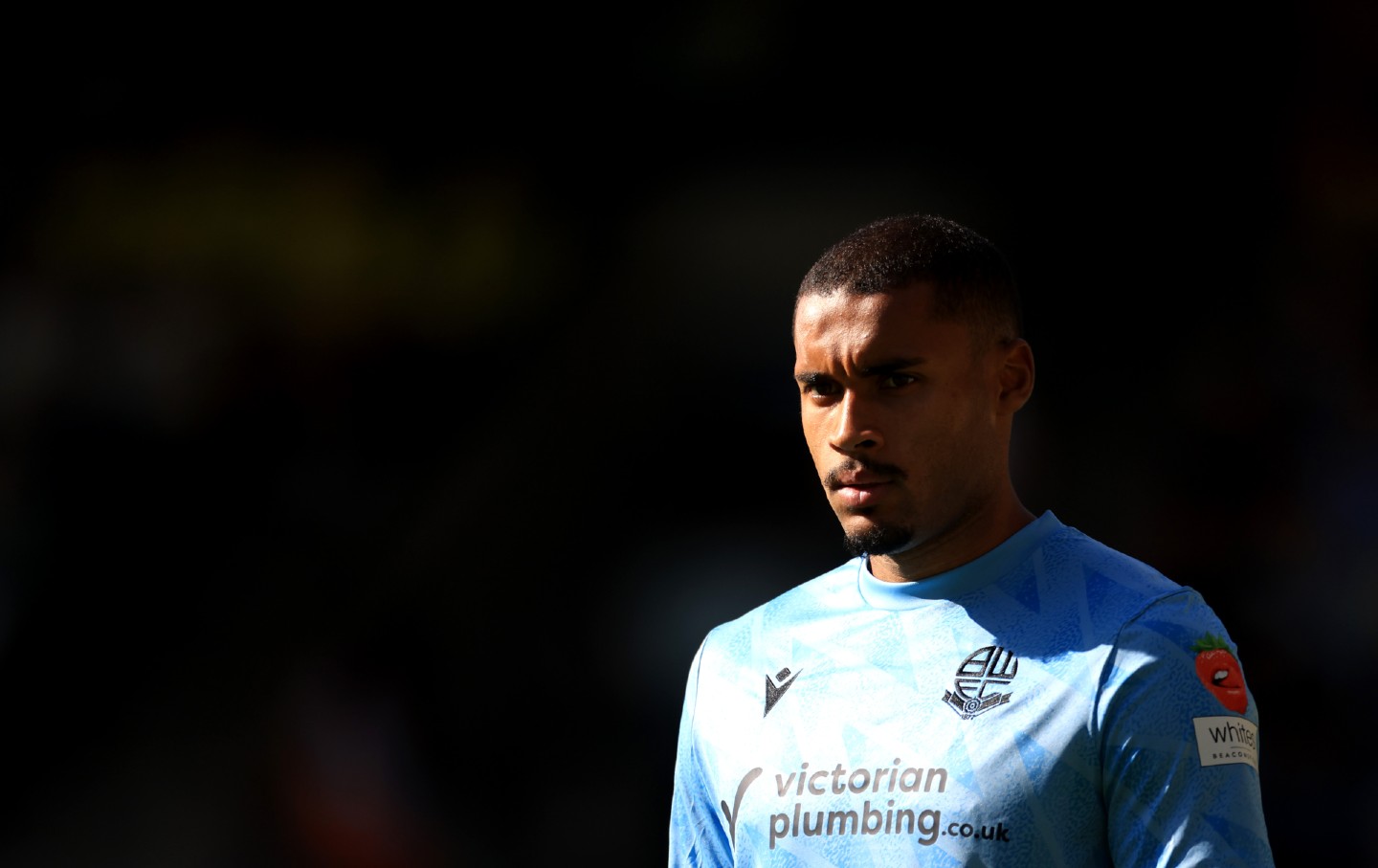
Irish Goalkeeper Gavin Bazunu’s Refusal to Play Against Israel Puts Him on the Right Side of History Irish Goalkeeper Gavin Bazunu’s Refusal to Play Against Israel Puts Him on the Right Side of History
Bazunu’s decision raises the perennial question: Why is a country that is currently committing a genocide allowed to compete in the first place?
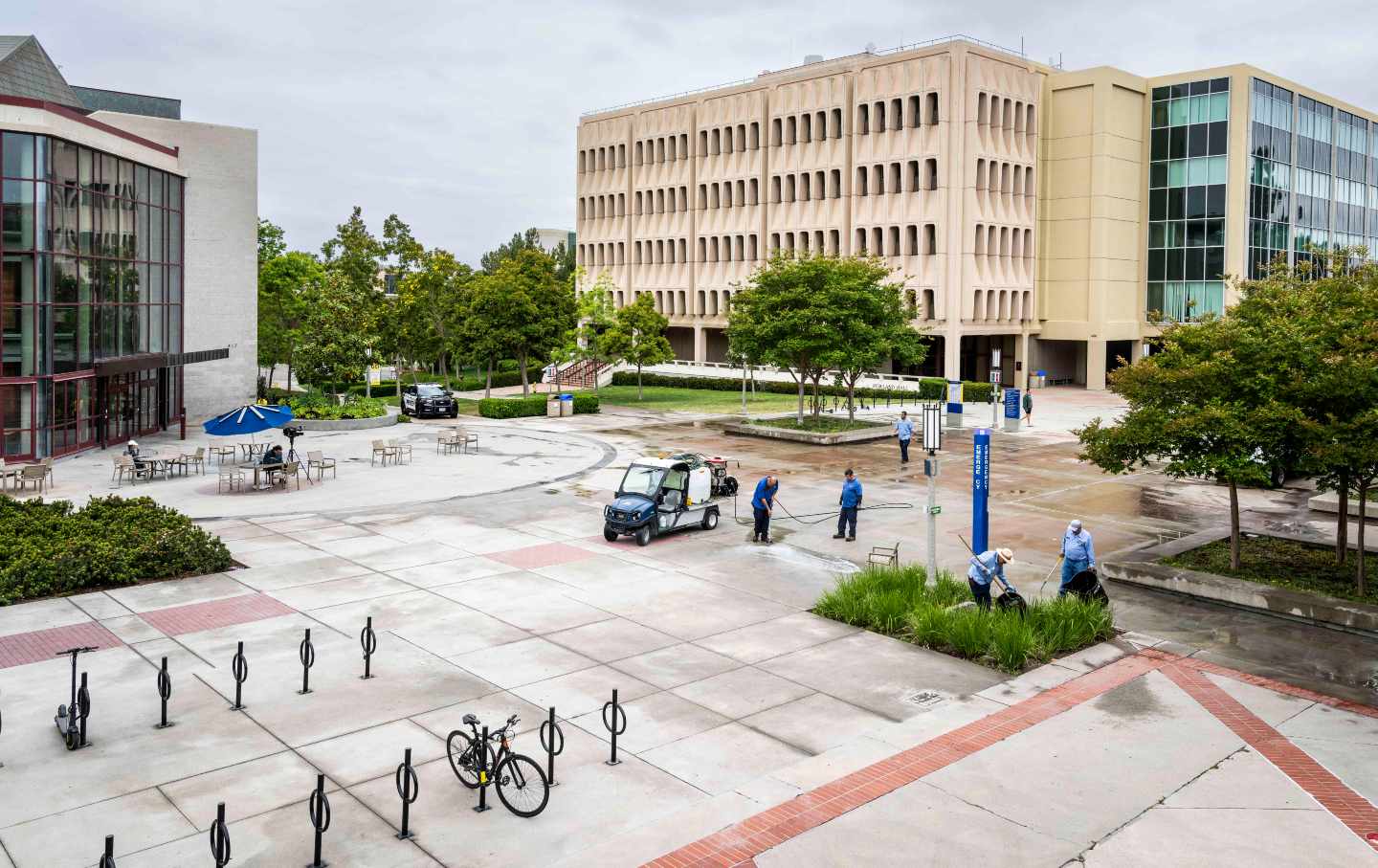
The Promises and Compromises of the University of California The Promises and Compromises of the University of California
I grew up in a neighborhood manufactured by the University of California, Irvine. It felt like a utopia for academics—until the university forsook its mission of serving the publi...

Is Platonic Co-Parenting the Future of the Family? Is Platonic Co-Parenting the Future of the Family?
Disillusioned with the nuclear family and apprehensive of tethering their reproductive futures to the bleak hellscape of modern love, young people are seeking a different way.

How Trump’s Crackdown on Speech Has Damaged the Student Press How Trump’s Crackdown on Speech Has Damaged the Student Press
I serve as editor in chief and president of The Stanford Daily. Our newsroom has keenly felt the effects of Trump’s campus crackdown, which is why we sued the federal government.
Treat Spotify Like a Public Utility Treat Spotify Like a Public Utility
Music streaming platforms have way too much control over musicians and music lovers. It’s time to rein them in.

