Reimagining The Nation in Print
Reimagining “The Nation” in Print
Each new monthly issue will be much longer—with more room for hard-hitting investigative pieces and reporting that challenges corporate power and conventional wisdom.
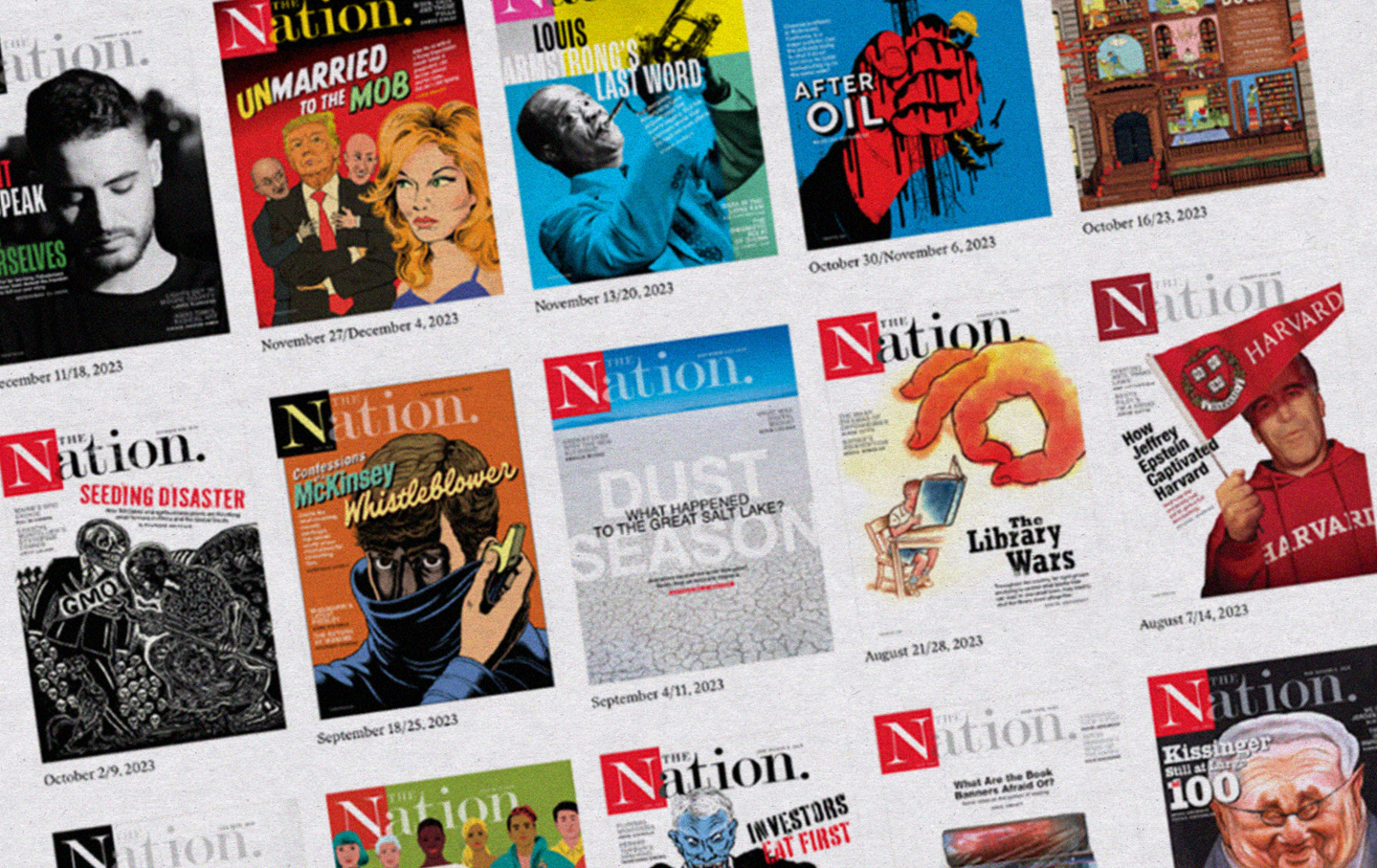
As the last few weeks have made brutally clear, the gap between what is actually happening in the world and the terms allowed for discussion in the corporate media has never been wider. It’s no accident that Edward Said first became visible outside the academy in our pages, or that James Baldwin’s “Report From Occupied Territory,” Toni Morrison’s reminder that in moments of crisis “there is no time for despair…no room for fear,” and Tony Kushner’s “Socialism of the Skin” first appeared in The Nation. Or that we’re the first—and sadly, so far the only—US magazine to have a Palestine correspondent, Mohammed El-Kurd. The need for a publication dedicated to the radical possibility of “what might happen if you tell people the truth” has never been more urgent.
But as this special issue underlines, the current moment holds unprecedented peril for independent media. With newsstand space relentlessly shrinking and the casualty list of extinct titles growing with every passing month, The Nation faces the same imperatives as anyone else in this business.
As a magazine in continuous existence since 1865, from the invention of the telegraph to the arrival of TikTok, we have a proud legacy of evolution and reinvention. Now is no different. That’s why, both to survive in this industry and to give the subscribers and donors who support us more of what they say they want, we are reimagining our print edition.
Each new issue will be much longer—with more room for hard-hitting investigative pieces, reporting that challenges corporate power and conventional wisdom, and reviews and commentary on culture that aim to provoke active thought rather than solicit passive agreement. Space for open, civil debate on the left. Delivered at a monthly frequency that allows readers more time to enjoy what we publish in print, while at TheNation.com we continue to post the same nimble, responsive, authoritative reporting and analysis we already provide to millions of readers each month.
This shift will allow us to be more journalistically ambitious, creating space for both longer reads and a wider range of voices. We’re excited about the changes—which will start with our January issue. We hope you are, too, and we’d love to hear from you! Please direct any questions or suggestions to [email protected].