
Dysfunctional Los Angeles City Politics Threatens Housing Progress
Mayor Karen Bass’s administration has failed to live up to its own affordable-housing ambitions.
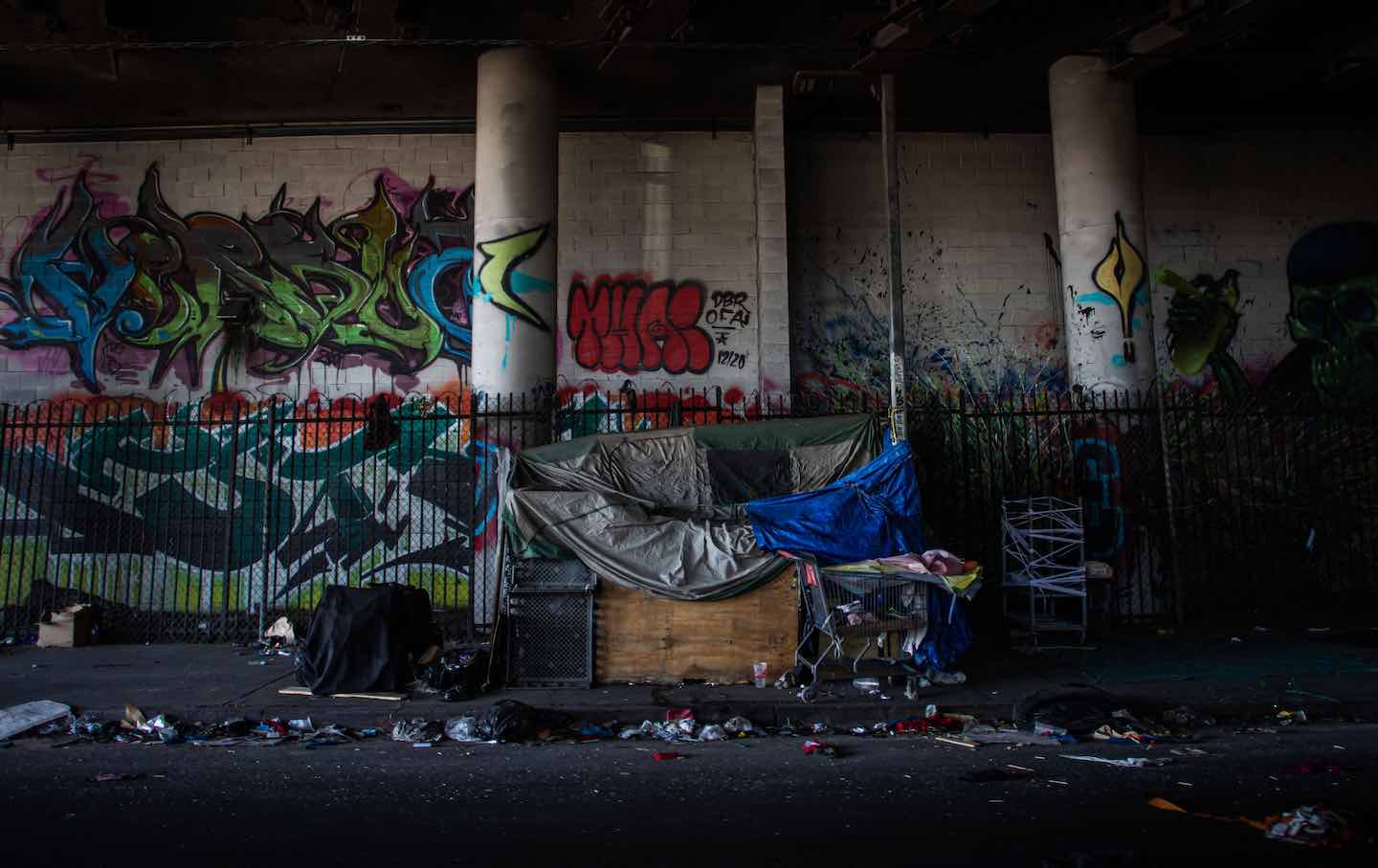
A homeless encampment under a bridge in downtown Los Angeles on July 26.
(Photo by Apu Gomes / AFP)
When Karen Bass was elected mayor of Los Angeles, it seemed that the city’s shameful neglect of its housing crisis would finally end. Bass, after all, is a progressive, and she staked much of her political capital during her mayoral campaign on a pledge to tackle the interconnected crises of homelessness and a dearth of affordable or supportive housing in the sprawling city.
Two years on, the promise is unfulfilled, and what progress has been made, through Bass-backed programs such as Inside Safe, which has moved thousands of people from the streets into motels, is now at risk of being reversed, according to advocates who have argued in court that city officials are using their clout to block new housing developments in affluent parts of town. Becky Dennison, co–executive director of the Venice Community Housing Corporation, told me in a recent conversation that different city agencies and officials are at war with each other over how to tackle the housing crisis and whether to share the burden equitably across neighborhoods. “There’s no unified message coming out of the city; it’s complete uncertainty. It creates a situation in which everybody loses.”
True, on-the-streets homeless numbers have declined for the first time since the start of the Covid pandemic, at least in part because of Bass’s efforts on the issue. But the declines are small (just over 2 percent in 2024), and upwards of 45,000 people continue to live on the sidewalks of Los Angeles, with tens of thousands more in the surrounding county.
When Los Angelenos are polled, by huge margins they report that housing and homelessness are their top local concerns, and large majorities of residents favor the city and state’s being more involved in developing affordable housing in the region. Two-thirds of residents also want more rental units in their neighborhoods. Yet progress is being stifled by an unsavory coalition of developers and affluent homeowners, who have sought to prevent affordable housing from being constructed in wealthier parts of town.
Karen Bass’s much-touted Executive Directive 1, which was aimed at fast-tracking affordable housing projects around the city, has been watered down to the point of absurdity. Under pressure from homeowners, especially on the wealthy West Side and in glitzier enclaves of the San Fernando Valley, Bass had the directive rewritten to exclude residential neighborhoods zoned exclusively for single-family housing. This change automatically excluded roughly three-quarters of the city, including most of its affluent, politically influential neighborhoods, from having to meet affordable-housing and supportive-housing targets. Those areas that weren’t excluded were poorer, and less white; thus, poverty and services for the unhoused remain concentrated in already-struggling communities.
Arguably, nowhere has the promise fallen shorter than in Venice, a picturesque beach community that has seen an explosion in homelessness and encampments in recent years. As I reported in 2021, homes along the canals in Venice can cost millions of dollars; meanwhile, a year into the pandemic, thousands were sleeping in tents along the boardwalk and in back alleys and parking lots.
In the years since, many of the encampments have been swept, and more will likely be dismantled in the wake of the Supreme Court’s recent ruling allowing cities to shut down encampments, and under Governor Gavin Newsom’s executive order urging cities to do just that. But Venice’s affordable-housing crisis remains as acute as ever.
Dennison’s group hopes to break ground on a 140-unit supportive housing development—one of eight city-owned lots identified, back in 2016, as being suitable for such projects—in early 2026. It is known as the Venice Dell supportive housing development, and was conceived as part of a larger, coordinated effort to tackle the community’s housing crisis. So far, however, it is more a dream than a reality.
In a sign of how dysfunctional Los Angeles city politics around housing continues to be, city agencies, urged on by affordable-housing advocates, recently fought two lawsuits, brought by NIMBYist community groups opposed to the project. The city won the lawsuits, tamed the NIMBYists, and for a while it looked as if the project would proceed as planned. Meanwhile, however, council member Traci Park and the City Attorney’s office under Hydee Feldstein Soto quietly launched their own rearguard action to stonewall the project, exerting pressure on the Departments of City Planning and of Transportation to withhold vital notices of clarification from the Coastal Commission, without which the commission cannot issue the final permits needed for development projects near the ocean to get underway. Those documents have been on ice for over a year now, resulting in a Fair Housing lawsuit being filed against the city last month, and an investigation being launched by the state’s Housing Accountability Unit.
In other words, taxpayer dollars were recently spent to allow the city to fight in the courts in favor of the affordable-housing development. Now, additional taxpayer dollars will be spent allowing the city to defend itself in court against allegations that it is illegally opposing that very same development. That isn’t just dysfunctional; it’s absurd.
Since January 2023, Dennison’s organization has been asking the Coastal Commission whether the needed paperwork has been filed and whether the project can proceed. And each time they ask, the commission tells the group that they have to get more information from the city attorney or from councillor Park—information that isn’t forthcoming. “Everybody’s just pointing fingers at each other,” Dennison says in exasperation.
For Mike Bonin, who represented Venice on the city council from 2013 to 2022 and now lectures on public policy at Occidental College and USC, and who has long worked on housing issues in his community, the ongoing efforts are nothing short of shameful. “A lot of it has been done behind the scenes, absent a council vote,” he answers. “There has been an approach both through policy and denial of projects, of pushing the problem onto other parts of the city.” Richer, whiter areas of the city, Bonin argues, are “very resistant to more housing—they don’t like affordable housing, don’t like housing for the homeless.” As a result, projects like the Venice Dell are stalling out, encampments are being swept, and existing shelters for the homeless on the West Side are being shuttered as the unhoused in those facilities or who are on the streets are being removed to poorer, less-white neighborhoods around Los Angeles. “Every neighborhood in Los Angeles needs to be part of the solution,” Bonin avers. “But you have parts of the city who are exempting themselves from it. Everybody needs housing. That is, to me, a moral absolute.”
Mayor Bass’s instincts around tackling the housing crisis are sound. But her administration over the past two years has failed to live up to its own affordable-housing ambitions. The difficulties facing the Dell project in Venice sum up the chaos and dysfunction around housing policy in the greater-LA region. It’s past time for the mayor to take control of the situation and past time for important affordable-housing projects to be given the green light.
Support independent journalism that does not fall in line
Even before February 28, the reasons for Donald Trump’s imploding approval rating were abundantly clear: untrammeled corruption and personal enrichment to the tune of billions of dollars during an affordability crisis, a foreign policy guided only by his own derelict sense of morality, and the deployment of a murderous campaign of occupation, detention, and deportation on American streets.
Now an undeclared, unauthorized, unpopular, and unconstitutional war of aggression against Iran has spread like wildfire through the region and into Europe. A new “forever war”—with an ever-increasing likelihood of American troops on the ground—may very well be upon us.
As we’ve seen over and over, this administration uses lies, misdirection, and attempts to flood the zone to justify its abuses of power at home and abroad. Just as Trump, Marco Rubio, and Pete Hegseth offer erratic and contradictory rationales for the attacks on Iran, the administration is also spreading the lie that the upcoming midterm elections are under threat from noncitizens on voter rolls. When these lies go unchecked, they become the basis for further authoritarian encroachment and war.
In these dark times, independent journalism is uniquely able to uncover the falsehoods that threaten our republic—and civilians around the world—and shine a bright light on the truth.
The Nation’s experienced team of writers, editors, and fact-checkers understands the scale of what we’re up against and the urgency with which we have to act. That’s why we’re publishing critical reporting and analysis of the war on Iran, ICE violence at home, new forms of voter suppression emerging in the courts, and much more.
But this journalism is possible only with your support.
This March, The Nation needs to raise $50,000 to ensure that we have the resources for reporting and analysis that sets the record straight and empowers people of conscience to organize. Will you donate today?
More from The Nation

The Real Reason Americans Love Guns The Real Reason Americans Love Guns
With a weak social safety net, a gun offers a false sense of personal power and security.

The Endless Hypocrisy of Bari Weiss The Endless Hypocrisy of Bari Weiss
She claims to be a free speech champion. But as her actions at CBS News keep showing, she seems to think free speech should run only in a rightward direction.
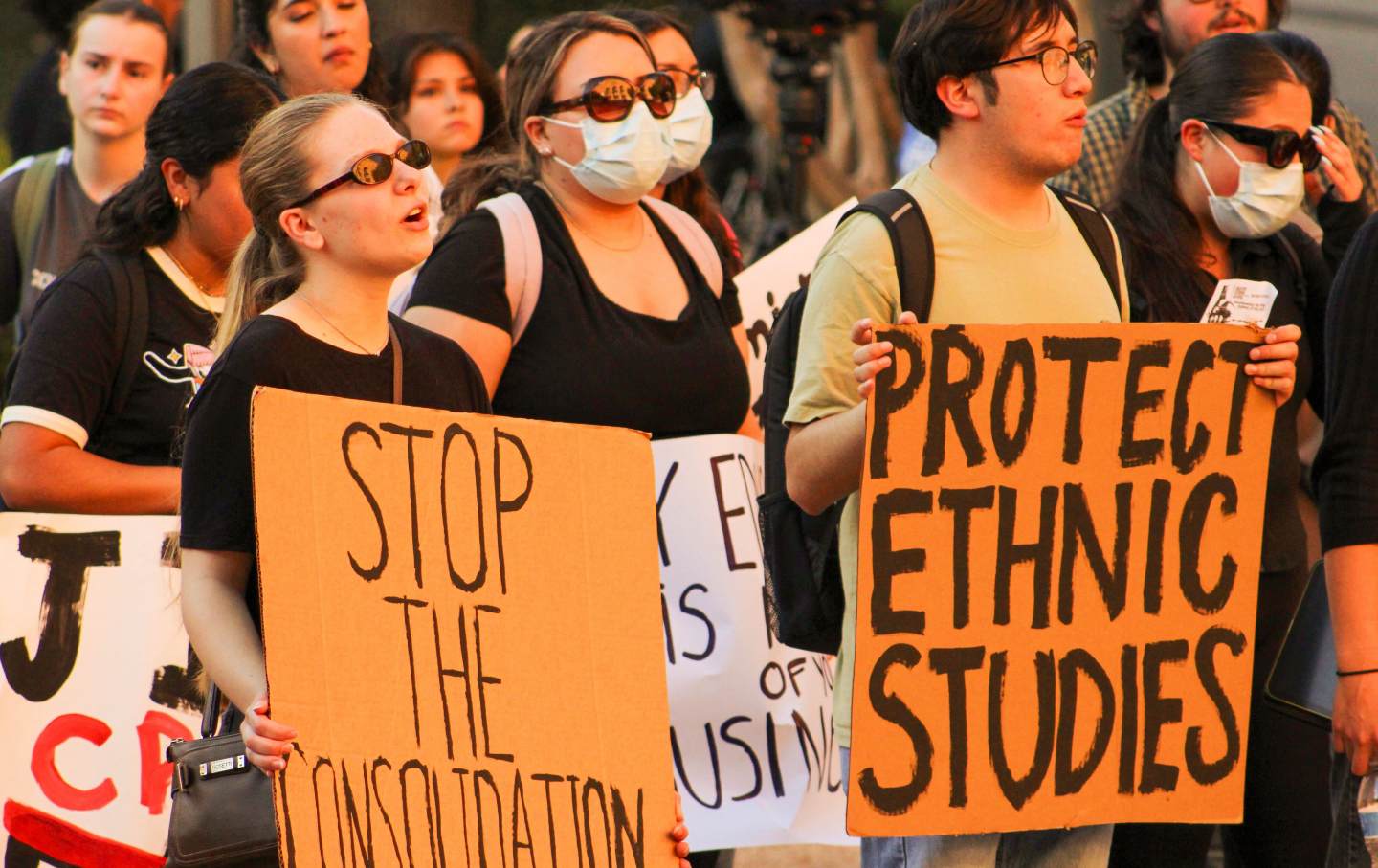
What Will Be Left After the University of Texas Destroys Itself? What Will Be Left After the University of Texas Destroys Itself?
UT-Austin has collapsed its race, ethnic, and gender studies into a single program while a new policy asks faculty to avoid “controversial” topics. But the attacks won’t end there...

The Corporate Media Is Head Over Heels for the Iran War The Corporate Media Is Head Over Heels for the Iran War
Donald Trump’s attack may be surreal, unjustified, and illegal. But that’s not stopping the press from turning the propaganda dial way up.

The Disturbing History of ICE’s “Death Cards” The Disturbing History of ICE’s “Death Cards”
The Vietnam-era practice is yet another example of ICE agents thrilling to the brutality they have been encouraged to cultivate.
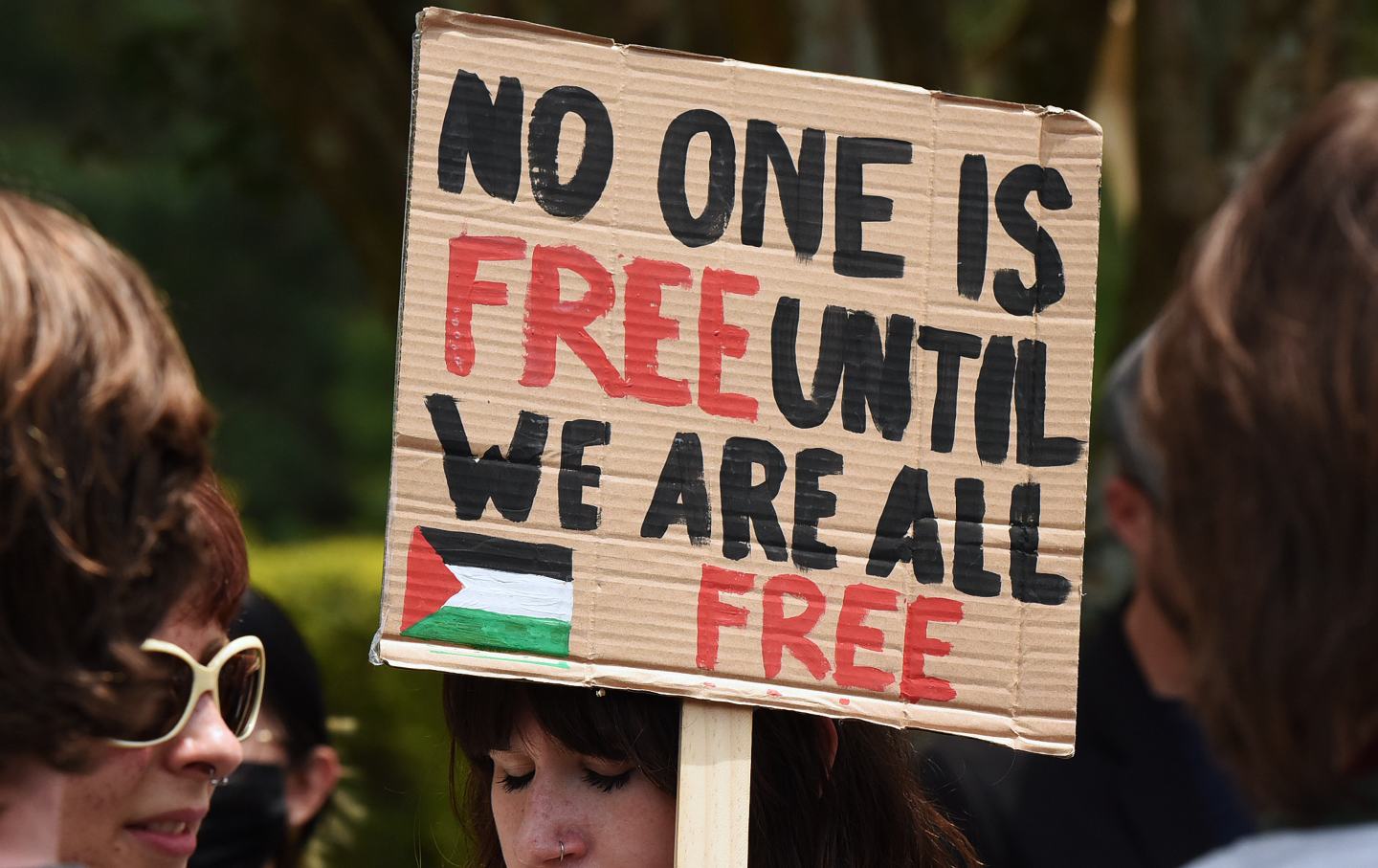
The American Universities Programming Israel’s Killer Drones The American Universities Programming Israel’s Killer Drones
Industry partnerships in higher education are pushing STEM graduates into the business of weapons manufacturing and genocide profiteering.

