
She Gave a Lecture on White Supremacy. IU Removed Her From the Class.
Jessica Adams was barred from teaching a course on social justice for six weeks after showing a graphic that listed MAGA and Columbus Day as forms of “covert white supremacy.”

Students pass through the Sample Gates at Indiana University in Bloomington.
(Jeremy Hogan / Getty)
In September, Jessica Adams showed her “Diversity, Human Rights, and Social Justice” class at Indiana University a graphic that listed Make America Great Again and Columbus Day as forms of “covert white supremacy.” A student complained about the lecture to the office of US Senator Jim Banks, who brought the concern to the dean of the IU School of Social Work, and administrators launched an investigation into the incident.
During the lecture on white supremacy, Adams didn’t talk about the term “Make America Great Again,” and none of the students voiced objections in person, according to a student who attended the lecture. During the next class, Adams reportedly told students that if they ever had a disagreement, they were welcome to talk to her about it—either openly or in private. Then she split students into groups, and they spent the rest of the time discussing a reading assignment.
The next class was scheduled to cover immigration, but Adams didn’t show up. Instead, a different professor arrived and presented a guest lecture on her prior research, which was about children with autism. Starting October 6, Adams was barred from teaching the course.
Students weren’t told anything about Adams’s removal. “It was just business as usual,” said Jane Grady, an IU masters student in public health and social work who described Adams as a thoughtful and measured instructor. “She is, in my mind, very interested in making the class something that is cooperative, collaborative, open to discussion, open for people to share their individual experiences and to try and give people a chance to learn from one another.”
Indiana law SEA 202, which passed in 2024, requires instructors to promote “intellectual diversity” in the classroom or face disciplinary action. Universities are also required to institute a method for students or employees to report faculty that violate that code, and to evaluate faculty on their efforts to promote intellectual diversity before making decisions on tenure, bonuses, or reappointment. In September, the Foundation for Individual Rights and Expression ranked IU as the worst public university in the country for free speech.
The Republican lawmakers who pushed SEA 202 through the state legislature said it would make higher-education classrooms friendlier to conservative students, but the bill met opposition from Indiana activist groups who said it would restrict free speech and censor discussions of racial discrimination and civil rights.
Grady and a few other students shared another class with Adams, where she explained that she would no longer be teaching their class on diversity, but couldn’t explain why. In a press conference on November 7 by the IU chapter of the American Association of University Professors, Adams and a colleague in the Labor Studies department said that administrators had failed to grant Adams due process or follow standard procedures for investigating an intellectual diversity complaint.
Adams said that the School of Social Work dean Kalea Benner accused Adams of teaching information that was biased, unusual, and not rooted in evidence. In the ensuing investigation, Benner acted as both the main complainant and a “content expert,” and was “effectively allowed to determine the merit of her own complaint.”
Adams said she was initially asked to attend what she believed would be an “informal meeting” about the complaint. But the information she shared during that meeting was later used in the investigation against her. In a later meeting, Adams said she was told that if she brought council, the meeting would be “shut down immediately.”
Administrators cited a second, informal complaint as reason for barring Adams from teaching the class, but Adams said she wasn’t allowed to see the content of that complaint, and was told informal resolution would not be possible.
In the press conference, Adams also said that she disagreed with the dean’s complaint that the graphic used in her lesson on white supremacy was not evidence-based or widely used in social work education. The graphic, which was created by the Safehouse Progressive Alliance for Nonviolence, had been published in academic journals and used by the National Equity Project and the National Education Association, according to Adams. “I feel that the assumption that [the graphic] is not evidence-based is rooted in white supremacist ideology,” she said.
Adams also said that the lesson fit into the structure of the curriculum she was asked to teach. IU’s course catalog states that “Diversity, Human Rights and Social Justice” teaches students essential skill-sets to navigate “the shifting landscape of diversity, oppression, power, and privilege” in the field of social work.
Braydyn Lynts, a masters student studying social work, said the class’s focus on social justice is fundamental to the profession. “Social workers are bound by the code of ethics to understand and be competent in social justice,” Lynts said. “For lack of a better word, social justice means that we understand all people, no matter what situation or what circumstance they’re in.”
In the weeks since, Grady said, many students in the class expressed frustration with the School of Social Work’s ongoing lack of transparency. “We have been begging the university at every turn to provide us with transparency, accountability, or even just empathy to our situation, to encourage us that they are, in fact, trying to do the right thing, the right ways, for the right reasons,” Grady said. “And every turn that I can think of, they have refused to do so, which has been a huge erosion of trust.”
Six weeks after Indiana University administrators barred her from teaching her class on diversity and social equity, Adams returned to the classroom. On November 14, Benner announced her return in an e-mail to the class. Grady responded with a list of follow-up questions about IU’s process while handling the investigation, including what policies and offices it was processed under, how investigators gathered evidence, and what the investigation concluded.
Popular
“swipe left below to view more authors”Swipe →In a response e-mail, Benner stated she couldn’t comment on personnel matters. When Grady asked which policy prevented her from answering, Benner suggested Grady contact the investigator. Grady responded that she couldn’t, since no one had provided the name, office or contact information of the investigator. Benner repeated that IU couldn’t comment on personnel matters, and didn’t respond to Grady’s follow-up e-mails.
When Adams returned to the classroom last week, she informed students she’d been sanctioned by the university, according to Grady. Adams did not respond to requests for comment, and an IU spokesperson stated via e-mail that the university cannot comment on personnel matters. “Indiana University is committed to academic freedom, following policies that uphold due process for faculty and provide a framework to best serve our students,” the spokesperson stated.
Lynts said he’s lost respect for IU’s administration. “College is not this place to be sheltered away from your opinions,” Lynts said. “What’s going on with Jessica is terrible, because students should be able to learn.”
Grady said that she and other students in the class have contacted regulatory oversight organizations, including the National Association of Social Workers and the Council on Social Work Education. “It feels as though the School of Social Work is unwilling to adhere to the values that it purports to teach us, while failing to protect teachers who provide us that accurate history, theory, and evidence-based social work practice that we need in order to understand the dynamics socially within the United States, and to work on repairing the ways in which it causes harm.”
Become a Sustaining Donor This September
Between the reemergence of right-wing red-baiting and Donald Trump’s use of the chilling National Security Presidential Memorandum–7 to criminalize left political organizing, we’re seeing McCarthyism reborn before our eyes.
This assault on democracy cannot be ignored or wished away. Resisting it requires bravery in the face of threats and repression, a steadfast commitment to the truth, and the unwavering belief that we can—and will—overcome this darkness.
We must have an independent media that sets the record straight, unearths corruption and abuses of power, and advances a politics of justice and dignity for all if we’re to win this fight.
That’s why I’m writing to you today. This September, The Nation needs to add 100 monthly donors to sustain our progressive journalism. Your contribution makes the next investigative report, the next truth-speaking column, and the next pathbreaking essay all possible.
I hope you’ll support our work with a recurring donation today. If you donate $10 or more a month, we’ll send you a brand new “Hands Off the Free Press!” sticker to recognise your commitment to our cause. Please, donate today.
Onward,
Katrina vanden Heuvel
Editor and Publisher, The Nation
More from The Nation

As Morale Sags, More Military Service Members Are Having a Crisis of Conscience As Morale Sags, More Military Service Members Are Having a Crisis of Conscience
According to multiple GI rights organizations, service members are inquiring in unprecedented numbers about seeking conscientious objector status.
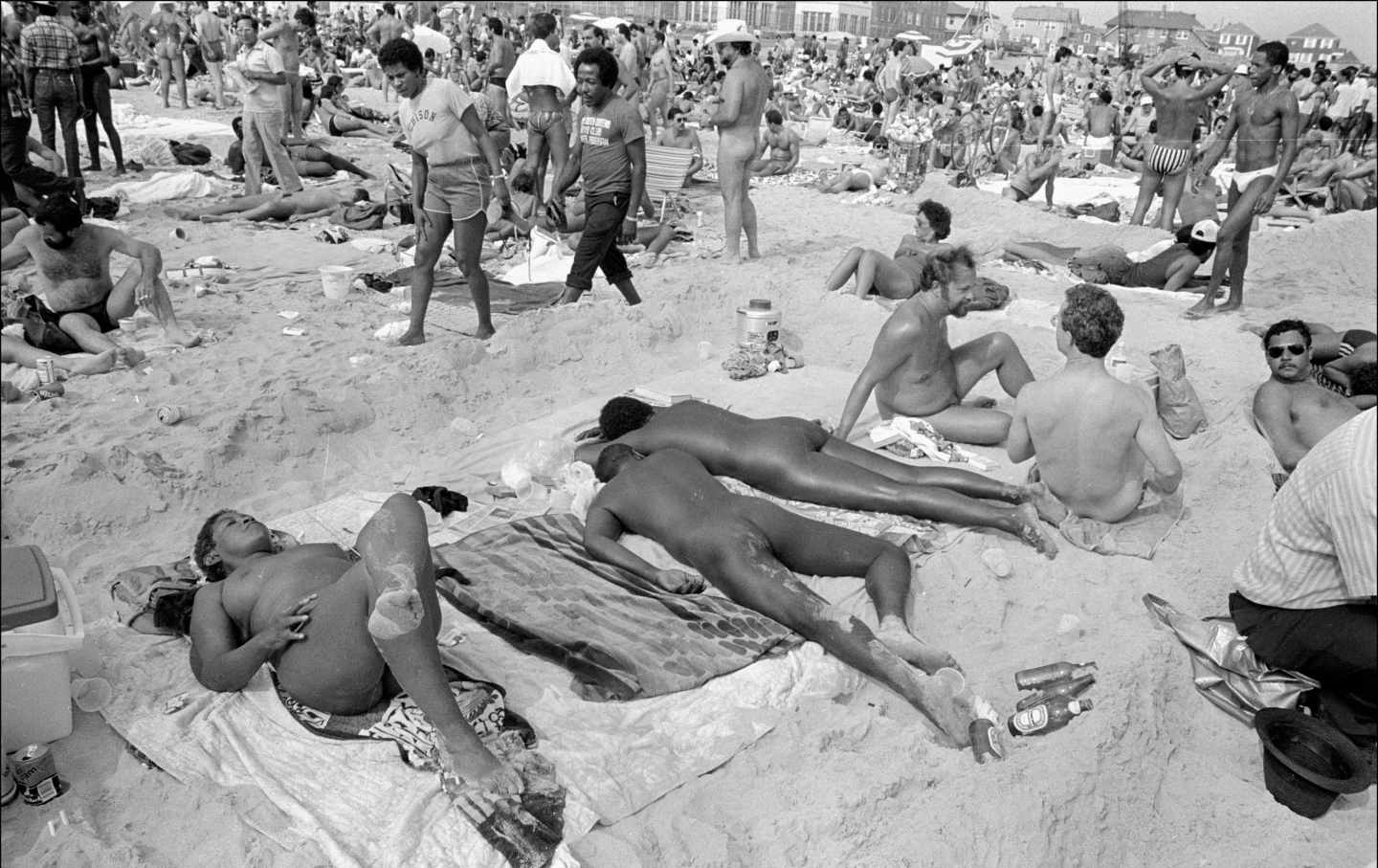
What Remains of Riis? What Remains of Riis?
A new members’ club has revived Riis Park’s long-vacant bathhouse, reopening old questions about whom the People’s Beach is really for.

When Texas Sex Ed Falls Short, Gen Z Women Turn to Social Media When Texas Sex Ed Falls Short, Gen Z Women Turn to Social Media
A 2025 study found that 70 percent of adolescents sought reproductive health information through social media platforms.

Justice for Macklemore Justice for Macklemore
The rapper has been dumped from Ed Sheeran’s tour for saying “free Palestine.” That’s a disgrace.

We Are Living Under Roy Cohnian Logic We Are Living Under Roy Cohnian Logic
The political fixer created a career for himself as a self-promoting, ubiquitous hustler. Like Trump, he got away with it by having the right friends.

Time Has Run Out for AI Risk Deniers Time Has Run Out for AI Risk Deniers
The recent spate of reports about the technology’s destructive power underline two prime directives: Be afraid, and regulate aggressively.

