
Chinese Transnational Repression Is a Real Issue—but Shujun Wang Is a Bad Example
Our government spent almost a decade chasing a professor they thought was a spy. The case raises questions about our ability to pursue real perpetrators of China’s crimes.
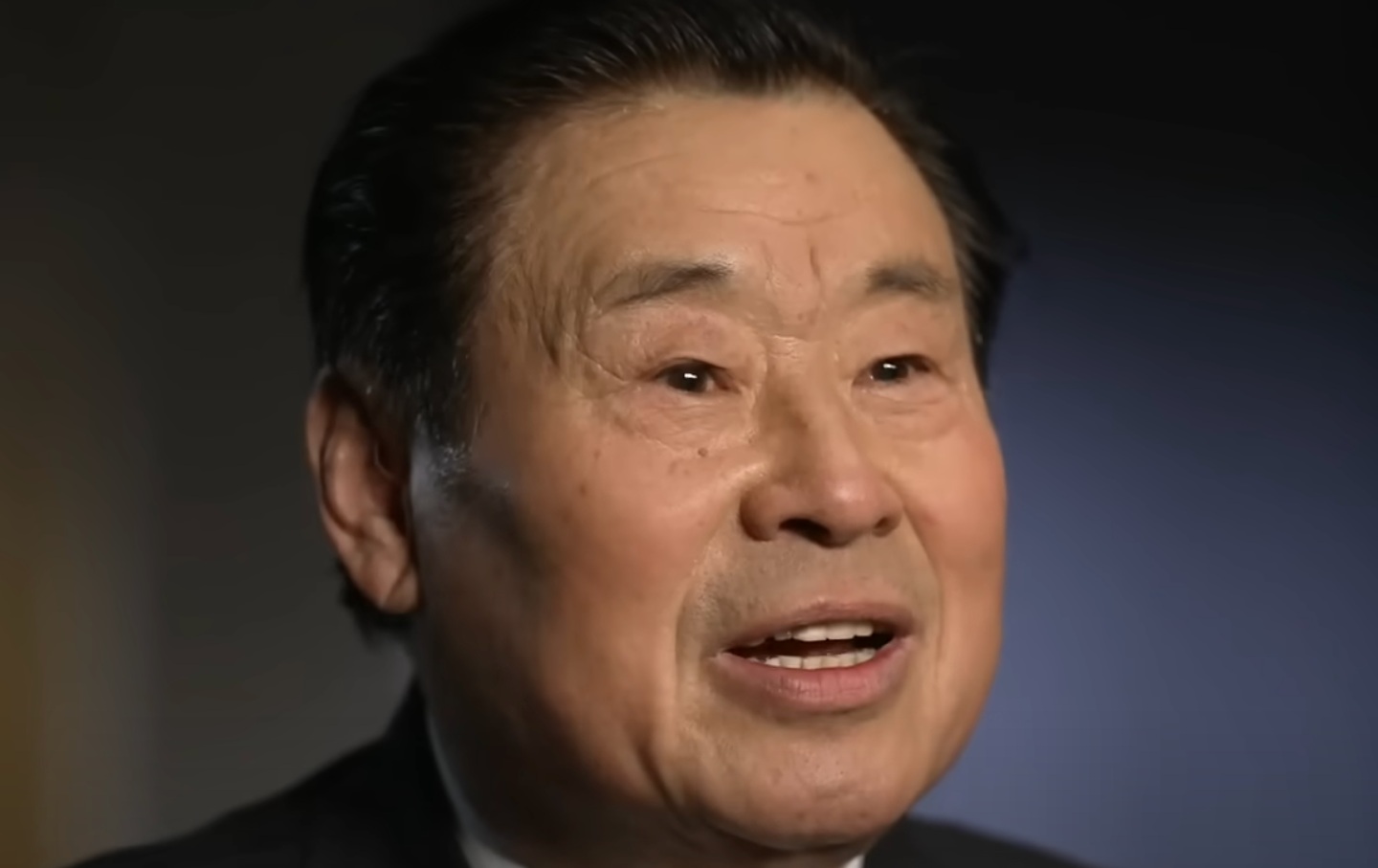
Shujun Wang on 60 Minutes.
(YouTube)On May 18, viewers of 60 Minutes were promised a show that would reveal the depths of Chinese surveillance in the United States. One lengthy segment dedicated its time to the case of Wang Shujun: an elderly historian who was convicted last year in the US of secretly passing information to the Chinese security state. Anchor Norah O’Donnell used Wang, who is an American citizen, as the archetypical example of a conniving spy who burrowed deep inside the Chinese dissident community in Queens, New York, in order to betray the diaspora.
Transnational repression of dissidents by the Chinese Communist Party is a real and pressing issue. Officials in Hong Kong have placed bounties on multiple activists residing overseas, including in the United States. Other individuals have carried out campaigns of stalking and violent harassment on behalf of Beijing. But Wang’s a bad example, and one that raises considerable questions about the ability of the US government to pursue the real perpetrators of China’s transnational crimes and the hyperbolic terms in which the government and media celebrate them.
Wang came to the United States in the early 1990s as a visiting scholar at Columbia University. In 2006, he helped to establish the Hu Yaobang and Zhao Ziyang Memorial Foundation, a nonprofit with a mission of promoting democracy in China. The organization, a low-budget operation, gave him access to other dissidents and events around the US. In August 2017, the FBI met with Wang at a restaurant in Queens to ask him about the foundation, discuss his travels to China, and any contacts he may have had with the Chinese government, particularly the Ministry of State Security (MSS). They were interested in seeing if Wang might be able to help them out.
Wang lied and said he had no contacts with the MSS: He said he was allowed to travel freely to China because, while his foundation was pro-democracy, it wasn’t explicitly anti–Chinese Communist Party. Two years later, he was stopped at the airport while returning from China at the request of the FBI: A search of his luggage turned up an address book with the contact information for Chinese security officials, and combing through his iCloud and e-mail accounts revealed recaps of meetings he had with other activists and notes on conversations that he was passing to MSS handlers. Wang was a terrible liar and it was catching up with him.
Many of Wang’s contacts were dissidents who arrived in the US following the Tiananmen Square massacre in 1989. They hoped that the outrage over the crackdown would make China a pariah and eventually set it on a path toward democracy. This never happened: Instead, the country was welcomed back into the international fold and grew into an economic and military power without ever democratizing. The state of the movement was not lost on Wang.
Still looking for a potential lead for the US government, in 2021, the FBI sent an undercover agent posing as an intermediary to meet Wang. The two discussed his work and how Wang might be able to delete evidence of what he was doing. A year later, he was arrested for acting as a foreign agent without notifying the US attorney general, criminal possession of identification documents, and lying to law enforcement. His trial began two years later. “The FBI’s methods in this case were pretty heavy-handed and likely missed an opportunity to get to the root of more serious overseas repression by the Chinese authorities,” said Zachary Margulis-Ohnuma, Wang’s lawyer—adding that he thought the FBI “went to pick what they thought was low-hanging fruit.”
Each day, Wang would shuffle into the Theodore Roosevelt Courthouse in Brooklyn in an outfit that appeared cobbled together from thrift store finds, his thinning and unnaturally black hair slicked to the side of his head. The eccentric old man carried a cane and pulled a wheeled cart bursting with books, documents in Chinese and English, food, and newspaper clippings.
When court was in session, Wang would sometimes appear engaged, while at others, fall asleep. Judge Dennis Chin, who has run seminars on the history of accusations of espionage against Asian Americans, often seemed frustrated. It turned out that Wang, according to a doctor’s report submitted to the court, was exhibiting behavior consistent with senile dementia. His mental fitness had been declining for years.
Seven years into their pursuit, prosecutors were sure they would be able to lock Wang up. An expert witness was flown in from Australia to explain the basics of the Chinese government and the country’s intelligence operations to the jury. Prosecutors time and again tried to link Wang’s actions to a jailed dissident in Hong Kong, despite no evidence of such. Though it is difficult to tell from the dramatic rhetoric surrounding his case, Wang was not charged under the Espionage Act—not even close. He was charged with violating the Foreign Agents Registration Act, which requires agents of foreign principals to register with the attorney general and occasionally report the details of the work they are undertaking. For decades, the government pursued only a handful of cases for violation of the act, opting instead to simply send warning letters. Much of what Wang had passed on to the MSS, it turns out, was useless and dated. Even his handlers seemed annoyed at times over the quality of what he was producing.
Prosecutors likened Wang’s work to that of a John LeCarré or Graham Greene novel, comparisons that beggared belief if you had the real facts. In reality, authorities spent the better part of a decade chasing a big score only to be forced to settle for a consolation prize whom they now needed to make appear far more important than he actually was. Wang was hardly a competent mole, let alone the Communist Party mastermind the government sought to portray him as. Meanwhile, the true MSS agents, not their bumbling functionaries, remained free and out of reach of US law enforcement.
When court was in recess, Wang retreated to the park across the street where he would gladly speak to anyone who approached him. I found him there one day sitting on a bench with his legs crossed, exposing his ankle monitor and pair of droopy socks covered in a marijuana leaf pattern. If anyone asked Wang about his life or the case, they would get a long rambling and disjointed response that may have, but most likely would not, fully answered their question. If they were to ask again a day or even a moment later, the answer could be completely different. This may be due to his poor mental fitness. When I chatted with Wang, he had no qualms admitting that he had passed information to China, but argued that it was mostly public and his actions were being misconstrued. (As we spoke, it became clear to me that his gregariousness may have been a bigger reason for his focus in numerous news reports, magazine stories, and podcasts than his role as a supposed debonair secret agent set on upending the work of pro-democracy activists.)
Wang’s trial also happened to take place right as New York saw a raft of cases related to Chinese transnational repression. In Flushing, home to a large Chinese diaspora community, dissidents I spoke with were thankful that their fears of Beijing’s reach were being taken seriously after years of feeling they were being downplayed or ignored. Wang’s situation, though, prompted a different response: Many people who knew him were sympathetic or even angry at the government’s pursuit of him. Some dissidents mocked the FBI, saying that the agency was incapable of catching any real Chinese agents.
Popular
“swipe left below to view more authors”Swipe →The trial ended in August with a jury finding Wang guilty. After threatening that he could spend 25 years in jail for his crimes, prosecutors asked the judge that he be sentenced to four years, well beyond the sentencing guidelines. At his sentencing, Judge Chin read from a damning doctor’s report that stated Wang displayed behavior “consistent with senile dementia” and that he had “seriously deteriorated psychologically over the past two years.”
Contrary to the government’s repeated claims, Judge Chin said, “There is no concrete evidence that anyone was actually or physically hurt by Mr. Wang’s actions.” In fact, Chin added, “There’s no evidence of payment, no evidence that he received anything for this other than perhaps a trip to China; and even then, the evidence was they were trying to find a cheap flight.” Chin declined to sentence Wang to any jail time at all.
Wang’s declining mental facilities as well as the fact that he never went to jail were only briefly mentioned in the 60 Minutes piece. Including them would upset a tidy storyline that fits the current moment of near-hysteria where even Chinese-grown garlic is a supposed national security threat. The bombastic rhetoric around China will, unfortunately, get worse. Trump has used the threat of Beijing as an excuse to try to cripple Harvard and float a possible invasion of Greenland. His administration says it will soon begin to “aggressively” revoke Chinese student visas. Chinese researchers charged with trying to bring a fungus into the United States have already been branded “bioterrorists,” with one pundit calling for them to be sent to Guantánamo even before their trial begins. It will fall to the media to serve as a robust check on the prevailing narrative even when the findings may be inconvenient. That’s why the accounts we offer need to be nuanced, thoughtful, and relentlessly questioning.
Support independent journalism that does not fall in line
Even before February 28, the reasons for Donald Trump’s imploding approval rating were abundantly clear: untrammeled corruption and personal enrichment to the tune of billions of dollars during an affordability crisis, a foreign policy guided only by his own derelict sense of morality, and the deployment of a murderous campaign of occupation, detention, and deportation on American streets.
Now an undeclared, unauthorized, unpopular, and unconstitutional war of aggression against Iran has spread like wildfire through the region and into Europe. A new “forever war”—with an ever-increasing likelihood of American troops on the ground—may very well be upon us.
As we’ve seen over and over, this administration uses lies, misdirection, and attempts to flood the zone to justify its abuses of power at home and abroad. Just as Trump, Marco Rubio, and Pete Hegseth offer erratic and contradictory rationales for the attacks on Iran, the administration is also spreading the lie that the upcoming midterm elections are under threat from noncitizens on voter rolls. When these lies go unchecked, they become the basis for further authoritarian encroachment and war.
In these dark times, independent journalism is uniquely able to uncover the falsehoods that threaten our republic—and civilians around the world—and shine a bright light on the truth.
The Nation’s experienced team of writers, editors, and fact-checkers understands the scale of what we’re up against and the urgency with which we have to act. That’s why we’re publishing critical reporting and analysis of the war on Iran, ICE violence at home, new forms of voter suppression emerging in the courts, and much more.
But this journalism is possible only with your support.
This March, The Nation needs to raise $50,000 to ensure that we have the resources for reporting and analysis that sets the record straight and empowers people of conscience to organize. Will you donate today?
More from The Nation

The Real Reason Americans Love Guns The Real Reason Americans Love Guns
With a weak social safety net, a gun offers a false sense of personal power and security.

The Endless Hypocrisy of Bari Weiss The Endless Hypocrisy of Bari Weiss
She claims to be a free speech champion. But as her actions at CBS News keep showing, she seems to think free speech should run only in a rightward direction.
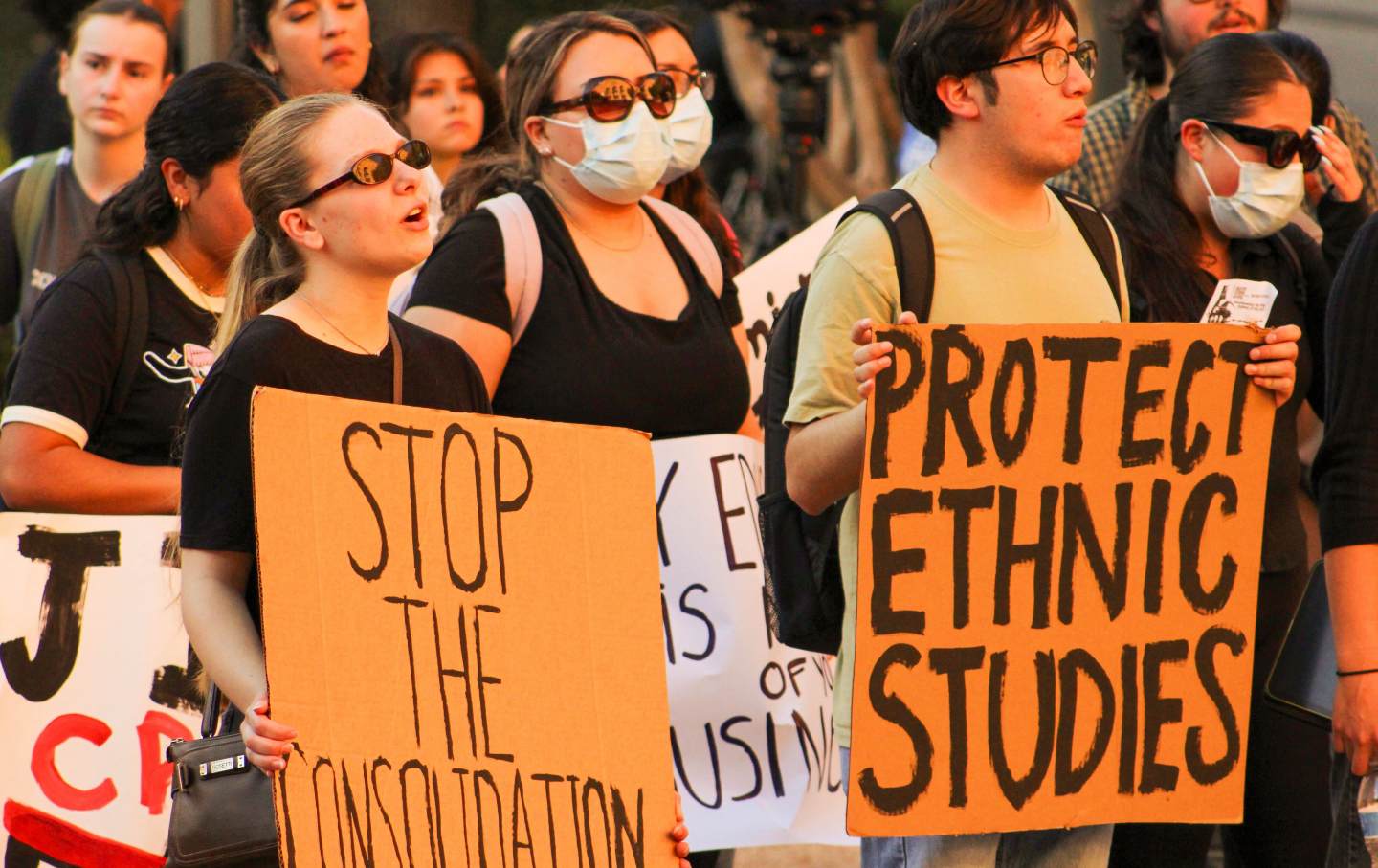
What Will Be Left After the University of Texas Destroys Itself? What Will Be Left After the University of Texas Destroys Itself?
UT-Austin has collapsed its race, ethnic, and gender studies into a single program while a new policy asks faculty to avoid “controversial” topics. But the attacks won’t end there...
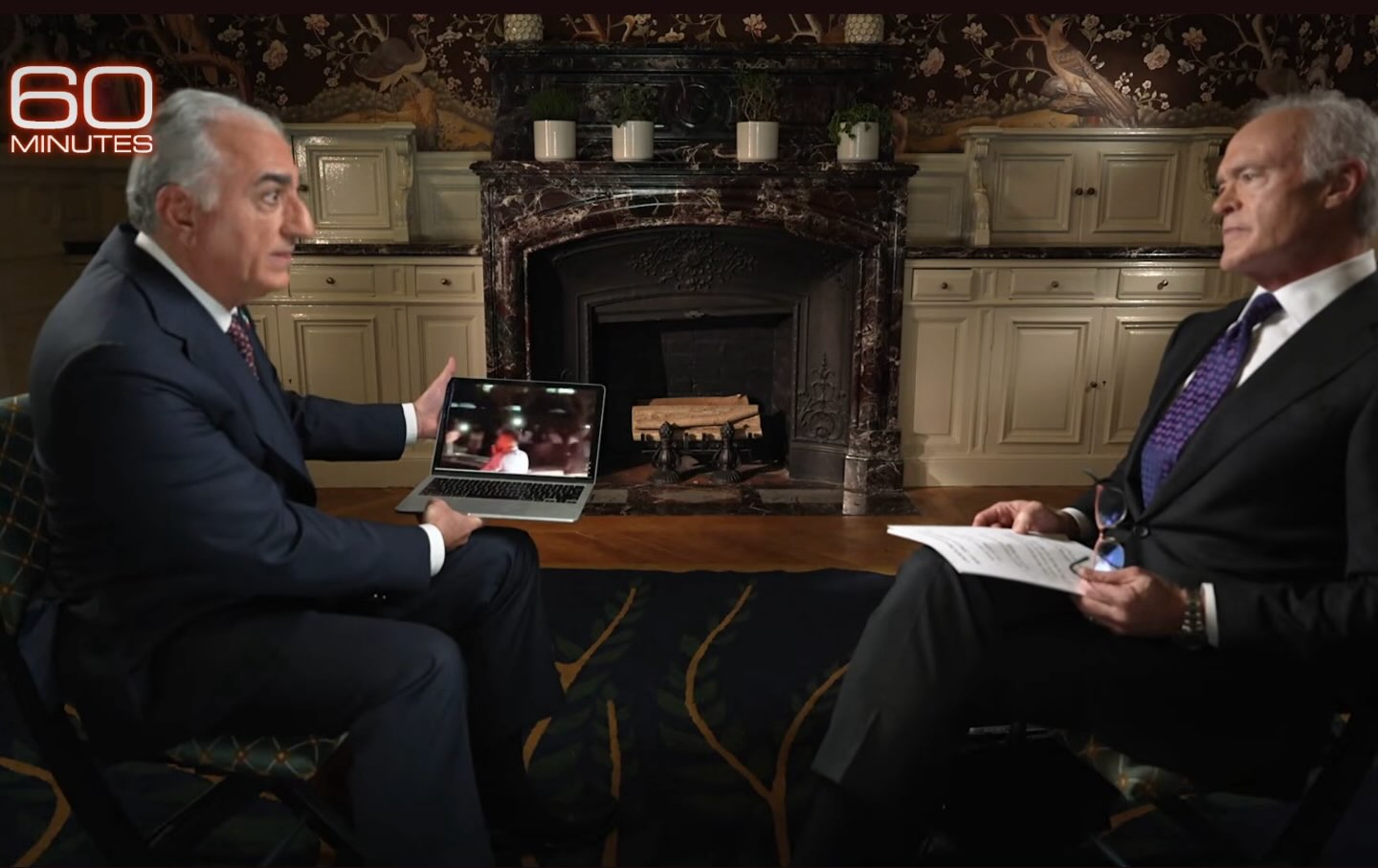
The Corporate Media Is Head Over Heels for the Iran War The Corporate Media Is Head Over Heels for the Iran War
Donald Trump’s attack may be surreal, unjustified, and illegal. But that’s not stopping the press from turning the propaganda dial way up.
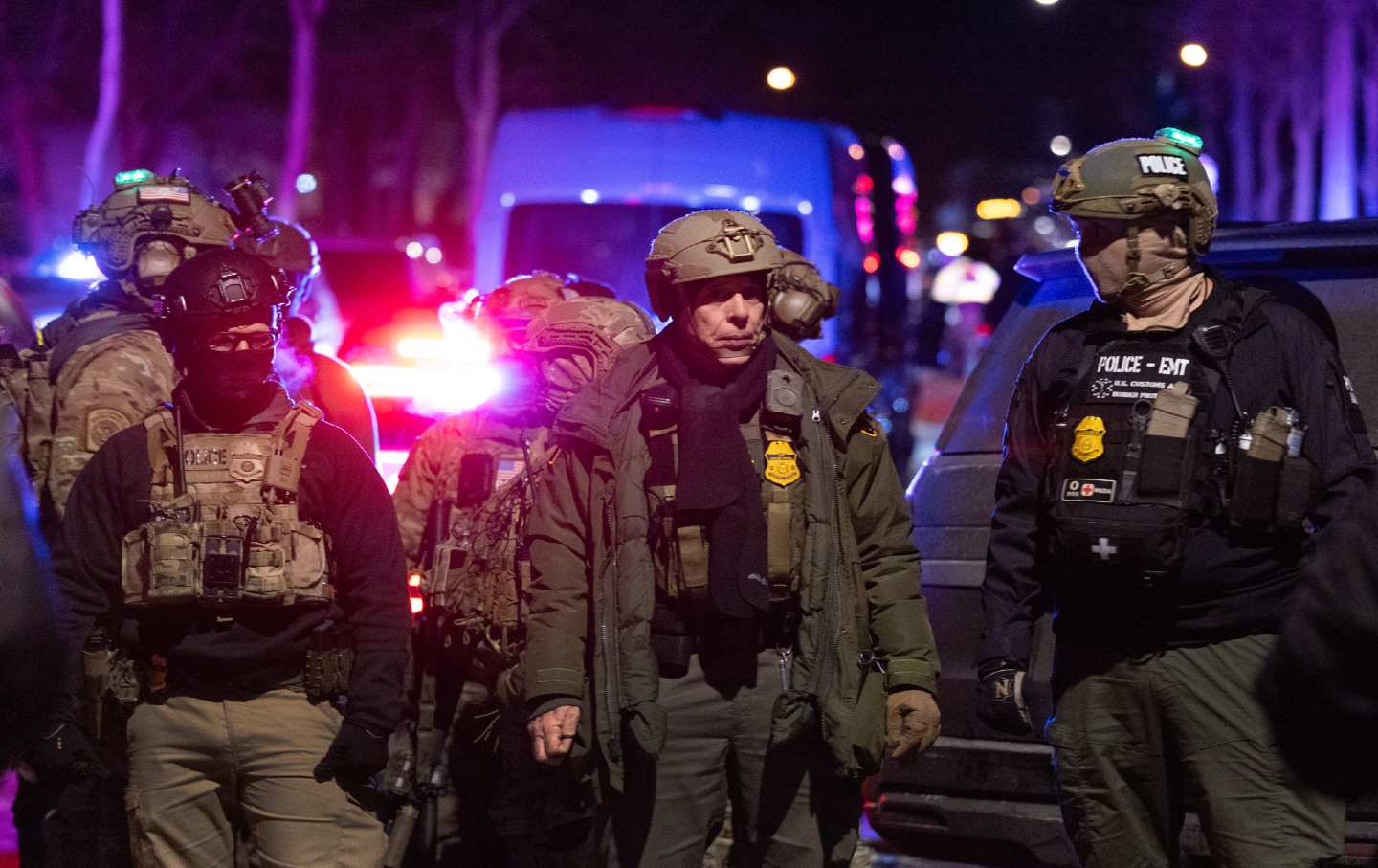
The Disturbing History of ICE’s “Death Cards” The Disturbing History of ICE’s “Death Cards”
The Vietnam-era practice is yet another example of ICE agents thrilling to the brutality they have been encouraged to cultivate.
The American Universities Programming Israel’s Killer Drones The American Universities Programming Israel’s Killer Drones
Industry partnerships in higher education are pushing STEM graduates into the business of weapons manufacturing and genocide profiteering.

