
Inside Brown University’s Sit-In for Palestine
After occupying University Hall, all 20 protesters with Jews for Ceasefire Now were arrested and charged with trespassing. “These are kids. And this was a perfect example of a nonviolent civil disobedience.”
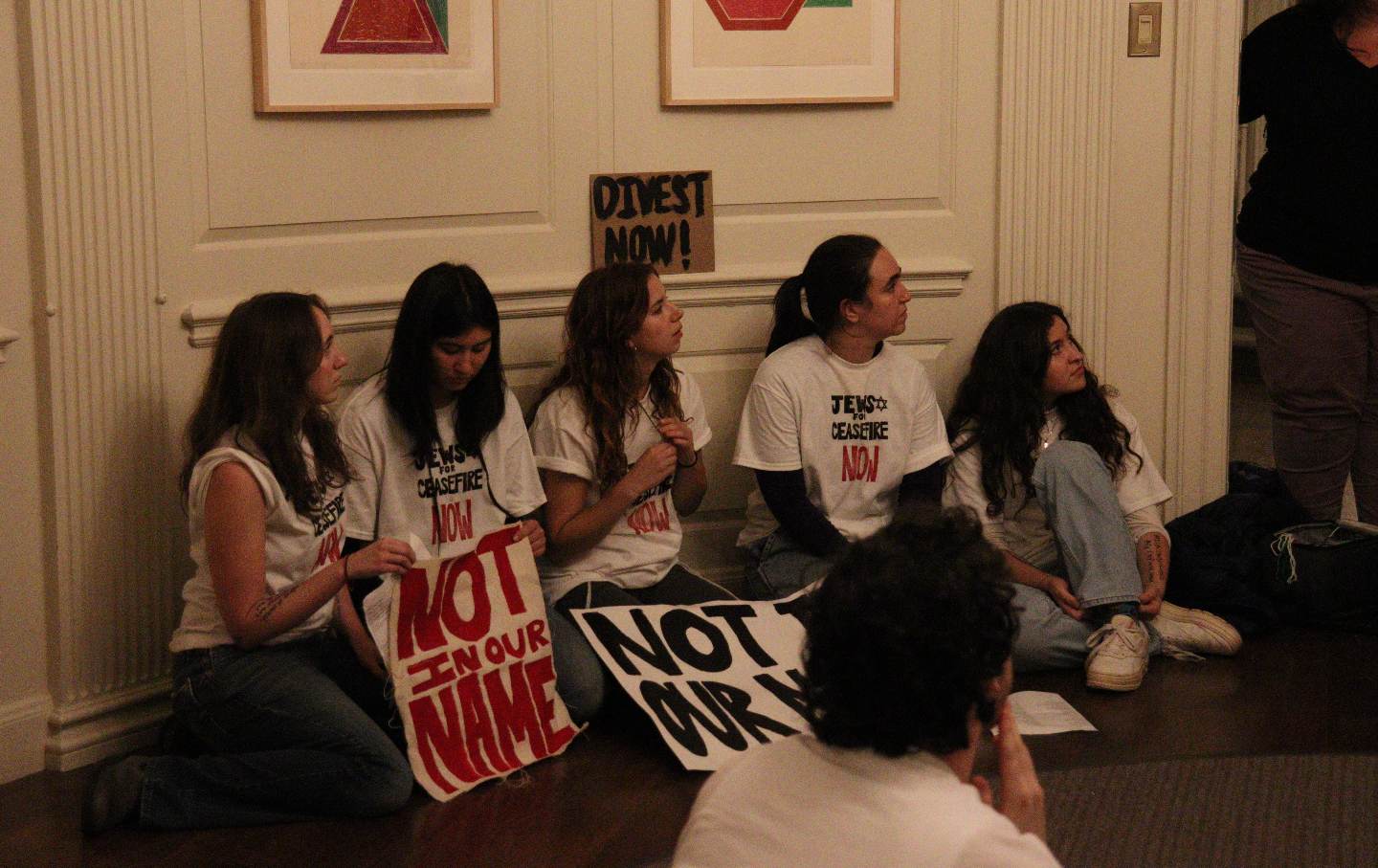
Protesters with Jews for Ceasefire Now during a sit-in at Brown University.
(Talia LeVine)On November 8, a student in a white T-shirt walked through the green behind Brown University’s main administration building, her hands cuffed behind her back. Around her were three police officers holding her elbows, in front were the university’s main gates lit up with flashing police lights, and on either side of her were hundreds of students singing. She was singing too.
As a member of the recently formed student group at Brown “Jews for Ceasefire Now,” she joined 19 other members of the organization to hold a sit-in at University Hall, refusing to leave until Brown President Christina Paxson promised to divest the school’s endowment from “companies that enable war crimes in Gaza.” Five hours after the sit-in began, and 45 minutes after the building’s operating hours ended, the protesters were arrested.
As the crowd sang a Jewish hymn, the officers walked the girl through the gates and to a transport van. Then they came back, re-entered the building, and 10 minutes later, emerged with another student in a white T-shirt.
All 20 protesters were eventually arrested and transferred from university police to the Providence police, which held them in holding cells for multiple hours before releasing them later that night. Charged with willful trespassing, the 20 protesters have court hearings scheduled later this month and will enter into university disciplinary proceedings.
The sit-in is one of the latest in an escalating series of protests on Brown’s campus about the war in Gaza, with student activists calling for the university to divest from companies that manufacture weapons and military equipment used by the Israeli military.
The university’s response has drawn widespread criticism, including from 196 faculty members who signed a letter saying they were “dismayed” that the university chose to have the students arrested, calling for the administration to push for criminal charges to be dropped and for the students to be exempt from university discipline. “Just arresting them without talking to them on what they were striking for? On what was at stake? It seems incredible. I just don’t understand this,” Adi Ophir, a visiting professor of Humanities and Middle East Studies, told The Nation. “These are kids. And this was a perfect example of a nonviolent civil disobedience. It was completely nonviolent.”
“There has to be some other way to sit and talk with people, and it’s a university—what is all this thing of calling the police?” said professor of Holocaust and genocide studies Omer Bartov. “Sit down and talk with them, order coffee and cookies and sit all night with them and chat with them. That sounds to me like a much better thing to do.”
An official statement issued last week by university spokesman Brian Clark said, “After offering students every opportunity for a different outcome, Brown issued multiple trespass warnings and ultimately moved forward in arresting 20 students who refused to leave a campus building where their presence after operating hours posed security concerns.” It added that “Brown leaders have met with many student groups in recent weeks to listen to and address concerns, and we will continue to do so moving forward.” In an e-mail to The Nation, Clark wrote, “Staff informed the students of their right to protest during the building’s operating hours as long as their activities did not raise security concerns and did not disrupt normal operations…. To protect the security of all community members and facilities, students cannot remain in non-residential campus buildings past the point of normal operating hours.”
Protesters and their supporters argued that the extremely visible manner in which the university had them arrested was an effort to make an example out of them. “The point of arresting them and pressing criminal charges is to set an example and say, ‘you cannot step out of line,’” said Steven, a Jewish student at Brown who requested a pseudonym out of fear of retribution.
“We knew that we would likely face criminal charges, but I’ll say I was a bit optimistic,” said Lily Gardner, a sophomore who participated in the sit-in. “I was feeling like maybe my college administration will not want me carried out in handcuffs before they engage with me in any kind of real and reasonable dialogue. The moment that we were told, ‘President Paxson will not meet with you, and it doesn’t matter how long you are here, she will not change her mind,’ our tone really shifted because we still knew that this was something we needed to do.”
As at universities across the country, pro-Palestinian groups at Brown have held multiple demonstrations and walkouts demanding divestment since the war in Gaza began. But the sit-in at Brown last week was distinct not just in its criminal consequences for participants but also in the fact that it was explicitly organized by Jewish students.
Members of Jews for Ceasefire Now told The Nation that their intention was to complicate the assumption that all Jewish people support the Israeli government. “The slaughter of over 10,000 Palestinians will not stand in our eyes. The moment that we allow our history and our name to be manipulated and weaponized in that way is the moment that we lose all Jewishness in my opinion,” said R.F., a member of Jews for Ceasefire Now who did not participate in the sit-in. She gave only her initials to protect her identity. “I think that the Jewish values that I was raised with are to stand up for what’s wrong. I think for a long time we’ve seen Jewish activists at the core of social justice movements.”
Popular
“swipe left below to view more authors”Swipe →The current demands from Jews for Ceasefire Now center around a 2020 report from the University’s Advisory Committee on Corporate Responsibility in Investment Policies. The report recommended divestment from companies that “facilitate human rights violations in Palestine,” a policy that 69 percent of voting undergraduate students supported in a 2019 referendum. In a 2021 letter to the committee, Paxson wrote, “Brown’s endowment should not be used as an instrument to take sides on contested geopolitical issues over which thoughtful and intelligent members of the Brown community vehemently disagree. Brown is deeply committed to academic freedom, and we will continue to uphold the right of members of the Brown community to express their views on the Israeli-Palestinian conflict. However, we will not use the endowment to take an institutional position on this issue.”
More recently, Paxson refused to respond to a November 2 letter signed by over 150 faculty members, urging her to call for a cease-fire in Gaza. At a faculty meeting on November 7, Paxson declined to comment, saying, “My responsibility, as president, is not to place a stamp of approval on the views of a subset of the community, even if that subset is large.”
But Gardner pointed out that Brown has in the past used its endowment as a political tool. In the 1980s, the university partially divested from companies doing business in apartheid South Africa, and in 2020, Paxson announced that the university would divest from fossil fuel companies.
Clark wrote to The Nation that the divestment from fossil fuels was not an action originating from the corporate responsibility committee and it instead was more financially motivated. “It was a decision by university leaders reflecting the view that, as the world shifts to sustainable energy sources, investments in fossil fuels carry too much long-term financial risk,” he wrote.
The university’s partial divestment from companies in South Africa almost 40 years ago came after years of student protests, which included a 500-person rally in front of University Hall. And later, to pressure the university to fully divest, students held a hunger strike and disrupted a trustee meeting, which led to 20 students’ being placed on probation. It’s part of a broader history of influential student activism at Brown that also includes an occupation of University Hall in 1992 that led to the arrests of 253 students protesting the university’s then-policy considering the finances of applicants when making admissions decisions.
For some, the influence those protests had makes the university’s response to the recent sit-in even more indefensible. “It was as if there was no institutional memory within the administration of the role of these sit-ins in the history of the university itself and other universities in the US,” Ophir said.
“It’s a lot easier to look at it retrospectively and say, ‘Wow, look at what these students did 30 years ago. This was incredible,’” R.F. said. “In 30 years, we will be looking at this and we will see how the administration responded.”
Beyond the punishment from the university, Ariela Rosenzweig, who participated in the sit-in, said many of the protesters have received criticism from other Jewish students and people they know. “When people were crying, when people were afraid while we were inside of University Hall, a lot of that was because people were like ‘My family is going to think that I’m calling for harm to come to them, my family doesn’t trust me, my parents are calling me saying they’re so disappointed in me.’”
“[The sit-in participants] do not represent us,” read a letter in support of Israel signed by over 600 Jewish students and alumni published in the Brown Daily Herald Wednesday night. “Jewish anti-Zionists do not speak for us. And they do not speak for the vast majority of the American Jewish population.” It continued to argue that “calls for a ceasefire miss two critical requirements for lasting peace: the safe return of all American, Israeli and foreign hostages in Gaza and the unconditional surrender of Hamas.” One of the letter’s writers declined The Nation’s request for an interview.
“We’re not going to sit here and claim to speak for the entire Jewish people. I think it’s very obvious that we don’t,” R.F. said. “We will say that we are not a fringe group. There are 20 students who were arrested. There are way more than 20 students, Jewish students who are involved in this movement and were involved in making it happen.”
Despite this criticism, the group has received widespread support from the Brown community, as the crowd of hundreds that assembled around University Hall during the sit-in demonstrated. “This was an incredible moment for me. And not only for me, I think that it was really moving for a lot of people who were there,” Ophir said. “It had an immediate impact, breaking the closure of the imagination, enabling the spectators to grasp the possibility that Jews must not always be against Palestinians, and that Jews should be equated with Israelis or with Zionists, that it is not ‘the Jews’ who are the oppressors of Palestine. And I hope that events like this will remind Jews and others of the potential to revive the role Jews played here in previous struggles for justice and peace.”
And even though the sit-in hasn’t yet influenced university policy, members of the group and its supporters still say the demonstration had a significant impact in engaging people in discussion and activism around Palestine on campus. “I think it is very effective. It has mobilized many, many more people than had been initially engaged in it before,” Ophir said.
Rosenzweig said the backing the demonstration received showed her the widespread support for divestment at Brown. “I was smiling and I was crying as I was being escorted out. I had an immense feeling of hope seeing the amount of people that were there and knowing that all of those people will continue to push Brown to materially support a cease-fire by divesting. And so that confirmed my certainty in my choice.”
Bartov, who in August helped craft a petition signed by 2,446 academics, clergy, and other public figures, that connected Israel’s attempts to overhaul its judiciary to its occupation of Palestinian territories, questioned the material effect that Brown’s divestment would have on the war. But he affirmed that such organizing replicated across the country can impact the position of the US government, which has a massive influence on Israel. “A large amount of pressure from various places in the country that builds up to criticize and redirect American policy I think is a good thing and we should all support it,” he said. “There will always be elements in it that people don’t like. That’s how protest works. Protest is something that annoys people. If everybody is very nice and happy then nothing changes.”
And for Ophir, the urgency of the situation in Gaza demands such engagement from universities. “For what are we using our minds and using the times of our students, if not for this moment?”
Support independent journalism that does not fall in line
Even before February 28, the reasons for Donald Trump’s imploding approval rating were abundantly clear: untrammeled corruption and personal enrichment to the tune of billions of dollars during an affordability crisis, a foreign policy guided only by his own derelict sense of morality, and the deployment of a murderous campaign of occupation, detention, and deportation on American streets.
Now an undeclared, unauthorized, unpopular, and unconstitutional war of aggression against Iran has spread like wildfire through the region and into Europe. A new “forever war”—with an ever-increasing likelihood of American troops on the ground—may very well be upon us.
As we’ve seen over and over, this administration uses lies, misdirection, and attempts to flood the zone to justify its abuses of power at home and abroad. Just as Trump, Marco Rubio, and Pete Hegseth offer erratic and contradictory rationales for the attacks on Iran, the administration is also spreading the lie that the upcoming midterm elections are under threat from noncitizens on voter rolls. When these lies go unchecked, they become the basis for further authoritarian encroachment and war.
In these dark times, independent journalism is uniquely able to uncover the falsehoods that threaten our republic—and civilians around the world—and shine a bright light on the truth.
The Nation’s experienced team of writers, editors, and fact-checkers understands the scale of what we’re up against and the urgency with which we have to act. That’s why we’re publishing critical reporting and analysis of the war on Iran, ICE violence at home, new forms of voter suppression emerging in the courts, and much more.
But this journalism is possible only with your support.
This March, The Nation needs to raise $50,000 to ensure that we have the resources for reporting and analysis that sets the record straight and empowers people of conscience to organize. Will you donate today?
More from The Nation

The Real Reason Americans Love Guns The Real Reason Americans Love Guns
With a weak social safety net, a gun offers a false sense of personal power and security.

The Endless Hypocrisy of Bari Weiss The Endless Hypocrisy of Bari Weiss
She claims to be a free speech champion. But as her actions at CBS News keep showing, she seems to think free speech should run only in a rightward direction.
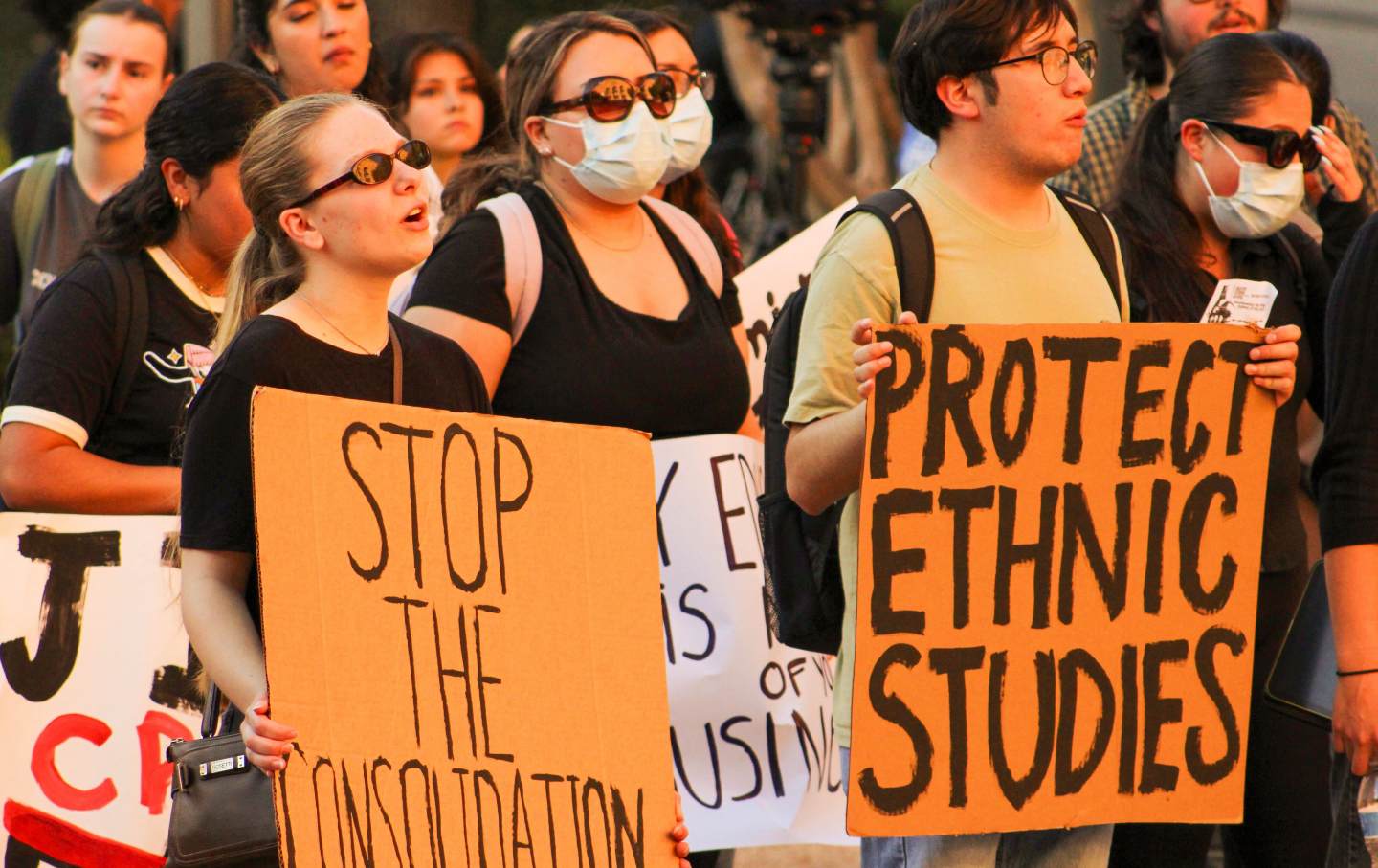
What Will Be Left After the University of Texas Destroys Itself? What Will Be Left After the University of Texas Destroys Itself?
UT-Austin has collapsed its race, ethnic, and gender studies into a single program while a new policy asks faculty to avoid “controversial” topics. But the attacks won’t end there...

The Corporate Media Is Head Over Heels for the Iran War The Corporate Media Is Head Over Heels for the Iran War
Donald Trump’s attack may be surreal, unjustified, and illegal. But that’s not stopping the press from turning the propaganda dial way up.
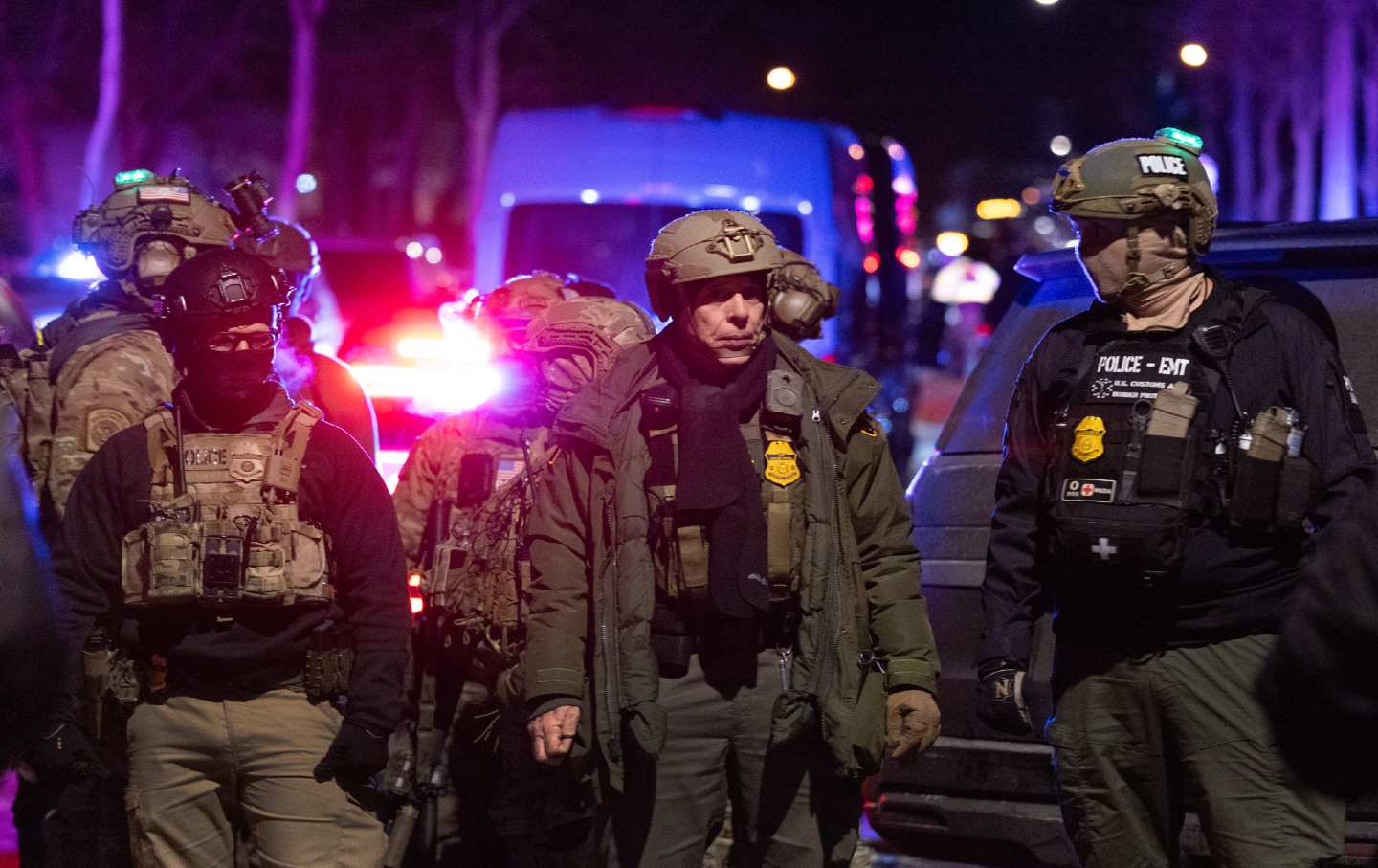
The Disturbing History of ICE’s “Death Cards” The Disturbing History of ICE’s “Death Cards”
The Vietnam-era practice is yet another example of ICE agents thrilling to the brutality they have been encouraged to cultivate.
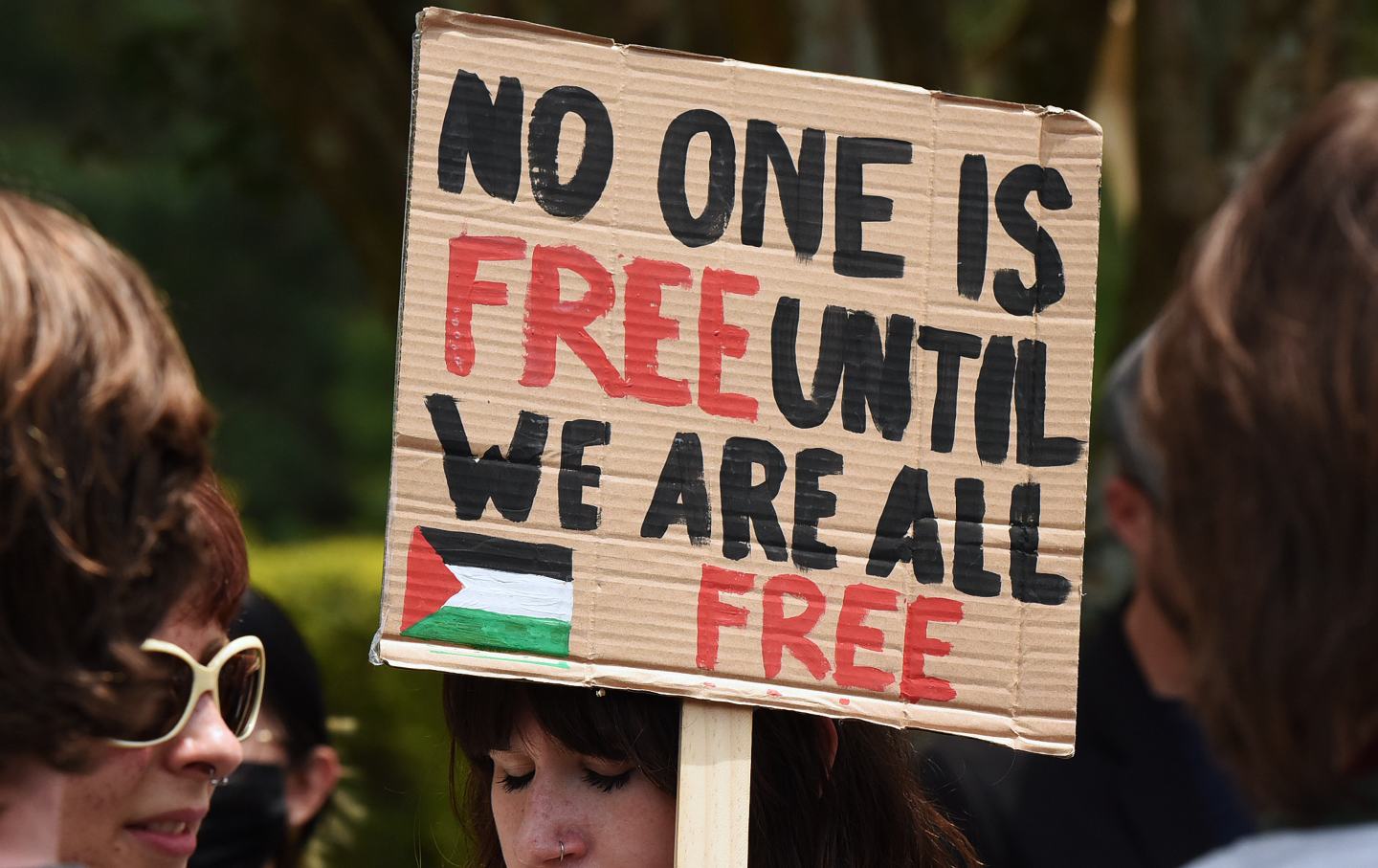
The American Universities Programming Israel’s Killer Drones The American Universities Programming Israel’s Killer Drones
Industry partnerships in higher education are pushing STEM graduates into the business of weapons manufacturing and genocide profiteering.

