The Real Bill de Blasio Has Something to Say
The Times of London failed to meet even the basic standards journalism. We should demand better from our media.
The Real Bill de Blasio Has Something to Say
The Times of London failed to meet even basic journalistic standards. We should demand better from the media.
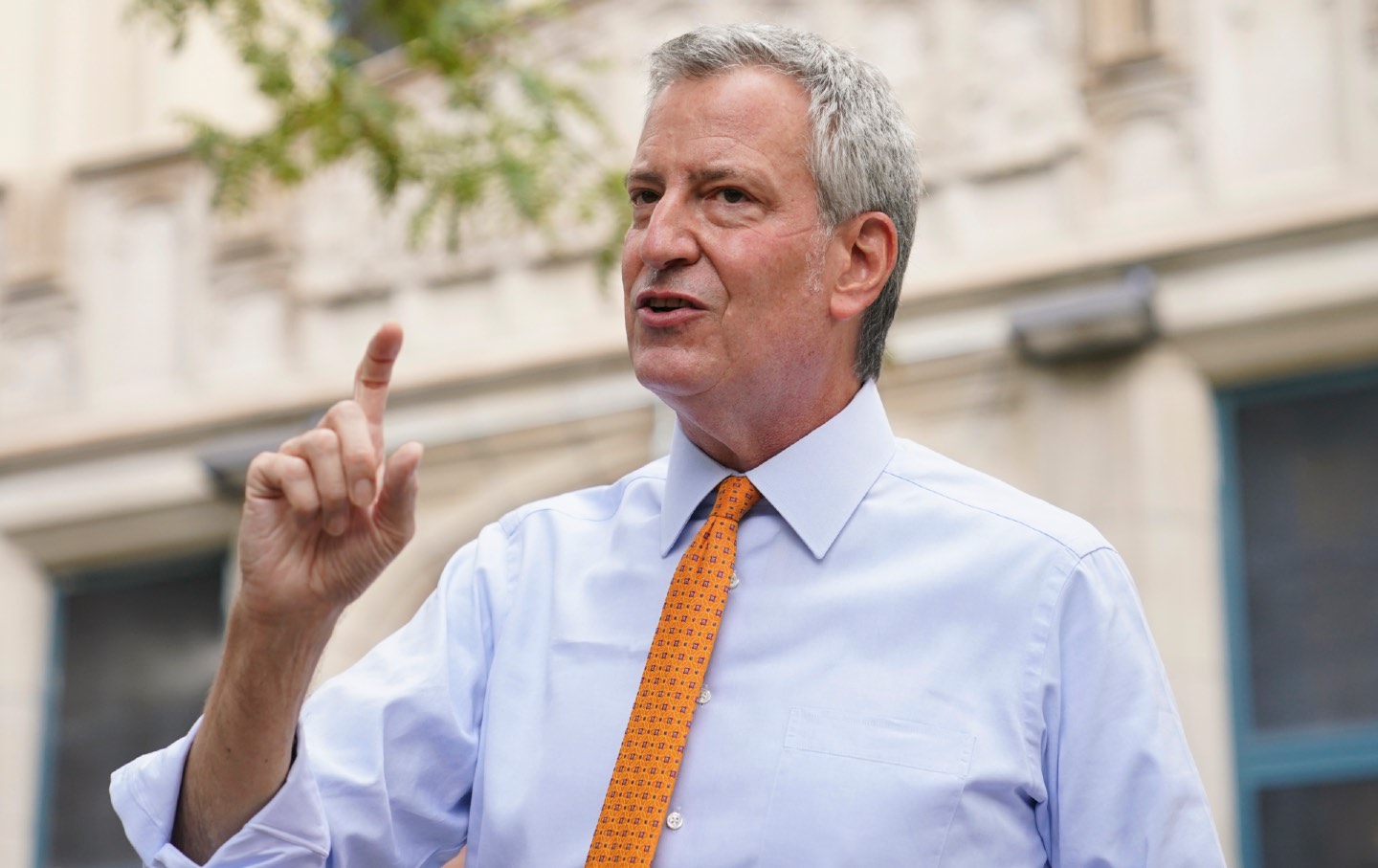
Bill de Blasio
(John Minchillo / AP)
Just before 5 pm on Tuesday, I saw a text from a New York Post reporter asking for comment on my interview with the Murdoch-owned Times of London about Zohran Mamdani.
The problem was: I had never given an interview to The Times.
Yet here was a screenshot of the article along with a quote from “me” claiming that Mamdani’s platform “doesn’t add up.”
That’s the opposite of what I believe and have said dozens of times publicly, including on national television and in this magazine. Yet, here was a major international media outlet, one of the most famous and oldest newspapers in the world, publishing a story stating that I had suddenly reversed myself.
In what version of journalism would a reporter and their editors not be curious about why a public figure would have such a quick conversion experience?
I quickly tweeted that the story was a fabrication and demanded that The Times take it down. But there was no immediate reply or action.
A few hours after the Times article went live, I received a plaintive text from the writer of the piece, Bevan Hurley. As I prepared to call him, I stopped to wonder how I could confirm that he was an actual reporter and not someone mischievously trying to compound the fakery. The speed with which The Times’ apology appeared after that conversation suggests he was the real thing.
Hurley was a bit halting and clearly embarrassed. He apologized repeatedly and noted that when he didn’t hear back after an attempt to find me through my website, he searched online for contact info. He apparently chose an e-mail to try, got a response, conducted the entire “interview” via e-mail, and never bothered to confirm the identity of whom he was communicating with. No phone call, no Zoom, nothing.
This explanation and apology doesn’t add up, unless a previously well-respected outlet has abandoned meaningful journalistic standards and ethics. Did their conservative bent cloud their judgment? Did someone cleverly lay a trap for them? Or was this just shoddy work by a journalist and his editors who were supposed to maintain quality control?
I do want to give the journalist in question, Hurley, some credit for reaching out directly and apologizing to me—but it was too late. The right-wing media was already having a field day, and several media outlets in New York City ran with it without any effort to confirm the story with me.
I also do appreciate that The Times of London published an apology, but I wonder why it came with no explanation of how this miscarriage happened and what would be done to prevent it in the future.
And I note that its sister publication, the New York Post, persisted in running the story for hours after I told The Times it was a fake. How interesting that such an agile outlet chose to keep running a confirmed fabrication that happened to suit their fiercely anti-Mamdani agenda.
Popular
“swipe left below to view more authors”Swipe →This leads to the bigger concern: Where is journalism going in a hyper-partisan era when standards of objectivity and decency are decaying week by week, fueled by Donald Trump’s relentless assault on the norms of democratic discourse? How many AI-generated deep fakes will be treated as straight news unless reporters and editors actually care to confirm their veracity?
If it’s faster and easier to accept “sources” without confirming their identity, will too many reporters and editors fall into that habit—and will their billionaire publishers encourage this cavalier approach to journalism?
We must demand better from media outlets that make a habit of running inadequately reported, or just plain false, stories versus those that intently and effectively work to avoid reporting a falsehood.
My faith in the ability of the public to discern a lie remains intact. In fact, the election now in New York City confirms that despite every effort by the wealthy to purchase an election and to smear Zohran Mamdani through their chosen mouthpiece, Andrew Cuomo, the people see through it.
But for everyone who cares about building a better, fairer society, we need to fight against fake news, disinformation, misinformation, and every effort to dupe us.
That means that the many honest, well-meaning people in journalism cannot blithely harbor some all-for-one mentality about their fellow media outlets. Traditional journalistic solidarity, which stems from the historic need to protect the free press, should not extend to the point that critical thinking is abandoned and fellow journalists demure from speaking out.
Every journalist who immediately took The Times’ story on face value and commented online, despite its evident disconnect from everything they knew about me and my views, unfortunately enabled the spread of a falsehood.
The ones who exercised thoughtful discretion and came to me for confirmation helped protect their readers from literal, actual fake news.
Let the reader beware. And let us all—news consumers and journalists alike—demand better.
Become a Sustaining Donor This September
Between the reemergence of right-wing red-baiting and Donald Trump’s use of the chilling National Security Presidential Memorandum–7 to criminalize left political organizing, we’re seeing McCarthyism reborn before our eyes.
This assault on democracy cannot be ignored or wished away. Resisting it requires bravery in the face of threats and repression, a steadfast commitment to the truth, and the unwavering belief that we can—and will—overcome this darkness.
We must have an independent media that sets the record straight, unearths corruption and abuses of power, and advances a politics of justice and dignity for all if we’re to win this fight.
That’s why I’m writing to you today. This September, The Nation needs to add 100 monthly donors to sustain our progressive journalism. Your contribution makes the next investigative report, the next truth-speaking column, and the next pathbreaking essay all possible.
I hope you’ll support our work with a recurring donation today. If you donate $10 or more a month, we’ll send you a brand new “Hands Off the Free Press!” sticker to recognise your commitment to our cause. Please, donate today.
Onward,
Katrina vanden Heuvel
Editor and Publisher, The Nation