Listen to Bad Bunny: Abolish Act 22
An egregious tax-evasion loophole is inflaming the displacement crisis in Puerto Rico.
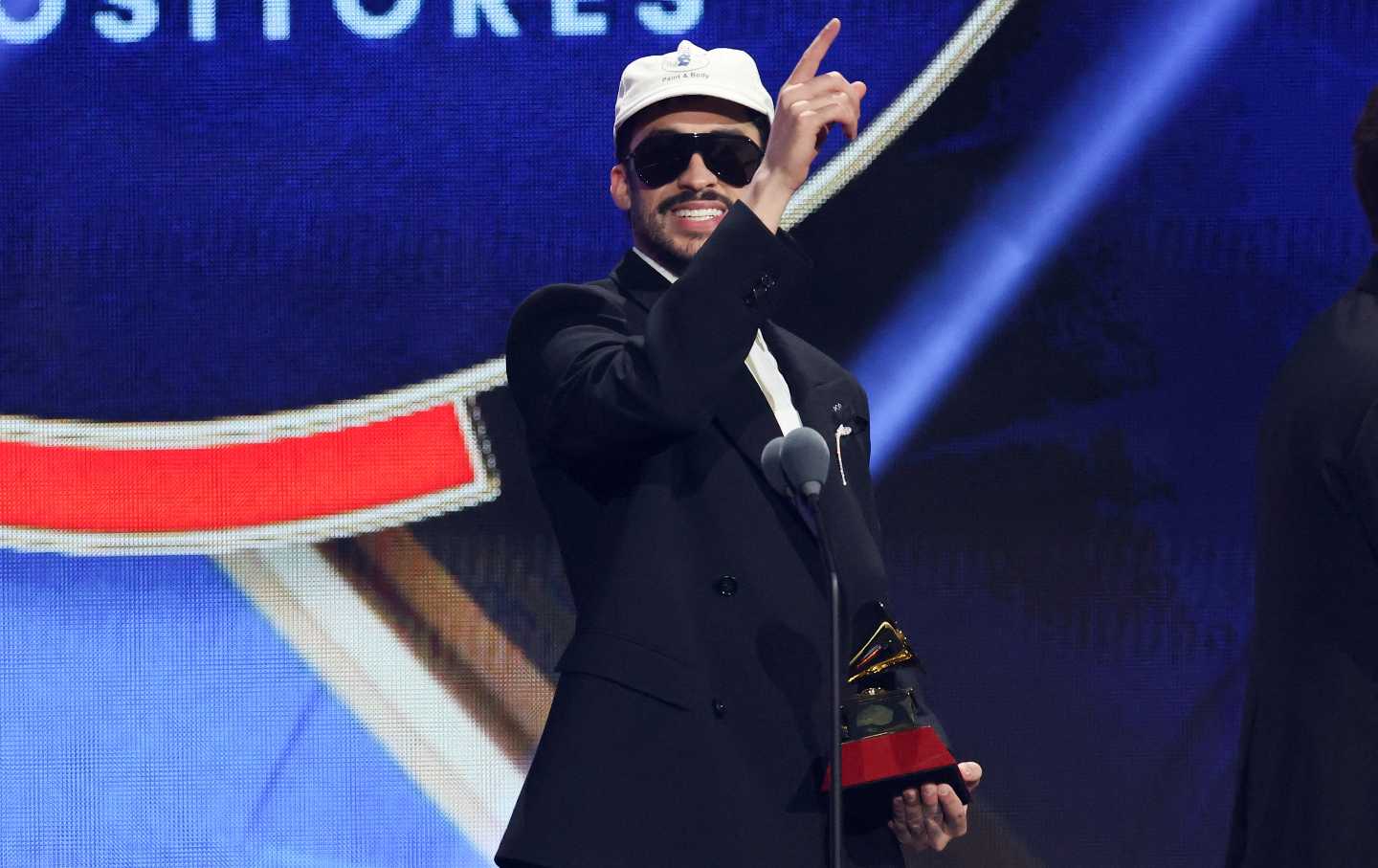
Two of the biggest names of 2025—Bad Bunny and Zohran Mamdani—have more in common than a music career. The day after he won his historic race for mayor of New York, Mamdani flew to the city’s sixth borough (Puerto Rico) and proclaimed before the energized crowd at Somos, an annual political conference on the island, “Here we say, ‘Puerto Rico no se vende’ [Puerto Rico is not for sale]. In New York City we say, ‘Nueva York no se vende.’” These same ideas are also regularly woven into the songs of one of the world’s most famous artists—who refuses to perform in English despite the MAGA campaign to oust him as the Super Bowl halftime headliner.
It’s personal for Bad Bunny, born Benito Martínez Ocasio, as he raps about his fears of losing his home to tax-evading Americans. “They want to take my river and my beach, too. / They want my neighborhood and for grandma to leave,” he testifies on his Debí Tirar Más Fotos album.
What he’s referring to is not the run-of-the mill gentrification caused by the usual vultures speculating on real estate. Puerto Rico is experiencing a displacement crisis inflamed by the Act to Promote the Relocation of Individual Investors, also known as Act 22—possibly the most egregious loophole for the evasion of federal taxes available to Americans. Passed by the territory’s Legislative Assembly in 2012, the law hurts not only Puerto Rico but also communities across the United States, including Mamdani’s “Nuevayol.”
Act 22 exploits a federal loophole that exempts all Puerto Rico–sourced income from US federal income taxes. This makes the island the only place in the world where an American can “establish residency” and pay Uncle Sam almost no taxes and not risk losing their passport. And in true colonial spirit, these local tax breaks aren’t available to existing residents of the island.
The minimal requirement of the law is to buy a home on the island, spend only half of the year there, and make a $10,000 yearly donation to loosely defined “local” charities—with practically no oversight from the IRS or the Puerto Rican government.
Average rents in the territory have skyrocketed 600 percent since 2017 as properties have been bought up by newcomers, making it unaffordable for locals to live on their own Island of Enchantment.
Act 22 is also detrimental to cities and states like New York City and Florida, allowing millionaires and billionaires to stash their money in Puerto Rico tax-free while avoiding local, state, and federal taxes back home. Now localities in the states have less revenue to pay for schools, roads, and hospitals. And the island’s Boricuas, already feeling the consequences of austerity under the congressionally appointed fiscal control board that’s left the local infrastructure in shambles, are being priced out. This further increases Puerto Rican migration to the states, worsening a brain drain and creating a vicious cycle of despair on both sides of the pond.
Meanwhile, crypto colonizers are corrupting the US financial system and buying off politicians on and off the island to keep Act 22 in place. These tax evaders are among the bad actors who are funding the territory’s New Progressive Party, a pro-statehood party that promotes Act 22 and has increasingly become a wholly owned subsidiary of MAGA. Puerto Rico, like other tax havens around the world, is used for money laundering and other schemes that have deleterious effects on local communities in the territory and in the states. These scam artists make Wall Street sharks look like saints.
The newcomers have illegally bulldozed landmark locations and nature reserves, four-wheeled through turtle sanctuaries on the beach, shot at animals, and built walls around their mansion communities to block locals from accessing their own shores. In Dorado, a gated beachfront community, a home was recently being offered for $65 million, the most expensive in the island’s history.
The same shady interests fueling skyrocketing housing prices in the Big Apple are making it impossible for Puerto Ricans to live in their own land. The issues and communities are intertwined. As Bad Bunny denounces the displacement crisis, Zohran Mamdani is putting the affordability crisis front and center for New Yorkers.
The irony of Puerto Rico’s colonial status is that to give power to the people on the island, Congress must abolish the Act 22 tax loophole. Which means that Democrats must win back the House and the Senate. We know there’s no better message for the midterms than prioritizing affordability and taxing the rich—whether in New York, Texas, or Illinois. Abolishing Act 22 will not only help save Puerto Rico’s soul; it will revive communities across the continental United States.