
Should Ballot Initiatives to Protect Reproductive Rights Restrict Abortion in the Third Trimester?
Melanie Folwell writes that a post-viability limit is the right choice for a citizens’ initiative in Idaho, but Erika A. Christensen argues that restrictions are never acceptable.
Yes!
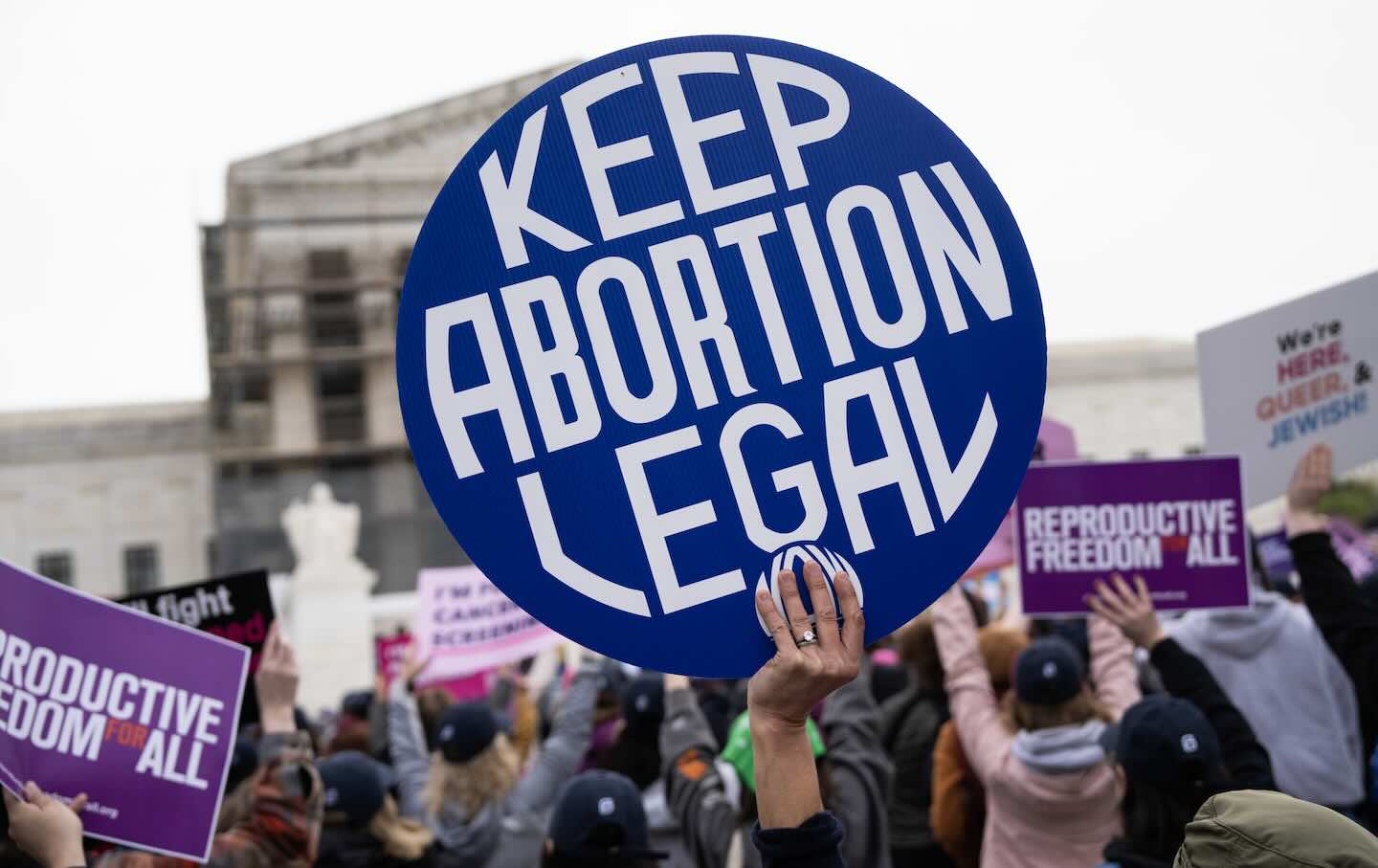
In March, I stood on a porch in northern Idaho and spoke with Nancy, a labor nurse who has delivered hundreds of babies over the years. She signed the petition I was carrying, for the Reproductive Freedom & Privacy Act, because she knows exactly how many things can and do go wrong during a pregnancy. So did Jim in Canyon County, who told me that he was a lifelong conservative who believed Idaho’s abortion ban had gone too far. So did Corey, a military veteran who declared that the politicians needed to mind their own damn business—and whose wife had to be flown to Utah to receive essential care.
By the time the signature drive ended, volunteers with our coalition, Idahoans United for Women & Families, had gathered over 110,000 signatures in every corner of the state, from Boise and Coeur d’Alene to towns most people outside Idaho have never heard of.
I start with our petition because the question posed in this debate can make the topic sound like an abstract line-drawing exercise. It isn’t. In Idaho, we’re not choosing between an ideal policy and a compromised one. We’re choosing between the total ban we have right now, which contains “exceptions” so deliberately narrow as to be unusable, and a standard that protected access to essential care for nearly 50 years.
That distinction matters, and I think it’s gotten lost as people around the country debate the merits of our petition. Our initiative restores the framework that Idaho and much of the country lived under before Dobbs v. Jackson Women’s Health Organization struck down the federal constitutional right to abortion: legal access to abortion before viability (the point in a pregnancy when the fetus may be capable of surviving outside the uterus, typically between 22 and 24 weeks), and after viability when it’s necessary to protect the patient’s life or health or in cases of a fatal fetal diagnosis. (Notably, Idaho is one of only five states with no health exception.)
This is not a new restriction that we invented to win over skeptical voters. It’s the same line set by the Supreme Court that many of us have lived with for our entire lives. We are not asking Idaho to accept a limit; we are asking it to take back a line that a majority of Idahoans still support.
I understand that some advocates want ballot language with no gestational reference point at all, full stop, and they are critical of Idaho’s policy because it includes post-viability limits. But I must strongly disagree.
At the risk of becoming even more of a pariah in national abortion-rights circles, I’d ask these advocates to consider the nuances of voters’ complex personal beliefs around abortion. A majority of Americans, and Idahoans, understandably balk at the notion of no restrictions because of the bad-faith work of anti-abortion activists, who will say and do anything to misrepresent what post-viability access so often actually means: a wanted pregnancy that turned fatal for the fetus or catastrophic for the pregnant woman in the final months.
Nothing in our initiative—or in any serious reproductive-rights initiative on any ballot—permits what anti-abortion activists claim it does. The idea of unrestricted abortion “up to the moment of birth” is not a real policy anywhere in the United States. It is a bad-faith phrase created to be repeated, not examined, and I’d rather focus on what the policy does than on rebutting a ghoulish caricature of it.
Since Dobbs, we’ve ended up with a patchwork of healthcare access, a jumble of unworkable bans, and women from states like Idaho (where we’ve lost 43 percent of our obstetricians since the 2022 ban) enduring hardship and heartache as it becomes increasingly clear that no one is coming to save us.
This is the system we’re organizing within, and I’d argue that’s exactly why the viability line is the right choice for a citizens’ initiative in a state like Idaho—not as a ceiling on our ambitions, but as the reflection of a broad, reasonable coalition united by urgent need.
Our campaign includes physicians and nurses, Catholics and Mormons, college students and retirees, ranchers and suburbanites, young parents and great-grandparents, Republicans and Democrats and independents who agree on very little else. What holds this coalition together isn’t a shared position on the best, most perfect reproductive-healthcare policy. Instead, it’s a shared belief that politicians are always the wrong people to be making these decisions.
That belief is not a lesser version of reproductive freedom. It’s the version that is building consensus among voters, and it’s the standard in 21 states, from red to blue to purple ones. I don’t know what the future of the national movement to restore reproductive rights to every American looks like, and that’s not my job; my responsibility is to the women, doctors, and families suffering needlessly in Idaho. Our future rests in campaigns like this one—rooted in local trust, driven by life-or-death stakes, and honest about what we’re asking for and why.
Melanie Folwell
No!
Ballot initiatives meant to protect reproductive rights should not include restrictions on abortion in the third trimester or at potential fetal “viability.” Either people have the right to make decisions about their lives and bodies without government interference, or they don’t. Whether we call this form of restriction a “limit” or a “ban,” it authorizes government interference in people’s medical decisions. The consequences are delayed or denied medical care, criminalization, and diminished rights for pregnant people.
For all these reasons and more, leading medical organizations and public-health experts reject legal restrictions on abortion, including in the third trimester. Medical professionals know that denying someone timely abortion care at any point in their pregnancy jeopardizes their health and safety, and the exceptions written into any law are insufficient.
Popular
“swipe left below to view more authors”Swipe →The reality is that abortions later in pregnancy reflect diverse and often overlapping circumstances: serious fetal diagnoses, threats to the pregnant person’s health, a later recognition of pregnancy, abusive relationships that make it difficult or unsafe to end a pregnancy early on, interactions with crisis-pregnancy centers, and financial or logistical barriers that delay access to timely care.
Critically, laws that limit rights also adopt the premise of abortion bans: that at some point in a pregnancy, the government should overrule the pregnant person’s decisions about their own body. That premise fundamentally reshapes the relationship between pregnant people and the state.
If the government can claim authority over a pregnancy at some point, that becomes the point when the pregnant person’s rights are diminished. Behaviors during pregnancy become paths to punishment: The same legal foundation is used to justify surveillance, investigate miscarriages, and prosecute pregnancy outcomes.
That is why debates over third-trimester abortion cannot be separated from debates over the criminalization of pregnancy. At a time when such criminalization is accelerating, efforts to preserve abortion limits leave intact the legal foundation that harms pregnant people. Protections with gestational limits simply fail to meet the current moment.
For decades, the abortion-rights movement has accepted compromises intended to make abortion more politically palatable to moderates. We celebrated Roe v. Wade even though it explicitly allowed states to enact restrictions that denied care and allowed criminalization. We perpetuated an anti-abortion stigma when we reassured the public that later abortions were tragic but rare. We emphasized exceptions instead of bodily autonomy.
Those compromises only served to normalize the idea that the government should have the authority to override a pregnant person’s decisions. Activists must stop conceding that premise.
Abortion bans are never acceptable. But we also don’t have to settle for them. Ballot initiatives both with and without limits have succeeded since Roe was overturned. This suggests that voters who support abortion rights will support meaningful protections when given the chance.
Defenders of limits often argue that they are “meeting people where they are,” shifting blame onto the public, as if people are clamoring for limited protections. Instead, public-opinion research shows that most people reject government interference and support abortion access. (And new research suggests that the number of people who support abortion in all circumstances is growing.) Their biggest fear is that excluding a viability limit will doom a ballot initiative, jeopardizing access to abortion earlier in pregnancy. But that is a false choice. None of this diminishes the need for strong legal protections for early-abortion care. It does, however, challenge the assumption that the only way to protect abortion access is to abandon later-abortion patients.
I understand the appeal of political compromise, because I once believed in it myself. But then I needed abortion care in the third trimester and discovered that my then–home state of New York effectively banned abortion after 24 weeks. Already in the throes of a crisis, my husband and I had to pay thousands of dollars out of pocket, travel across the country, and navigate one of the most difficult experiences of our lives far from home. Ultimately, we were lucky. But we learned the hard way that there are always people left behind on the other side of a political compromise.
Ballot initiatives present an extraordinary opportunity to define the future of reproductive rights. We should not squander it on entrenching the same legal framework that has long justified abortion bans and the criminalization of pregnancy.
This moment demands solidarity across state lines and a clear commitment to one fundamental truth: Pregnancy must never erase a person’s rights, and the decision whether, when, and how to continue a pregnancy belongs to the person living it—not to the government.
Erika A. Christensen
Become a Sustaining Donor This September
Between the reemergence of right-wing red-baiting and Donald Trump’s use of the chilling National Security Presidential Memorandum–7 to criminalize left political organizing, we’re seeing McCarthyism reborn before our eyes.
This assault on democracy cannot be ignored or wished away. Resisting it requires bravery in the face of threats and repression, a steadfast commitment to the truth, and the unwavering belief that we can—and will—overcome this darkness.
We must have an independent media that sets the record straight, unearths corruption and abuses of power, and advances a politics of justice and dignity for all if we’re to win this fight.
That’s why I’m writing to you today. This September, The Nation needs to add 100 monthly donors to sustain our progressive journalism. Your contribution makes the next investigative report, the next truth-speaking column, and the next pathbreaking essay all possible.
I hope you’ll support our work with a recurring donation today. If you donate $10 or more a month, we’ll send you a brand new “Hands Off the Free Press!” sticker to recognise your commitment to our cause. Please, donate today.
Onward,
Katrina vanden Heuvel
Editor and Publisher, The Nation
More from The Nation

Is Platonic Co-Parenting the Future of the Family? Is Platonic Co-Parenting the Future of the Family?
Disillusioned with the nuclear family and apprehensive of tethering their reproductive futures to the bleak hellscape of modern love, young people are seeking a different way.

How Trump’s Crackdown on Speech Has Damaged the Student Press How Trump’s Crackdown on Speech Has Damaged the Student Press
I serve as editor in chief and president of The Stanford Daily. Our newsroom has keenly felt the effects of Trump’s campus crackdown, which is why we sued the federal government.

Treat Spotify Like a Public Utility Treat Spotify Like a Public Utility
Music streaming platforms have way too much control over musicians and music lovers. It’s time to rein them in.

What’s the Matter With Effective Altruism? What’s the Matter With Effective Altruism?
President Trump has decried the techbro creed for indulging in AI doomerism, but its excesses are far worse than that.

As Morale Sags, More Military Service Members Are Having a Crisis of Conscience As Morale Sags, More Military Service Members Are Having a Crisis of Conscience
According to multiple GI rights organizations, service members are inquiring in unprecedented numbers about seeking conscientious objector status.

