Feature / June 9, 2026

Special Issue: America at 250

The debate over our national experiment is as old as the country, and as new as this issue of The Nation.
Katrina vanden Heuvel and John Nichols

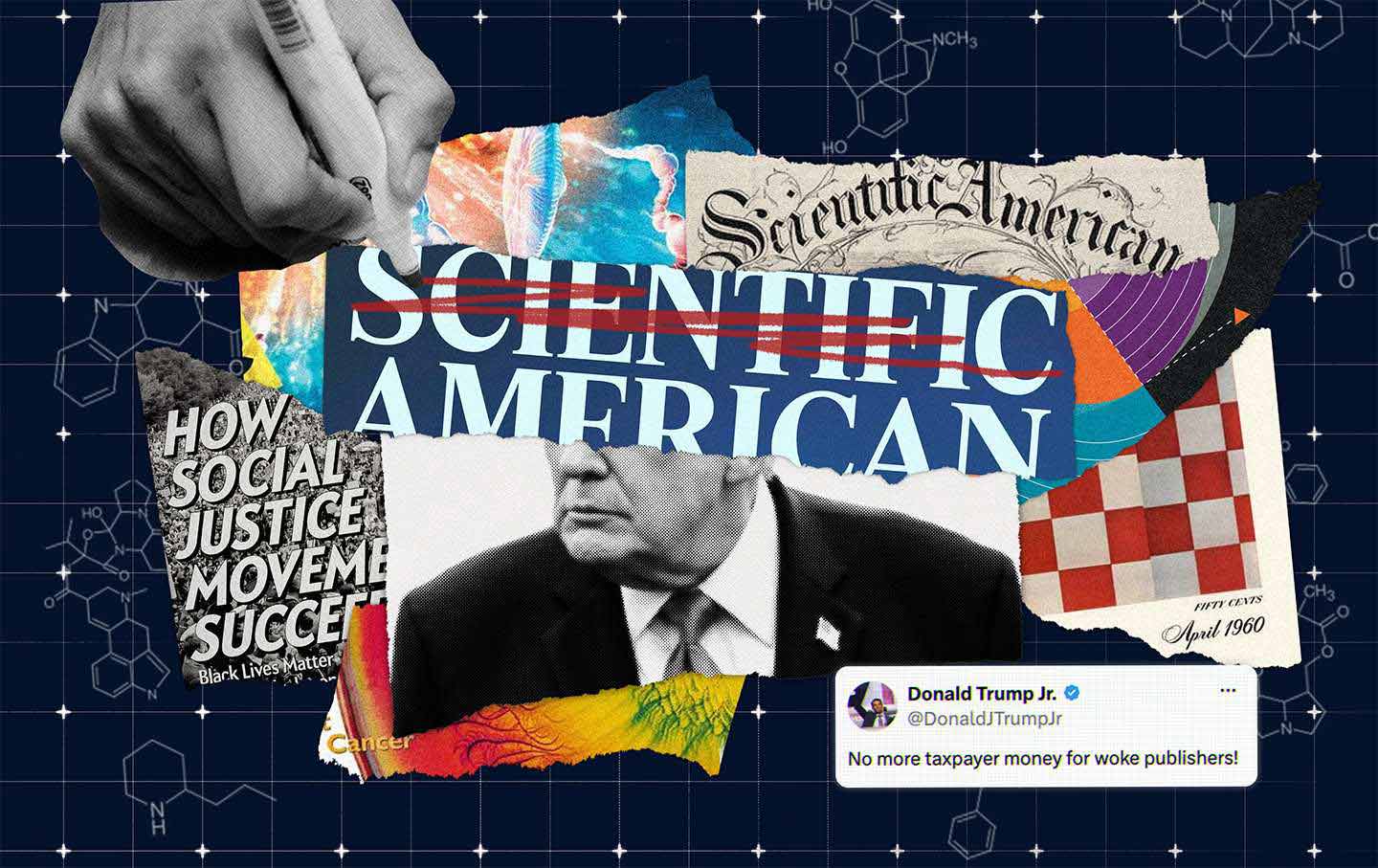
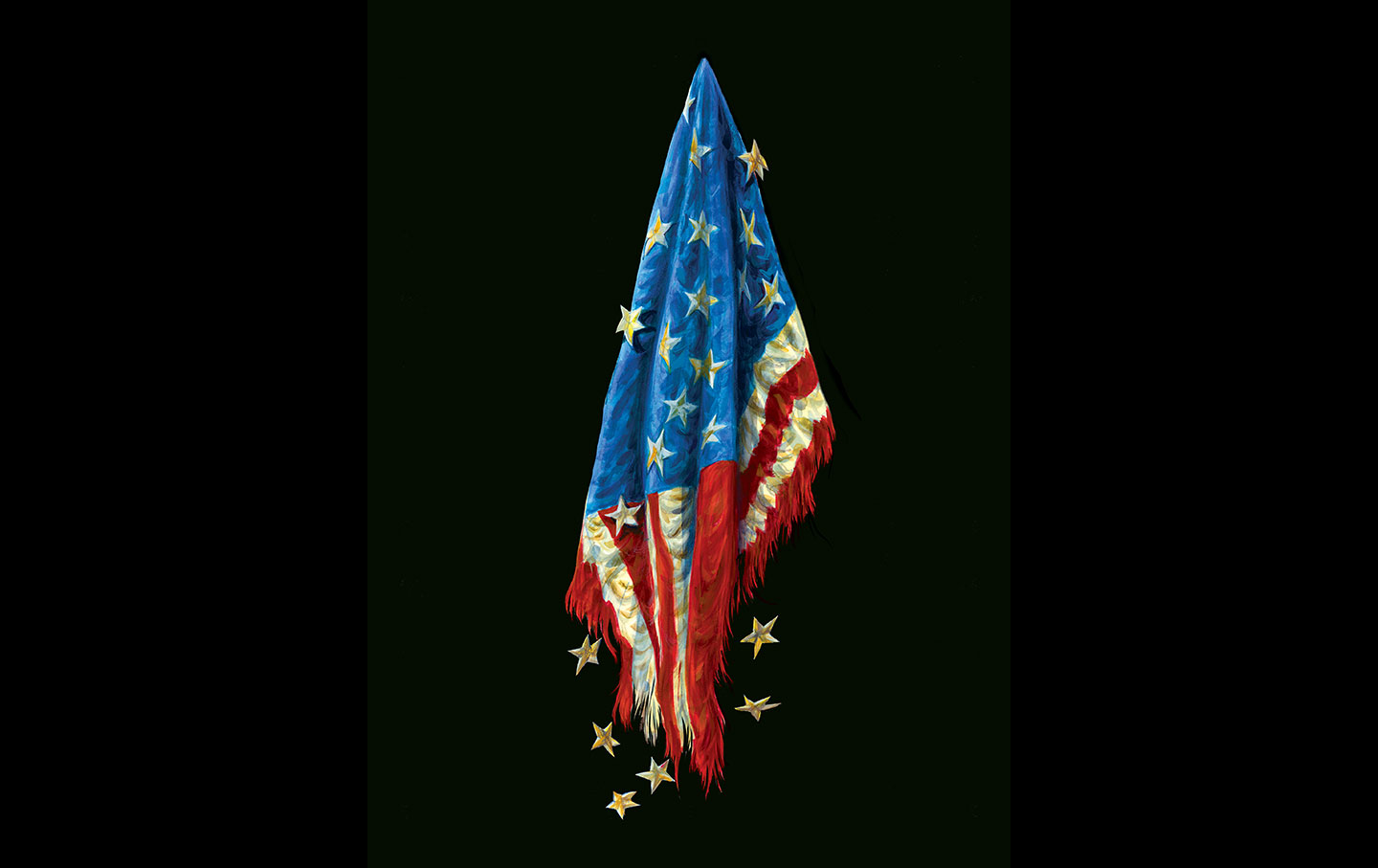
Illustration by Victor Juhasz.


“We ask all who believe in democracy and the best of our American experience to rise with us, raise your voices against authoritarianism, and let freedom ring.”

—BRUCE SPRINGSTEEN

Bruce Springsteen, who for well over half a century has chronicled the unsteady progress of the American experiment, refers to our history as “an ongoing blessed, sacred argument about what course the country should take.” This argument is not merely a reflection on the positioning of Democrats and Republicans: It’s a more fundamental disputation about what this republic stands for. And it informs the essays that make up our special issue marking the 250th anniversary of an American journey that The Nation has chronicled since 1865.

From the very founding of the United States in the sweltering Philadelphia summer of 1776, the argument has raged between those who embrace Thomas Paine’s expansive promise that “we have it in our power to begin the world over again” and those who have sought to make this country a soft reflection of the monarchy—and the oligarchy—against which its revolutionary combatants revolted.

It is the cruel fate of our republic, in this 250th-anniversary year of its Declaration of Independence, that the White House is occupied by a modern-day King George III, Donald Trump, who makes no secret of his lust for the gilded trappings of royalty and monarchical abuses of power. Springsteen speaks for so many of us when he says, “The America that I love, the America that I’ve written about for 50 years, that’s been a beacon of hope and liberty around the world, is currently in the hands of a corrupt, incompetent, racist, reckless, and treasonous administration.”

With no sense of irony, Trump and his cabal have endeavored to obscure the actual history of the United States: whitewashing our heritage to deny not just the soul-crushing wrongs of an enslaving, segregating, discriminating, and oligarchical past, but also to deny the inspired achievements of generation upon generation of radicals who strove to make real the promise that we all are created equal and endowed with unalienable rights to life, liberty, and the pursuit of happiness.

This issue of The Nation rejects the false narratives of reactionary presidents, senators, and justices. These essays on the past, present, and future of our country examine the awful choices made by compromised and self-serving leaders. Yet they also lift up the redemptive civil-rights, economic-justice, environmental, and peace movements that have countered the royalists and the racists with a politics that pursues a more perfect union. In the spirit of these struggles, we join the sacred argument, seeking nothing less than to elevate the call to action, carried forward from Paine to Frederick Douglass, from Sojourner Truth to Fannie Lou Hamer, and from Woody Guthrie to Bruce Springsteen when he asks “all who believe in democracy and the best of our American experience to rise with us, raise your voices against authoritarianism, and let freedom ring.”

Katrina vanden Heuvel

Katrina vanden Heuvel is editor and publisher of The Nation, America’s leading source of progressive politics and culture. An expert on international affairs and US politics, she is an award-winning columnist and frequent contributor to The Guardian. Vanden Heuvel is the author of several books, including The Change I Believe In: Fighting for Progress in the Age of Obama, and co-author (with Stephen F. Cohen) of Voices of Glasnost: Interviews with Gorbachev’s Reformers.

John Nichols

John Nichols is the executive editor of The Nation. He previously served as the magazine’s national affairs correspondent and Washington correspondent. Nichols has written, cowritten, or edited over a dozen books on topics ranging from histories of American socialism and the Democratic Party to analyses of US and global media systems. His latest, cowritten with Senator Bernie Sanders, is the New York Times bestseller It's OK to Be Angry About Capitalism.

More from The Nation

AI slop depicting caricatured Italian thugs threatening NYC’s mayor.

The Fake Controversy Behind Little Italy’s “Exclusion” The Fake Controversy Behind Little Italy’s “Exclusion”

The Italian American establishment’s hysterical response to Mayor Mamdani’s map of immigrant enclaves reveals a cynical politics of victimhood.

Chris Gelardi

Young people walking in front of the BlackRock corporate headquarters in Hudson Yards.

How Corporate Recruiters Took Over Campus—and What It’s Costing Democracy How Corporate Recruiters Took Over Campus—and What It’s Costing Democracy

Many students arrive at college with dreams of creating social change, but the corporate pipeline diverts them. A democracy in need of their talent is poorer because of it.

StudentNation / Jason Vadnos

Detainees stand by a window inside the federal immigration center at Delaney Hall, where ICE is housing detained immigrants on May 26, 2026, in Newark, New Jersey.

This Is How We Close the Camps This Is How We Close the Camps

Until we, as a society, reject the camp and its logic, it will remain a threat—and the linchpin in the entire immigration enforcement regime.

John Washington

Team Spain celebrates winning the 2026 FIFA World Cup on July 19, 2026, in East Rutherford, New Jersey.

Trump’s Reverse Midas Touch Even Got the World Cup Trump’s Reverse Midas Touch Even Got the World Cup

Of course fans roundly booed the president at the World Cup final: Damaging the integrity of anything he touches is true to the Trump brand.

Dave Zirin and Jules Boykoff

Andrew Tate and his brother Tristan Tate talk to the media outside their residence on March 23, 2025 in Bucharest, Romania.

Why Andrew Tate Is a MAGA Superstar Why Andrew Tate Is a MAGA Superstar

Manosphere celebrities—including alleged sexual predators like Tate—are a symptom of a politically resurgent misogyny.

Jeet Heer

Richard Lingeman, longtime executive editor of The Nation, at the magazine’s copy office sometime in the 1990s.

Paying Tribute to Richard Lingeman—Longtime Executive Editor and a Quiet Force at “The Nation” for More Than Three Decades Paying Tribute to Richard Lingeman—Longtime Executive Editor and a Quiet Force at “The Nation” for More Than Three Decades

A man of few spoken words, on the page he was a marvel.

Obituary / Nation Contributors