
Trump’s Not the Only Top Republican Whose Fascism Is Showing
Former Vice President Henry Wallace warned eighty years ago about the threat posed by politicians like today’s GOP leaders.
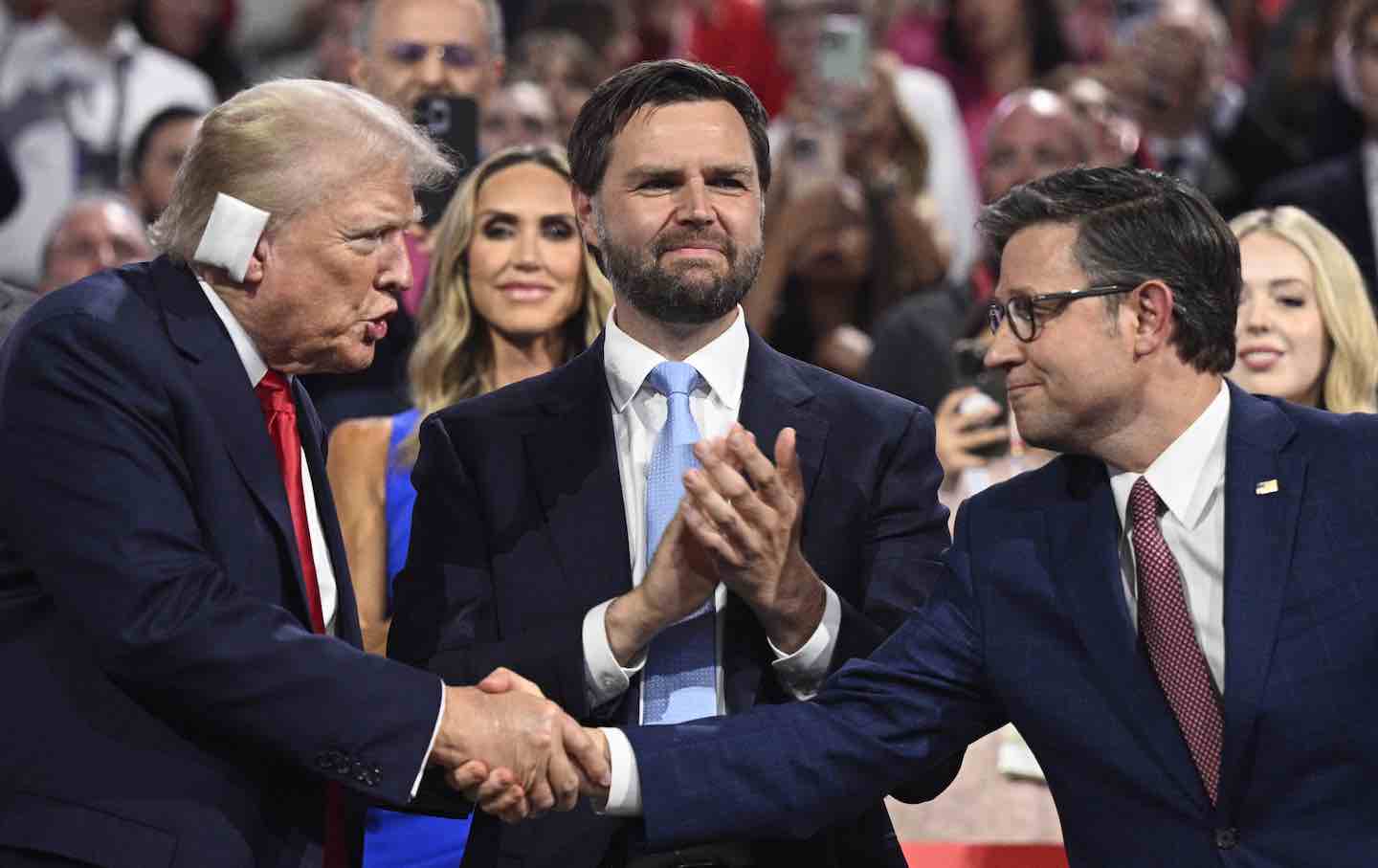
When House Speaker Mike Johnson, the Louisiana Republican who schemed to help Donald Trump overturn the results of the 2020 presidential election, appeared Sunday at the Republican presidential nominee’s Madison Square Garden rally, he concluded his otherwise forgettable complaints about “woke ideology” with a fevered declaration that, “We’re not in a battle this time between two different political parties. It’s much deeper than that. There’s something much more fundamental going on,” argued the speaker.
The speaker claimed that:
We’re in a battle between two completely different visions for who we are as a nation and who we’re going to be. We revere the founding principles. We revere our Judeo-Christian foundations. We revere individual freedom and limited government, and the rule of law, and peace through strength, and fiscal responsibility, free markets, human dignity, secure borders. But the other team doesn’t anymore, my friends. This is not your father’s Democratic Party. They are now full on to Marxism and socialism. They don’t envision for us to save the founding principles in the greatest nation in the history of the world. Instead, what they envision for us is that we will be some sort of European-style Marxist, borderless utopia.
PolitiFact immediately pointed out that Johnson’s remarks were based on “Pants on Fire” falsehoods.
But that correction did not prevent Johnson from hitting the road to promote his dishonest, and crudely divisive, claims about the Harris campaign, which is, in fact, backed by dozens of prominent Republicans who recognize that the Democratic ticket is closer to the American political mainstream than today’s GOP.
Johnson is not alone in his abandonment of the truth. Republican Vice Presidential nominee J.D. Vance has been called out, again and again, for making racist and xenophobic statements about Haitian immigrants in Ohio.
It has become increasingly common, in these closing days of the campaign, to hear former Trump officials and high-ranking military leaders describe Trump’s rhetoric and behavior as fascist. Democratic presidential nominee Kamala Harris has said that she agrees with the characterization, while describing Trump as a dictator in waiting.
In her closing argument to the American people, delivered Tuesday on the Ellipse in Washington, D.C., the vice president described Trump as “unstable, obsessed with revenge, consumed with grievance, and out for unchecked power.” The Democrat recounted the historic struggles of Americans who fought for individual liberty and fuller democracy. “They did not struggle, sacrifice and lay down their lives, only to see us cede our fundamental freedoms, only to see us submit to the will of another petty tyrant,” Harris declared. “The United States of America is not a vessel for the schemes of wannabe dictators. The United States of America is the greatest idea humanity ever devised.”
The focus on Trump is appropriate. But the threat does not end with this one man. The fact is that many prominent Republicans have embraced messaging that fits the definition of “American fascism” proffered during World War II by one of the most outspoken advocates for the struggle to defeat Nazi Germany.
There will always be those who claim that the mere mention of “fascism” or the “tactics of neo-fascist division” in an American context goes too far. But they fail to recognize that fascism takes many forms, as former Vice President Henry Wallace explained in his groundbreaking essay, “The Danger of American Fascism.” Writing for the New York Times in the spring of 1943, Franklin Roosevelt’s second vice president explained that, “The worldwide, age-long struggle between fascism and democracy will not stop when the fighting ends in Germany and Japan.”
Fascist thinking would remain a threat, even in the United States, warned Wallace. “The American fascists are most easily recognized by their deliberate perversion of truth and fact,” he observed. “Their newspapers and propaganda carefully cultivate every fissure of disunity, every crack in the common front against fascism. They use every opportunity to impugn democracy. They use isolationism as a slogan to conceal their own selfish imperialism.”
The American fascist, said Wallace, “is one whose lust for money or power is combined with such an intensity of intolerance toward those of other races, parties, classes, religions, cultures, regions or nations as to make him ruthless in his use of deceit or violence to attain his ends.” But, the former vice president added, they are especially inclined toward propaganda. “With a fascist the problem is never how best to present the truth to the public but how best to use the news to deceive the public into giving the fascist and his group more money or more power.”
Wallace argued that American fascism could be “encountered on Wall Street.” He noted that, “Some even suspect that they can detect incipient traces of it along the Potomac” in Washington.
Popular
“swipe left below to view more authors”Swipe →That willingness to call out his fellow business and political leaders, even fellow Democrats, distinguished Wallace from most other political figuires—in his time, and ours.
Wallace was a controversial vice president and an even more controversial presidential candidate in 1948. A onetime Republican who was drawn into the Democratic fold by FDR, Wallace was a man of deep Christian faith who studied the great religions of the world, an extraordinarily successful businessman who supported trade unions and recognized the value of government intervention on behalf of consumers, and a proud American who sought to avert the Cold War by advocating for diplomacy with the Soviet Union, when others refused to do so. He was accused of being too close to radicals, including the communist and socialist labor organizers, civil rights activists, and Hollywood writers US Senator Joe McCarthy would eventually target. His explicit advocacy for an end to “Jim Crow” segregation inspired death threats.
But, when it came to identifying and calling out the fascist threat abroad and at home, FDR’s vice president was acting as a political pragmatist who recognized a genuine danger and a necessary response. He used the term “Americanized fascism” to help people recognize that authoritarian tactics and threats were not merely a foreign concern. What Wallace wanted Americans to understand is that fascist thinking can adapt itself to different moments, and different countries. Indeed, he explained, American fascism “is an infectious disease, and we must all be on our guard against intolerance, bigotry and the pretension of invidious distinction.”
Wallace argued that it was not difficult to identify American fascists. “They claim to be super-patriots, but they would destroy every liberty guaranteed by the Constitution,” he wrote. “They demand free enterprise, but are the spokesmen for monopoly and vested interest. Their final objective toward which all their deceit is directed is to capture political power so that, using the power of the state and the power of the market simultaneously, they may keep the common man in eternal subjection.”
Eight decades after Wallace wrote his description of American fascism, the United States finds itself at a moment when there is a great battle for political power between Trump’s Republicans and Harris’s Democrats. It is appropriate in a such a moment for people of differing political persuasions to exercise caution when it comes to characterizing political rivals. But Trump with his talk of going after the “enemy within,” Vance with his racist lies, and Johnson with his pattern of amplifying divisive falsehoods, have crossed the lines about which Wallace warned.
They are leading a Republican Party that once defended civil liberties and free and fair elections in a direction Americans are well warned to avoid.
Democrats have begun to call out the threat, with varying degrees of boldness. After John Kelly, the retired Marine general who served as Trump’s White House chief of staff, revealed Trump’s enthusiasm for “German generals” and said the former president meets “the general definition of fascist,” Harris’s running mate, Minnesota Governor Tim Walz, announced, “Folks, the guardrails are gone. Trump is descending into this madness — a former president of the United States and the candidate for president of the United States, says he wants generals like Adolf Hitler had.” Asked if she thinks Trump is a fascist, Harris replied, “Yes, I do.” And a new ABC News/Ipsos poll, conducted before Kelly spoke up, finds that 49 percent of Americans surveyed identified Trump as a fascist who fans the flames of hate.
But the debate must extend beyond a rigid focus on Trump, as Representative Jamie Raskin (D-Maryland) has explained. “Two of the hallmarks of a fascist political party are: One, they don’t accept the results of elections that don’t go their way. And, two, they embrace political violence,” Raskin said in a 2022 interview.
Echoing a President Biden’s ominous warning about the threat posed by MAGA Republican election denialism, Raskin decried “continuing attacks on our constitutional order from the outside by Donald Trump and his movement.”
Vance and Johnson have only moved the GOP in a more extreme direction over the past two years. That’s one of the reasons why Democrats need to be prepared to warn—as Wallace did more than 80 years ago—about “the danger of American fascism.” They need to recognize that Americans are hearing a lot about the word “fascism,” and about the threat that is poses. But they are not hearing enough about the Democratic alternative to that threat.
Wallace argued for pro-democracy politics—and a pro-democracy governance—writing:
It must develop the ability to keep people fully employed and at the same time balance the budget. It must put human beings first and dollars second. It must appeal to reason and decency and not to violence and deceit. We must not tolerate oppressive government or industrial oligarchy in the form of monopolies and cartels. As long as scientific research and inventive ingenuity outrun our ability to devise social mechanisms to raise the living standards of the people, we may expect the liberal potential of the United States to increase. If this liberal potential is properly channeled, we may expect the area of freedom of the United States to increase. The problem is to speed up our rate of social invention in the service of the welfare of all the people.
That’s a potent vision from 1944 for an anti-fascist politics that remains relevant to a 2024 presidential race where fascism is, once more, a looming threat.
The hour is late. The contest is close. But Americans are disinclined toward authoritarianism, as Harris recognized in her “closing argument” speech on Tuesday. Voters can be rallied to oppose the threat.
The pro-democracy majority has been too confident in the belief that it can’t happen here. Now, that majority must rise up and declare it won’t happen here.
Support independent journalism that does not fall in line
Even before February 28, the reasons for Donald Trump’s imploding approval rating were abundantly clear: untrammeled corruption and personal enrichment to the tune of billions of dollars during an affordability crisis, a foreign policy guided only by his own derelict sense of morality, and the deployment of a murderous campaign of occupation, detention, and deportation on American streets.
Now an undeclared, unauthorized, unpopular, and unconstitutional war of aggression against Iran has spread like wildfire through the region and into Europe. A new “forever war”—with an ever-increasing likelihood of American troops on the ground—may very well be upon us.
As we’ve seen over and over, this administration uses lies, misdirection, and attempts to flood the zone to justify its abuses of power at home and abroad. Just as Trump, Marco Rubio, and Pete Hegseth offer erratic and contradictory rationales for the attacks on Iran, the administration is also spreading the lie that the upcoming midterm elections are under threat from noncitizens on voter rolls. When these lies go unchecked, they become the basis for further authoritarian encroachment and war.
In these dark times, independent journalism is uniquely able to uncover the falsehoods that threaten our republic—and civilians around the world—and shine a bright light on the truth.
The Nation’s experienced team of writers, editors, and fact-checkers understands the scale of what we’re up against and the urgency with which we have to act. That’s why we’re publishing critical reporting and analysis of the war on Iran, ICE violence at home, new forms of voter suppression emerging in the courts, and much more.
But this journalism is possible only with your support.
This March, The Nation needs to raise $50,000 to ensure that we have the resources for reporting and analysis that sets the record straight and empowers people of conscience to organize. Will you donate today?
More from The Nation
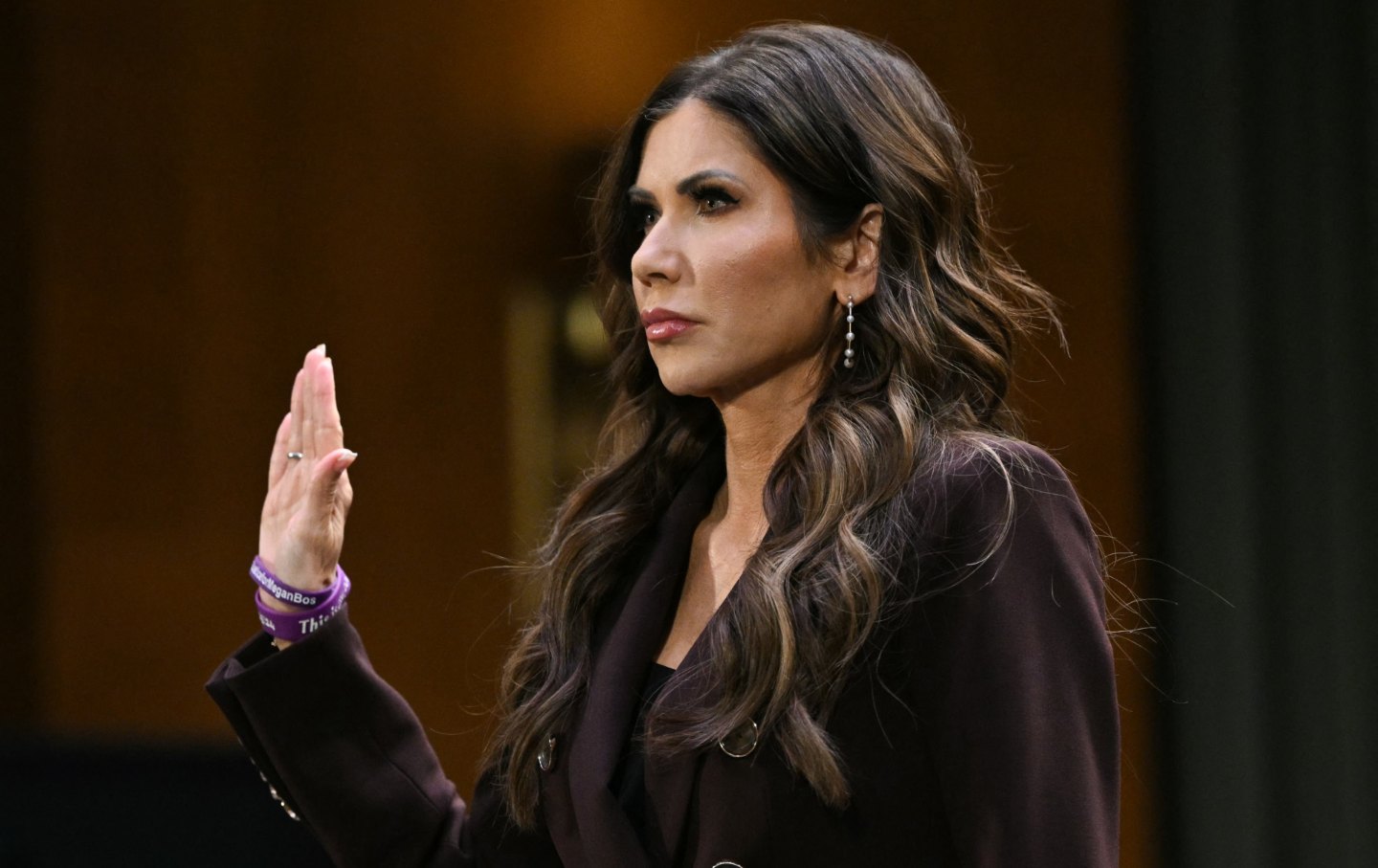
Celebrate Kristi Noem’s Firing. But Keep Protesting ICE. Celebrate Kristi Noem’s Firing. But Keep Protesting ICE.
Finally, someone in the administration is paying for their cruelty and incompetence.
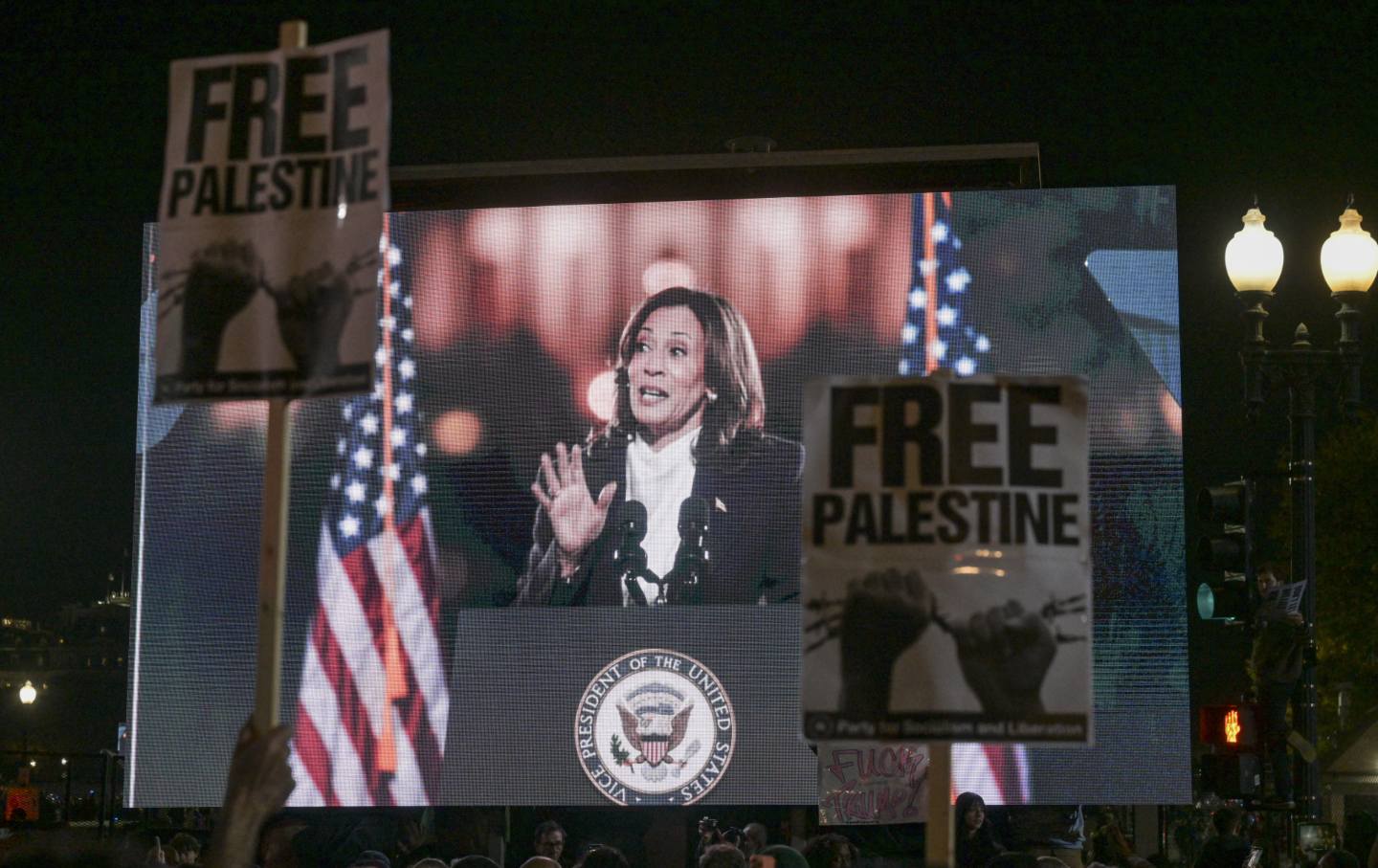
We Don’t Need an Autopsy to Tell Us the Democrats Failed on Gaza We Don’t Need an Autopsy to Tell Us the Democrats Failed on Gaza
The DNC is allegedly hiding a report showing that Kamala Harris’s Gaza policy helped cost her the 2024 election. But that report won’t tell us anything we don’t already know.
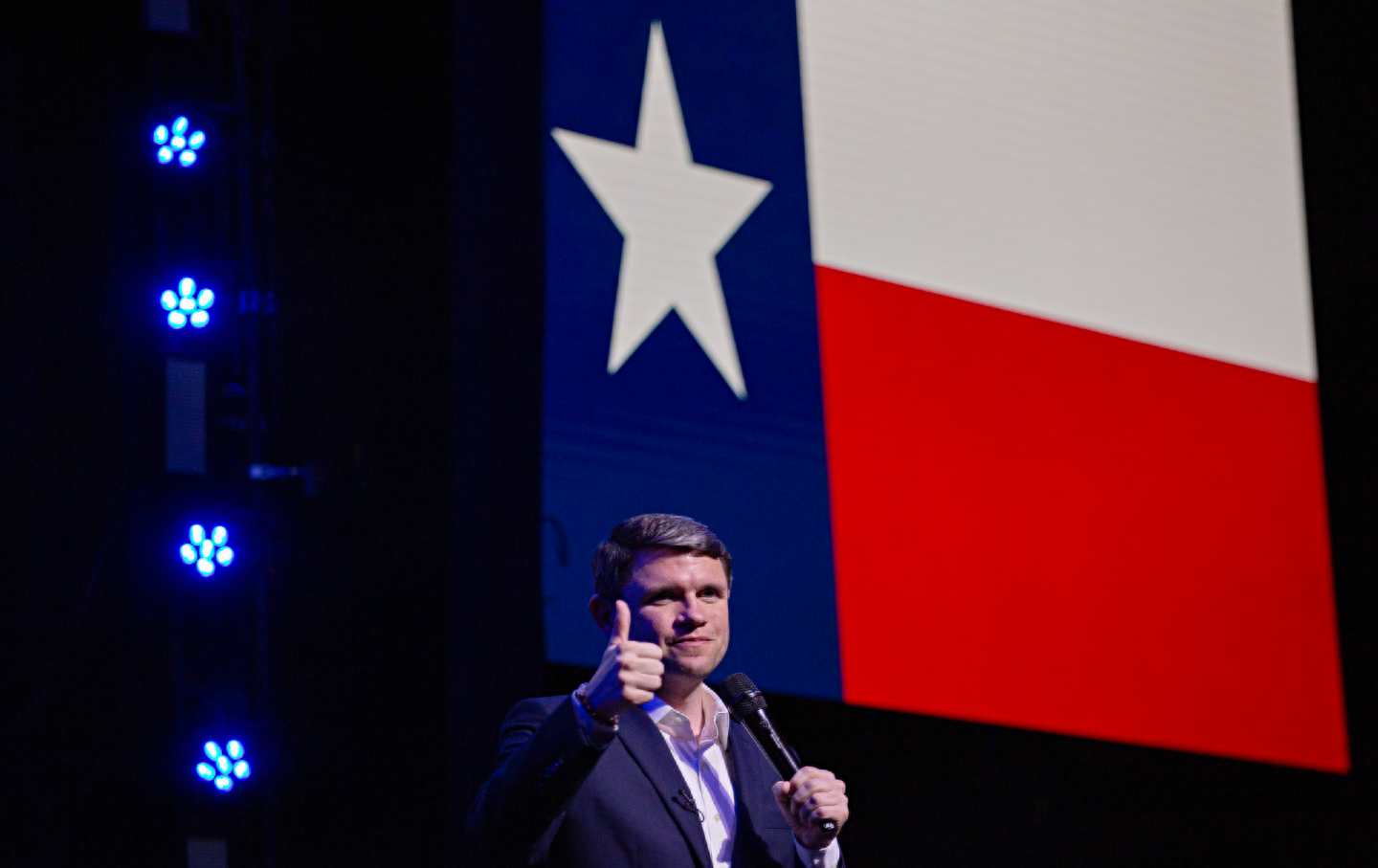
Texas’s Senate Primary Has Already Made History—and It’s Not Over Yet Texas’s Senate Primary Has Already Made History—and It’s Not Over Yet
Democratic nominee James Talarico is getting national media attention, but the real story is sky-high voter turnout, even amid GOP bids to suppress balloting
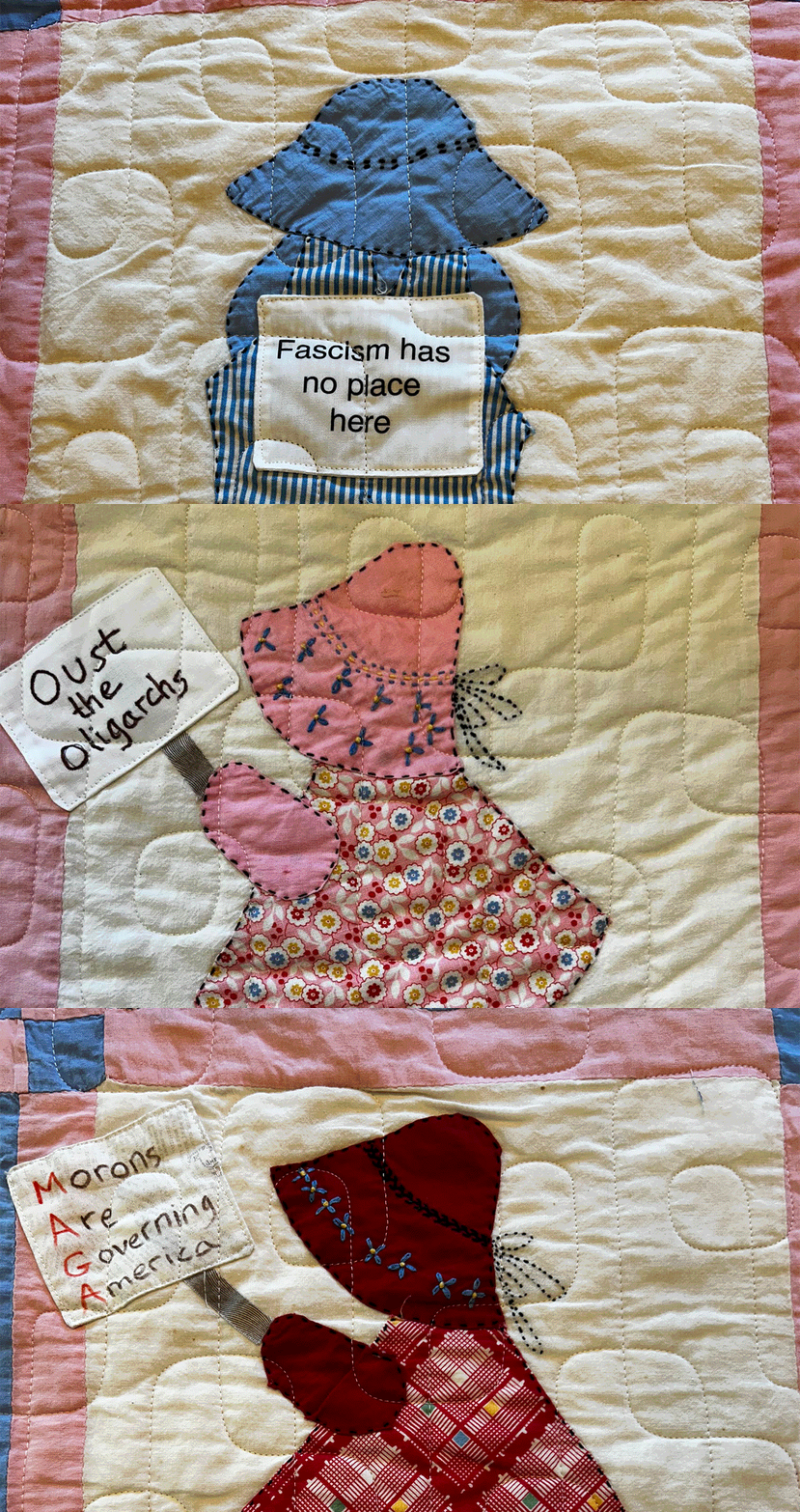
Quilted Messages Quilted Messages
Sunbonnets carrying not-so-sunny truths.
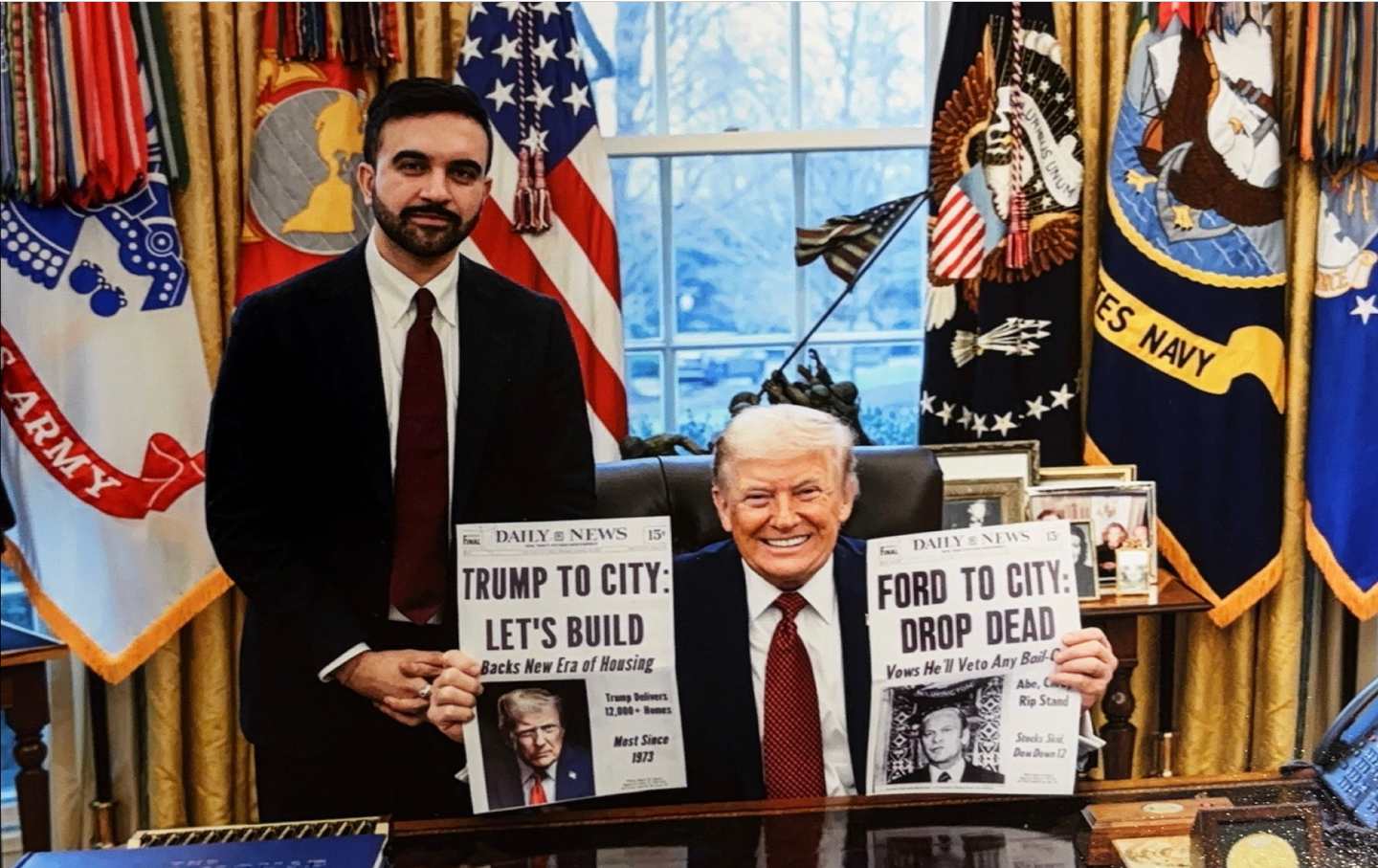
How the Theatrics of Mamdani’s Trump Meeting Backfired How the Theatrics of Mamdani’s Trump Meeting Backfired
By pandering to the president’s vanity, the New York mayor reinforced Trump’s image as a strongman commanding deference—an especially bad look on the eve of Trump’s war with Iran

Students in New York Are Going Hungry. How Can Mamdani Help? Students in New York Are Going Hungry. How Can Mamdani Help?
With plans for city-owned grocery stores and a focus on affordability, the new mayoral administration offers fresh hopes of successfully confronting the food crisis among students...

