
Revenge of the Normies
The theme at the 2024 Republican convention is restoration, not revolution. And the mood, at least last night, was confident.
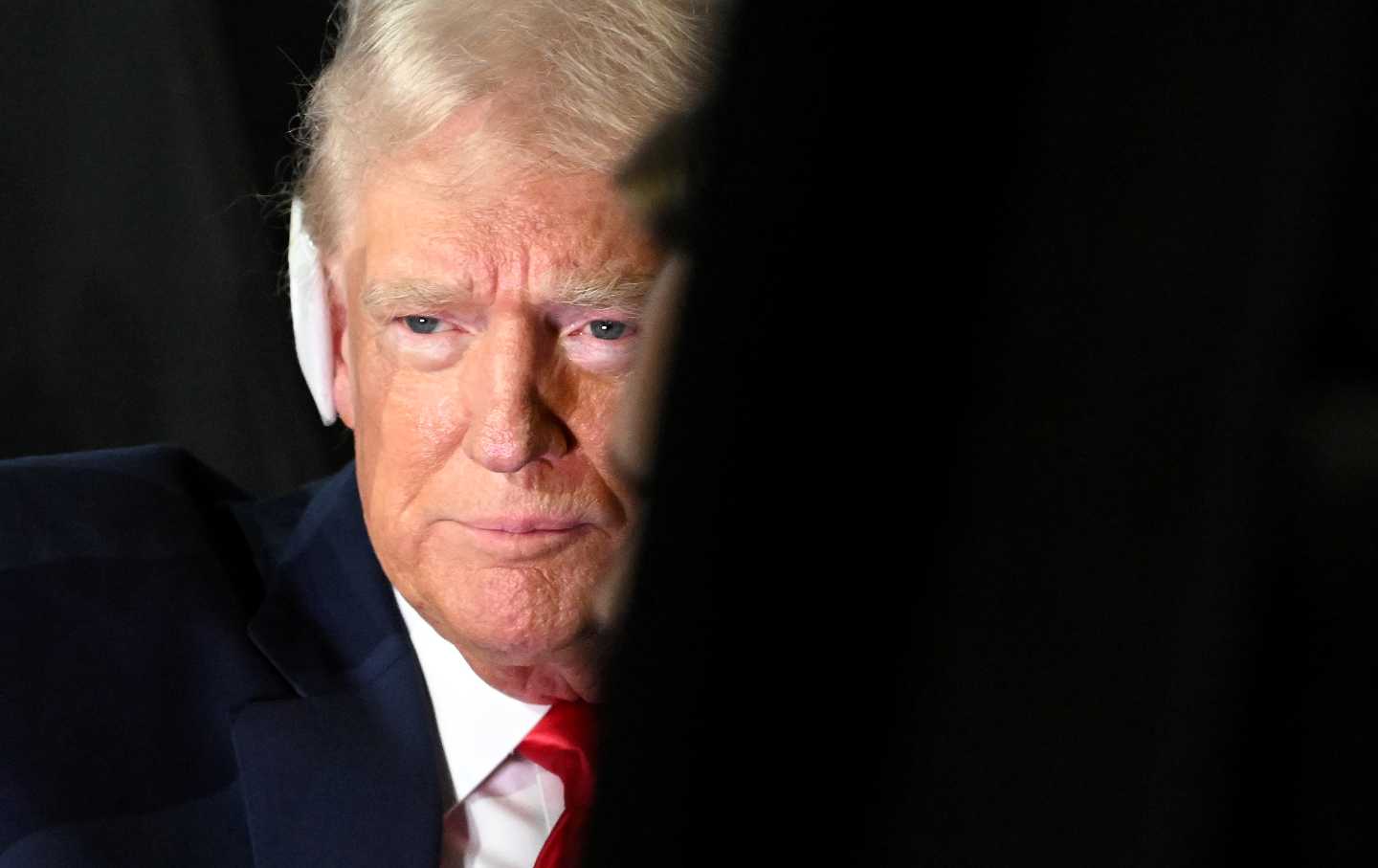
Former US president Donald Trump during the Republican National Convention at the Fiserv Forum in Milwaukee, Wisconsin, on Monday, July 15, 2024.
(Victor J. Blue / Getty)Milwaukee—It was just bad luck, I suppose, that the first Republican delegate I ran into here outside the Fiserv Forum was Susan Sweeney. Though her Abe Lincoln stovepipe hat promised a colorful character—and perhaps fodder for a MAGA caricature—Sweeney, a delegate from Chicago’s northern suburbs, told me she had come to the convention “to talk about the things that unite us as Americans, not the things that divide us.”
Sweeney did list her three major issues: “illegal immigration,” inflation, and so-called parental rights. I’m sure her views on those issues are at odds with those of most Nation readers—though her argument that “the quality of your kid’s education shouldn’t depend on your zip code” might find some sympathizers. But Sweeney, who recently retired as a special needs teacher for preschool kids, was simply too normal, too reasonable, and—by Republican standards at least—too moderate to paint as an extremist.
I arrived in Milwaukee with memories of the last full GOP convention in Cleveland in 2016—which, as my colleague Joan Walsh recently recalled, was a nightmarish spectacle of political cruelty.
Twenty twenty-four feels different. Donald Trump may be the same vicious grifter he’s always been, and the Republican Party, which still had pockets of deep Never Trump resistance in 2016, is now wholly his creature. But the mood here is far from the Nuremberg-style hatefest I’d, frankly, expected.
Like England’s Tories, Trump’s Republicans have long seemed determined to live up—or down—to the label of “the nasty party.” And there was certainly some of that here. Ted Cruz—a walking, smirking incarnation of the dark side—told the crowd that “every damn day” Americans “are dying, murdered, assaults, raped by illegal immigrants” who came here not because they were fleeing violence at home but “because Democrats cynically decided they wanted votes from illegals more than they wanted to protect our children.” The Republicans’ traditional, and cynical, exploitation of grief was on full display, as a procession of murder victims’ relatives blamed their losses on Joe Biden and the Democratic Party. Yet the theme overall was of reconciliation, not revenge, and of restoration, not revolution.
Tuesday evening had been billed as a parade of losers, with former Trump rivals Nikki Haley, Ron DeSantis, and Marco Rubio lining up to publicly kiss the ring of the victorious nominee, who once again sat in the arena sporting the Vincent van Gogh–style ear bandage that has become a visual reminder of his near-assassination last weekend. But perhaps because none of them had ever gone quite so far as to compare Trump to Adolf Hitler—as vice presidential nominee J.D. Vance had done before his born-again MAGA conversion—the abasement seemed somehow less humiliating, the endorsements less extorted.
Not that there was anything remotely plausible in Haley’s claim that her “strong endorsement” of the man she once described as unfit to be president was motivated by “the Democrats’ hav[ing] moved so far to the left that they’re putting America in danger,” rather than her own political ambition. Her reminder that “you don’t have agree with Donald Trump 100 percent of the time to vote for him,” while true enough, landed in silence, though her comment that “a vote for Joe Biden is a vote for Kamala Harris” roused the crowd a bit more—and helped to illuminate Haley’s possible path to redemption.
As the governor of a key Republican citadel, DeSantis had more claim to a place on the program—and judging by the applause that punctuated his speech, more claim to the audience’s affections. His lampooning of DEI as standing for “division, exclusion, and indoctrination” brought louder cheers than any of Haley’s applause lines. But the man Trump memorably lampooned as “Ron DeSanctimonious” struggled to shake off the aura of grievance and resentment that mark his politics—and his personality.
Instead it was Rubio, fresh off of losing to Vance in this year’s veepstakes, who delivered what was easily the most effective speech of the night—a tribute to Corey Comperatore, the former firefighter killed at the Trump rally on Sunday, which depicted the party’s credo of “America First” not as a jingoistic rallying cry but as “a fight for the hopes and dreams that unite us, and make us one.”
“There is nothing dangerous, or divisive,” Rubio told the television audience, “about putting America first.”
It was as if, in mustering Trump’s former rivals, the party was using them not merely as surrogates but also emissaries from the land of the normal people. Rubio repeatedly brought the crowd to its feet—and in the end he brought Trump to his feet as well, clapping and beaming.
How long will this Norman Rockwell vision of Republican comity last? Who knows. But for tonight, at least, this felt like a party at peace with itself and with its leaders.
Which might be the most frightening thing of all.
More from The Nation
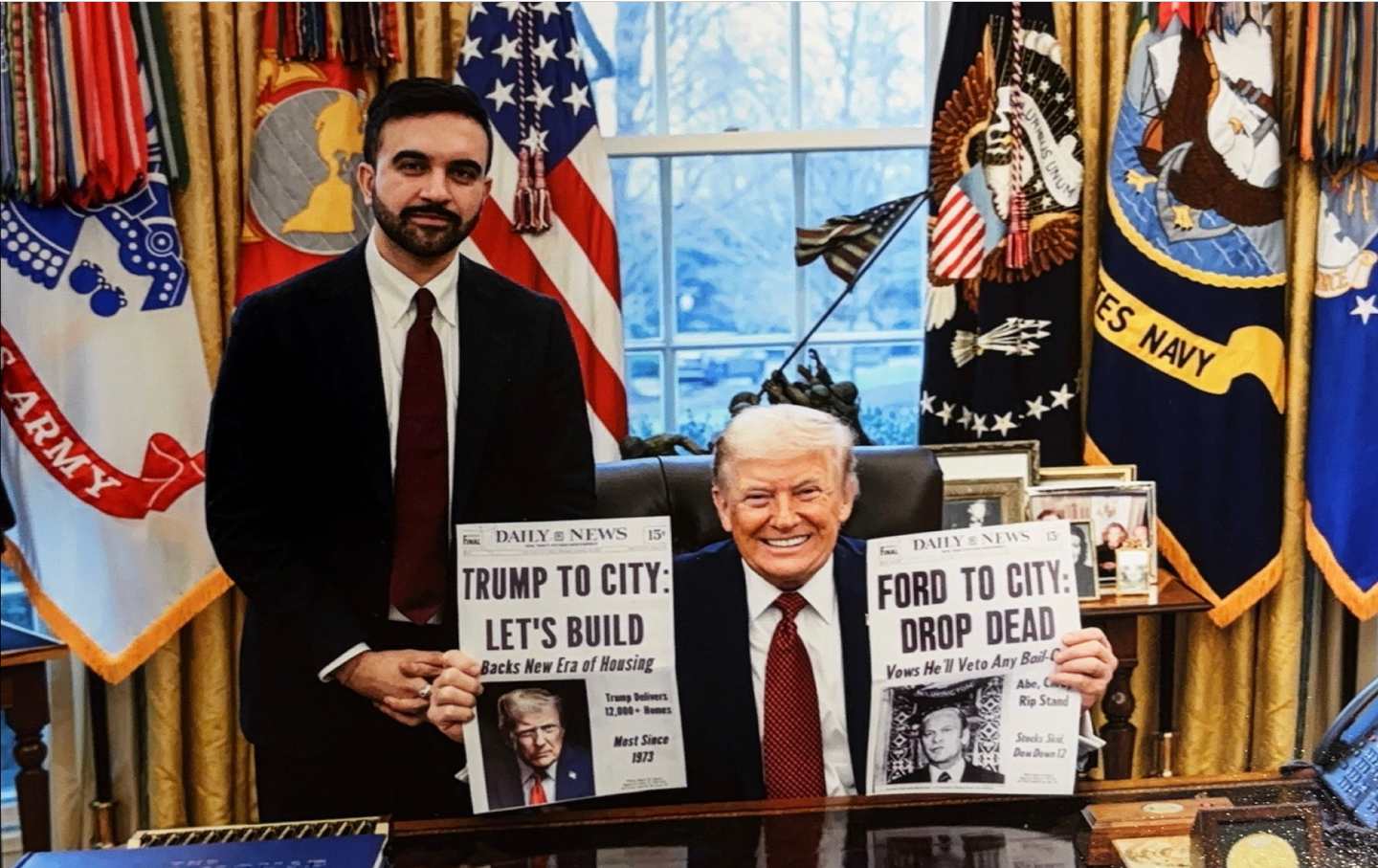
How the Theatrics of Mamdani’s Trump Meeting Backfired How the Theatrics of Mamdani’s Trump Meeting Backfired
By pandering to the president’s vanity, the New York mayor reinforced Trump’s image as a strongman commanding deference—an especially bad look on the eve of Trump’s war with Iran

Students in New York Are Going Hungry. How Can Mamdani Help? Students in New York Are Going Hungry. How Can Mamdani Help?
With plans for city-owned grocery stores and a focus on affordability, the new mayoral administration offers fresh hopes of successfully confronting the food crisis among students...

We Are the Fire That Melts the ICE We Are the Fire That Melts the ICE
Oaxaca, Mexico, street art.
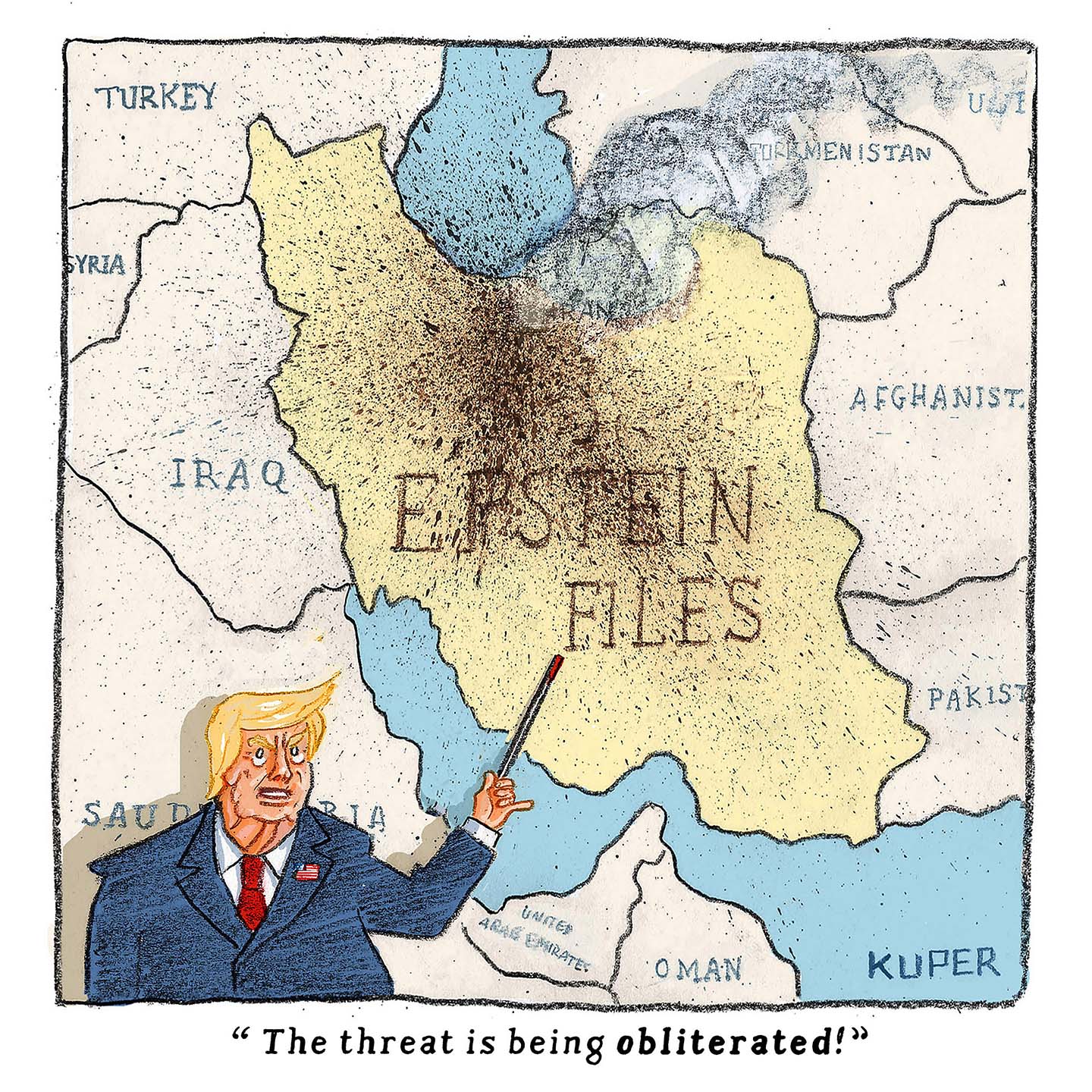
Trump’s Reason for War in Iran? Trump’s Reason for War in Iran?
Obliterating the Epstein files at any cost.
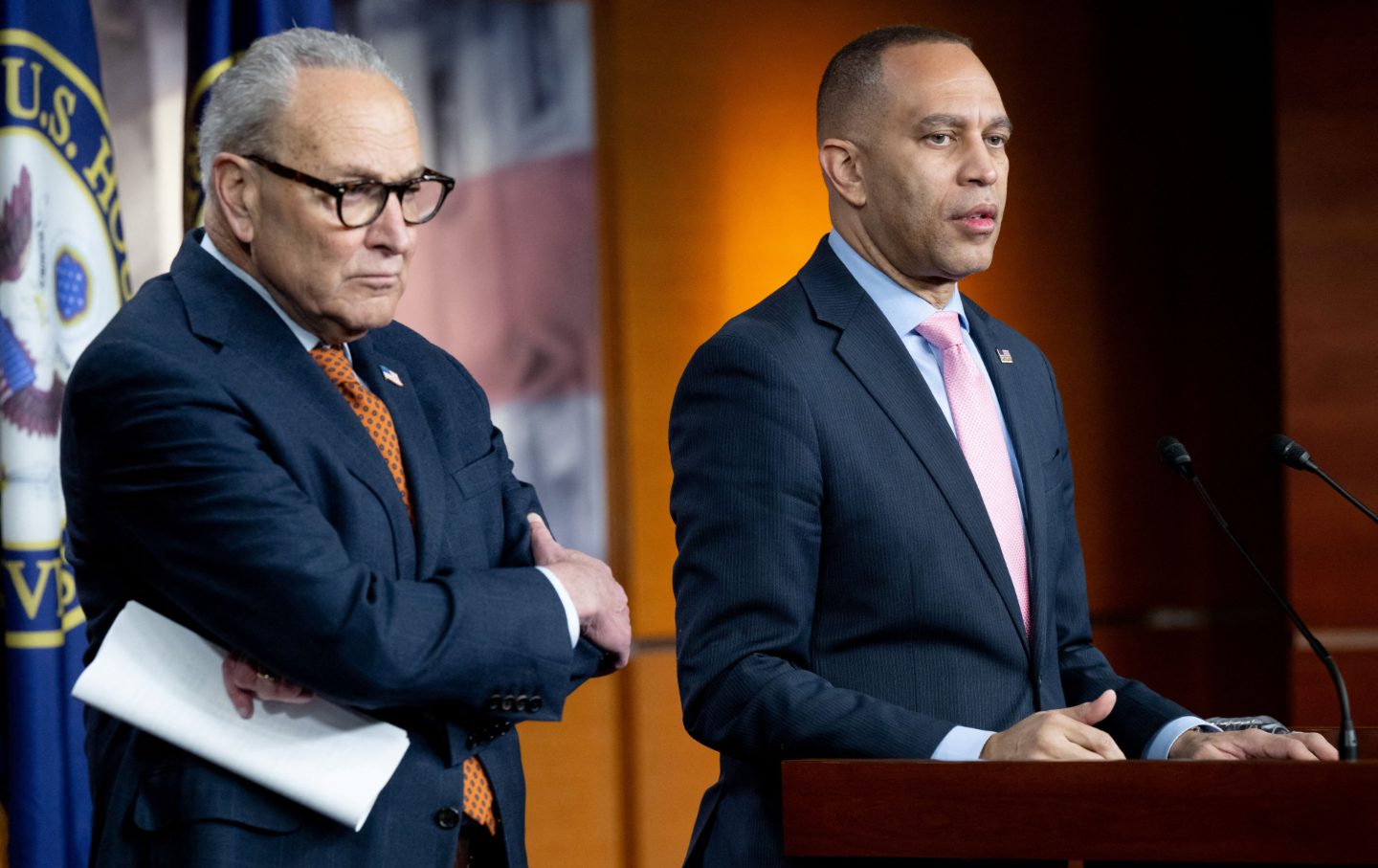
Why Can’t Top Democrats Just Say “No War With Iran”? Why Can’t Top Democrats Just Say “No War With Iran”?
The response to what could be the biggest geopolitical disaster of the 21st century is foot-dragging, silence, and sleepy, feigned opposition long after the deed is done.
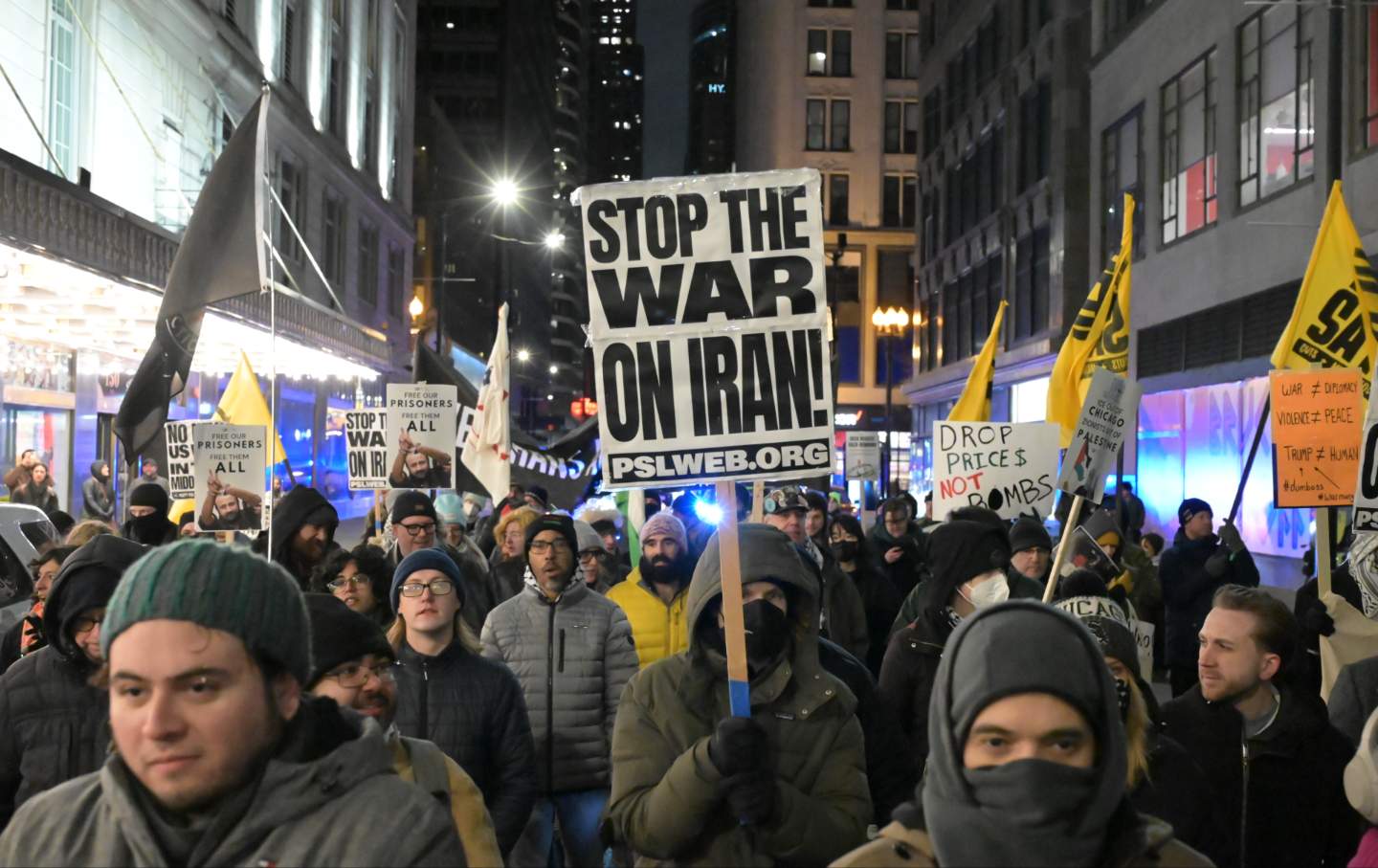
This Is an Unnecessary, Unauthorized, and Unconstitutional War This Is an Unnecessary, Unauthorized, and Unconstitutional War
Congress has a duty to take up War Powers resolutions and assert its primacy over matters of war and peace.

