
The Bad-News Echo Chamber of Pro-Democracy Substack
How many pro-democracy Substack authors over-focus on gloom and doom and ignore organizing, and who’s bucking that trend.
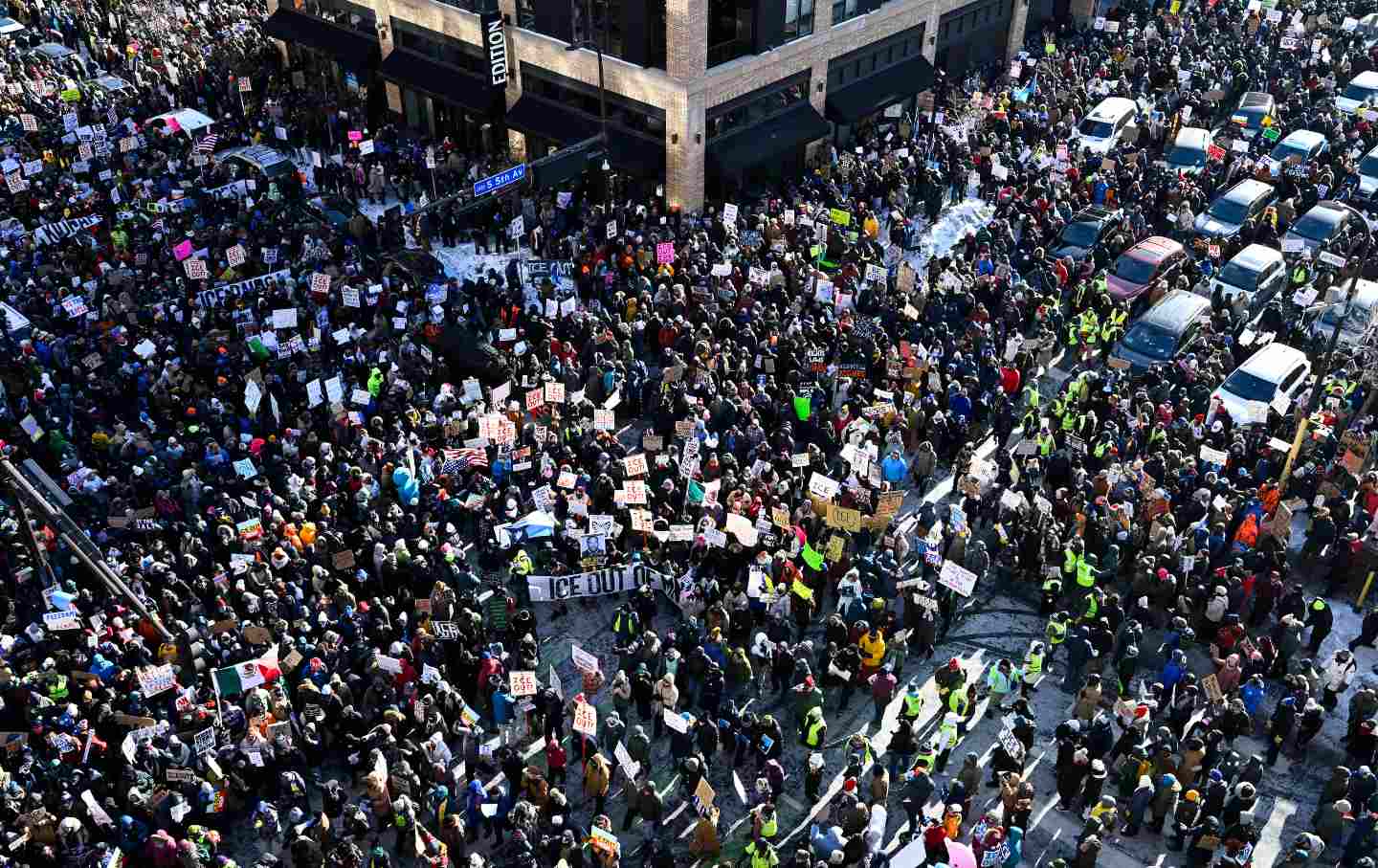
Afew weeks ago, Susan Wagner, founder of the activist group Markers for Democracy, posted an urgent plea on the Grassroots Connector Substack. Addressing an array of liberal pundits, she begged them to change their focus:
All your programs, podcasts, livestreams, and Substack content feed the public a steady diet of all the evils of MAGA and Trump. The message is relentless: Democracy is collapsing. Institutions are failing. Our opponents are ruthless. You rarely, if ever, feature grassroots stories or host activists from organizations that are part of the solution. Excluding such voices is more than an annoying oversight.
There is only one goal for 2026—to win every possible election and loosen the MAGA hold on this country. Winning requires all-hands-on-deck which requires a convincing narrative. As an example, sports fans need to believe their team can win in order to show up at stadiums. And sportscasters are masters of talking up their team’s chances, focusing on strengths, not detailing the dangers ahead. Your readers and listeners, like sports fans, need the hope that today’s activists bring. This is precisely the attitude needed to stage a decisive win for democracy.
…All of us, you included, need to be informed of concrete actions being taken to save our democracy. Grassroots activists recounting small and large examples of organized resistance across the country are missing from your coverage. The resistance did not start in Minneapolis; we have been organizing and growing since 2016. The decision to ignore this significant volunteer effort contributes to the narrative that individuals are helpless, that few care, and that no one can do much to change the inevitable seizing of rights and power. Absolutely nothing of the sort is true or inevitable, but without your help, that may well be the prevailing status.
Unfortunately, you have created an echo chamber. Every week the same experts make the rounds with the same anxiety-provoking messages. This leaves listeners with an incomplete picture of the political landscape.
Wagner’s words struck a chord for me, but I wondered if empirically, it really was true. I don’t watch cable news because I find it mostly vapid, performative, repetitive, and anxiety-provoking, but I do read a lot of newsletters, and particularly those by authors focused on democracy. So, with a little AI help, I decided to take a closer look. Have our leading pro-democracy writers formed an echo chamber? And are they failing to cover pro-democracy organizing?
To make this a manageable project (meaning, something I could do in a day given what this Substack generates income-wise!), I decided to focus on two things. First, taking note of how often pro-democracy authors have been using Substack Live to attract and drive attention, I built a network analysis of “who is talking to whom.” I seeded the network with a list of some the most prominent sites and authors I’m familiar with: The Contrarian (which is led by Jennifer Rubin, formerly of the The Washington Post), The Bulwark, historians Timothy Snyder, Heather Cox Richardson, and Ruth Ben-Ghiat, economist Paul Krugman, political strategists Simon Rosenberg, Rick Wilson, and Michael Podhorzer, and author Anand Giridharadas. And then I went back a year, scraping each of their Substack sites to identify Substack Live guests, and then build a graph showing multiple co-appearances as stronger ties and individual appearances as weaker ones.
The second thing I did was much simpler: Focusing just on that core group of 10 sites/authors, I looked for mentions by them of “No Kings”—the name of the biggest pro-democracy push in the country—since the end of January, when the No Kings coalition announced that March 28 (this Saturday), would be the next day of mass national protest. What I found surprised me.
Since the beginning of February through last Friday, many of the leading lights of the pro-democracy punditocracy have all but completely ignored No Kings 3. Timothy Snyder, Rick Wilson, Ruth Ben-Ghiat, Paul Krugman, or The Bulwark never mentioned it (though Bulwark editor at large William Kristol did manage to write a post on February 11 that looked backward at “the massive turnout at the No Kings demonstrations in June and October”). Anand Giridharadas mentioned the “no kings” message in passing. Heather Cox Richardson gave it a plug on a Facebook “politics chat” on March 3. Only Simon Rosenberg, Michael Podhorzer, and Jennifer Rubin gave No Kings 3 real attention.
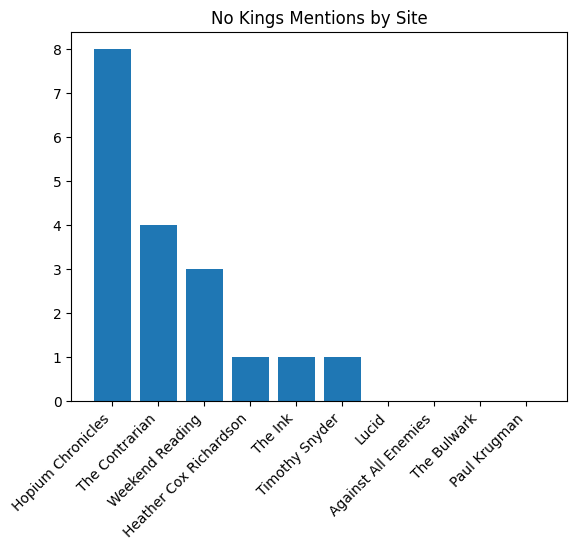
This has shifted, slightly, in recent days. Last Saturday, Snyder devoted his whole “Thinking about…” newsletter, which has 437,000 subscribers, to “No Kings, Freedom!” Likewise, also on Saturday, Ruth Ben-Ghiat noted briefly to her 210,000 subscribers that she would be doing a Substack Live with preacher Diana Butler Bass “to get ready” for the No Kings protests.
Why haven’t so many of the most prominent pro-democracy writers active today said so little about No Kings 3? Do they think it’s passé? Do they think something other than mass, highly visible, public protest is going to stop and reverse America’s slide into authoritarianism? Obviously not, which leaves me to wonder if they think organizing and mobilizing is beneath them, something better left to lesser “names.”
Because of course there are plenty of other Substack authors who do an excellent job of centering organizing in their writing. I’m thinking of Robert Hubbell, whose “Today’s Edition” newsletter regularly features photos from protests all over the country; Jess Craven’s “Chop Wood, Carry Water” which is also daily and chock-a-block with calls to action (and also includes a family of state-focused newsletters); and “We The People Dissent” by K. Starling, which is basically all protest info, all the time.
But it’s still concerning that No Kings 3 hasn’t gotten more attention from some of our best attention-mongers. Do not assume that people know something big is coming this weekend—most Americans are too busy and pay little attention to most of the news. And if they don’t know about it, they won’t come.
On Logrolling and Backscratching
So who do the leading pro-democracy writers feature in their attention streaming machines? Here’s the network graph:
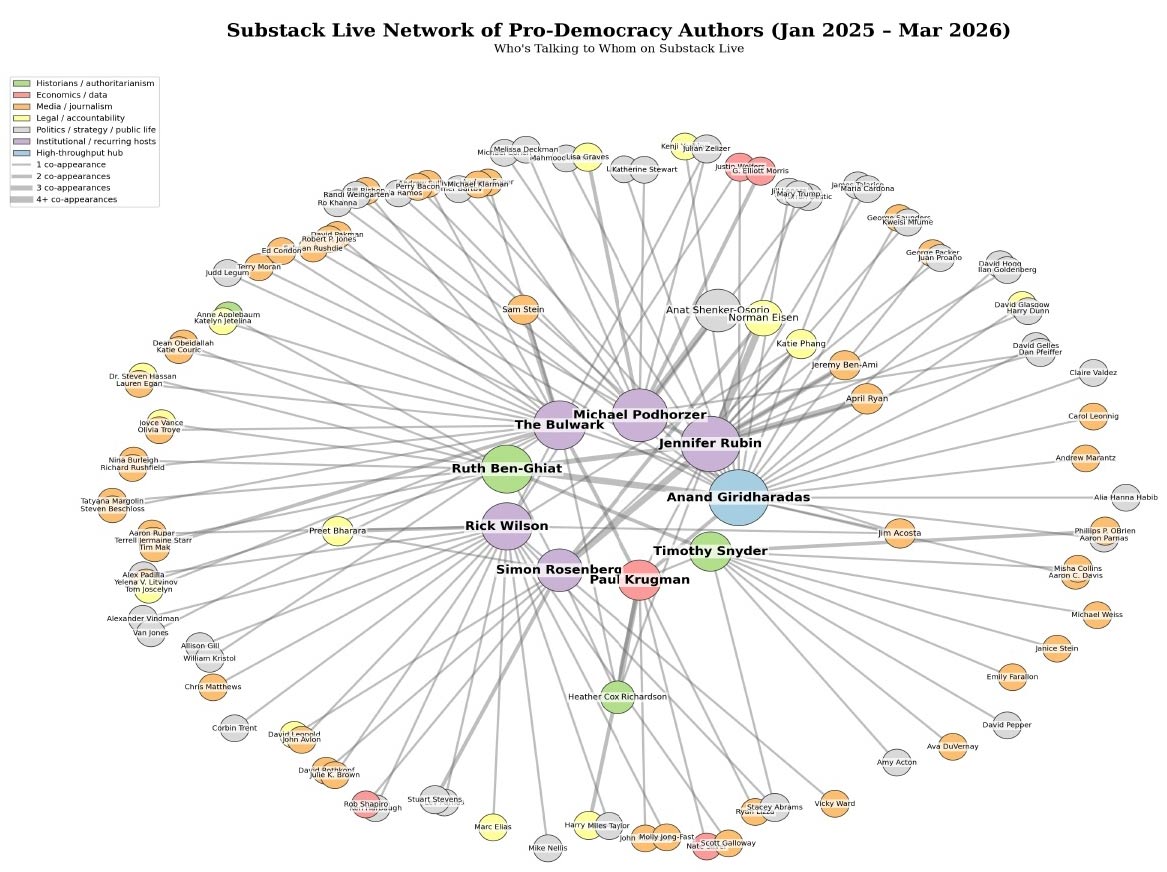
I should say right from the start that this is, of course, an incomplete picture. There are easily several dozen more sites and writers that one could include in mapping this whole ecosystem. But I’m not a professional data scientist; perhaps the good people who wrote the book Network Propaganda and produced amazingly data-rich charts showing the entire political news ecosystem in 2016 could train some of their tools on the Substack politics landscape. Certainly there’s plenty of relationship data to be mined simply from looking at who recommends whom!
But here’s what I found, as rough and dirty as it is. Nine of those ten sites/authors are closely linked to each other, appearing on each other’s Substack Live shows often in the last year. Only Richardson, whose “Letters from an American” Substack has 2.8 million subscribers, isn’t in the center circle—most likely because she already has a gigantic audience and doesn’t need to hustle more to build it. A few of folks in the center have close collaborators who show up in a middle ring. And then there’s a wide array of other guests who have been on the core group’s Live shows once or twice.
Notably, very few of the people on this visualization of “Who’s Talking to Whom” are political organizers. Most work in media as talkers, or in politics as commentators. A handful, like Norman Eisen and Marc Elias, are deeply involved in pro-democracy work in the courts, so they’re closer to the organizing trenches. Someone like Jeremy Ben-Ami, who runs J Street, is clearly a political organizer, and if you squint you can spot David Hogg, Stacey Abrams, and Corbin Trent out on the periphery. But even after the spectacular amount of grassroots pushback from places like Los Angeles, Chicago and Minneapolis, and the massive No Kings protests of April and October 2025, the pro-democracy chattering class hasn’t put the leaders of those efforts anywhere on their collective radar.
People like Ezra Levin and Leah Greenberg of Indivisible, Doran Schrantz of Faith in Minnesota, Cristina Jimenez of United We Dream, Maurice Mitchell of the Working Families Party, Ian Bassin of Protect Democracy, Lisa Gilbert of Public Citizen, Chris Dols of the Federal Unionists Network, Alex Winter of #TeslaTakedown somehow don’t get called much by these folks’ bookers. And it’s not like these organizers are press-shy or afraid to go on a live show.
What Explains This?
I get why hosts of cable TV news shows might not invite organizers onto their nightly programs. They are in a continuous ratings war against their competition, their revenues are based on audience share, and they can’t risk losing their audience’s attention. But Substack’s pro-democracy authors aren’t subject to the same corporate market pressures. So why are they acting like a pack? Why do they tend to talk to many of the same people, including each other? And why do they give organizing short shrift? I have a few theories.
One: If you are trying to build a large audience of Substack subscribers, of whom only a fraction will pay to subscribe or donate, quantity and speed beats quality. Going live is a fast way to reinforce a connection with your subscribers, be they free or paying. And going live with someone who also has a big following is probably one of the most efficient ways to gain new subscribers. This produces a version of the “winners take all” effect, where people already rich in audience attention choose to hang out with and amplify other people also rich in attention.
Second: If you are an author with any following whatsoever, Substack is an endorphin machine. You are treated to a constant stream of feedback in the form of likes, comments, and shares. (Notably, Substack doesn’t give readers a way to dislike a post.) Positive feedback makes everyone feel good; but it can be addicting. Going Live on Substack adds in more positive feedback, in the form of a live audience chat thread. And some of these authors now get live adoring audiences in the thousands; who wouldn’t want to bath in that kind of attention? This past weekend, I saw a friend turn on Substack Live (you get an e-mail notifying you, if you’re a subscriber) and he didn’t even have a guest or a plan to talk—he just needed to do some work on the computer and wanted to offer his fans the opportunity to hang out and watch!
Third: Pontificating about the latest outrage of the day is easy to do from your desk. It’s fast and cheap (see point One). Reporting on the ins and outs of organizing or producing a new insight from the complex mix of news that flows around us constantly, that’s hard and often expensive. In the best of both worlds, sites/authors with the kinds of big audiences some of these pro-democracy authors have built would use the money they’re making to hire more actual journalists. Some are doing that, like The Bulwark, which has people like Jonathan Cohn and Adrian Carrasquillo dedicated to beats like healthcare and immigration, respectively. But what does Heather Cox Richardson with the millions of dollars she must be making from her massive and devoted subscriber base? I have no idea.
Fourth and last: Political writers and commentators are just responding to what political news consumers want, though that consumer mindset is something these writers and commentators helped build and reinforce every day. They don’t try to produce in-depth coverage of movements because those stories, when they do appear, tend to get fewer views and clicks than another rant about Jeffrey Epstein or the Orange Cheeto. Or both.
Unfortunately, these tendencies combine to produce a star-system of high-quality talking heads and a dumbed-down audience that never quite figures out why the news and commentary on offer just makes it feel worse. Last fall, I saw this on display when I caught the Bulwark’s live show at New York City’s Symphony Space. This was a recording of their lead podcast, featuring Bulwark publisher Sarah Longwell, editor Jonathan V. Last, and writer-at-large Tim Miller. The Upper West Side audience gave them a hero’s welcome and roared mightily at their jokes, but most of the conversation was incredibly self-referential. (Watch here if you think I’m wrong.) Longwell, Last and Miller spend so much time doing live shows with each other by Zoom or Substack Live that they didn’t feel like they had to change a thing for an in-the-flesh live audience. After a while, I stopped laughing at the puerility of their jokes and walked out early.
Is this fixable? Yes, from both the top and the bottom. The people who manage these big Substacks are their own bosses; there’s no network honcho telling them how to run their sites. And people like Susan Morgan have already offered them a great list of potential guests to feature who are more involved in the everyday fight to defeat authoritarianism; they don’t have to start from scratch in considering who to highlight. From the other end, readers and subscribers can vote with their feet and their checkbooks. Cut back on the money you give to Substack stars who dwell too much on the cheap production of gloom and doom, and shift your dollars to sites that really cover what’s happening on the ground.
Oh, and don’t forget to show up somewhere this Saturday for No Kings 3!
Duly Noted
Popular
“swipe left below to view more authors”Swipe →I missed this post when it came out two months ago, but it’s just as current now. Haley Bash nails what’s wrong with all the giant webinars progressive organizations keep having. While they allow small numbers of staff to reach large numbers of people, they turn the audience into consumers rather than active participants, and as she writes, “thus they begin to act like critics,” adding, “We’ve trained people to observe and judge, not to co-create.” Read the whole thing.
If you’ve been looking for a simple way to turn your concerns into ongoing action—and bring others along—check out 2-10.org. The idea is simple: Contact two to 10 elected officials on issues that matter to you, then ask two to 10 people you trust to do the same and follow up with them. That’s it. No app, no membership. Just a lightweight accountability chain that multiplies real civic action through personal networks. It started in Athens, Georgia, and has been spreading organically ever since. It’s a tool, not a movement—use it however fits your context.
End Times
At least they know they’re free!
Support independent journalism that does not fall in line
Even before February 28, the reasons for Donald Trump’s imploding approval rating were abundantly clear: untrammeled corruption and personal enrichment to the tune of billions of dollars during an affordability crisis, a foreign policy guided only by his own derelict sense of morality, and the deployment of a murderous campaign of occupation, detention, and deportation on American streets.
Now an undeclared, unauthorized, unpopular, and unconstitutional war of aggression against Iran has spread like wildfire through the region and into Europe. A new “forever war”—with an ever-increasing likelihood of American troops on the ground—may very well be upon us.
As we’ve seen over and over, this administration uses lies, misdirection, and attempts to flood the zone to justify its abuses of power at home and abroad. Just as Trump, Marco Rubio, and Pete Hegseth offer erratic and contradictory rationales for the attacks on Iran, the administration is also spreading the lie that the upcoming midterm elections are under threat from noncitizens on voter rolls. When these lies go unchecked, they become the basis for further authoritarian encroachment and war.
In these dark times, independent journalism is uniquely able to uncover the falsehoods that threaten our republic—and civilians around the world—and shine a bright light on the truth.
The Nation’s experienced team of writers, editors, and fact-checkers understands the scale of what we’re up against and the urgency with which we have to act. That’s why we’re publishing critical reporting and analysis of the war on Iran, ICE violence at home, new forms of voter suppression emerging in the courts, and much more.
But this journalism is possible only with your support.
This March, The Nation needs to raise $50,000 to ensure that we have the resources for reporting and analysis that sets the record straight and empowers people of conscience to organize. Will you donate today?
More from The Nation
Trump’s TV-Warped Brain Is Putting the World in Danger Trump’s TV-Warped Brain Is Putting the World in Danger
The president is experiencing the Iran War almost entirely through misleading video clips—and that’s very bad news for all of us.
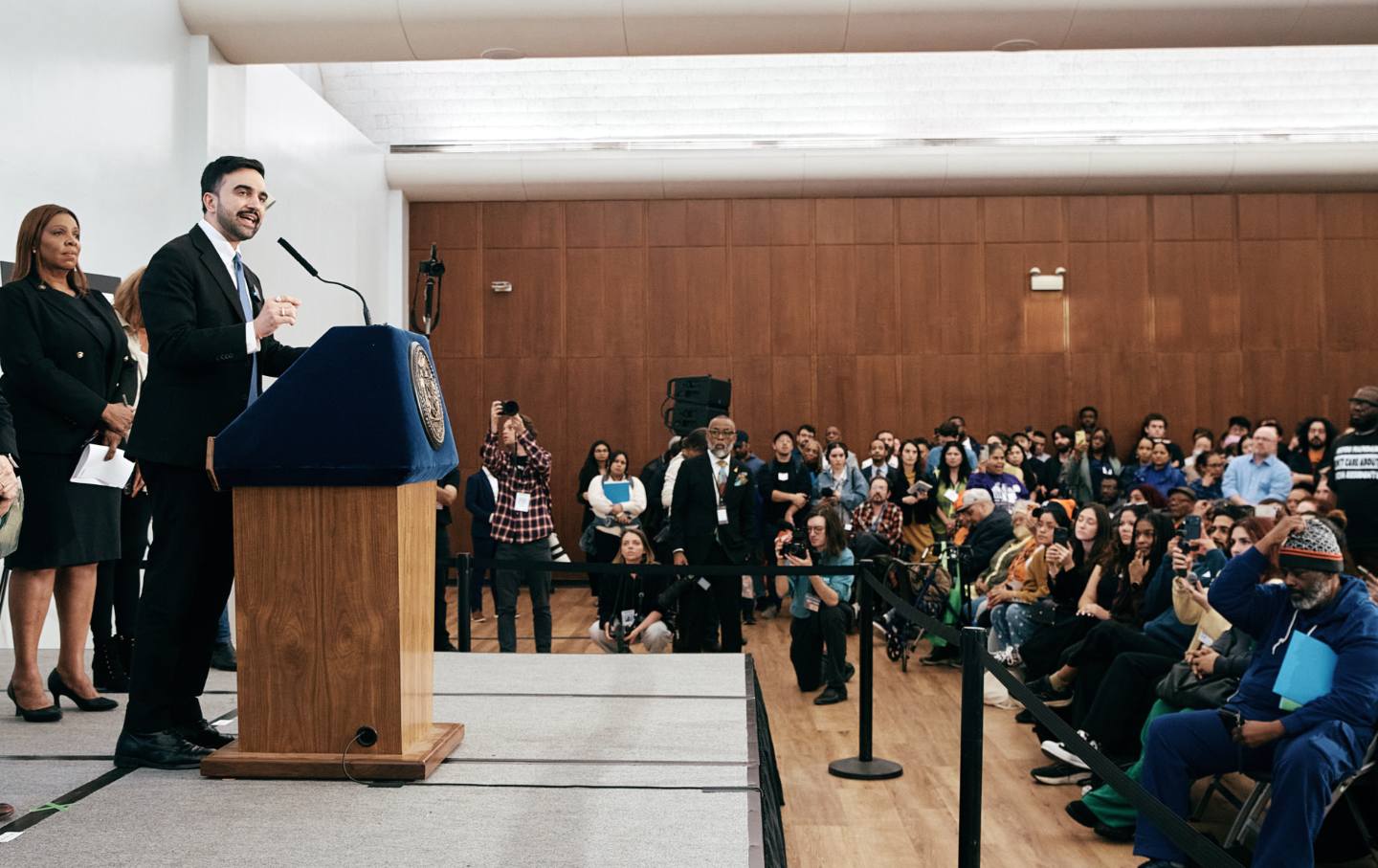
Mamdani Asked Tenants to Tell Him Their Problems. Hundreds Did. Mamdani Asked Tenants to Tell Him Their Problems. Hundreds Did.
What it's like at one of the mayor's "Rental Ripoff" hearings.


Mamdani’s Master Class in Impression Management Mamdani’s Master Class in Impression Management
New York’s mayor continues to showcase his command of political symbolism as he prepares to reckon with some difficult real-world choices
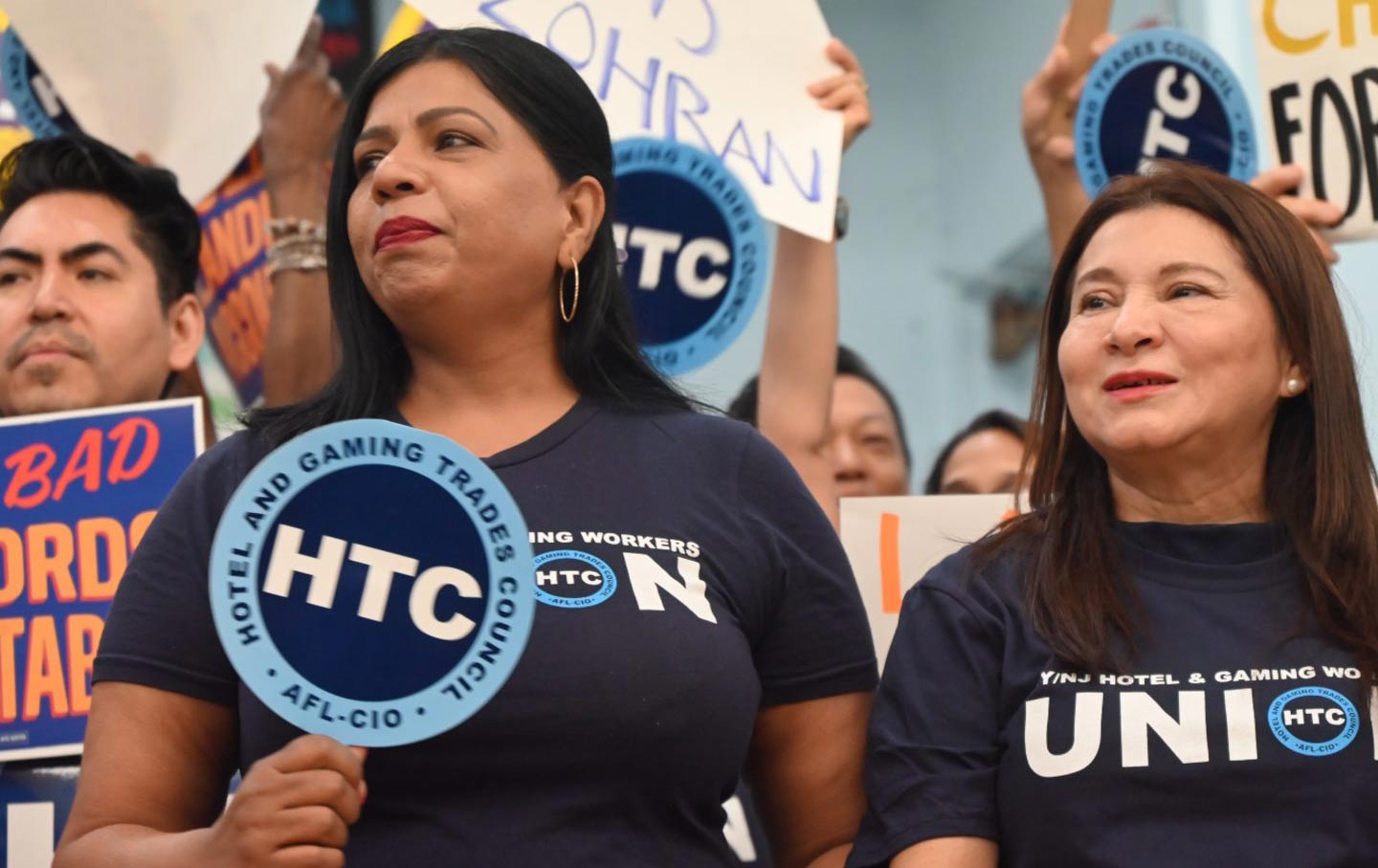
Tourists See a Luxury Hotel. We See Labor History and a City That Protects Workers. Tourists See a Luxury Hotel. We See Labor History and a City That Protects Workers.
New York’s hotel industry was built on labor struggles—and today’s protections show how worker rights and world-class hospitality go hand in hand.
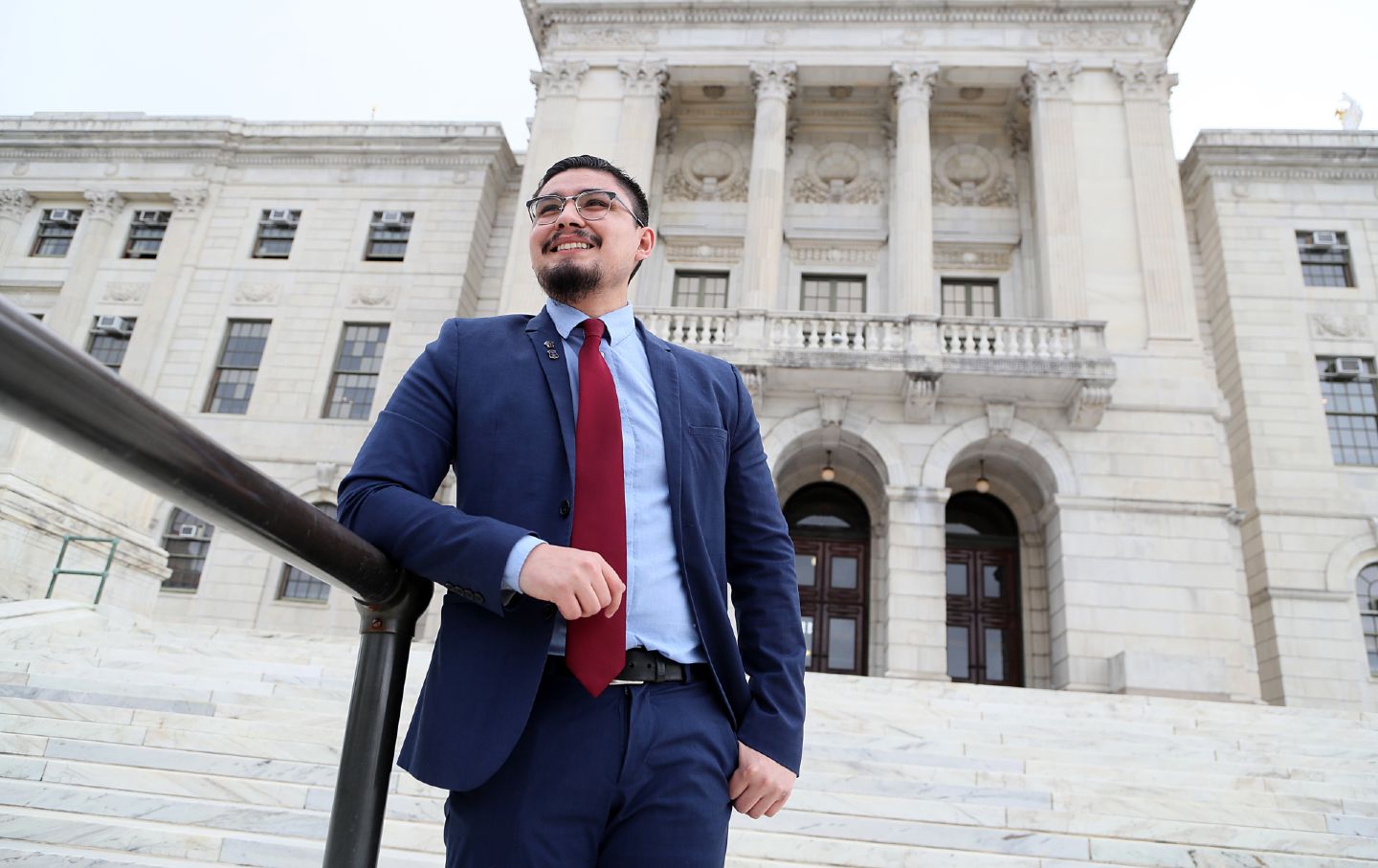
The Affordability Crisis in Midsize Cities Is Not Inevitable The Affordability Crisis in Midsize Cities Is Not Inevitable
A mayoral candidate in Providence argues that unique challenges—and unique responses—must be explored.

