
Mamdani Asked Tenants to Tell Him Their Problems. Hundreds Did.
What it’s like at one of the mayor’s “Rental Ripoff” hearings.
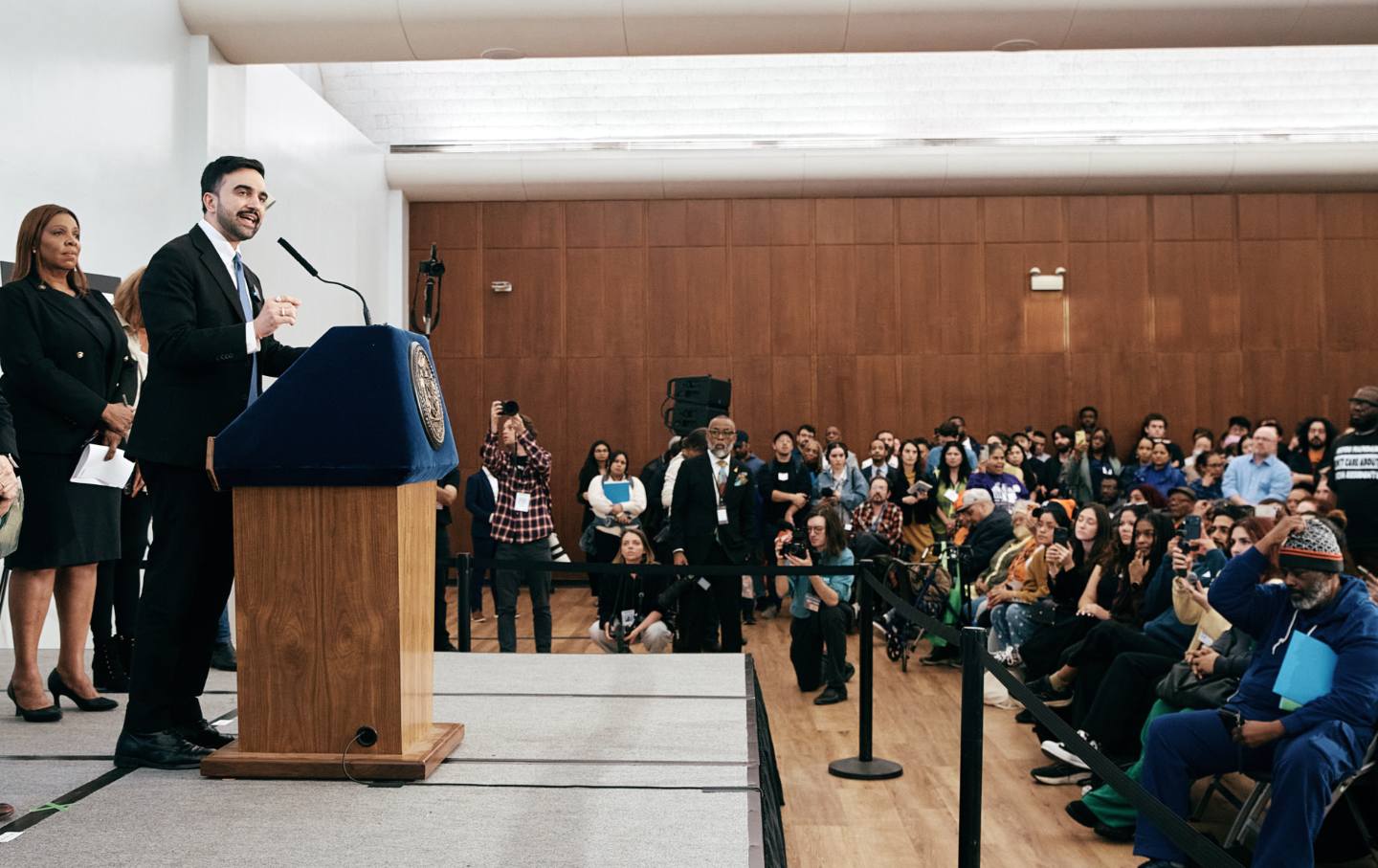
Zohran Mamdani speaks during a Rental Ripoff Hearing at Fordham University on Wednesday, March 11, 2026.
(Andres Kudacki / AP)Vincia Barber, 45, is no stranger to New York’s housing system. For the past six years, she has been organizing tenants at 1616 President Street in Crown Heights, Brooklyn — a building that spent years under the ownership of Jason Korn, named New York City’s worst landlord two years running by the public advocate’s office. Last December, after a four-year rent strike, a judge sided with Barber and her neighbors, waiving $250,000 in rental arrears.
Weeks later, newly installed Mayor Zohran Mamdani announced that the city would be holding “Rental Ripoff” hearings to give people like Barber a chance to tell policymakers about their experiences as New York City tenants. She seized the opportunity, turning up at the very first hearing, which was held at a high school in Brooklyn on February 26.
Barber was quickly escorted to a classroom behind the school’s gym, where she sat at a desk for a three-minute listening session with a city official. She rattled off a list of complaints about the leaks in her house, the lack of heat, issues with garbage disposal, and the frustration of coordinating with different city agencies and the landlord. Two officials took down her information and promised to follow up.
“I am really glad that they are doing something like this,” Barber told The Nation after her listening session finished. “I am hoping that they actually take all of the complaints they receive today and use it to inform their policies on housing,” she said.
Barber’s experience is in some ways a microcosm of what tenants across the city are contending with. Nearly 900,000 serious housing violations were recorded in New York City in 2024. That number likely only represents a fraction of the problems tenants face in a city where a median-income household would need to spend 68.5 percent of their income to rent an average apartment.
Since February, the Mamdani administration has held three Rental Ripoff hearings, one each in Brooklyn, Queens, and the Bronx. So far, 400 people have given in-person testimonies, and 500 more have submitted them digitally, a spokesperson for Housing and Planning in City Hall told The Nation. The spokesperson added that the testimonies will feed into a report proposing policy interventions and inform a housing plan tentatively set to be released in May.
Cea Weaver, the head of the Mayor’s Office to Protect Tenants and the architect of these hearings, hopes they will also serve as a catalyst for tenant organizing. “The most protected tenant is an empowered tenant who knows their rights and is organizing with their neighbors,” she told The Nation. “I really think if you have a union in your building, you are going to have an easier time getting repairs from your landlord directly and you’re going to have an easier time getting attention from the city,” she said.
Tenant organizations are finding they have much more access to the Mamdani administration than to previous City Hall governments. “The city’s process for interacting with organized tenants feels night and day compared to previous administrations,” said Charlie Dulik, director of organizing at the nonprofit Housing Conservation Coordinators in Manhattan.
Dulik said the city’s reporting and response system has long frustrated tenants, who want to be able to schedule their own inspections when they call 311, who want their complaints to stay open until the problem is actually fixed, and who want their landlords to be made to pay the fines they accrue. “These may sound like basic demands, but the system is so deeply broken that we’re far from this being a reality,” he said. “It will take time, money, and a massive culture shift — and that can only happen with sustained pressure.”
The three hearings held so far drew many residents like Barber who were part of tenant organizations, but also those who came on their own. Jade Lauw, 27, a Queens resident, had spent three months searching for an apartment, running into AI-generated listings that looked nothing like the actual units and brokers adding fees to listings after she expressed interest in an apartment. “The demand is so high in New York that we just end up having to settle for subpar conditions,” she said. “I think this (the hearings) speaks more directly to the source of people that can decide on these laws. Instead of like, okay, I’m at a community board meeting, they’re gonna advocate for it in the next meeting… I hope this goes directly to the people who can make a difference,” she added.
Yet not all of the city’s tenants felt welcome at the hearings. Some New York City Housing Authority (NYCHA) residents told The Nation they had initially felt excluded since the hearings focused on HPD, a city agency that deals with private landlords. (NYCHA is the landlord for over 177,000 apartments housing over half a million people.) At the Brooklyn hearing, Crackhead Barney – a performance artist and comedian known for ambushing politicians at public events in outrageous costumes – commandeered the podium in a Donald Trump mask to call attention to NYCHA. “There is no tenants association without NYCHA. Poor people have a fucking voice!” she said. Outside the hearings, Kingdom Justice Church’s Reverend Kevin McCall parked a truck with a sign that read “NYCHA residents matter!”
Weaver, who came to the role after years of tenant organizing, took the mic in the hearings to say that city officials would listen to the grievances of NYCHA residents. She also invited NYCHA residents to sign up for one-on-one conversations and said that NYCHA officials were available to speak to tenants with concerns.
Popular
“swipe left below to view more authors”Swipe →There are still those who remain skeptical of the city’s commitment to public housing residents. “The residents of public housing have suffered the most corruption, the worst corruption in the city,” Dr.Jesse Fields, a doctor and an advocate for public housing residents in Harlem and the Bronx, told The Nation. “You can’t develop a plan for the future of public housing in New York City without including the people who live in it, the residents, and their leadership.”
More predictably, landlord groups are also unhappy. The New York Apartment Association — which spent $2.5 million backing Andrew Cuomo in last year’s mayoral race — called the hearings “anti-landlord events,” arguing that it is not negligent landlords but rent stabilization policies that are driving buildings into disrepair. “The real rental ripoff in housing is a system that pulls rent money away from repairs and building operations,” said CEO Kenny Burgos in a statement.
The reaction from landlords has only inspired tenant organizers, who sense an opportunity to build collective power through the hearings. “I hope that the hearings can serve as useful organizing tools both inside and outside of government — providing tenant organizations a place to recruit and connect, but also creating some much-needed public pressure on some stagnant parts of the municipal bureaucracy,” said Dulik.
Three weeks after attending the Brooklyn hearing, Vincia Barber said that an HPD official followed up with her about the lack of heat in her apartment and encouraged her to file a complaint with the Division of Housing and Community Renewal, the agency that handles rent reductions for decreased services. “The officials are talking to me and this gives me hope that landlords who are not doing right by their tenants are held accountable under this new administration,” Barber said.
Become a Sustaining Donor This September
Between the reemergence of right-wing red-baiting and Donald Trump’s use of the chilling National Security Presidential Memorandum–7 to criminalize left political organizing, we’re seeing McCarthyism reborn before our eyes.
This assault on democracy cannot be ignored or wished away. Resisting it requires bravery in the face of threats and repression, a steadfast commitment to the truth, and the unwavering belief that we can—and will—overcome this darkness.
We must have an independent media that sets the record straight, unearths corruption and abuses of power, and advances a politics of justice and dignity for all if we’re to win this fight.
That’s why I’m writing to you today. This September, The Nation needs to add 100 monthly donors to sustain our progressive journalism. Your contribution makes the next investigative report, the next truth-speaking column, and the next pathbreaking essay all possible.
I hope you’ll support our work with a recurring donation today. If you donate $10 or more a month, we’ll send you a brand new “Hands Off the Free Press!” sticker to recognise your commitment to our cause. Please, donate today.
Onward,
Katrina vanden Heuvel
Editor and Publisher, The Nation
More from The Nation
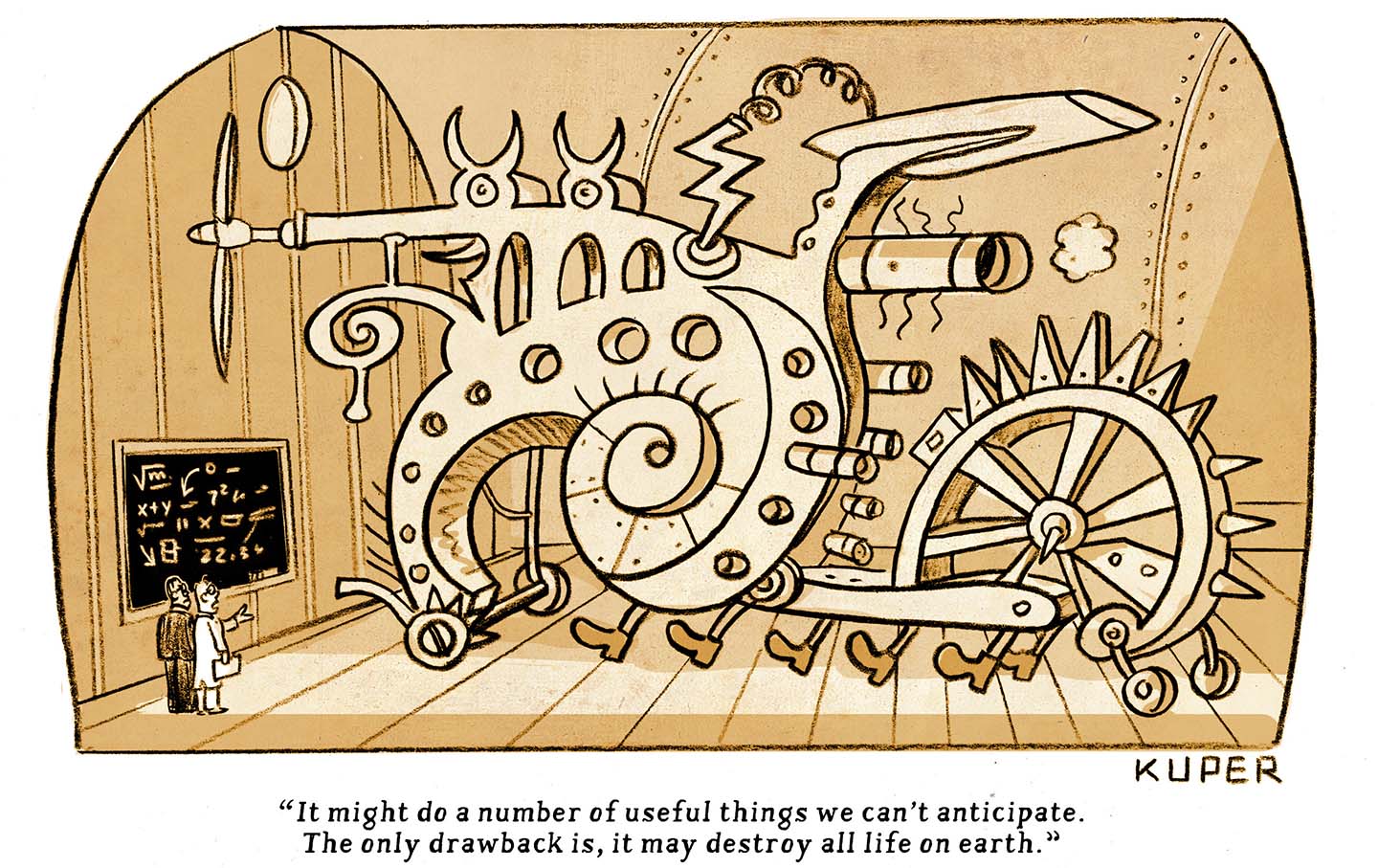
Missing Guardrails for AI Missing Guardrails for AI
Trump ignores the threat of extinction.
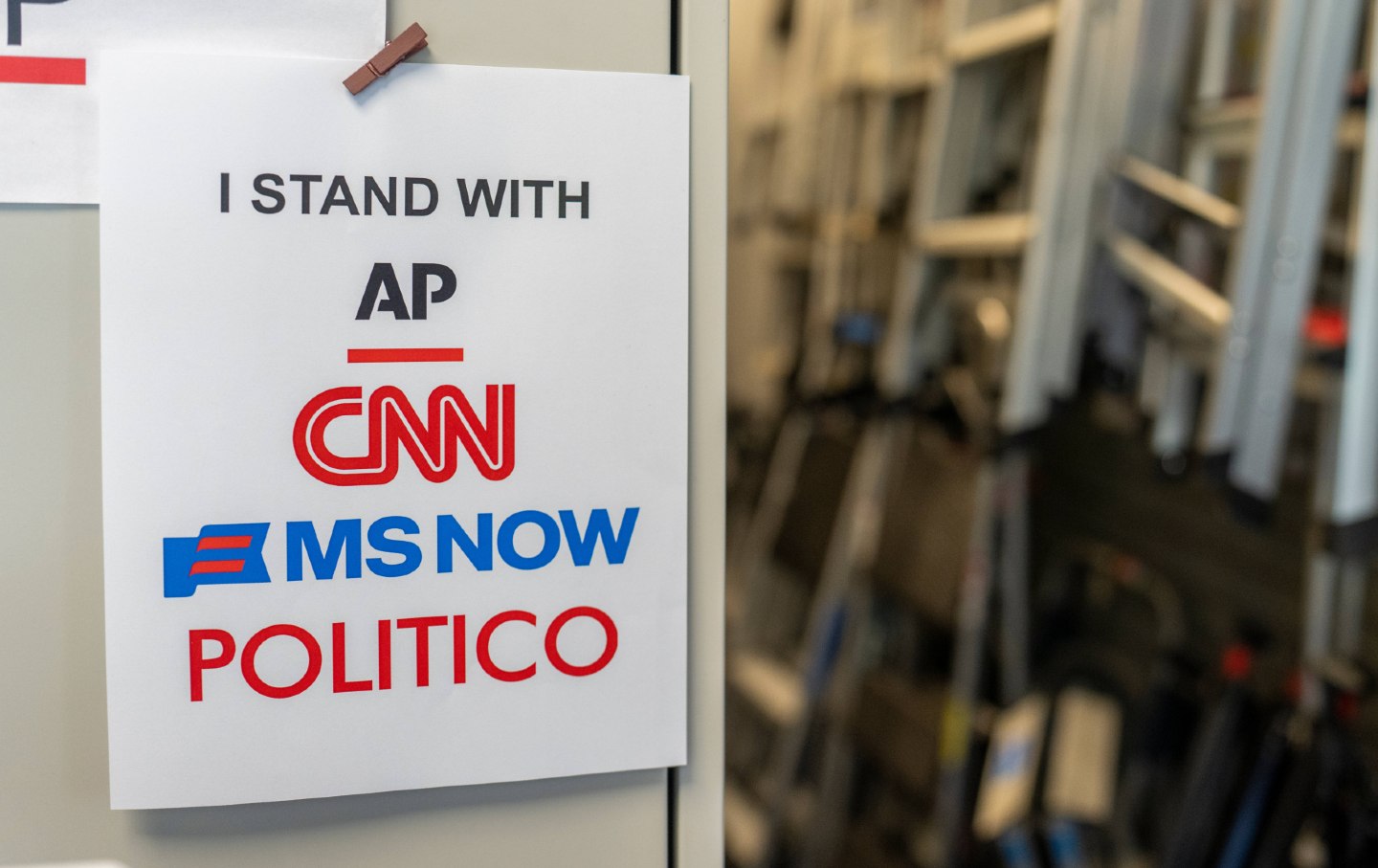
The First Amendment Lives for Another News Cycle—Maybe The First Amendment Lives for Another News Cycle—Maybe
In this week’s Elie v. U.S., our justice correspondent parses Trump’s attacks on CNN, MS NOW, and Politico. Plus: it’s time to impeach the judges!
Susan Collins Is Corrupt. She Still Might Be Reelected. Susan Collins Is Corrupt. She Still Might Be Reelected.
Despite being embroiled in scandal, the Maine senator is benefiting from Democratic Party divisions.

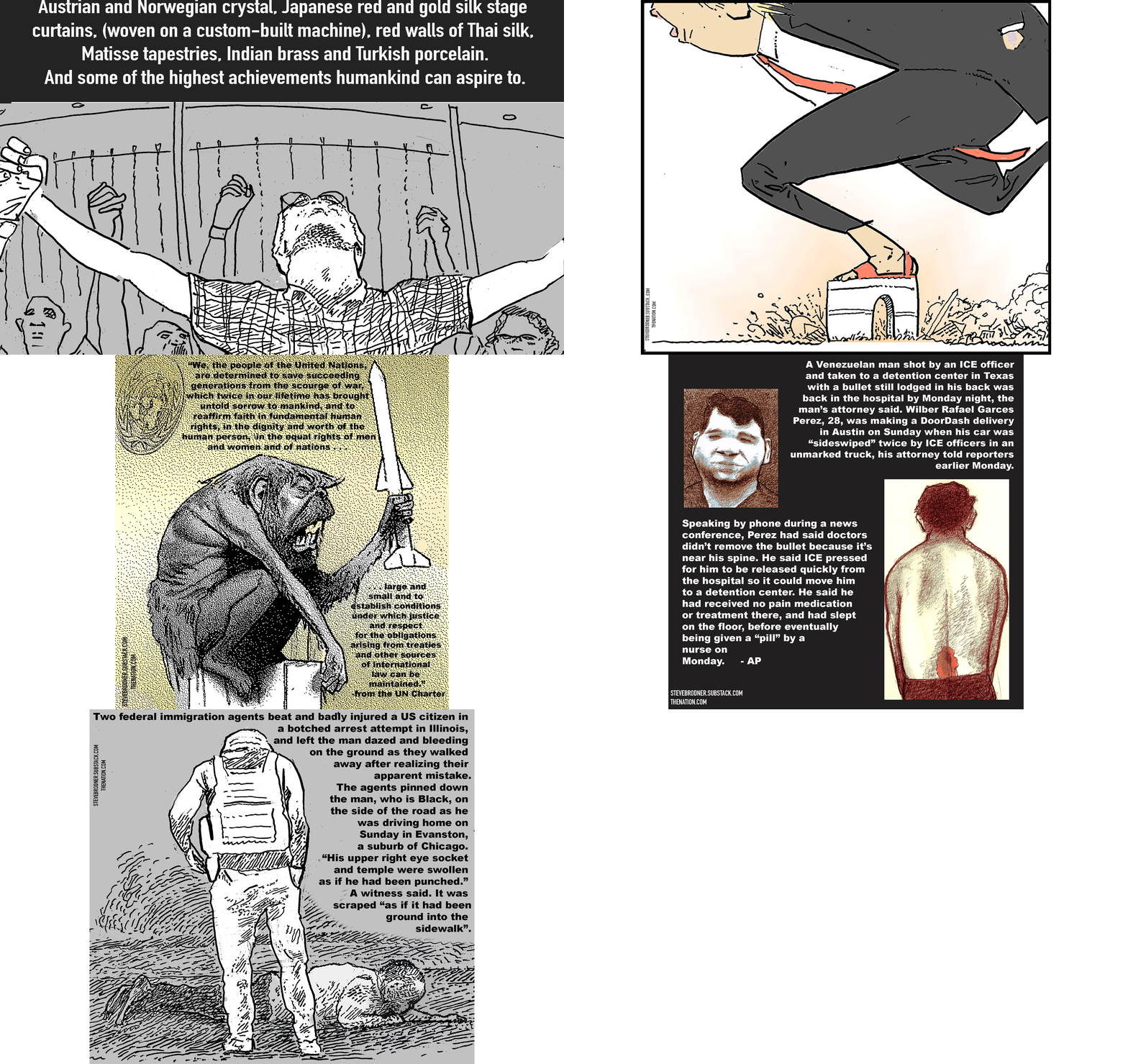
Trump Impersonated Hitler at the United Nations Trump Impersonated Hitler at the United Nations
It was just one more of many examples of the president mirroring a fascist leadership.

