
Good Riddance to Mitch McConnell, an Enemy of Democracy
He stole Supreme Court seats, thwarted accountability for Donald Trump, and left a trail of partisan destruction in his wake.
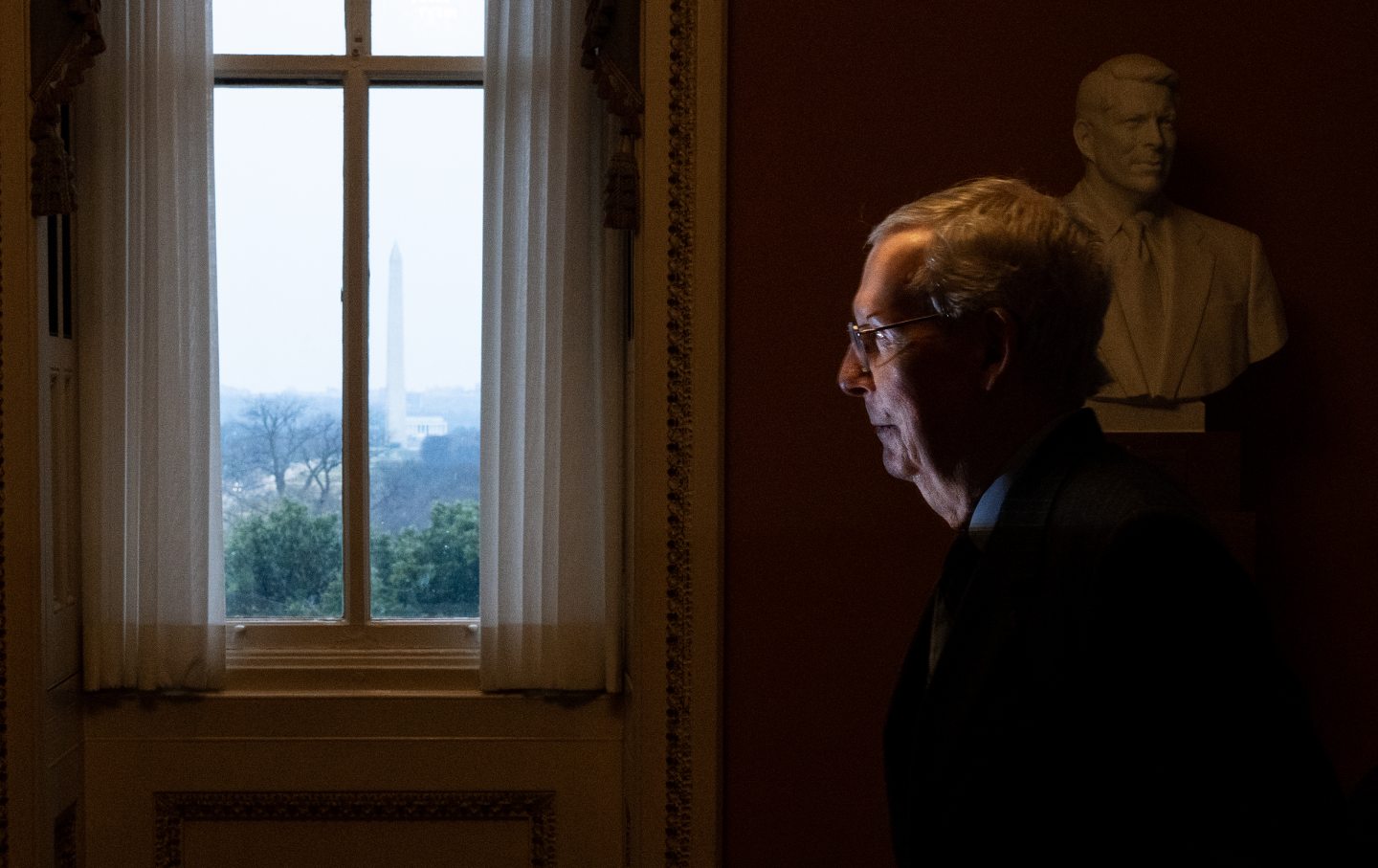
Senate minority leader Mitch McConnell (R-Ky.) walks to his office after a vote in the Senate chamber on Wednesday, February 28, 2024.
(Bill Clark / CQ-Roll Call, Inc via Getty Images)On February 7, 2017, one of the darker days of his long, dark tenure as one of the most cynical partisans ever to serve in the Senate, then–majority leader Mitch McConnell prevented Massachusetts Senator Elizabeth Warren from reading aloud a historic letter from Coretta Scott King that recalled some of the worst abuses of voting rights by then–Alabama Senator Jeff Sessions. Sessions, a conservative Republican whose nomination to serve as then-President Donald Trump’s first attorney general was under consideration by the chamber, was an ally of McConnell’s. More importantly, he was a fellow Republican. And the all-powerful majority leader decided he had heard more than enough criticism about his partisan compatriot’s sordid history of seeking to suppress the Black vote in Alabama.
So McConnell employed a rule that bars a senator from ascribing “to another senator or to other senators any conduct or motive unworthy or unbecoming a senator” to silence his Democratic colleague—even though Warren was merely reading a letter from the widow of the Rev. Martin Luther King Jr. that described actual events and that was already a part of the Congressional Record. Sputtering with frustration, the majority leader went to the floor and infamously grumbled in his scolding tone, “Senator Warren was giving a lengthy speech. She had appeared to violate the rule. She was warned. She was given an explanation. Nevertheless, she persisted.”
Seven years later, Warren still persists, having long ago turned McConnell’s words into a rallying cry for progressive women. She’s all but certain to win a new term, extending a distinguished Senate career that is likely to see her rise to the chairmanship of one or more key committees. Her contribution to the chamber has been great, and it will be greater.
McConnell, on the other hand, is calling it quits after 17 years as the Senate Republican leader—six of them as majority leader—in which he invariably put party ahead of country and did more long-term damage to American democracy than any member of the Senate in modern US history.
McConnell is the longest-serving Senate leader ever, but he is headed for the exits at the nadir of his power. If he once ruled as a mighty “lion of the Senate,” he leaves as something more like an 82-year-old toothless tiger. He’s now the minority leader in a chamber led by Senate majority leader Chuck Schumer (D-N.Y.). The Republican who once shaped the party’s direction not just on Capitol Hill but in Senate races across the country is on the outs with the base of a Grand Old Party where Trump—who despises McConnell—has shaped a cult of personality so intense that no room is left for leaders other than the former president. When McConnell returns to his home state for political events, he is heckled and met with cries of “Retire!” Now, he has begun the process of heeding those calls.
“One of life’s most underappreciated talents is to know when it’s time to move on to life’s next chapter,” McConnell told colleagues Wednesday. “So I stand before you today…to say that this will be my last term as Republican leader of the Senate.”
But don’t fret for McConnell, who will keep collecting his government checks, while he serves out the remainder of his seventh term. If awards are being handed out for political longevity, give him one. But McConnell’s record of partisan conniving and moral compromising merits no applause.
One of two current senators who witnessed the 1963 March on Washington for Jobs and Freedom—he was a sympathetic House intern looking on from near the Capitol, while Bernie Sanders (I-Vt.) marched and rallied with the massive crowd of civil rights activists—McConnell arrived in the Senate in 1985 with a record as a something of a moderate on issues of race and labor rights, like his Kentucky mentors, Republican Senators John Sherman Cooper and Marlow Cook. But he quickly adjusted himself to the rightward thrust of a party in the thrall of then-President Ronald Reagan.
Where Cooper had courageously opposed Republican President Richard Nixon’s pursuit of the Vietnam War, and where Cook cast a decisive vote in opposition to Nixon’s nomination of Judge G. Harrold Carswell, a Georgian with a track record of supporting segregation, to serve on the US Supreme Court, McConnell became the ultimate GOP hack. When it mattered most, he put party above the cooperation, party above the common good, party above the truth, and, ultimately, party above the Constitution.
McConnell once notoriously declared that his highest political priority was unseating Democratic President Barack Obama, and he constantly manifested that same level of remorseless partisanship. Even when Obama was advancing legislation that would help Kentucky, in the form of the Affordable Care Act, McConnell moved to block it, leading a frustrated Cook to denounce his former aide and say, “If he had any knowledge of the lack of health and medical facilities in the hills of Kentucky, he’d know it’s a problem we need to solve. For Mitch McConnell to decide the new health program is not good for Kentucky—it tells me he’s not looking out for his own constituency.”
As Capitol Hill’s most ardent advocate for big money in politics, and a prodigious fundraiser, McConnell kept his seat. And he used his growing power in the Senate to engage in ever more egregious acts of partisanship. Perhaps most brazenly, his cynical manipulation of the judicial confirmation process in 2016 prevented consideration of Judge Merrick Garland, a highly qualified if blandly moderate federal jurist, to serve on the US Supreme Court.
McConnell’s refusal to allow the Senate to take up the Garland nomination relied on an obvious lie: the claim that the Senate could not weigh high court nominations in presidential election years. In fact, the majority leader was simply keeping the seat open until a Republican president could fill it with a right-wing judicial activist. After Donald Trump’s election, McConnell promptly steered Neil Gorsuch to confirmation in 2017. Then, when Justice Ruth Bader Ginsburg’s death created an election-year opening on the court in 2020, McConnell shamelessly raced to fill the seat with conservative Trump appointee Amy Coney Barrett—finishing his long mission of tipping the balance on the court so that it had an aggressively hard-right, anti-abortion majority. In less than two years, 50 years of precedent was overturned, as McConnell’s court overturned Roe v. Wade and opened the way for states to block access to reproductive rights.
It is fair to say that McConnell’s judicial machinations will be his longest-lasting legacy. Decades from now, Justices Gorsuch and Barrett, whose tenures McConnell made possible, will be undermining civil liberties and upending protections for economic, social, and racial justice. But there is a powerful case that McConnell’s most miserable dereliction of duty came when he defended a Republican president he didn’t even like—and who didn’t like him.
After the January 6, 2021, insurrection, a bipartisan House majority voted to impeach Donald Trump for seeking to overturn the results of the 2020 presidential election. McConnell knew full well that Trump deserved to be convicted for the high crimes and misdemeanors the 45th president had committed. The Kentuckian effectively acknowledged as much with a speech to the Senate, in which he said:
“There is no question that President Trump is practically and morally responsible for provoking the events of that day.
”The people who stormed this building believed they were acting on the wishes and instructions of their president.
”And their having that belief was a foreseeable consequence of the growing crescendo of false statements, conspiracy theories, and reckless hyperbole which the defeated president kept shouting into the largest megaphone on planet Earth.”
Popular
“swipe left below to view more authors”Swipe →With this understanding, McConnell should have rallied Senate Republicans to vote to hold Trump to account. Had he done so, there’s a good chance that a sufficient number of additional Republicans would have followed their leader in doing the right thing—creating the two-thirds majority that was needed to convict.
But McConnell refused to do the right thing. He voted to acquit, and did more to renew Trump’s political prospects than any other Republican.
McConnell swore an oath to support and defend the Constitution of the United States against all enemies, foreign and domestic. For reasons of partisanship and personal political advancement, he abandoned that oath. Nothing more needs to be said of him.
Support independent journalism that does not fall in line
Even before February 28, the reasons for Donald Trump’s imploding approval rating were abundantly clear: untrammeled corruption and personal enrichment to the tune of billions of dollars during an affordability crisis, a foreign policy guided only by his own derelict sense of morality, and the deployment of a murderous campaign of occupation, detention, and deportation on American streets.
Now an undeclared, unauthorized, unpopular, and unconstitutional war of aggression against Iran has spread like wildfire through the region and into Europe. A new “forever war”—with an ever-increasing likelihood of American troops on the ground—may very well be upon us.
As we’ve seen over and over, this administration uses lies, misdirection, and attempts to flood the zone to justify its abuses of power at home and abroad. Just as Trump, Marco Rubio, and Pete Hegseth offer erratic and contradictory rationales for the attacks on Iran, the administration is also spreading the lie that the upcoming midterm elections are under threat from noncitizens on voter rolls. When these lies go unchecked, they become the basis for further authoritarian encroachment and war.
In these dark times, independent journalism is uniquely able to uncover the falsehoods that threaten our republic—and civilians around the world—and shine a bright light on the truth.
The Nation’s experienced team of writers, editors, and fact-checkers understands the scale of what we’re up against and the urgency with which we have to act. That’s why we’re publishing critical reporting and analysis of the war on Iran, ICE violence at home, new forms of voter suppression emerging in the courts, and much more.
But this journalism is possible only with your support.
This March, The Nation needs to raise $50,000 to ensure that we have the resources for reporting and analysis that sets the record straight and empowers people of conscience to organize. Will you donate today?
More from The Nation
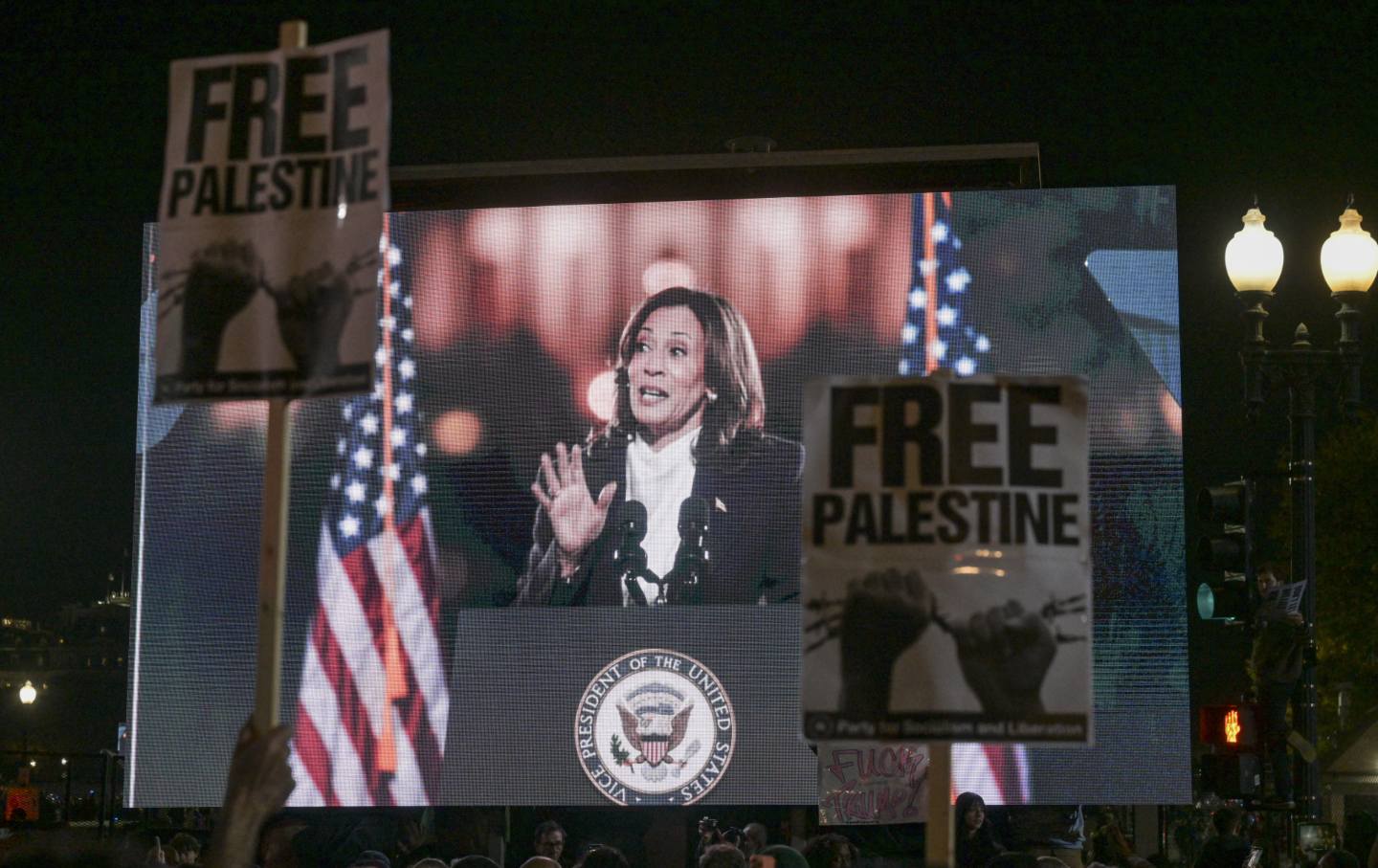
We Don’t Need an Autopsy to Tell Us the Democrats Failed on Gaza We Don’t Need an Autopsy to Tell Us the Democrats Failed on Gaza
The DNC is allegedly hiding a report showing that Kamala Harris’s Gaza policy helped cost her the 2024 election. But that report won’t tell us anything we don’t already know.
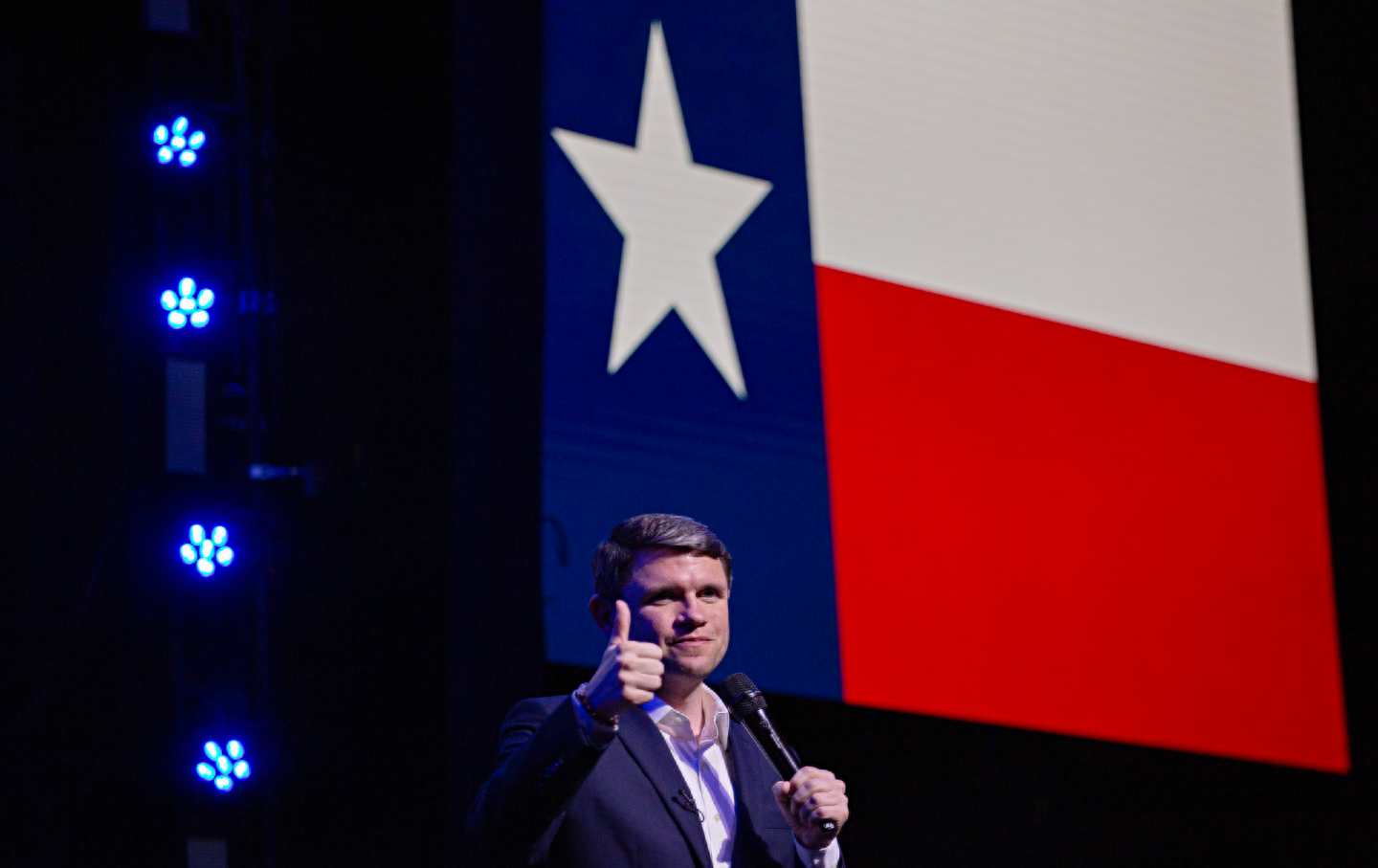
Texas’s Senate Primary Has Already Made History—and It’s Not Over Yet Texas’s Senate Primary Has Already Made History—and It’s Not Over Yet
Democratic nominee James Talarico is getting national media attention, but the real story is sky-high voter turnout, even amid GOP bids to suppress balloting
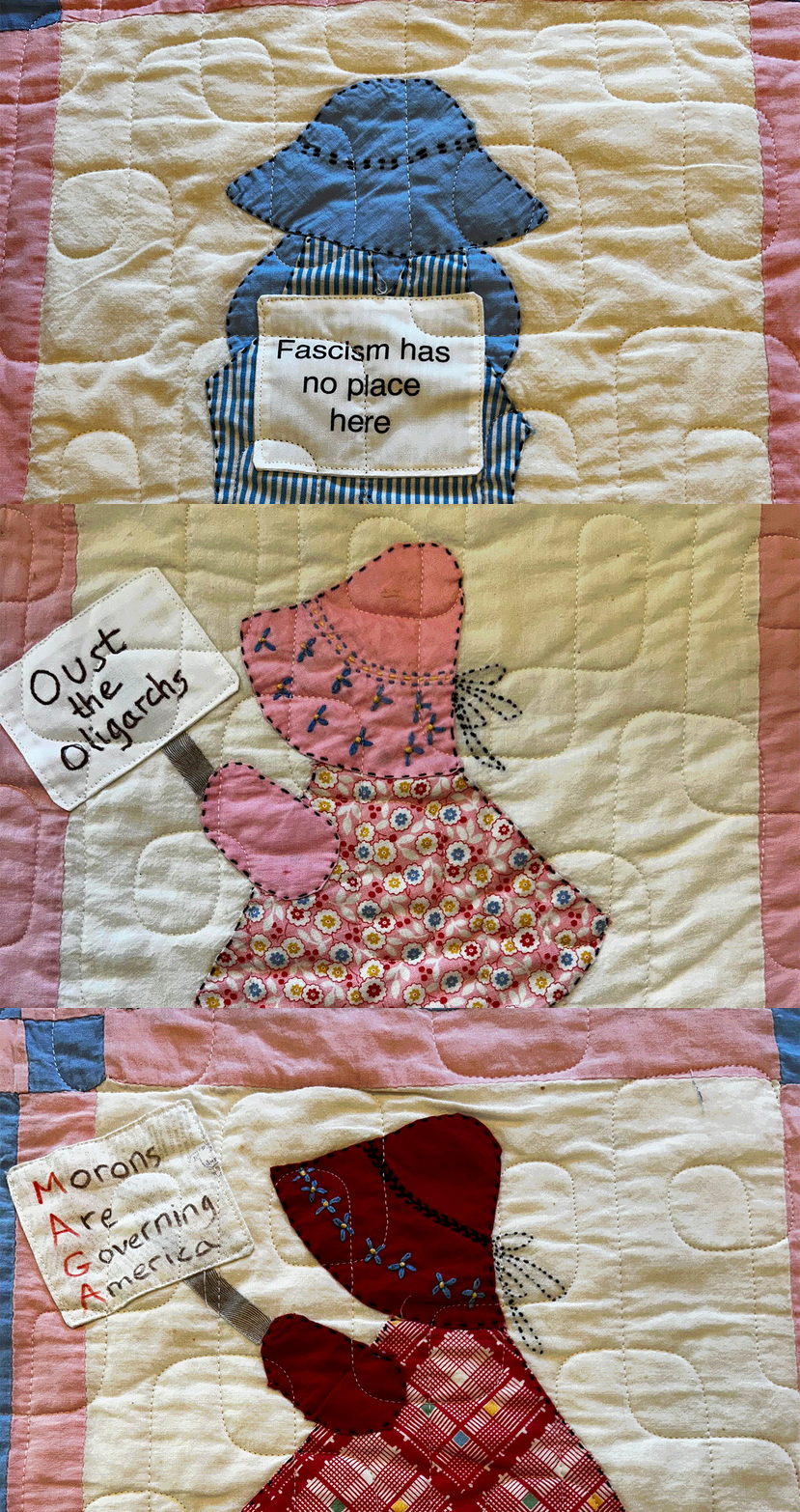
Quilted Messages Quilted Messages
Sunbonnets carrying not-so-sunny truths.
How the Theatrics of Mamdani’s Trump Meeting Backfired How the Theatrics of Mamdani’s Trump Meeting Backfired
By pandering to the president’s vanity, the New York mayor reinforced Trump’s image as a strongman commanding deference—an especially bad look on the eve of Trump’s war with Iran

Students in New York Are Going Hungry. How Can Mamdani Help? Students in New York Are Going Hungry. How Can Mamdani Help?
With plans for city-owned grocery stores and a focus on affordability, the new mayoral administration offers fresh hopes of successfully confronting the food crisis among students...

We Are the Fire That Melts the ICE We Are the Fire That Melts the ICE
Oaxaca, Mexico, street art.

