Why Won’t the Federal Government Reimburse People Whose Food Stamps Are Stolen?
The disastrous consequences for working-class families.
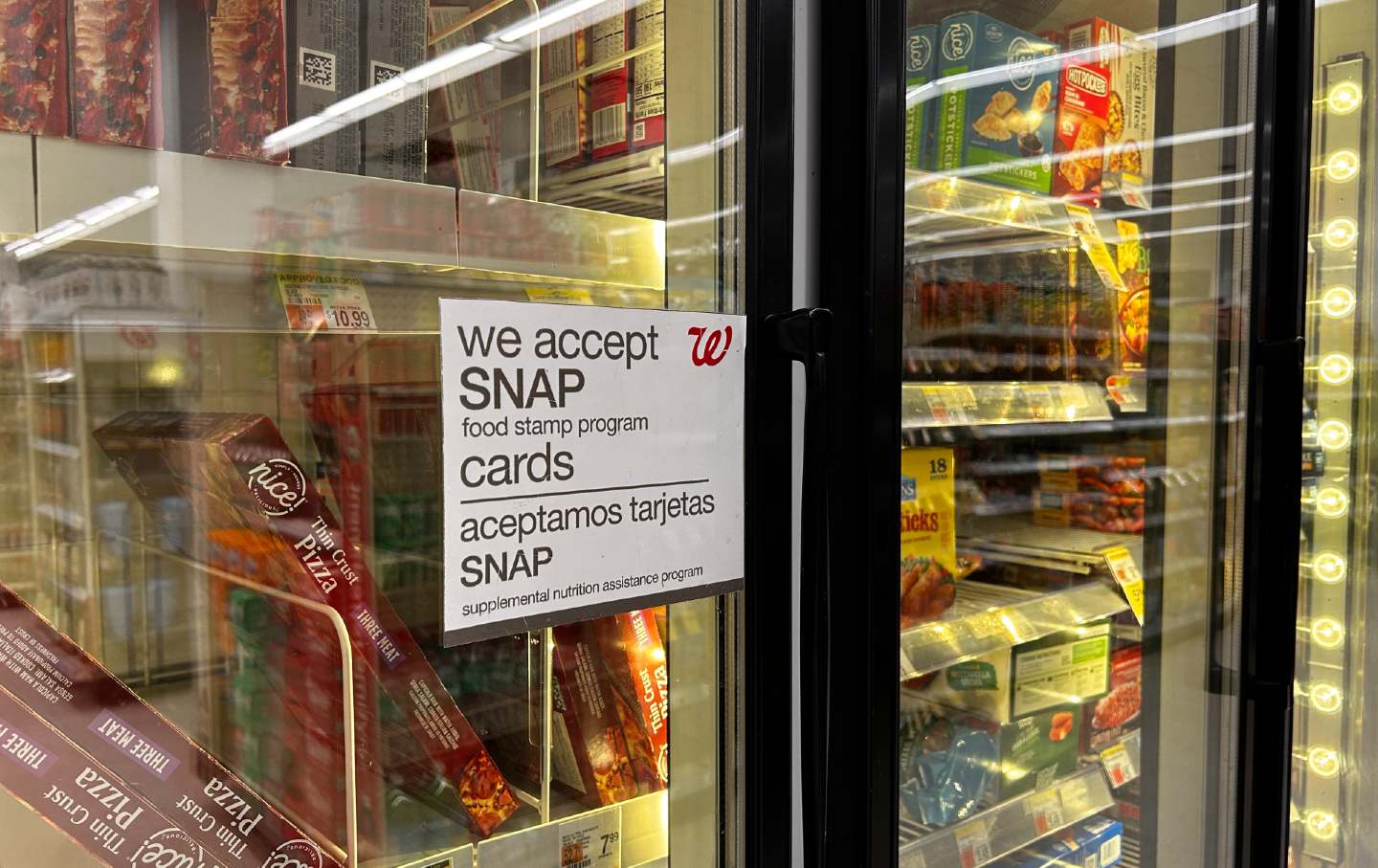
When Victoria, a mother of two who works as a medical assistant in Yolo County, California, found that food stamp benefits were stolen from her EBT card for the third time, she was at her wits’ end.
Since she couldn’t take paid leave to visit social services, she spent hours with them over the phone. After being transferred to multiple people, she was told she would receive the reimbursement in 10–15 business days. After three weeks, she called to check on the status and was informed she would not be reimbursed after all. It left her unable to pay her electricity bill or car payment, and she soon struggled to put food on the table for her two children.
Victoria’s experiences with EBT theft are not unique. In California, EBT thieves took an average of $15 million a month in 2024. Cuyahoga County, Ohio, saw a 62-fold increase in requests for food-stamp reimbursements from December 2023 to December 2024.
In the last two years, recipients of the Supplemental Nutrition Assistance Program (SNAP)—or food stamps—have had over $150 million in federal funds reimbursed after having their benefits stolen from their EBT cards.
However, as part of Congress’s short-term spending bill signed into law in December to avert a government shutdown, federal funds to reimburse SNAP theft victims are no longer available. This change will have disastrous consequences for working-class families and, over the long term, deeply damage the trust in government needed to support vital safety net programs.
“You think you’re going to get those resources by going to ask for the help,” Victoria said. “And then [you’re] not able to. It makes you very discouraged to even want to try to get the help that is needed.”
SNAP theft is common because of outdated technology. Benefits are deposited on debit cards that are swiped at cash registers. But unlike most modern debit and credit cards, EBT cards do not have microchips that would be effective against “card skimming.” Thankfully, California will be the first state to include these microchips in early 2025, and Oklahoma is expected to follow suit in the summer. California is also one of the only states that will use its own funds to replace stolen SNAP benefits.
The second, and perhaps more pernicious, reason SNAP theft is common, is that the victims of these crimes live in low-income households and so they are treated as disposable.
Despite years of warning that EBT theft was common and rising, state governments have been, at best, slow to act. And the federal government has been unwilling to extend to SNAP beneficiaries the same kinds of consumer protections that other credit and debit card users receive, including being notified of suspicious charges. As a result, SNAP recipients are entering the new year with even less protection at a moment when scams and fraud have reached all-time highs.
The consequences of these actions are devastating for families already struggling to make ends meet. Further, if working-class households do not view government as having their back, then support for the very safety net meant to protect people will continue to weaken. A cycle emerges where the failure to protect people breeds distrust in both government and our communities, eroding the high levels of social trust needed to invest in social programs.
And that might entirely be the point.
It is well known that conservatives in Washington, DC, prefer making the safety net exceedingly difficult to access through what has become known as the “time tax.” But this new maneuver takes it a step further by saying that even if you jump through all the hoops and onerous requirements government creates, you’re still on your own if you get robbed.
For those who live in states that will neither reimburse nor invest in secure EBT card technology, we can hardly blame people if their trust in government and in their neighbors continues to decline. In the end, that might be exactly what those who abet the SNAP benefit thieves are hoping for.
Become a Sustaining Donor This September
Between the reemergence of right-wing red-baiting and Donald Trump’s use of the chilling National Security Presidential Memorandum–7 to criminalize left political organizing, we’re seeing McCarthyism reborn before our eyes.
This assault on democracy cannot be ignored or wished away. Resisting it requires bravery in the face of threats and repression, a steadfast commitment to the truth, and the unwavering belief that we can—and will—overcome this darkness.
We must have an independent media that sets the record straight, unearths corruption and abuses of power, and advances a politics of justice and dignity for all if we’re to win this fight.
That’s why I’m writing to you today. This September, The Nation needs to add 100 monthly donors to sustain our progressive journalism. Your contribution makes the next investigative report, the next truth-speaking column, and the next pathbreaking essay all possible.
I hope you’ll support our work with a recurring donation today. If you donate $10 or more a month, we’ll send you a brand new “Hands Off the Free Press!” sticker to recognise your commitment to our cause. Please, donate today.
Onward,
Katrina vanden Heuvel
Editor and Publisher, The Nation
More from The Nation

How Joe Biden Helped Cause a Genocide in Gaza How Joe Biden Helped Cause a Genocide in Gaza
An interview with reporter Akbar Shahid Ahmed about his new book, “Crossing the Red Line.”


Transphobia Isn’t Winning Votes. But It Is Making Our Lives Much Worse. Transphobia Isn’t Winning Votes. But It Is Making Our Lives Much Worse.
Trans people must now live out another election cycle knowing our friends, family, coworkers, and neighbors are being flooded with agitprop designed to dehumanize us.

A Premature Farewell to the Ignominious Speaker Mike Johnson A Premature Farewell to the Ignominious Speaker Mike Johnson
If Democrats win the House in the midterms, as expected, Mike Johnson won’t hold the gavel in any meaningful way again.
Zohran Mamdani Hosts the World Zohran Mamdani Hosts the World
In a meeting with mayors from around the globe, Mamdani argued that the left must fix everyday problems—or the right will find someone to scapegoat for them.