
Donald Trump Was Convicted Because of Democracy—Not in Spite of It
Manhattan voters elected a district attorney who promised to apply the rule of law to a former president. He did just that.
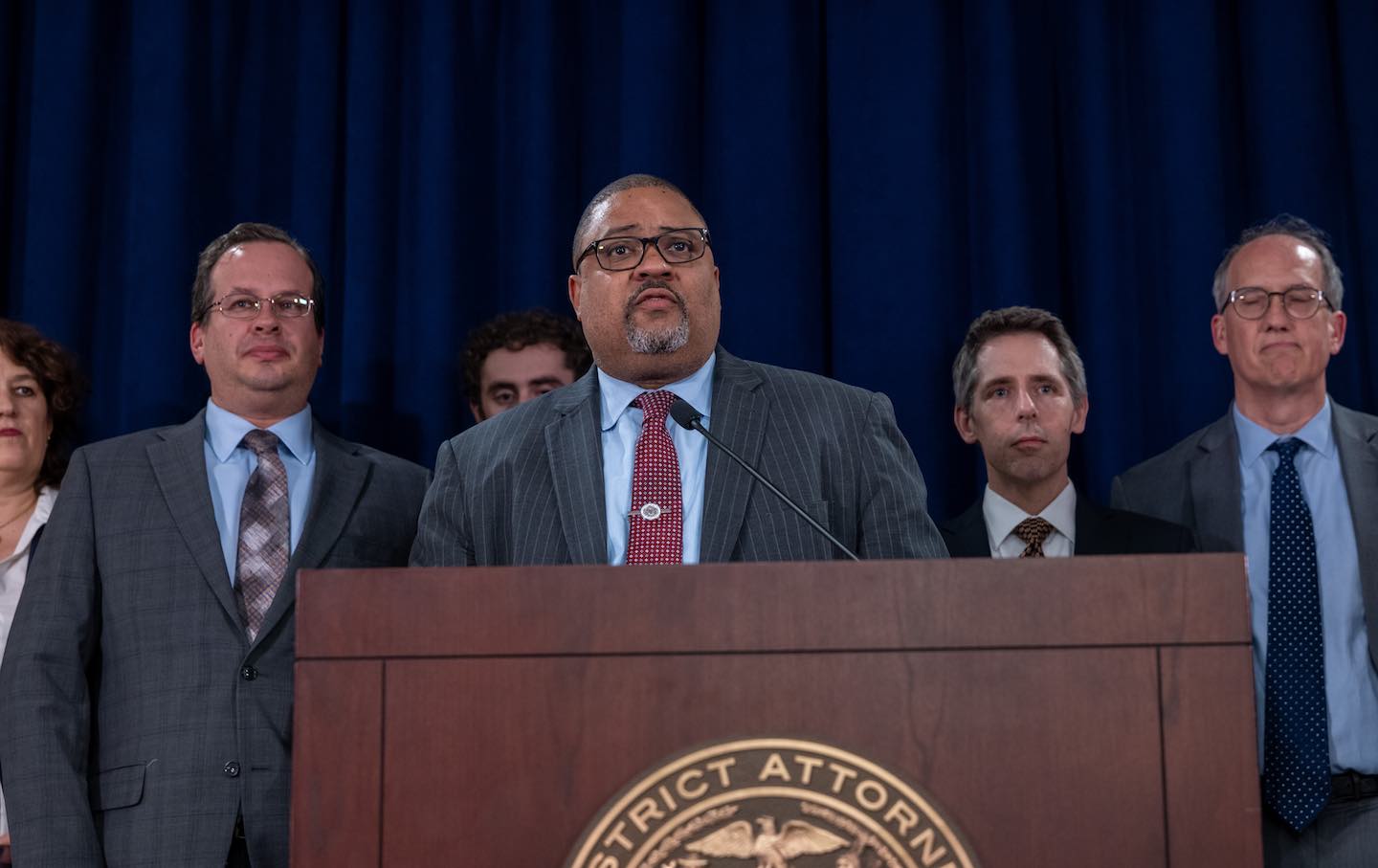
Manhattan District Attorney Alvin Bragg stands with members of his staff at a news conference following the conviction of former president Donald Trump in his hush-money trial on May 30 in New York City.
(Photo by Spencer Platt / Getty Images)Immediately after his historically unprecedented conviction on 34 charges of falsifying business records, Donald J. Trump tried Thursday to suggest that the jury’s decision was an affront to democracy. “The real verdict is going to be November 5th by the people. And they know what happened here and everybody knows what happened here,” said the presumptive Republican nominee for president of the United States, before he ripped into the prosecutor who brought the case, Manhattan District Attorney Alvin Bragg. “You have a Soros-backed DA and the whole thing. We didn’t do anything wrong. I’m a very innocent man.”
As usual, Trump got it wrong.
Trump was not convicted in spite of democracy. He was convicted because of democracy.
Alvin Bragg pursued Trump as an elected prosecutor, a popularly chosen law enforcement officer who did the job that voters assigned him.
In 2021, Manhattan voters were asked to fill one of the most powerful prosecutorial positions in the country. Manhattan DA Cyrus Vance Jr. had chosen not to seek a fourth term. Bragg won an eight-way Democratic primary, defeating veteran local, state and federal prosecutors, a civil rights attorney, a legislator, and a public defender who had had been a competitor on Survivor and The Amazing Race. Bragg then went on to defeat a Republican criminal defense lawyer, who had a record as a local prosecutor and top lawyer with the US Army Judge Advocate General’s Corps, by a landslide 84-16 margin.
Bragg did not obtain his position in a backroom deal. He did not get it via official scheming, or some arrangement to “get Trump,” as the former president imagines. He was elected.
Bragg won the support of hundreds of thousands of voters because they recognized his striking experience as a distinguished Harvard Law School graduate who had served as the chief of litigation and investigations for the New York City Council, an assistant United States Attorney for the Southern District of New York, and chief deputy attorney general of New York State. He ran with the influential support of the New York Times editorial board, which described the candidate as “a talented prosecutor with the endorsement of former colleagues across the wide swath of the legal system” and argued that he offered “the experience, the nimbleness and the moral compass Manhattan needs.”
On the basis of his experience, Bragg ran as the candidate who was ready and willing to hold the wealthy and the powerful, including when necessary former presidents, to account. He reminded voters that, as a state prosecutor, “I have sued Trump over 100 times. I can’t change that fact, nor would I. That was important work.”
Moreover, Bragg used his experience to distinguish himself from Vance. “The district attorney, [Bragg] argued, had appeared soft on the rich and powerful, declining to prosecute two of Trump’s children several years earlier on accusations that they misled potential buyers in the struggling Trump SoHo condo-hotel,” noted the Times.
Bragg never suggested that he would cut corners, or be unfair, when it came to bringing the felony case that would ultimately make Trump the first former president in US history to be a convicted felon. What he promised was that he would not blink. He would not shy away from doing the job he was assigned by the electorate, and that he was duty-bound under the law to perform.
Bragg kept the promise that he made as a candidate to pursue equal justice under the law. And he did so with appropriate focus and determination.
While the US Department of Justice, under the overly cautious leadership of Attorney General Merrick Garland, moved at a glacial pace on federal charges against Trump, Bragg and his team were rigorous and efficient. They understood the challenges associated with bringing a state case involving Trump’s effort to hide the details of a dalliance with a porn star from the electorate in advance of the 2016 presidential election. Yet they chose to go forward. When the charges came down in 2023, long before federal prosecutors stepped up, the Manhattan DA was mocked and jeered for seeking felony convictions in a case that critics suggested was more about embarrassing behavior than compelling illegality.
A Politico headline from the spring of 2023 announced, “Bragg’s case against Trump hits a wall of skepticism—even from Trump’s critics.”
Trump regularly claimed that the Manhattan district attorney was nothing more than a stooge of liberal billionaire George Soros, who has in recent years supported efforts to elect supporters of criminal justice reform to prosecutor positions across the country. But Soros explained in 2023 that he had never met Bragg, nor earmarked direct campaign contributions to the DA’s 2021 campaign. Trump’s attacks on Bragg, who is Black, and Soros, who is Jewish, were so persistent, and so ugly, that Magda Teter, a professor of history and the Shvidler Chair in Judaic Studies at Fordham University, observed, “With these attacks, Trump and his supporters, including Trump-supporting media outlets, tapped into deep-rooted antisemitic and racist ideas of Jewish power and Black gullibility, thus connecting antisemitism and racism.”
Popular
“swipe left below to view more authors”Swipe →Trump allies in Congress, led by House Judiciary Committee chair Jim Jordan of Ohio, accused Bragg of neglecting the work of prosecuting street crime in order to pursue pursuing “a radical political agenda.”
The political pressure has been intense. Yet Bragg is, at least to some extent, insulated from that pressure by the fact that he is not an appointed prosecutor. He does not report to the White House or, for that matter, to Jim Jordan. Bragg is an elected district attorney, who respects his duty to uphold the Constitution and the rule of law, and the voters who put him in a position to hold the powerful to account.
That, despite what Donald Trump suggests, is not an assault on the will of the people that must be rectified in November. It is the very essence of democracy, extending from Bragg’s 2021 election to the courtroom where Trump was fairly and responsibly prosecuted, and fairly and responsibly convicted.
Support independent journalism that does not fall in line
Even before February 28, the reasons for Donald Trump’s imploding approval rating were abundantly clear: untrammeled corruption and personal enrichment to the tune of billions of dollars during an affordability crisis, a foreign policy guided only by his own derelict sense of morality, and the deployment of a murderous campaign of occupation, detention, and deportation on American streets.
Now an undeclared, unauthorized, unpopular, and unconstitutional war of aggression against Iran has spread like wildfire through the region and into Europe. A new “forever war”—with an ever-increasing likelihood of American troops on the ground—may very well be upon us.
As we’ve seen over and over, this administration uses lies, misdirection, and attempts to flood the zone to justify its abuses of power at home and abroad. Just as Trump, Marco Rubio, and Pete Hegseth offer erratic and contradictory rationales for the attacks on Iran, the administration is also spreading the lie that the upcoming midterm elections are under threat from noncitizens on voter rolls. When these lies go unchecked, they become the basis for further authoritarian encroachment and war.
In these dark times, independent journalism is uniquely able to uncover the falsehoods that threaten our republic—and civilians around the world—and shine a bright light on the truth.
The Nation’s experienced team of writers, editors, and fact-checkers understands the scale of what we’re up against and the urgency with which we have to act. That’s why we’re publishing critical reporting and analysis of the war on Iran, ICE violence at home, new forms of voter suppression emerging in the courts, and much more.
But this journalism is possible only with your support.
This March, The Nation needs to raise $50,000 to ensure that we have the resources for reporting and analysis that sets the record straight and empowers people of conscience to organize. Will you donate today?
More from The Nation
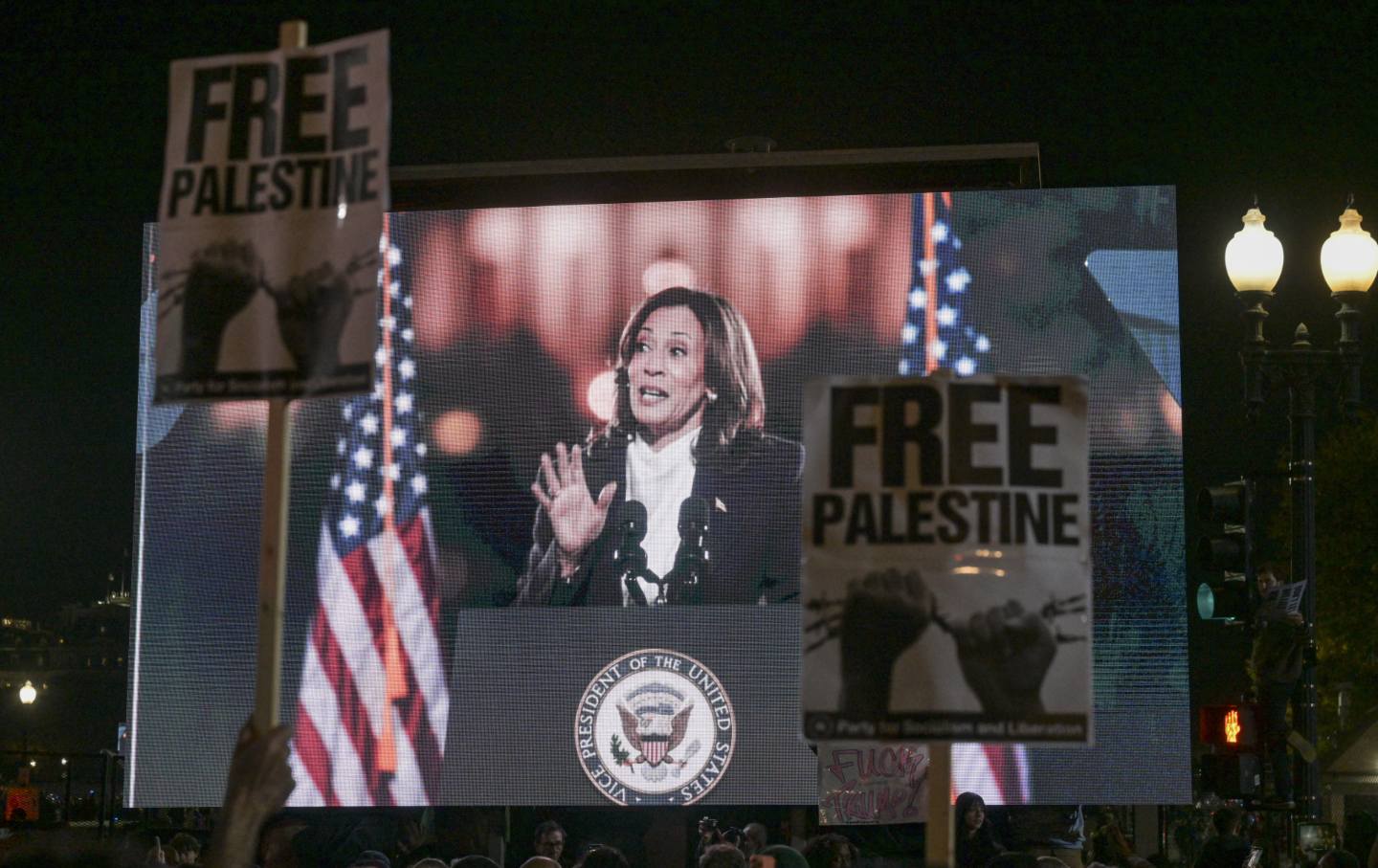
We Don’t Need an Autopsy to Tell Us the Democrats Failed on Gaza We Don’t Need an Autopsy to Tell Us the Democrats Failed on Gaza
The DNC is allegedly hiding a report showing that Kamala Harris’s Gaza policy helped cost her the 2024 election. But that report won’t tell us anything we don’t already know.
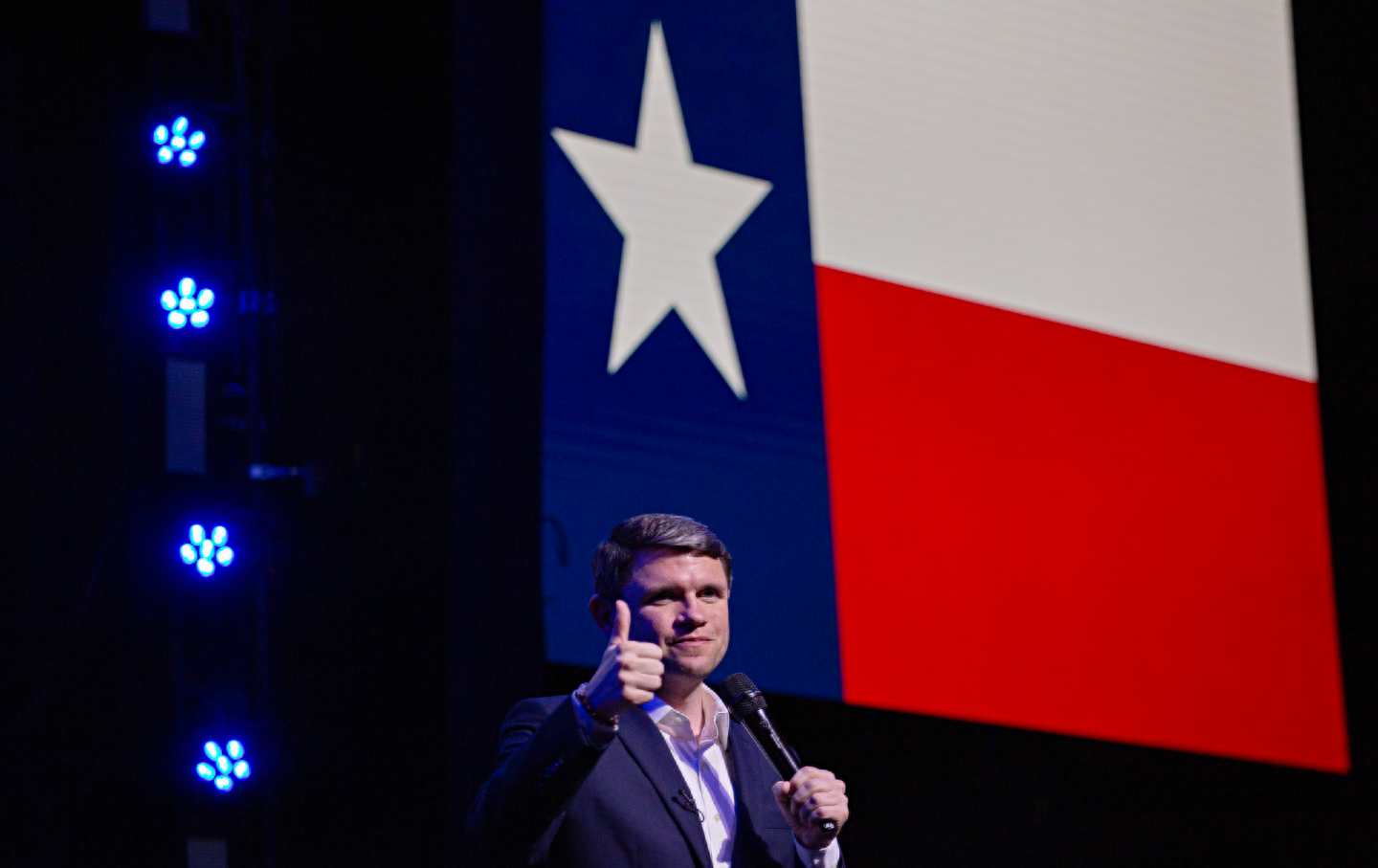
Texas’s Senate Primary Has Already Made History—and It’s Not Over Yet Texas’s Senate Primary Has Already Made History—and It’s Not Over Yet
Democratic nominee James Talarico is getting national media attention, but the real story is sky-high voter turnout, even amid GOP bids to suppress balloting
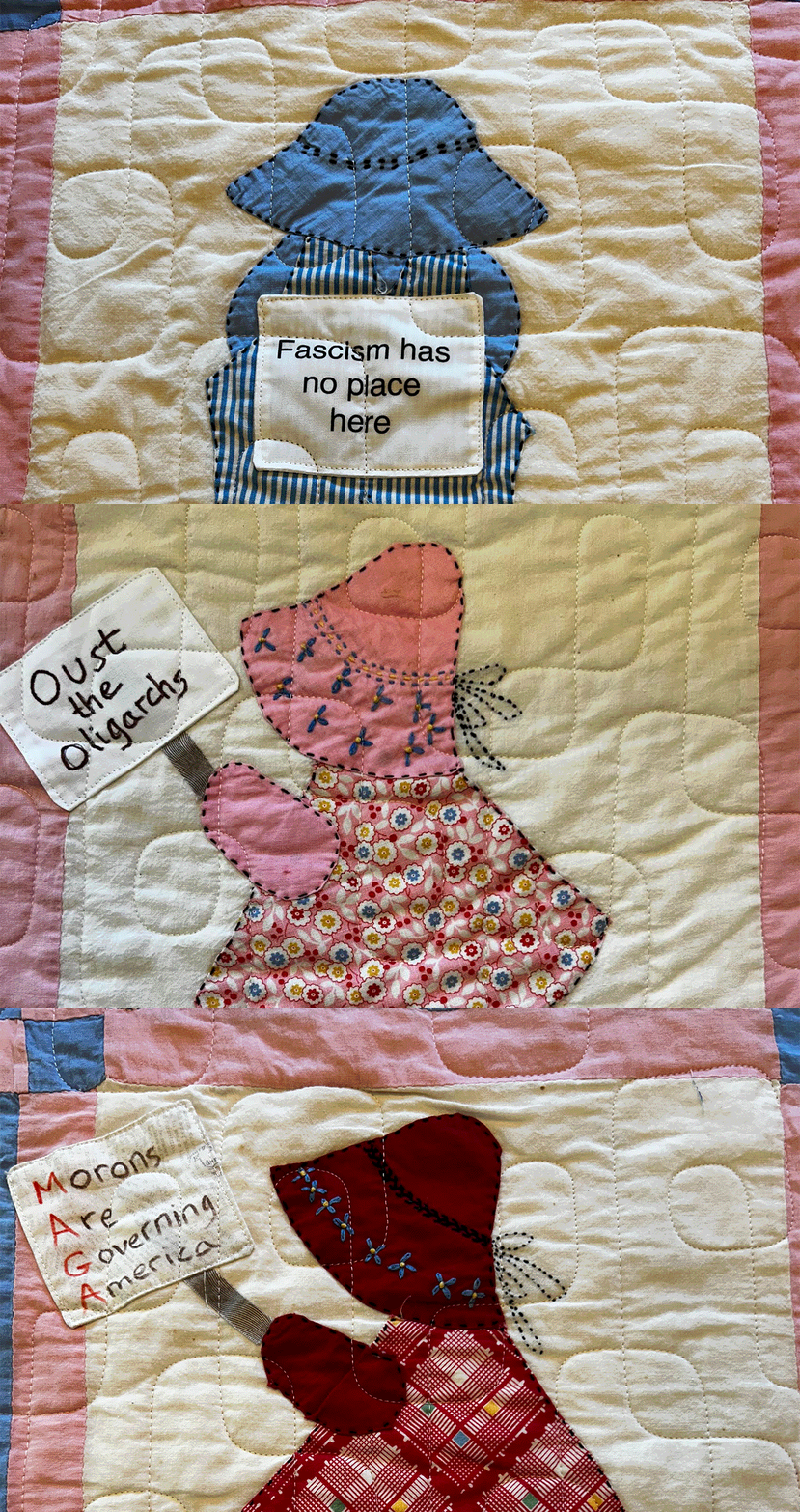
Quilted Messages Quilted Messages
Sunbonnets carrying not-so-sunny truths.
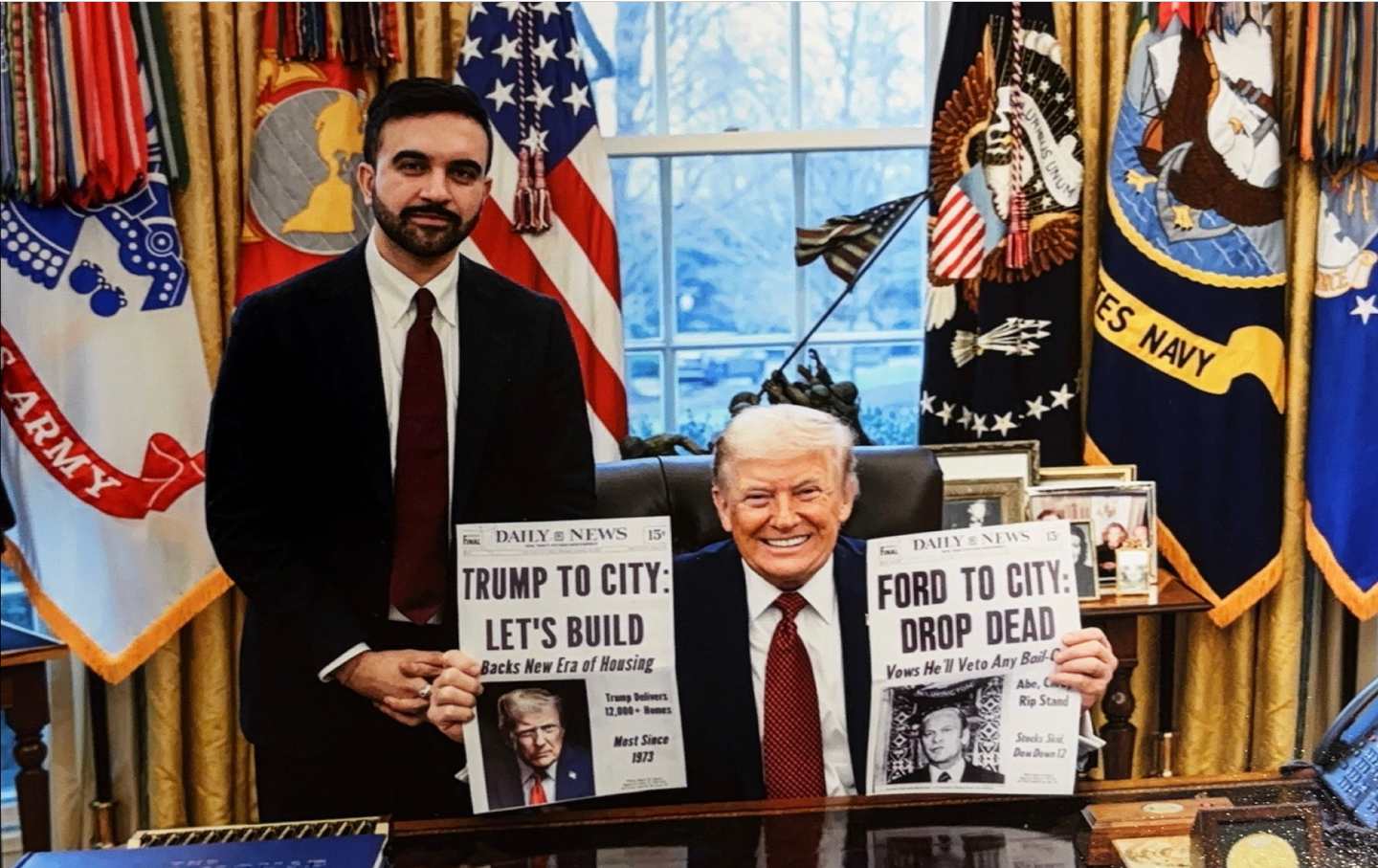
How the Theatrics of Mamdani’s Trump Meeting Backfired How the Theatrics of Mamdani’s Trump Meeting Backfired
By pandering to the president’s vanity, the New York mayor reinforced Trump’s image as a strongman commanding deference—an especially bad look on the eve of Trump’s war with Iran
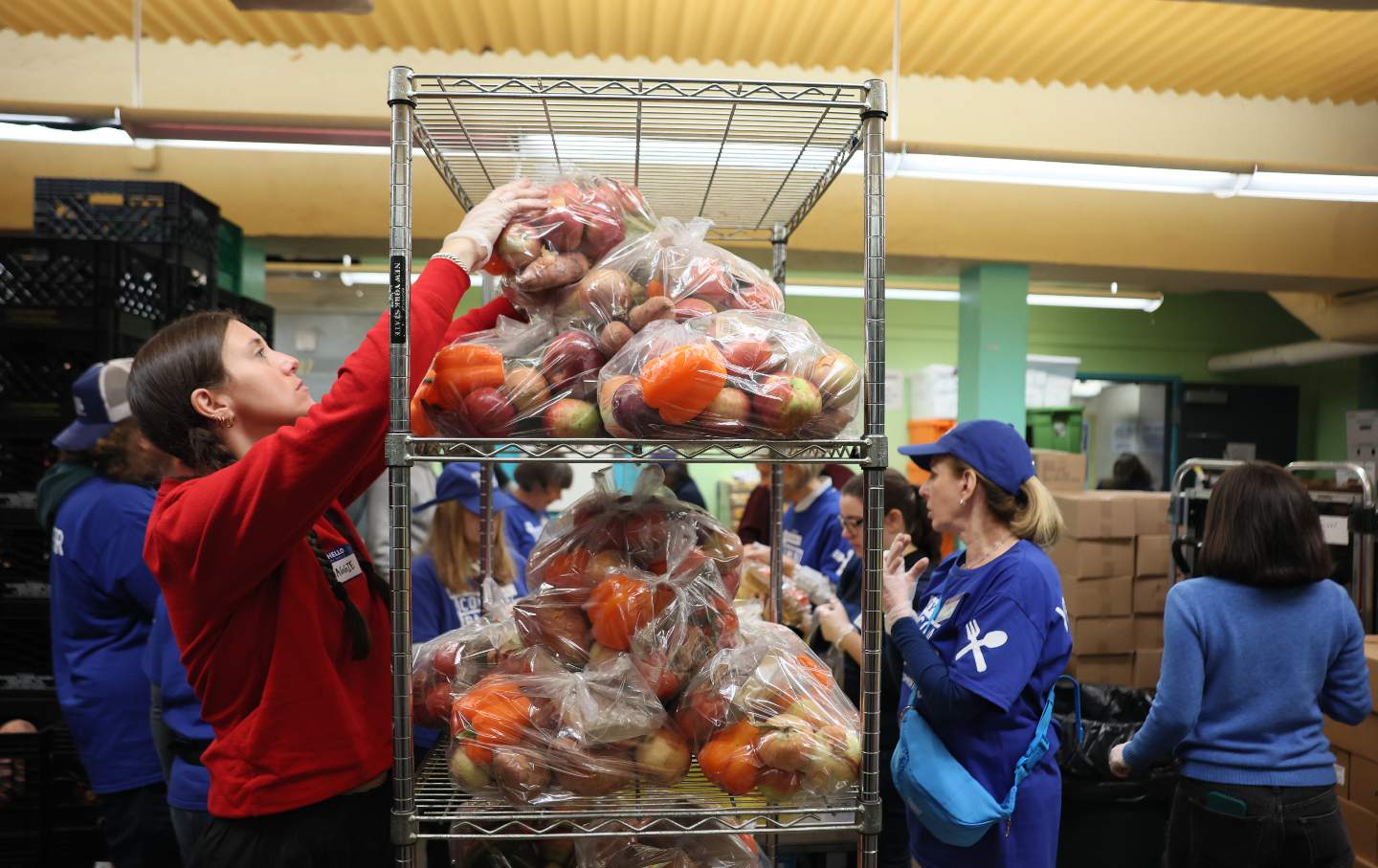
Students in New York Are Going Hungry. How Can Mamdani Help? Students in New York Are Going Hungry. How Can Mamdani Help?
With plans for city-owned grocery stores and a focus on affordability, the new mayoral administration offers fresh hopes of successfully confronting the food crisis among students...

We Are the Fire That Melts the ICE We Are the Fire That Melts the ICE
Oaxaca, Mexico, street art.

