
Dianne Feinstein’s Empty Seat
After the California senator’s death, the balance of power in American politics is left uncertain.
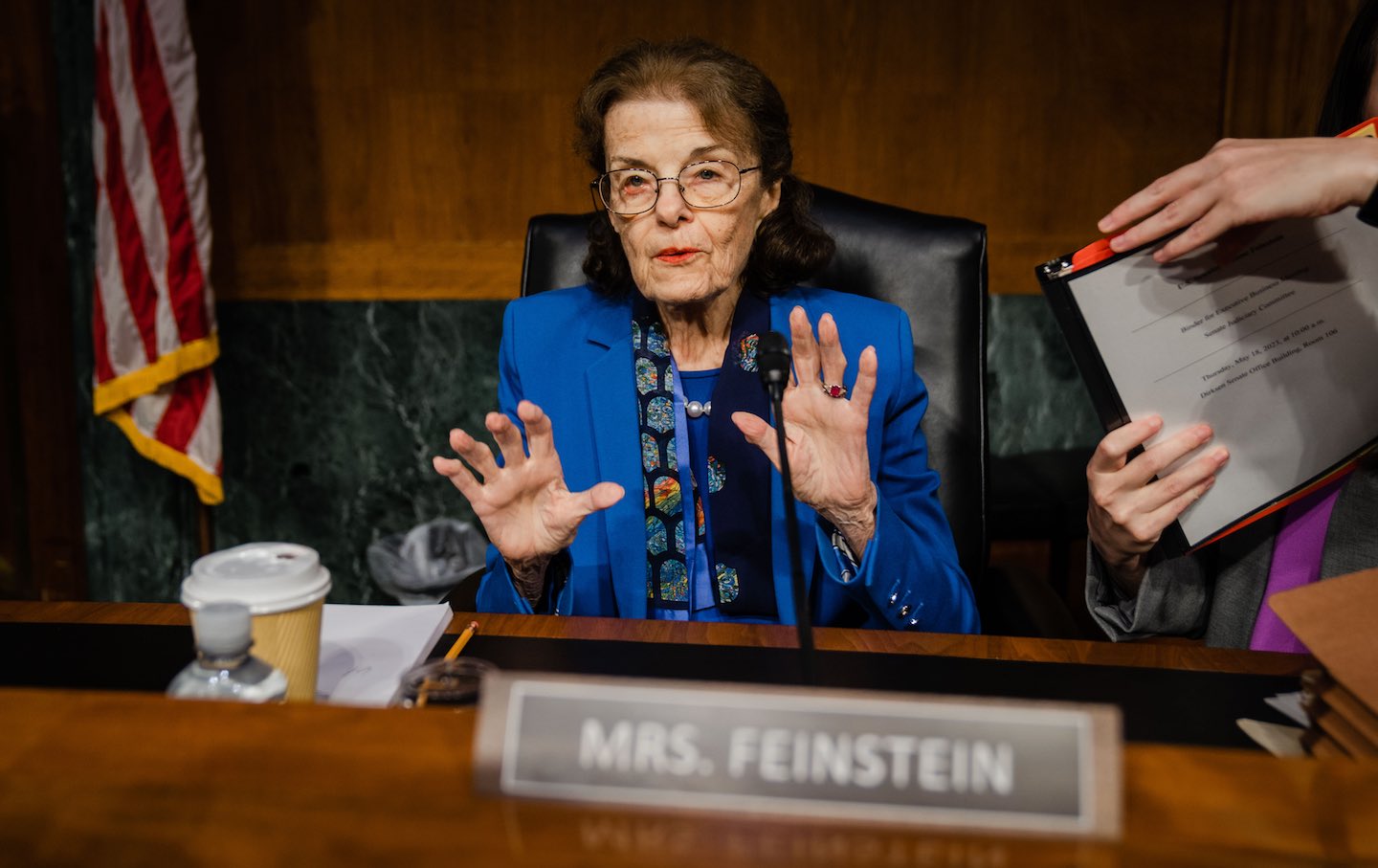
Senator Dianne Feinstein (D-Calif.) at a Senate Judiciary Business Meeting in the Senate Dirksen Office Building on Capitol Hill, May 2023.
(Kent Nishimura / Los Angeles Times via Getty Images)Senator Dianne Feinstein, who died Thursday night, was, by any measure, a towering figure in Californian and national politics. For half a century, from her time in San Francisco city government in the 1970s through to her recent status as the Senate’s oldest member, she broke through glass ceilings and left her stamp on a range of policies—from gun control through to pushing back against the post-9/11 CIA torture regime. With fellow Senator Barbara Boxer and House Speaker Nancy Pelosi, she was part of a troika of extraordinarily powerful Californian women who helped reshape national politics over the past generation.
On most issues, Feinstein was a self-proclaimed moderate, at times seeming to relish her ability to provoke her more radical opponents. For most of her career, she was pro–death penalty, although that stance put her at odds with the California Democratic Party. (In 2018, she finally came out against capital punishment.) She was also a national security hawk, in an age when many on the left of the Democratic Party were deeply suspicious of the military-industrial complex.
There will be, over the coming days, plenty of obituaries of Senator Feinstein, providing the granular details of her political career. This is not one of them. That Feinstein will be remembered as one of the hardest-hitting members of the Senate, I have no doubt. That she also overstayed her welcome on the political stage, I am equally sure of.
Feinstein, in recent years, bounced from one health crisis to the next; over the past couple years, there was serious doubt as to her mental competence to continue serving as a senator. It was, at best, unclear whether she was providing proper Senate representation to her 40 million constituents. Feinstein ought to have gracefully bowed out in 2018, ceding her role to a younger person. Instead, she fought and won a primary race against the now-disgraced Kevin de León, and then went on to win the general election in a follow-up campaign against de León, who had finished second in the open primary and qualified for a general election runoff against the senator.
That she didn’t retire in 2018 ultimately turned out to be Feinstein’s tragedy, putting her rather undignified decline—her battles with shingles and its after-effects, her confusion over how to vote and what the Senate rules were, even her seeming inability to remember that she had been absent from Washington, D.C., for a prolonged period of time as she recovered from shingles—firmly in the public eye. Every health crisis was, in these years, turned from a private matter to a subject of national speculation. She became a symbol of modern America’s gerontocratic politics.
Feinstein had already stepped down as the top Democrat on the Senate Judiciary Committee—having aroused the wrath of many in her own party for what they saw as her inappropriate praise for Republicans on their handling of the Amy Coney Barrett confirmation hearings. Then, last year, with a growing chorus of Democratic politicians calling on her to step down, she reluctantly announced that she wouldn’t run for reelection in 2024.
That set the stage for a scramble to replace her: Congresspeople Katie Porter, Barbara Lee, and Adam Schiff all threw their hats in the ring. Recent polling has shown that the two front-runners are Schiff and Porter. Lee, herself in her late 70s and hardly a generational change from the nonagenarian Feinstein, has been polling a distant third.
Now, however, the state will end up with a new senator more than a year before the 2024 election. California gives the governor the power to appoint an interim senator, and Governor Newsom has, since 2021, said he would appoint an African American woman should a Senate vacancy open up.
Lee has been angling to fulfill that role, but earlier this month Newsom announced that he was more likely to appoint a caretaker senator as a way not to tip the scales in next year’s primary fracas. The Oakland congresswoman responded scathingly, saying it would be insulting to appoint an African American woman solely as a caretaker senator. Many progressive organizations in the state, including She The People, a political network of women of color, poured scorn on Newsom’s decision.
Feinstein’s death removes a critical vote for Democrats in the near-evenly divided senate. With the government on the verge of a shutdown—and with the judiciary committee evenly divided without the presence of a senator from California, making it likely that Biden’s judicial nominations will be stalled—it’s a vote the party can’t afford to forgo for long. When Newsom appointed Alex Padilla to replace Kamala Harris in the Senate, the process took more than a month. This time around, he will likely have to make an appointment within a matter of days.
It’s possible that, facing blowback from some progressive networks, Newsom will backtrack on his idea of putting forward a caretaker senator. Certainly, Barbara Lee’s supporters will be lobbying furiously in the coming days for her to be appointed. But other constituencies will be just as vocal in saying that he should abide by his promise not to tip the scales of the 2024 race.
CBS News has reported that Secretary of State Shirley Webber, who built a strong reputation in the California Assembly as an advocate for expanding voting rights, is in the running to be the caretaker senator. Los Angeles Mayor Karen Bass and LA County Supervisor Holly Mitchell have both gone on record as saying they would not be interested in taking on the caretaker job, while San Francisco Mayor London Breed is a supporter of Lee’s, and would probably balk at taking the appointment in lieu of Lee.
Newsom, who himself has presidential ambitions, is now firmly in the national spotlight. How he navigates this process, and whom he ultimately chooses to replace Feinstein, will influence not just the composition of the US Senate but his own presidential prospects over the coming electoral cycles as well. He cannot afford to get it wrong.
Support independent journalism that does not fall in line
Even before February 28, the reasons for Donald Trump’s imploding approval rating were abundantly clear: untrammeled corruption and personal enrichment to the tune of billions of dollars during an affordability crisis, a foreign policy guided only by his own derelict sense of morality, and the deployment of a murderous campaign of occupation, detention, and deportation on American streets.
Now an undeclared, unauthorized, unpopular, and unconstitutional war of aggression against Iran has spread like wildfire through the region and into Europe. A new “forever war”—with an ever-increasing likelihood of American troops on the ground—may very well be upon us.
As we’ve seen over and over, this administration uses lies, misdirection, and attempts to flood the zone to justify its abuses of power at home and abroad. Just as Trump, Marco Rubio, and Pete Hegseth offer erratic and contradictory rationales for the attacks on Iran, the administration is also spreading the lie that the upcoming midterm elections are under threat from noncitizens on voter rolls. When these lies go unchecked, they become the basis for further authoritarian encroachment and war.
In these dark times, independent journalism is uniquely able to uncover the falsehoods that threaten our republic—and civilians around the world—and shine a bright light on the truth.
The Nation’s experienced team of writers, editors, and fact-checkers understands the scale of what we’re up against and the urgency with which we have to act. That’s why we’re publishing critical reporting and analysis of the war on Iran, ICE violence at home, new forms of voter suppression emerging in the courts, and much more.
But this journalism is possible only with your support.
This March, The Nation needs to raise $50,000 to ensure that we have the resources for reporting and analysis that sets the record straight and empowers people of conscience to organize. Will you donate today?
More from The Nation

An Argument Against Voting for the “Electable” Guy An Argument Against Voting for the “Electable” Guy
In this week’s Elie v. US, The Nation’s justice correspondent shares his thoughts on the Texas primaries. Plus, a terrible Supreme Court decision and a bad play by Major League Ba...
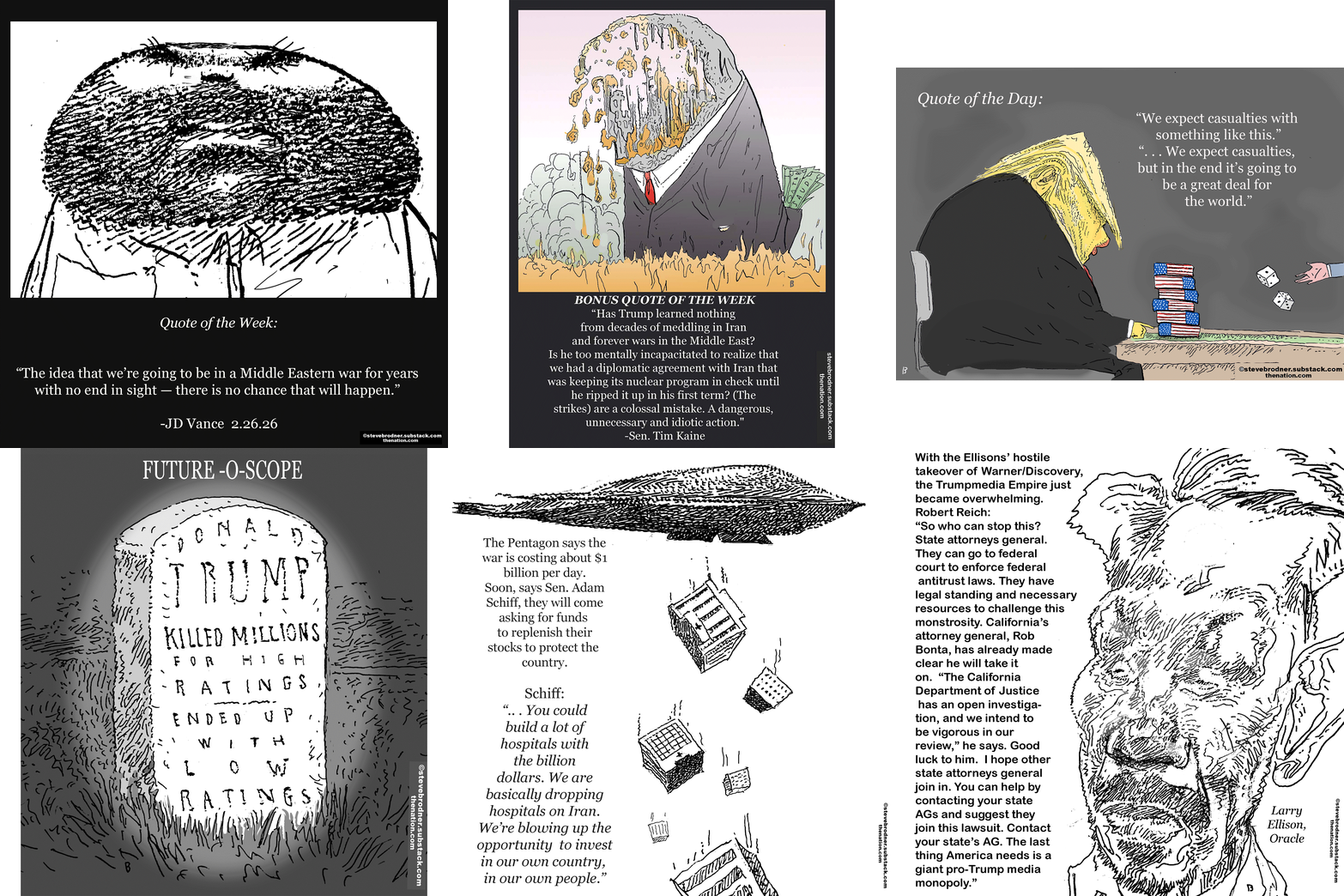

A Conflict Without Reason Has Become a Dangerous Holy War A Conflict Without Reason Has Become a Dangerous Holy War
Lacking a clear rationale for the attack on Iran, Trumpists are increasingly talking like crusaders.
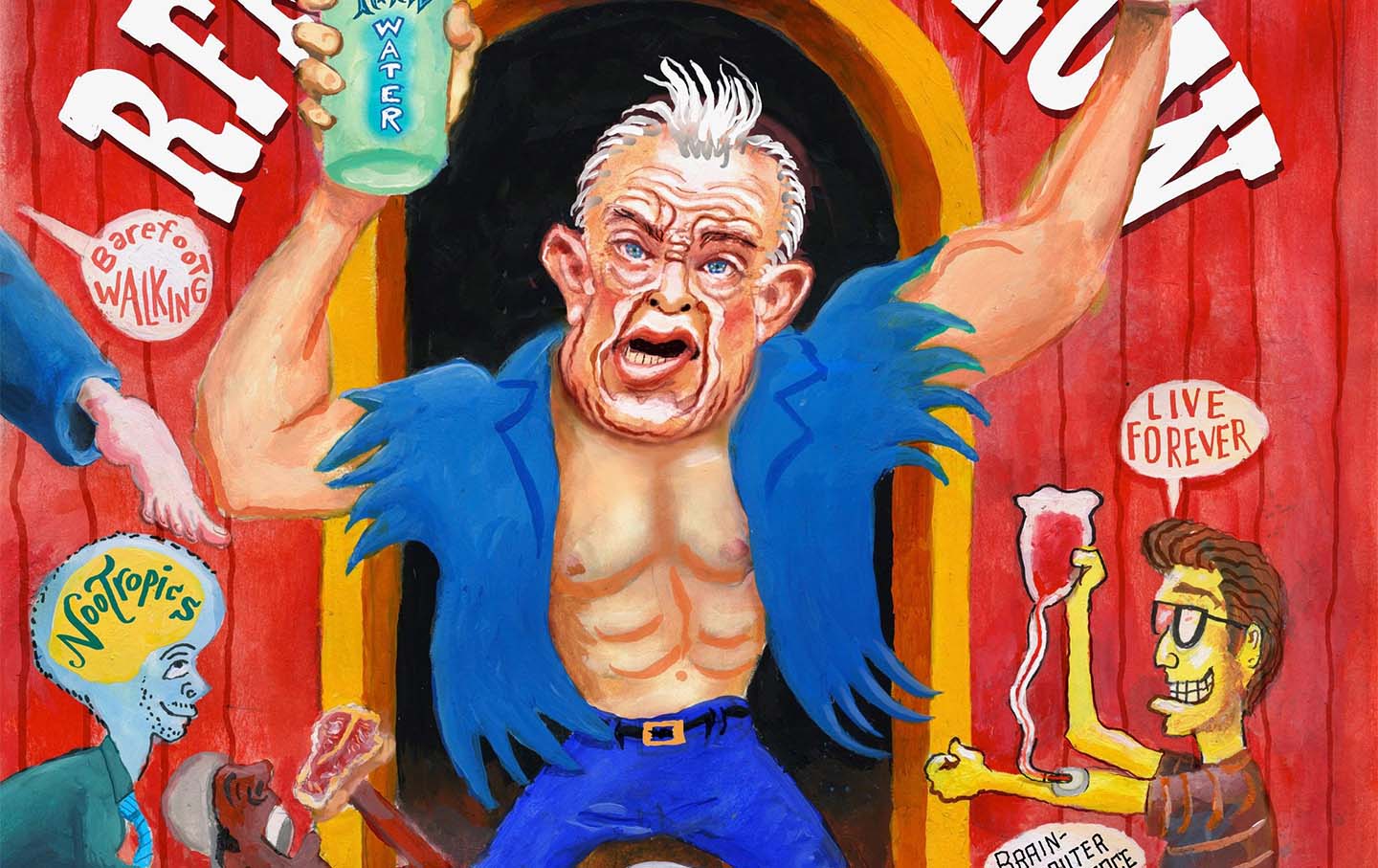
RFK Jr.: America’s Snake Oil Salesman RFK Jr.: America’s Snake Oil Salesman
Raw truth: MAHA is NUTS.

The Unfathomable Toll of the Syrian Civil War The Unfathomable Toll of the Syrian Civil War
How to make sense of the 13-year conflict?
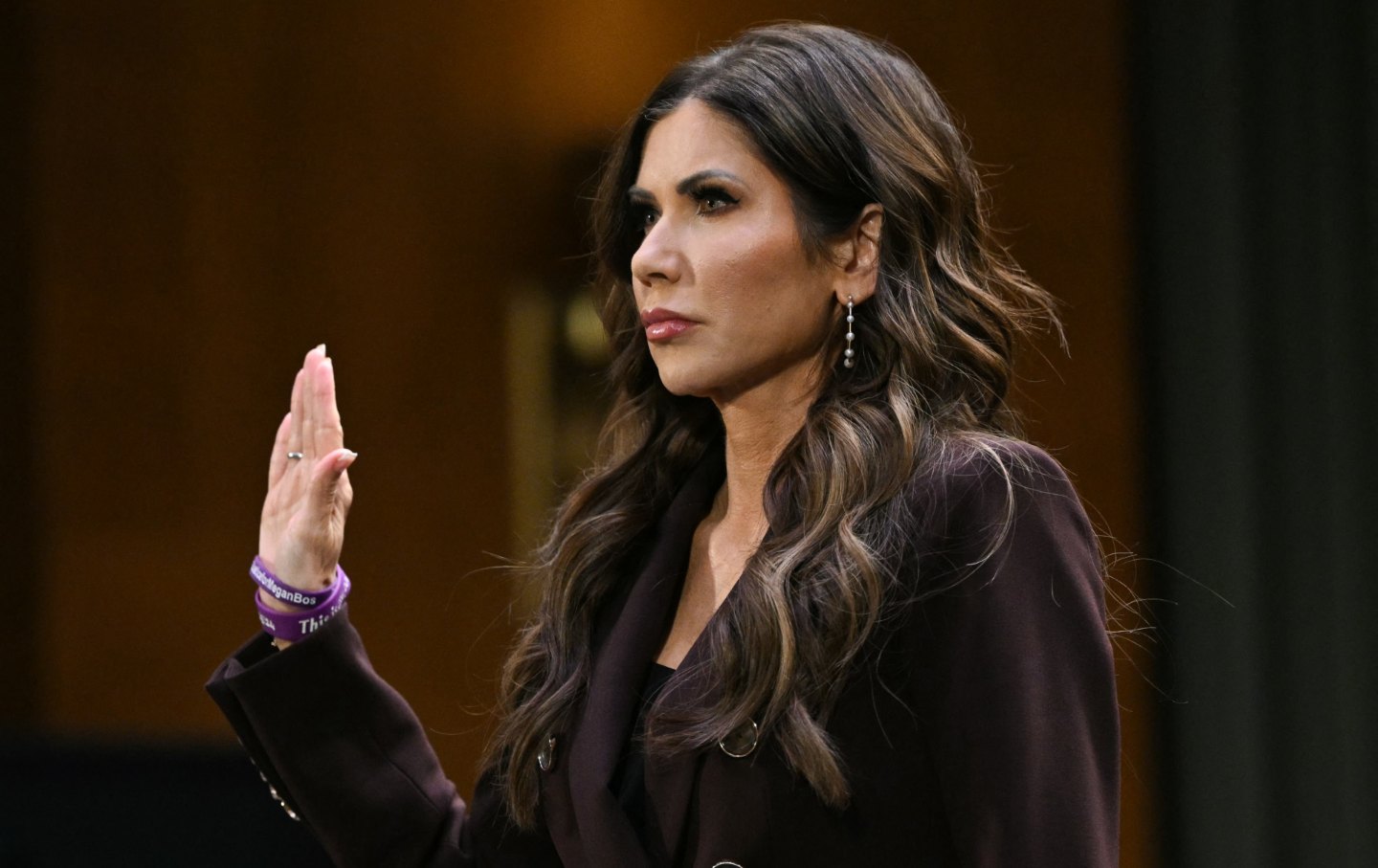
Celebrate Kristi Noem’s Firing. But Keep Protesting ICE. Celebrate Kristi Noem’s Firing. But Keep Protesting ICE.
Finally, someone in the administration is paying for their cruelty and incompetence.

