
With Alligator Alcatraz, Empire’s Tyranny Has Come Home
The Florida migrant gulag is what happens when the depravities of colonialist foreign policy are turned inward.
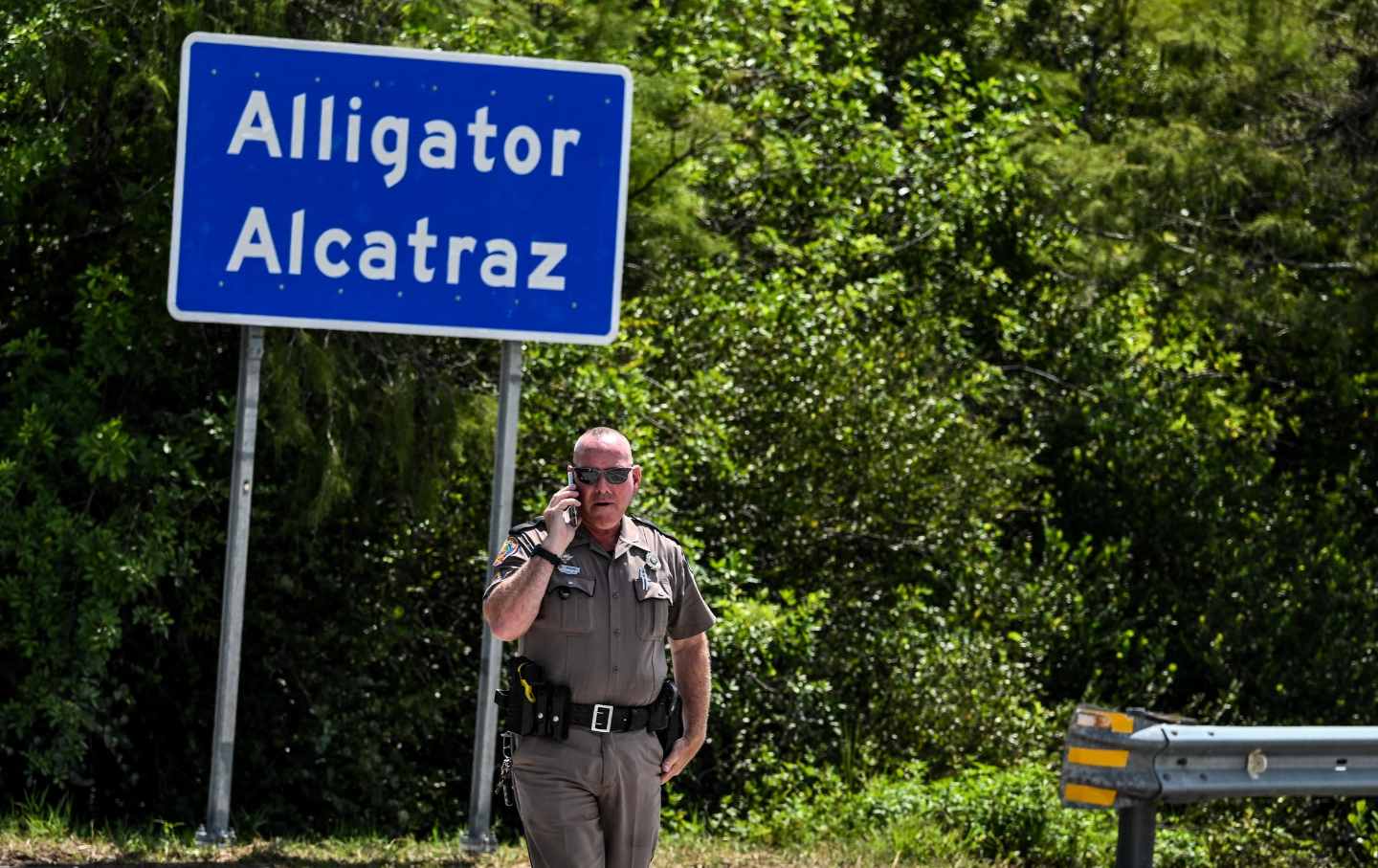
A Florida Highway Patrol officer looks on as protesters gather to demand the closure of the immigrant detention center known as “Alligator Alcatraz” at the Dade-Collier Training and Transition Airport in Ochopee, Florida, on July 22, 2025.
(Chandan Khanna / AFP via Getty Images)They’re calling it “Alligator Alcatraz”—a sprawling migrant detention center deep in the Florida wetlands, surrounded by flood zones, razor wire, and a sense of menace. Crawling with both literal and governmental predators, it was built not just to process but to intimidate. ICE buses arrive daily. Surveillance cameras and National Guard patrols make clear: This is a prison, not a sanctuary. Those deemed “unwelcome” in this country will be caged here and forgotten.
Officials claim the facility will redefine the deportation pipeline. They’re right—just not how they think. That’s because Alligator Alcatraz isn’t a new invention. It’s the latest incarnation of a system designed not to welcome the displaced but to contain, punish, and erase them. It’s the logical endpoint of decades of militarized US policy at home and abroad.
In June, President Trump bypassed California’s governor and deployed Marines and National Guard troops to Los Angeles to assist ICE raids in residential neighborhoods. Military personnel patrolled school drop-offs and hospitals. Cameras rolled as families were separated on sidewalks. Days later, Trump publicly suggested that Zohran Mamdani—a US citizen and New York mayoral candidate of South Asian descent—should be arrested and deported.
This isn’t a glitch in the system. It is the system—warnings embedded in spectacle.
We are not witnessing a sudden surge in xenophobia. We are witnessing the convergence of histories—immigration enforcement, racial control, and foreign policy merging into one carceral project. The result is a domestic counterinsurgency machine, refined over decades, now turned inward.
Start in Guatemala, 1954. The CIA overthrew Jacobo Árbenz after he threatened to redistribute land and cut into US business interests. The coup plunged the country into a civil war that lasted 36 years, killed more than 200,000 people, and sent refugees fleeing north. Many of those refugees or their descendants could now face detention or deportation.
The pattern repeated across the region. The US-backed ousting of Salvador Allende in Chile. The civil war in El Salvador, where American funded armed death squads and displaced nearly a quarter of the population. In Honduras, the 2009 US-backed coup sparked a political collapse that is still driving tens of thousands north to the border each year.
These migrations trace the scars of US foreign policy. As historian Greg Grandin writes, Latin America became “empire’s workshop”—a testing ground for counterinsurgency tactics that would eventually return home.
When migrants arrive at the southern border, they’re crossing fault lines created by the US through military aid, economic coercion, and covert operations. The so-called border crisis isn’t the product of random chaos. It’s the empire’s return flow.
In the 1980s, Cold War logic fused with the War on Drugs. Surveillance expanded. Local police were militarized. Poor and immigrant neighborhoods were redefined as threat zones. After 9/11, things intensified again. Techniques refined in Iraq and Afghanistan— biometric tracking, drone surveillance, predictive policing—were imported wholesale into immigration enforcement. ICE, DHS, and CBP absorbed a wartime logic.
And with them came the architects of war itself.
Behind the biometric gates of Alligator Alcatraz lie the fingerprints of America’s most powerful defense contractors. Raytheon, Palantir, and Lockheed Martin— firms once known for cruise missiles and drone strikes—now supply the surveillance, facial recognition software, and digital tracking tools used to police the immigrants.
Popular
“swipe left below to view more authors”Swipe →These surveillance technologies don’t originate in a vacuum. Many are tested and refined in occupied Palestine, where Israel has developed and exported a model of control built on biometric tracking, predictive policing, and permanent militarization. US agencies like ICE and DHS have engaged in joint training with Israeli security forces, importing not only tactics but an ideology of total control over racialized populations. Companies like Elbit Systems, which built surveillance technology in and around Israel’s separation wall, now provide surveillance towers and sensors for the US-Mexico border. The occupation of Palestine functions as a laboratory—where techniques of domination are sharpened before being deployed at home.
These engines of containment operate with bipartisan blessing.
From Reagan to Clinton, Bush to Biden, the approach has remained largely the same: treat migration as a threat to contain, not a consequence to understand. Criminalization becomes the default. Enforcement becomes policy. And budgets balloon accordingly.
President Obama—despite his reformist rhetoric—deported more immigrants than any president in US history, earning the nickname “Deporter in Chief” from immigrant rights advocates. His administration expanded detention quotas, surveillance programs, and legal frameworks that future presidents would inherit and escalate. Though he later narrowed priorities to focus on serious offenders and recent arrivals, the shift came too late—and without dismantling the underlying machinery.
That fortified system was handed to Trump, who wasted no time weaponizing it—turning immigration into theater, threatening naturalized citizens, and staging mass raids for cable news consumption. But the logic of punishment over protection, of surveillance over sanctuary, didn’t start with Trump—and it didn’t end with him.
Now, under his second term, the infrastructure is metastasizing. In July, the administration offered $608 million to states willing to replicate Florida’s detention model—an incentive for governors to build their own Alligator Alcatrazes using fast-track emergency powers. Texas, Arizona, and Louisiana have all expressed interest. Florida’s prototype—built in just eight days with $245 million in federal contracts—is a deterrence model packaged for national rollout.
Today, over 56,000 people are held in ICE detention on any given night—a record high and a 40 percent increase over last year. Nearly 72 percent have no criminal history. With overcrowding mounting, reports of physical and emotional abuse proliferate: migrants forced to stand in the blazing sun for hours, held in disgusting and unsafe conditions, denied legal counsel, and separated from children without clear reunification plans. These are recurring features of a system optimized for disorientation. And still, the budgets swell. Hundreds of millions materialize for rapid construction and mass detention, while calls for livable wages, healthcare, or functioning schools are met with shrugs and spreadsheets.
The question is never how we afford care—only why we keep choosing cages.
Last month, Congress passed the One Big Beautiful Bill Act, a sweeping spending measure that slashes funding for Medicaid and SNAP while allocating nearly $170 billion to immigration enforcement—making ICE the largest federal law enforcement agency. A massive share of that funding will flow to private prison operators and defense contractors behind detention sites like Alligator Alcatraz. This is intentional. Caging the displaced is now a bipartisan budget priority.
This isn’t about security. It’s about investment—in fear, in punishment, in profit.
As historian Kelly Lytle Hernández reminds us, ICE’s ancestry traces back to slave patrols and colonial policing. What once pursued the enslaved now targets the displaced. The tools have evolved—drones instead of dogs, algorithms instead of chains—but the purpose remains the same: capture and control.
And increasingly, even dissent becomes a deportable offense. Legal observers have documented ICE raids at churches, schools, and hospitals. Families torn apart not by accident, but by strategy. The goal isn’t just removal. It’s fear.
I’ve spoken with migrant workers who say today’s fear mirrors the violence they once fled. The helicopters were American then, too—just flown by others. Now they hover over US cities with the same intent: detain, divide, disappear.
Yet, even under these conditions, resistance endures. Detainees stage hunger strikes. Legal advocates sue. Communities build rapid-response networks and mutual aid systems. But the machine grinds on.
Philosopher Aimé Césaire warned that colonial violence always boomerangs back home. Hannah Arendt cautioned that totalitarianism begins when imperial methods turn inward—when entire populations are cast as internal enemies.
We’ve reached that moment. A nation that once exported counterinsurgency now enacts it on domestic soil.
Alligator Alcatraz is not an outlier. It is a signal flare.
The surveillance state that once patrolled Fallujah now monitors Fresno. The defense contractors that once armed foreign insurgencies now manage migrant detention contracts. The legal architecture that once interned Japanese Americans now justifies raids on schools and mosques.
Immigration enforcement is not broken. It is working exactly as it was designed to—to discipline labor, suppress dissent, and reinforce a racial and economic order.
We must stop asking how to fix a system built to punish. We must ask why we keep paying for it—in Congress, in budgets, in silence, and in complicity.
Because when empire turns inward, it doesn’t just target migrants. It targets the nation’s soul.
“Empire abroad entails tyranny at home,” Arendt warned us. The tyranny has landed.
Support independent journalism that does not fall in line
Even before February 28, the reasons for Donald Trump’s imploding approval rating were abundantly clear: untrammeled corruption and personal enrichment to the tune of billions of dollars during an affordability crisis, a foreign policy guided only by his own derelict sense of morality, and the deployment of a murderous campaign of occupation, detention, and deportation on American streets.
Now an undeclared, unauthorized, unpopular, and unconstitutional war of aggression against Iran has spread like wildfire through the region and into Europe. A new “forever war”—with an ever-increasing likelihood of American troops on the ground—may very well be upon us.
As we’ve seen over and over, this administration uses lies, misdirection, and attempts to flood the zone to justify its abuses of power at home and abroad. Just as Trump, Marco Rubio, and Pete Hegseth offer erratic and contradictory rationales for the attacks on Iran, the administration is also spreading the lie that the upcoming midterm elections are under threat from noncitizens on voter rolls. When these lies go unchecked, they become the basis for further authoritarian encroachment and war.
In these dark times, independent journalism is uniquely able to uncover the falsehoods that threaten our republic—and civilians around the world—and shine a bright light on the truth.
The Nation’s experienced team of writers, editors, and fact-checkers understands the scale of what we’re up against and the urgency with which we have to act. That’s why we’re publishing critical reporting and analysis of the war on Iran, ICE violence at home, new forms of voter suppression emerging in the courts, and much more.
But this journalism is possible only with your support.
This March, The Nation needs to raise $50,000 to ensure that we have the resources for reporting and analysis that sets the record straight and empowers people of conscience to organize. Will you donate today?
More from The Nation

Celebrate Kristi Noem’s Firing. But Keep Protesting ICE. Celebrate Kristi Noem’s Firing. But Keep Protesting ICE.
Finally, someone in the administration is paying for their cruelty and incompetence.

We Don’t Need an Autopsy to Tell Us the Democrats Failed on Gaza We Don’t Need an Autopsy to Tell Us the Democrats Failed on Gaza
The DNC is allegedly hiding a report showing that Kamala Harris’s Gaza policy helped cost her the 2024 election. But that report won’t tell us anything we don’t already know.

Texas’s Senate Primary Has Already Made History—and It’s Not Over Yet Texas’s Senate Primary Has Already Made History—and It’s Not Over Yet
Democratic nominee James Talarico is getting national media attention, but the real story is sky-high voter turnout, even amid GOP bids to suppress balloting
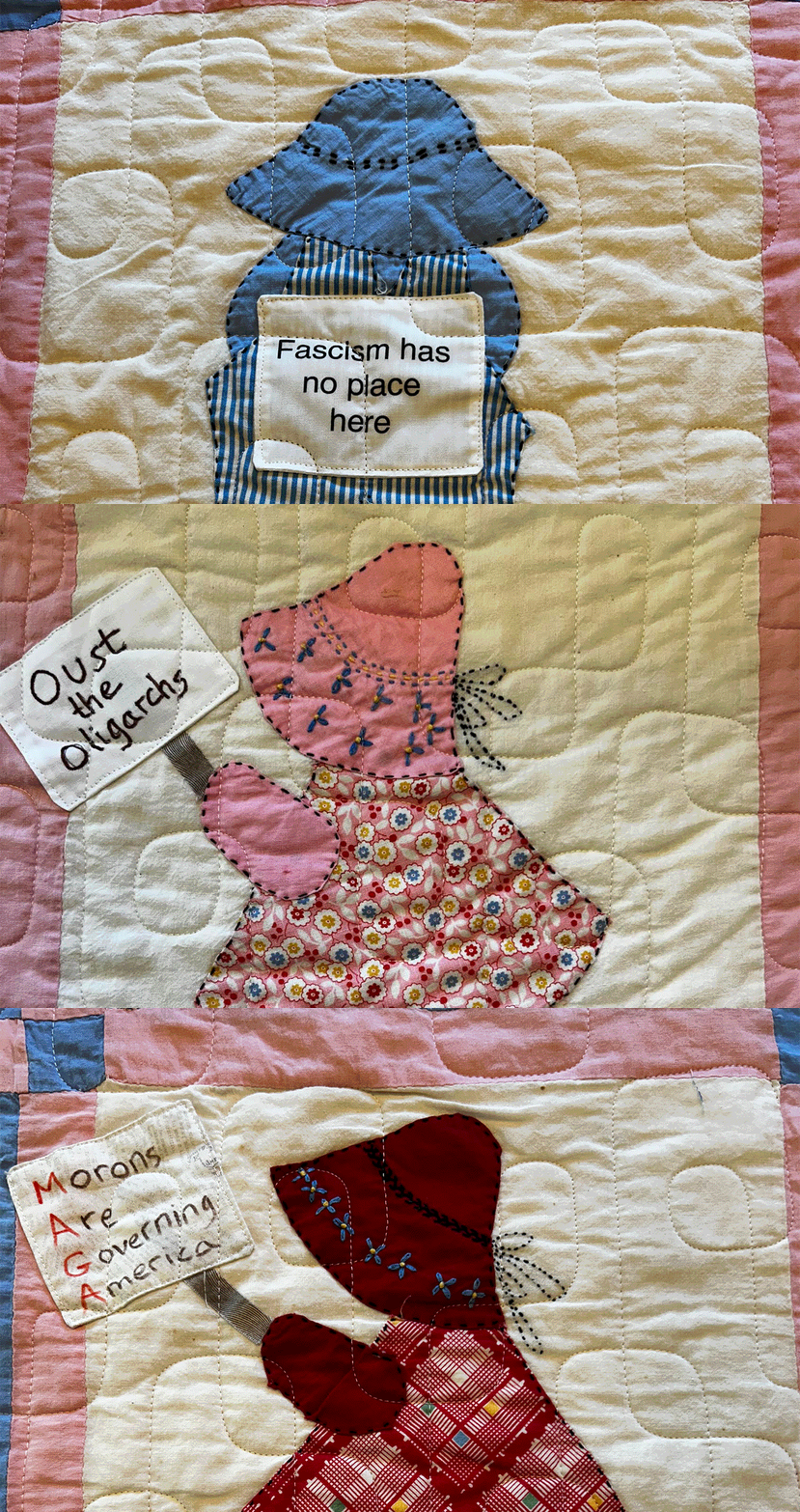
Quilted Messages Quilted Messages
Sunbonnets carrying not-so-sunny truths.
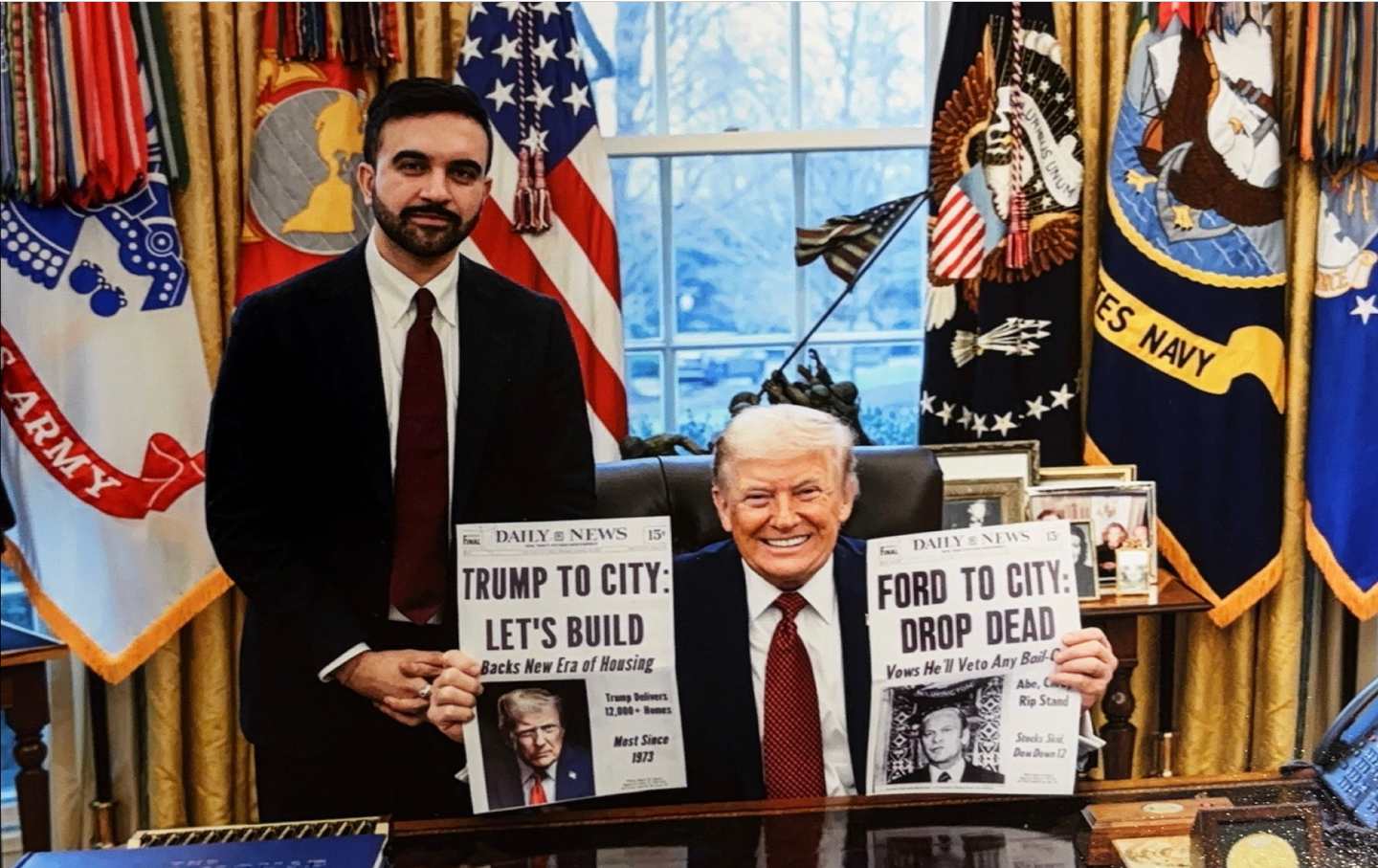
How the Theatrics of Mamdani’s Trump Meeting Backfired How the Theatrics of Mamdani’s Trump Meeting Backfired
By pandering to the president’s vanity, the New York mayor reinforced Trump’s image as a strongman commanding deference—an especially bad look on the eve of Trump’s war with Iran

Students in New York Are Going Hungry. How Can Mamdani Help? Students in New York Are Going Hungry. How Can Mamdani Help?
With plans for city-owned grocery stores and a focus on affordability, the new mayoral administration offers fresh hopes of successfully confronting the food crisis among students...

