
Does Weather Girl Forecast Our Planet’s Future?
Does “Weather Girl” Forecast Our Planet’s Future?
In the new play by Brian Watkins, a California meteorologist struggles to deliver daily weather reports that whitewash our unfortunate climate reality.
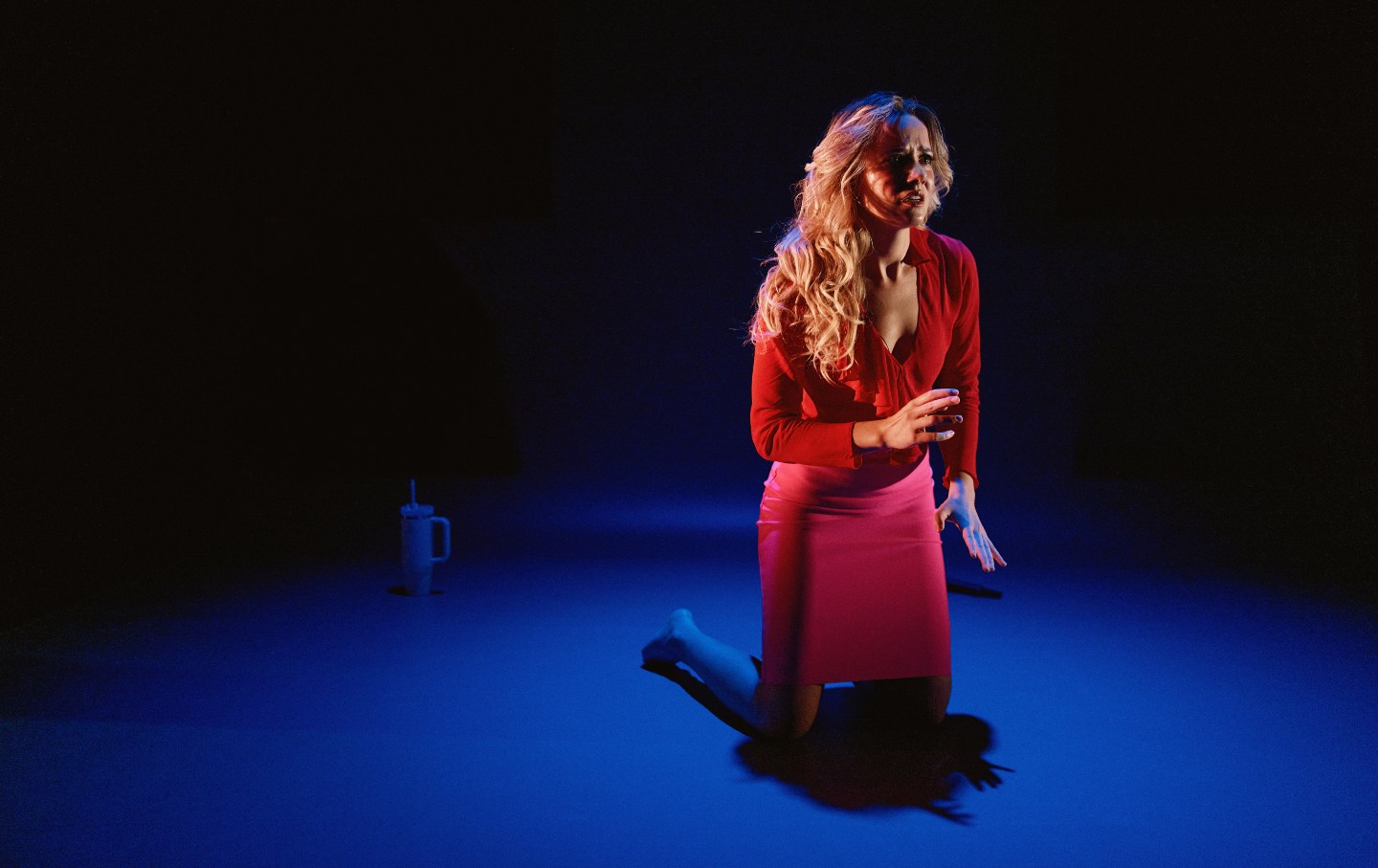
Julia McDermott, who plays Stacey in the play Weather Girl.
(Emilio Madrid)
In theory, weather reports should be neutral communications, free from ideological bias or political pressure. In practice, public broadcasting now faces severe federal funding cuts amid a crackdown on independent media and free speech; the terms “climate crisis” and “climate science” are being purged from government documents; and numerous meteorologists have received threats simply for explaining climate science.
In Weather Girl, a new play by Brian Watkins currently being staged at St. Ann’s Warehouse in Brooklyn, the situation is no different. Throughout the stream-of-consciousness-style one-woman show, the audience watches the protagonist fracture under the stress of having to put on a happy face. Stacey, a California meteorologist played by Julia McDermott, struggles to deliver daily weather reports that whitewash our unfortunate climate reality. The state is becoming unbearably hot, burning from intense, year-round wildfires. She eventually pleads for mass evacuation in an on-camera breakdown, yet some refuse to leave their burning homes, deeming the fires a “hoax.”
It’s a salient allegory of not only climate change but also the medley of societal failures that the crisis exposes. I would call the show prescient, yet what makes it so simultaneously haunting and mesmerizing is not its foresight of the future but rather how terrifyingly contemporary its depiction feels. Amid our current polycrisis—defined by the existence of disparate shocks that “interact so that the whole is even more overwhelming than the sum of the parts”—the housing and mental health crises, among others, merge with impending climate catastrophe into an apocalyptic Hydra that swallows both Stacey and the audience members.
The premise reflects an appreciation of the vastness and singularity of America’s natural wonders that Watkins thinks many people have lost. “I wanted to explore what a narrative would be that centered on that…feeling of being detached from the earth, or the earth sort of shaking us off of its surface,” he told me, aiming to “alter the perspective just for an hour with this play.”
While the play references social media, podcasts, and live-streams, it emphasizes more traditional news, recreating a time when people would look to television instead of TikTok to know what was happening outside. A 2023 poll by YouGov found that 60 percent of Americans still read, watch, or listen to the weather forecast for their local area at least daily. Yet Americans are increasingly avoiding the news—largely to ease the anxiety it can provoke—and over one-third of Americans rely mainly on social media.
The show also captures the wide-reaching effects of extreme heat and intensified wildfires, or as journalist Jeff Goodell warned, how “the heat will kill you first.” According to the World Health Organization, “heat stress is the leading cause of weather-related deaths,” while a new study shows wildfire smoke could cause over 71,000 excess deaths annually in the United States. Stacey’s thirst and quest for water amid a shortage reflect the growing imperilment of our most basic human need. She questions if the crisis is a form of “biblical punishment,” reflecting what Watkins deemed a “spiritual hunger” in our broken relationship to the environment.
As Stacey navigates a complex and surreal relationship with her mother, the audience sees how the climate crisis exacerbates the consequences of a lack of affordable and adequate housing and mental health services for those struggling with substance abuse. Exposed to the elements, the blazing heat represents a disproportionate threat for over 771,000 unhoused Americans: data has already shown increased deaths of people experiencing homelessness amid increased temperatures in the counties of Las Vegas and Los Angeles, and researchers fear this trend may only increase. Interestingly, in the show, it is Stacey’s unhoused mother who’s most in tune with the earth, teaching her the “lost art” of finding water all around us.
So how do we recover what’s lost and solve the polycrisis? True to reality, the show offers no clear ways out. “Hopefully, what the theater does is get us asking better questions, or deeper questions about what this crisis is,” said Watkins.
Certainly, though, the show suggests techno-optimism is not the answer. Stacey’s mother declares in a critical line, “What good are the tools, if this is where they got us,” and proclaims that “only we can save each other.” As the harmful psychological effects of a screen-addicted society become more apparent, and resource-intensive AI has begun displacing people from jobs, this sentiment might resonate even more. Technology undoubtedly has many benefits, including the lifesaving disaster alerts, as Stacey points out, yet distracting techno-“solutions” often pervade the climate change discourse, while the root cause of a continued dependence on fossil fuels remains largely unaddressed.
The question remains: How do we save ourselves? The play suggests the answer may be as simple as putting our phones down and connecting with each other and our natural environment.
I don’t think it’s quite so easy. Our struggle to connect implicates more than screens; it reflects historic political polarization and widespread distrust of government. Transforming a fossil fuel economy requires grappling with unequal structures of power and how they shape behavior. Fossil fuels’ domination reflects the success of Big Oil money in warping public policy and perception, including through decades-long climate denial and misinformation campaigns. Rebecca Solnit explains how the oil and gas company BP promoted the “carbon footprint” to shift focus toward individuals, inhibiting demands for systemic climate action. We can’t start asking the right questions without understanding this context, even as the show rightly pushes us to examine how we engage (or fail to) with our climate dystopian reality.
Still, connecting is a start toward forming a new kind of politics—building bridges, fomenting empathy instead of antipathy, and putting people and planet before clickbait—that our terrifying new normal demands. This moment is pivotal. I’m scared, of course, but hopeful, because just like Stacey, “I love this place.” And for all who feel the same, we know that we need to protect it—together.
More from The Nation
The Planet-Sized Hole in Trump’s State of the Union Address The Planet-Sized Hole in Trump’s State of the Union Address
Although climate change received no attention during the president’s speech, Americans must continue to find new ways of making progress against the ongoing environmental crisis.
Japan’s New Climate Bomb—in the US Japan’s New Climate Bomb—in the US
Bloomberg Green reveals the climate costs of the US-Japan trade deal.
Where Climate Coverage Goes to Die Where Climate Coverage Goes to Die
The very notion of public service journalism is under assault at precisely the moment that it’s most needed.
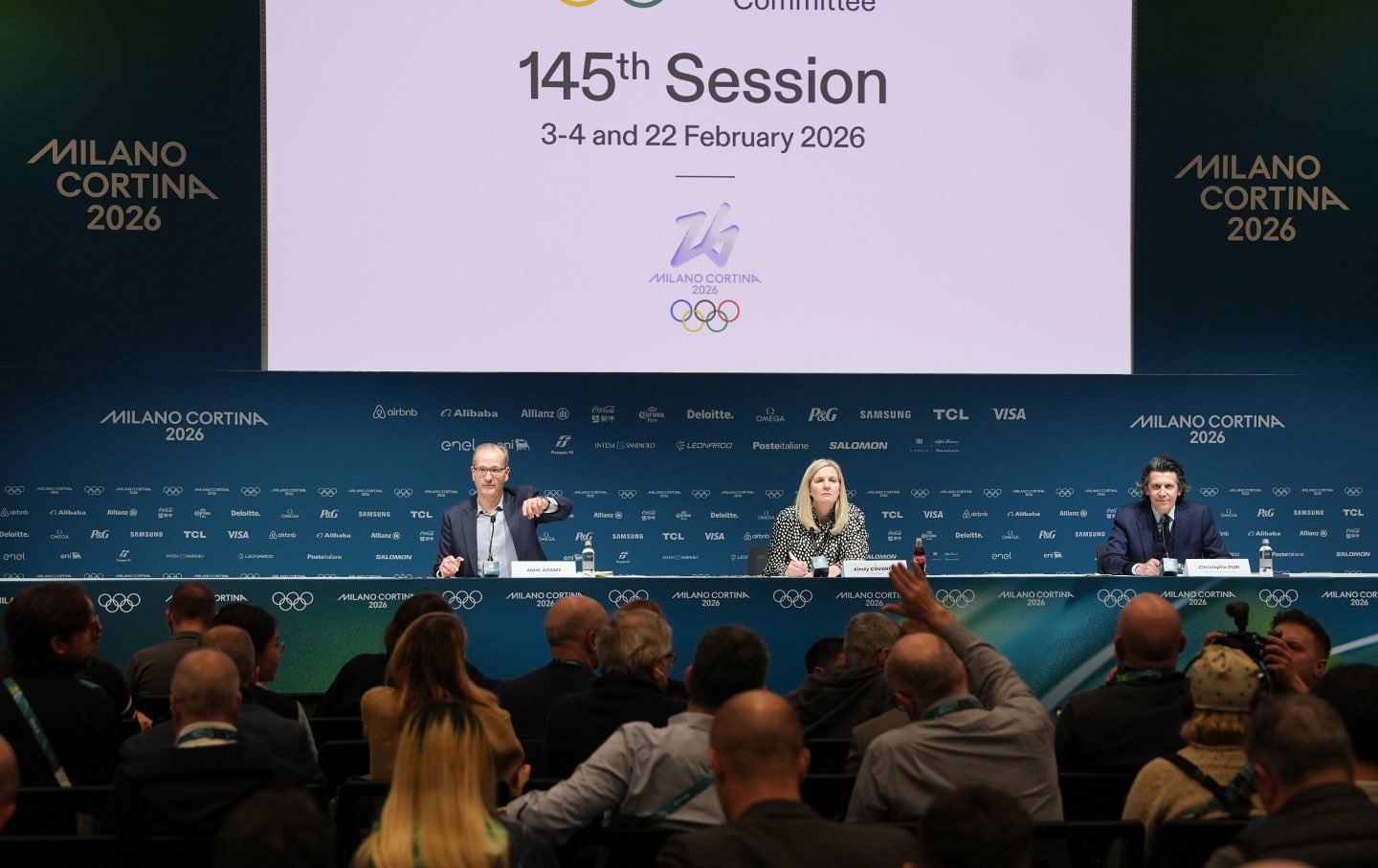
The International Olympics Committee Is Urged to Drop Oil Company Sponsors The International Olympics Committee Is Urged to Drop Oil Company Sponsors
Global warming means the future of Winter Games “is literally melting away.”
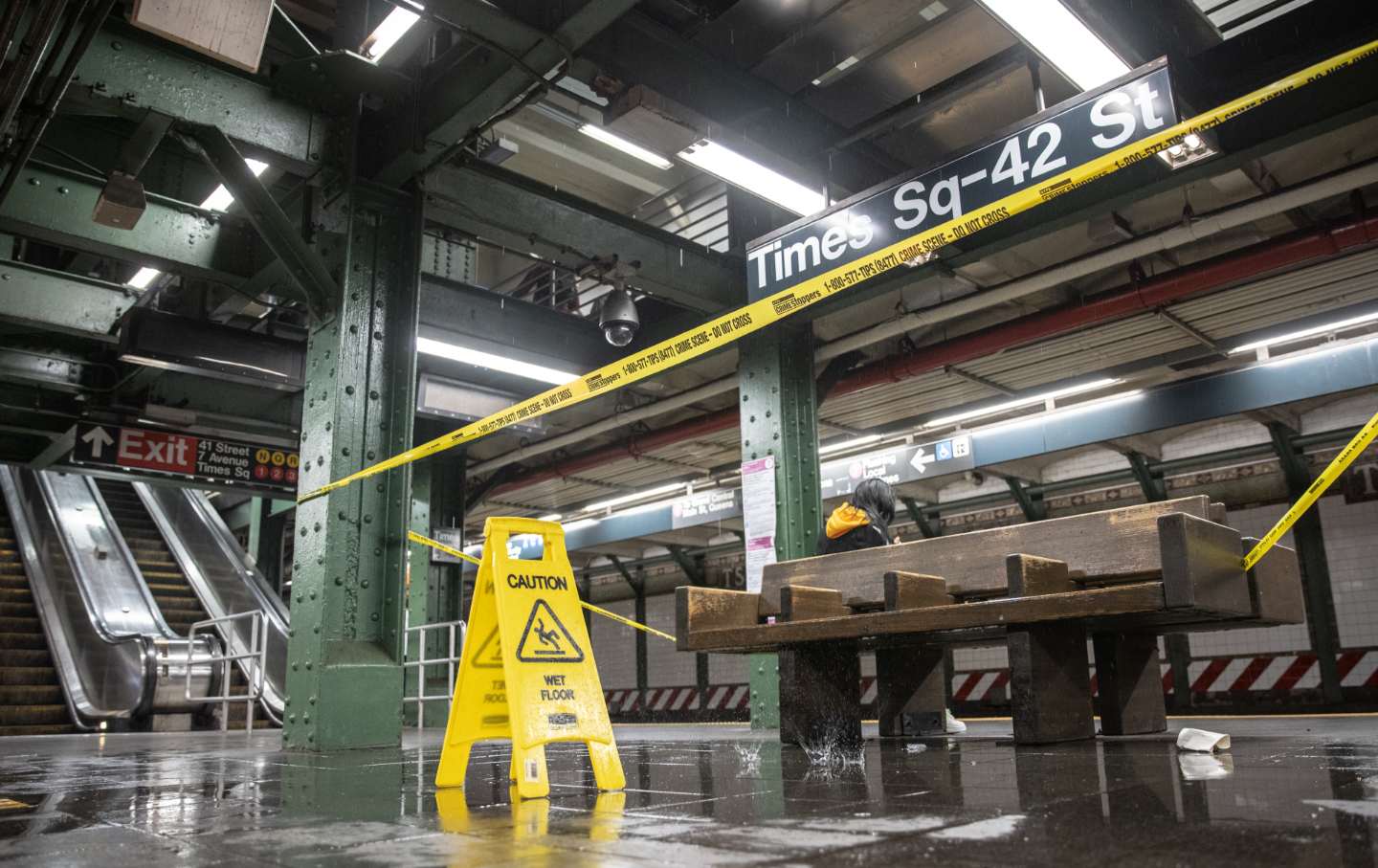
Can New York Adapt the Subway for the Climate Crisis? Can New York Adapt the Subway for the Climate Crisis?
As climate change leads to record rainfalls, the city’s 120-year-old subway system is more vulnerable to flooding than ever.
Climate Stories Are Everywhere Climate Stories Are Everywhere
Why do many news outlets ignore the connections between climate change and the struggle for democracy?

