
Rep. Summer Lee: The Fight for Environmental Justice Is Far From Over
The Trump administration’s destructive environmental policies will cost us all. But we must not give up.
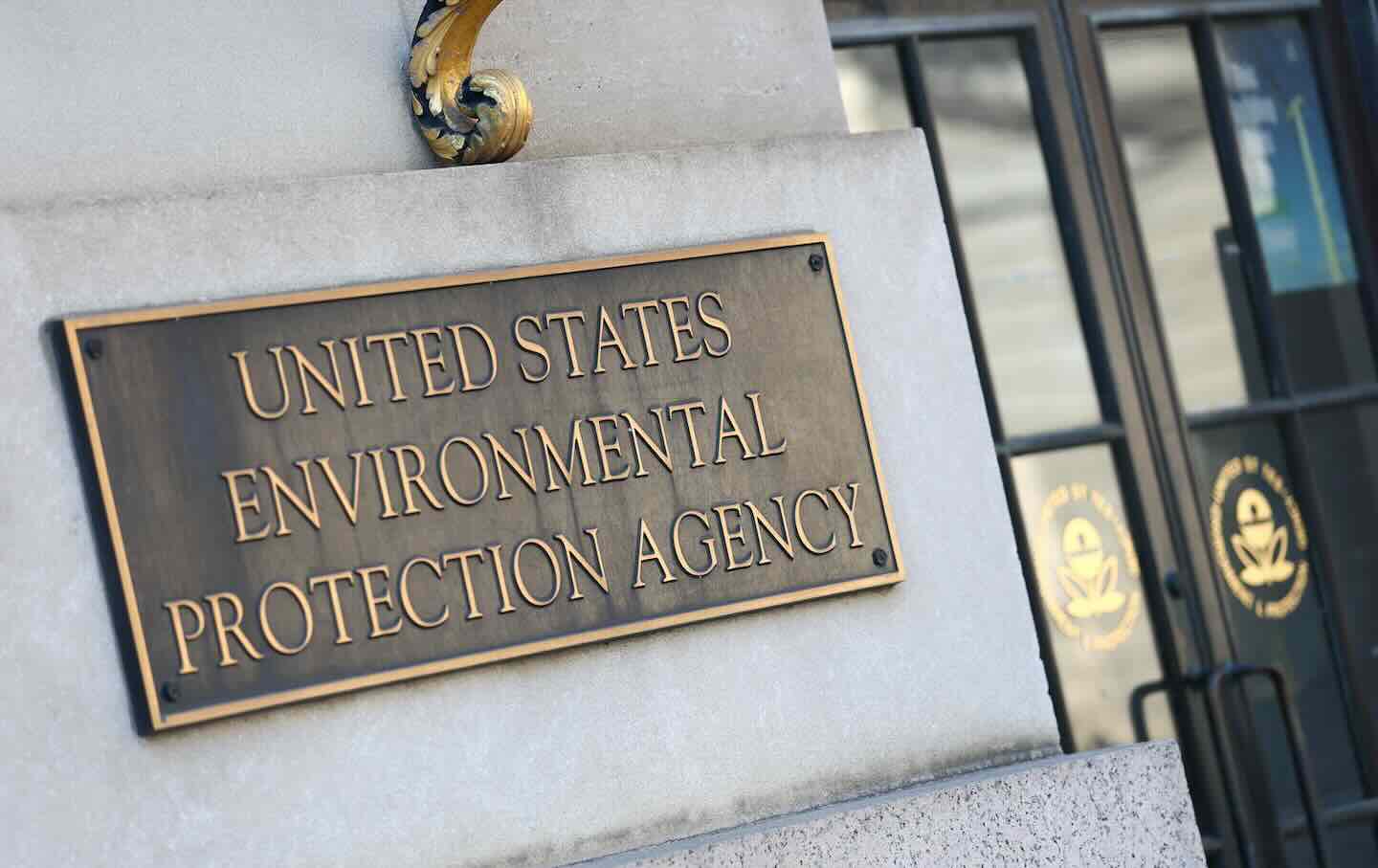
Immediately after Donald Trump was sworn in to his second term in the nation’s highest office, he launched an aggressive rollback of critical environmental-justice protections. In just one year, his administration has eliminated the 2009 endangerment finding, the scientific and legal basis for regulating greenhouse-gas emissions; weakened pollution limits; and offered industrial polluters exemptions to the rules that were designed to protect the environment and public health. Who is Trump and his Environmental Protection Agency doing this for?
I can tell you it is not for our kids. Not for working families. Not for the communities already bearing the brunt of pollution and climate disaster.
They are doing it for the oil and gas executives who bankrolled Trump’s reelection campaign, contributing over $75 million after he promised he’d grant their policy wish list if he won. Polluting fossil-fuel companies are receiving a fast pass for project approvals while reaping tens of billions of dollars in tax breaks and other government incentives. In a gross misuse of presidential power, Trump is making sure his donors see major returns from his policies. Take Energy Transfer and its executive chairman, Kelcy Warren, for example: They’ve contributed $25 million to Trump since he took office and are benefiting from his reinstituting exports of liquefied natural gas, which will allow them to extend operations and increase profits. Occidental Petroleum, which donated $1 million to Trump’s second inauguration, is now benefiting from the administration’s One Big Beautiful Bill Act, which offered tax breaks and subsidies to energy corporations.
Trump and his officials have made it easier for polluters to profit off our families, our public health, and our planet. As they continue to gut environmental funding, offices, and programs, we will see cancer risks rise. As they repeal essential safeguards, including limits on climate pollution and other toxic air emissions, asthma cases will increase.
In western Pennsylvania, which includes the district that I represent in Congress, we’ve seen the dangers of the climate crisis firsthand: more frequent flooding, stronger storms, and greater damage year after year. We suffer from some of the poorest air quality in the nation, and our families struggle with higher-than-average rates of asthma, cancer, heart disease, and exposure to toxic chemicals.
This doesn’t happen in a vacuum, either; it’s part of a cost-of-living crisis, and a reality for many of our neighbors. Dirty air means more trips to the doctor. Unsafe water means families have to dip into their paychecks to purchase bottled water. Extreme weather leads to lost homes, lost jobs, and prolonged recoveries.
But there is another way.
Our communities can work together to build a future in which no one has to choose between their health, their home, and their livelihood. We can reject these harmful policies and practices and reimagine safer and healthier neighborhoods.
When I served in the Pennsylvania legislature, I fought against these same destructive policies to prove what is possible. It’s the same fight I brought to Congress. That’s why I led the Pennsylvania Democratic delegation in fighting the EPA’s efforts to repeal the endangerment finding, which would erase our government’s responsibility to act against climate pollution. With the elimination of the endangerment finding, our loved ones and neighbors are now exposed to more pollution, more extreme weather events, and heightened public-health risks.
In Congress, I am working with my colleagues to launch the first-ever House Environmental Justice Caucus. Environmental justice often sounds more complicated than it is, but it simply means ensuring that every person who calls this country home has clean air, clean water, and a safe, healthy community. With those values, I will continue fighting alongside frontline communities for policies like the A. Donald McEachin Environmental Justice for All Act, which addresses the disproportionate impact that toxic-waste sites and pollution-causing fossil-fuel infrastructure have on communities of color and low-income communities, and to ensure that we are shaping the work ahead together.
When it comes to environmental issues, Trump’s second term has been even more destructive than his first. But we cannot fall into despair. We must continue to disavow special interests and look to the people who have been on the ground for decades to remind us that there’s a different way to legislate. Because the work doesn’t happen only in the halls of Congress or in statehouses. It happens in our homes, our union halls, our houses of worship— everywhere our neighbors gather to discuss the lived experiences that shape the priorities we set and the solutions we fight for.
We can either keep letting polluters rig the rules and line their pockets, or we can stand up for our communities, organize, and demand better. I know what I am choosing: people over profit. Health over harm. Our planet and the health of our people must never be put up for sale to the highest bidder.
More from The Nation
Abby Martin on the Climate Cost of US Empire Abby Martin on the Climate Cost of US Empire
The filmmaker discusses military pollution, her reporting in Hawai’i, and why the climate and antiwar movements belong together.
Trump Is Making Deals With Big Oil Trump Is Making Deals With Big Oil
Democrats and the press should be paying attention to how this pay-to-play behavior relates to the midterms
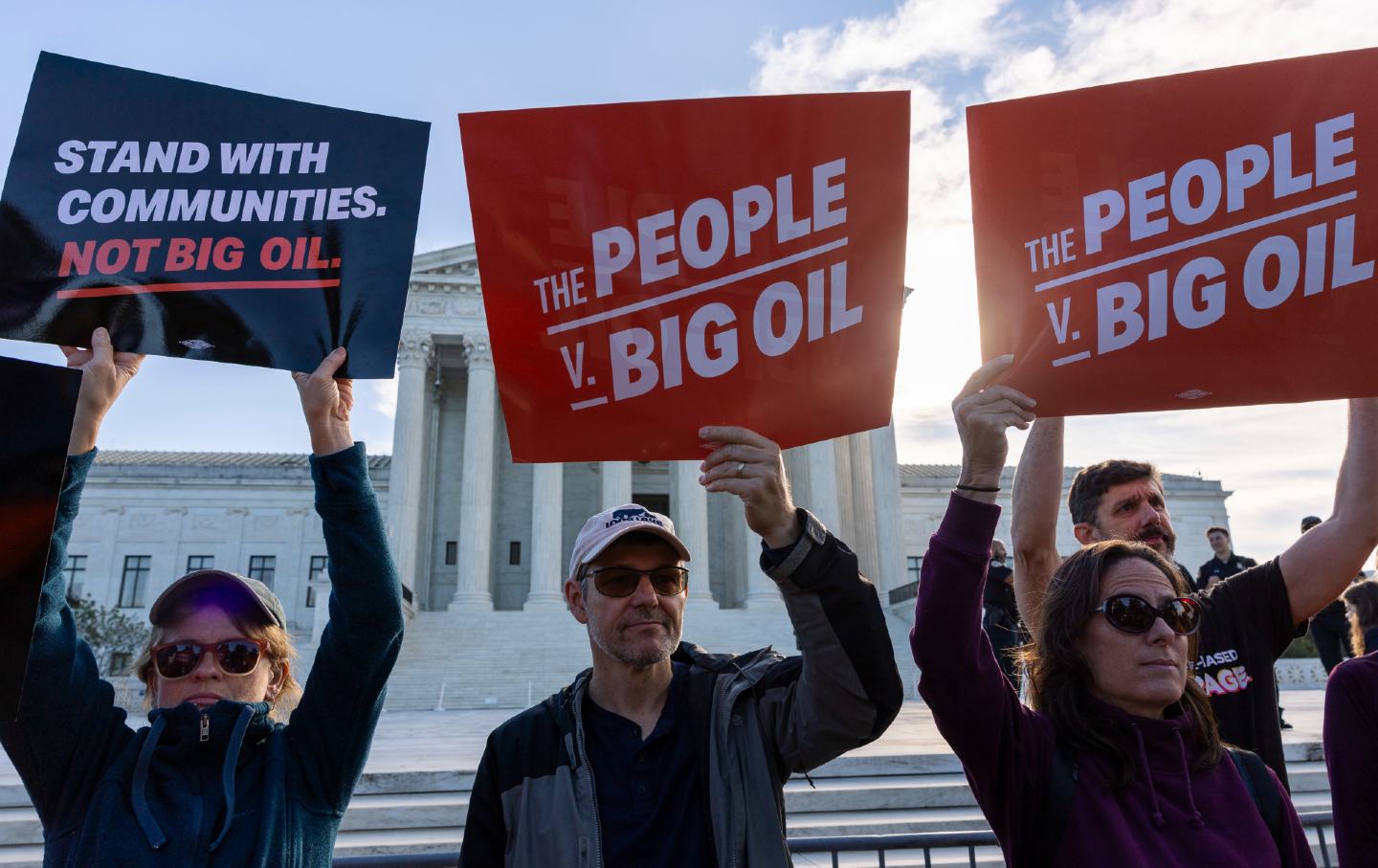
This Lawsuit Could Make Big Oil Pay for the Harm It’s Caused This Lawsuit Could Make Big Oil Pay for the Harm It’s Caused
The question is whether the Supreme Court will let it.
Germany and California Make Up an Environmental Superpower Germany and California Make Up an Environmental Superpower
The world’s third- and fourth-largest economies have pledged to environmental protections. Will others follow suit?
Gavin Newsom Comments on Climate Gavin Newsom Comments on Climate
On the sidelines of the UN General Assembly meeting and New York Climate Week, the California governor called AOC “the real damn deal.”
Cities as Climate Labs: Inside the U20 Summit Cities as Climate Labs: Inside the U20 Summit
Mayors at the Urban 20 Summit worked across borders to confront the climate crisis at the local level.

