Coming Sunday: The People Behind the Climate Numbers
The next phase of The 89 Percent Project profiles climate’s supermajority.
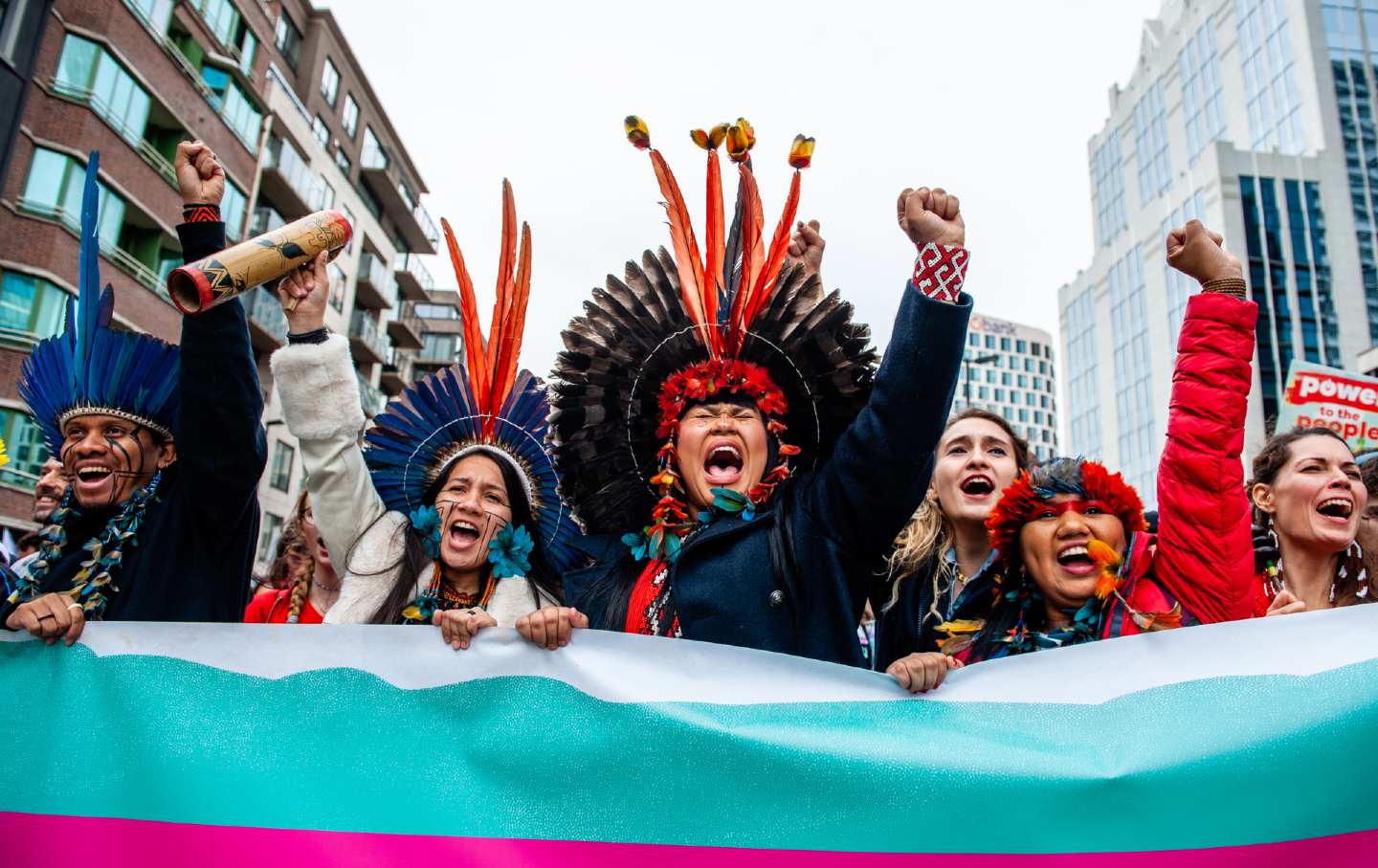
A group of Indigenous people is leading a demonstration for the climate organized in Brussels, Belgium, on October 23, 2022.
(Romy Arroyo Fernandez / NurPhoto via Getty Images)Let’s go! The next phase of The 89 Percent Project starts this Sunday, October 26, when news organizations from around the world begin telling the stories of the humans behind the numbers.
It’s one thing to report, as the project’s first surge of coverage did in April, that 80 to 89 percent of the world’s people want their governments to “do more” about climate change—though that same supermajority does not realize it is the majority. It’s another to put names and faces to that abstract number—to explore who these people are, why they feel the way they do, and what kinds of action they’d like to see their governments take.
That’s the goal of this next phase of The 89 Percent Project, which will serve as lead-up to the COP30 UN climate summit. We think it makes smart editorial and commercial sense for the people who make up the 89 percent to see themselves reflected in news coverage. We also think the world leaders and diplomats gathering in Brazil in November should be aware of how the people they represent think and feel about these issues. We suspect that, just as most of the global supermajority don’t realize they are the majority, neither do most political leaders recognize how widespread support for climate action is.
For the moment, that support remains “latent,” Anthony Leiserowitz, the director of the Yale Program on Climate Change Communication, told The Guardian in an 89 percent story published during the April Joint Coverage Week. “It hasn’t been activated or catalyzed. But when you break through these perception gaps, you help people understand that they’re not alone.” Thus one story for journalists to watch at COP30 and beyond is whether any politicians or social movements figure out how to mobilize this potentially massive social force.
Agence France-Presse, Hindustan Times, The Guardian, Channel 4(UK), The Nation, Drilled, The Asahi Shimbun, The New Republic, Mongabay, and Agência Pública are among the CCNow partners planning coverage. AFP, for example, will profile individuals from four countries talking about their “positive climate tipping points”: What made them shift from passively supporting stronger climate action to deciding they had to do something to make it happen?
Journalists and news outlets everywhere are invited to participate, even if they aren’t CCNow partners. Visit 89Percent.org to access links to the science behind the project, a branding kit, and ways to get in touch about anything else you might need. You can follow along on social media via the hashtag #The89Percent. CCNow will also be on the ground at COP30, connecting journalists and highlighting great stories that profile the 89 percent.
News coverage of climate summits usually prioritizes what world leaders and negotiators have to say, and that focus certainly has its place. This phase of 89 percent reporting is an opportunity to bring the global majority’s voices into the conversation. After all, every person on Earth has to live with what does, or does not, get decided at COP30. Beginning next Sunday, when the next phase of The 89 Percent Project kicks off, they get to have their say as well.
Become a Sustaining Donor This September
Between the reemergence of right-wing red-baiting and Donald Trump’s use of the chilling National Security Presidential Memorandum–7 to criminalize left political organizing, we’re seeing McCarthyism reborn before our eyes.
This assault on democracy cannot be ignored or wished away. Resisting it requires bravery in the face of threats and repression, a steadfast commitment to the truth, and the unwavering belief that we can—and will—overcome this darkness.
We must have an independent media that sets the record straight, unearths corruption and abuses of power, and advances a politics of justice and dignity for all if we’re to win this fight.
That’s why I’m writing to you today. This September, The Nation needs to add 100 monthly donors to sustain our progressive journalism. Your contribution makes the next investigative report, the next truth-speaking column, and the next pathbreaking essay all possible.
I hope you’ll support our work with a recurring donation today. If you donate $10 or more a month, we’ll send you a brand new “Hands Off the Free Press!” sticker to recognise your commitment to our cause. Please, donate today.
Onward,
Katrina vanden Heuvel
Editor and Publisher, The Nation