Trump’s Deadly Assault on Weather Reporting
I’m a meteorologist, and breaking NOAA would undermine journalists’ ability to cover the story our audiences care about most.
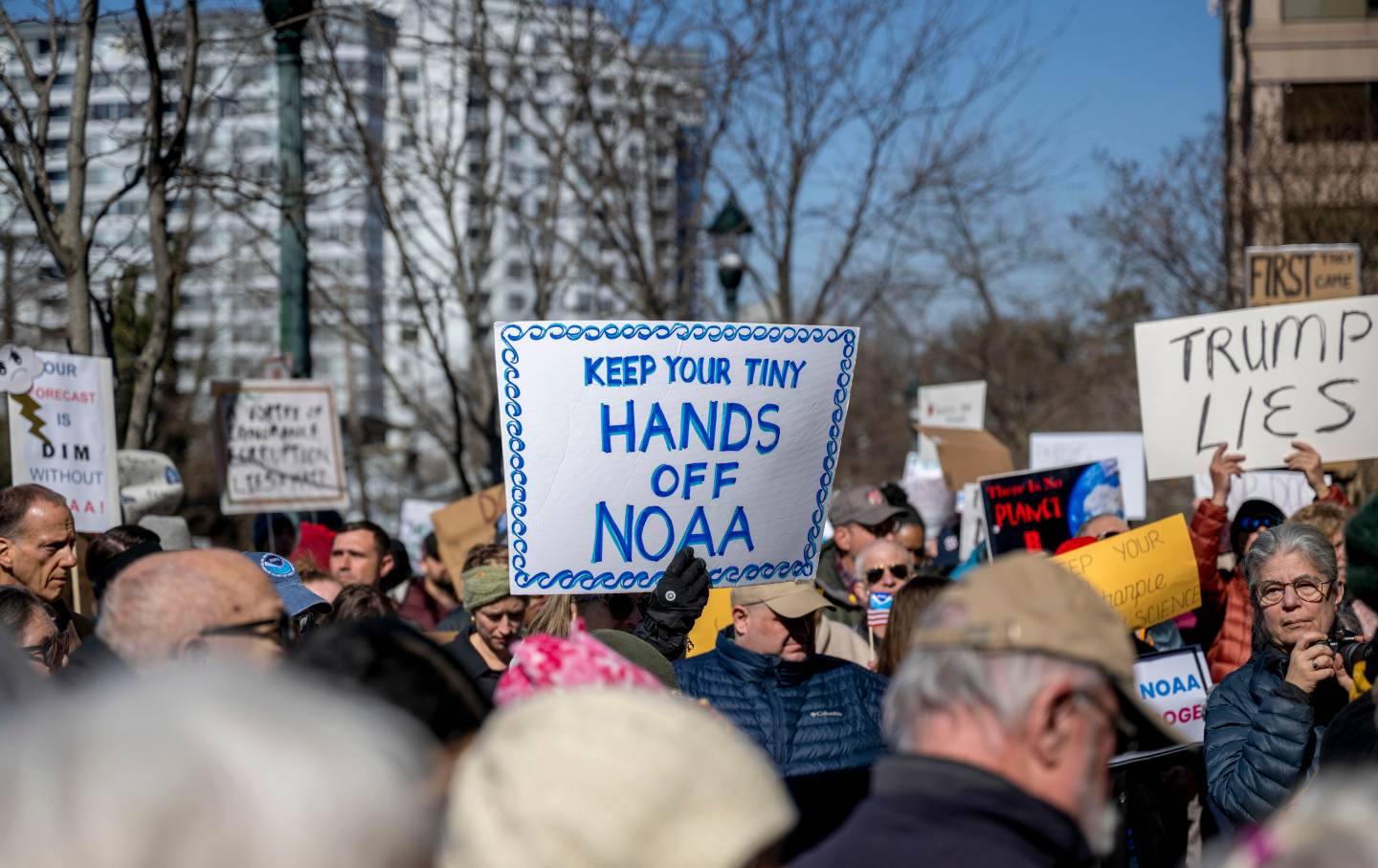
Protesters rally outside the National Oceanic and Atmospheric Administration headquarters in Silver Spring, Maryland, on Monday, March 3, 2025.
(Daniel Heuer / Bloomberg via Getty Images)
“There will be people who die.” That stark warning came last week from Daniel Swain, a climate scientist at the University of California, Los Angeles, after President Donald Trump sought to fire more than 800 employees of the National Oceanic and Atmospheric Administration (NOAA). As a former TV weathercaster myself, I know the same worry is shared throughout the professional meteorological community.
NOAA houses the National Weather Service, which provides the data and analysis that informs virtually all the weather forecasts Americans receive, whether via TV or radio broadcasts or their phone apps. Emergency alerts to coastal residents as a hurricane approaches? Warnings to farmers about an impending flood or heat wave? A winter weather advisory for mountain-bound ski vacationers? These and countless other lifesaving services are at risk if Trump succeeds with his order, which legal experts say violates US law, according to reporting by Inside Climate News.
“Going into the severe weather and hurricane season, this cannot be good,” Al Roker, the chief meteorologist for NBC News, wrote in a social media post responding to the NOAA layoffs.
The public deserves to know what’s at stake. To aid coverage of this developing story, it’s worth noting that NOAA is one of the best investments of taxpayer dollars on record. The National Weather Service’s annual budget of roughly $1.4 billion delivers an economic return in excess of $100 billion, according to one recent study. That’s not surprising, considering how directly the weather affects so much of the economy, including agriculture, air transportation, fishing, tourism, utilities, and commerce. To highlight this angle, reporters can explore the potential losses that companies, universities, and nonprofits may experience with further disruptions to the NOAA workforce. Think of airlines unable to steer their planes safely away from storms and farmers left unaware of an upcoming frost that threatens their entire season’s harvest.
Reporting can also point out that providing critical weather and climate information is just one part of NOAA’s work. Eat seafood? NOAA ensures that fish and shellfish from across the world are safe to consume. Enjoy a beach day? NOAA protects you from a number of marine impacts, including tsunamis (recent cuts included one scientist from this team). NOAA’s reach even extends beyond our planet, monitoring solar activity and “space weather” that disrupts global communications.
As climate change drives increasingly volatile and destructive extreme weather across the US and around the world, a reliable understanding of the climate-weather connection is critical to saving lives and ensuring that society can continue to function. Plainspoken journalism can make clear the consequences if this attempt to sabotage NOAA succeeds: People will die.
Become a Sustaining Donor This September
Between the reemergence of right-wing red-baiting and Donald Trump’s use of the chilling National Security Presidential Memorandum–7 to criminalize left political organizing, we’re seeing McCarthyism reborn before our eyes.
This assault on democracy cannot be ignored or wished away. Resisting it requires bravery in the face of threats and repression, a steadfast commitment to the truth, and the unwavering belief that we can—and will—overcome this darkness.
We must have an independent media that sets the record straight, unearths corruption and abuses of power, and advances a politics of justice and dignity for all if we’re to win this fight.
That’s why I’m writing to you today. This September, The Nation needs to add 100 monthly donors to sustain our progressive journalism. Your contribution makes the next investigative report, the next truth-speaking column, and the next pathbreaking essay all possible.
I hope you’ll support our work with a recurring donation today. If you donate $10 or more a month, we’ll send you a brand new “Hands Off the Free Press!” sticker to recognise your commitment to our cause. Please, donate today.
Onward,
Katrina vanden Heuvel
Editor and Publisher, The Nation