
“No One Wins on a Dead Planet”: A Former UN Climate Chief Loses Faith in Fossil Fuel Companies
At COP28, Christiana Figueres, the architect of the Paris climate agreement, said people must balance outrage and optimism.
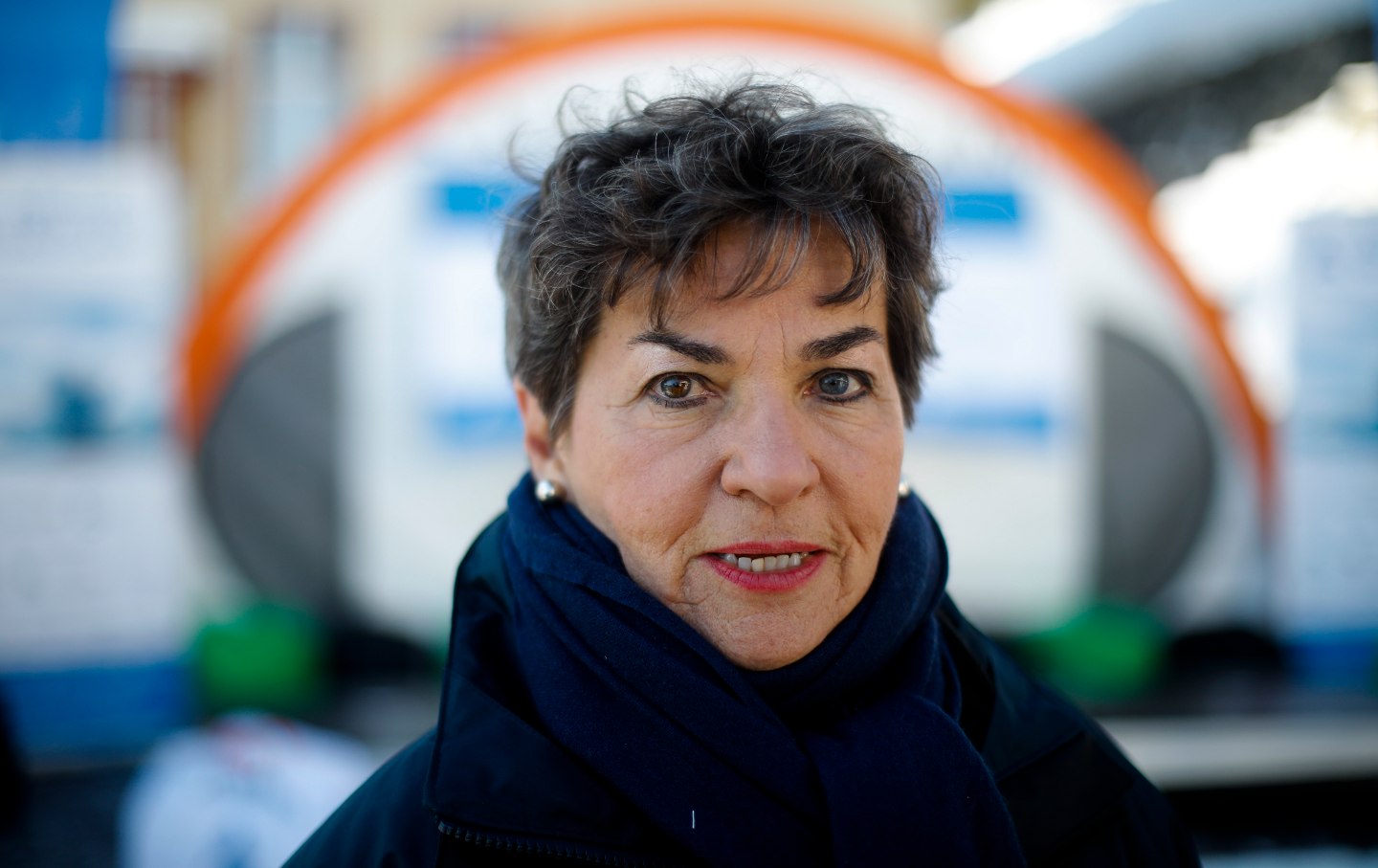
People must balance outrage and optimism after a “hellish summer” of extreme weather, the UN’s former climate chief has urged at the start of the COP28 climate summit.
“We have to keep the outrage really high because we are so darn late,” said Christiana Figueres, a veteran negotiator hailed as the architect of the Paris climate agreement. She pointed to the weak policies that governments have set to cut planet-heating pollution and the $7 trillion with which they directly and indirectly subsidize fossil fuels.
But there are reasons for optimism that can stop people falling into “a dark rabbit hole,” she added. “I do make a conscious choice every morning to say, ‘Yes, I know what all the bad news is’—that’s easy to get because that just screams at you from whatever newsfeed you have—but also, what is positive that is going out there? What are the disruptive pieces that are real, strong evidence of the fact that this is changing?”
Speaking to a small group of reporters on Monday, Figueres highlighted the plummeting cost of renewable energy and the growth of electric cars as two areas where positive changes are happening faster and faster.
But we are getting “horribly close” to tipping points, even if they have not become our destiny, she added.
Figueres, a Costa Rican diplomat who started working on climate in the mid-1990s, said that she feels moments of hopelessness, helplessness, and depression every day but that “it is not my dominant feeling and certainly not my dominant energy.”
“The moment that we give up and say, ‘OK, we’re doomed, we’re going above 1.5 C, I’m just going to crawl into my little cubbyhole and pull my blankets over my sheets’—then we have a self-fulfilling prophecy, for sure. Our responsibility here is to understand the threat and do everything within our power to avoid it.”
Her comments come as world leaders meet in Dubai for the 28th UN climate summit. At a previous summit in Paris in 2015, when Figueres was head of the UN body that oversaw the conference, governments signed a legally binding treaty to stop the planet heating 2º C above pre-industrial temperatures by the end of the century, and ideally 1.5º C. But in the eight years since, world leaders have continued to push policies that will clog the atmosphere with more carbon than many people and ecosystems can handle.
This year’s summit is hosted by the UAE, a major oil and gas producer. The COP28 president, Sultan Al Jaber, is the boss of the UAE’s national oil company, which plans to expand production of fossil fuels. Al Jaber and his supporters have argued that the industry is an important partner that deserves a seat at the table.
Figueres said that for many years she championed a similar attitude because fossil fuel companies have some of the deepest pockets and most skilled engineers. But her faith in them has waned since Russia’s invasion of Ukraine and the spike in energy prices that followed. Oil and gas majors that marketed themselves as part of the solution to climate change have used windfall profits to further enrich shareholders, while cutting their spending on renewable energy.
“That is unforgivable,” said Figueres. “I did lose, sadly, my hope with oil and gas companies because of the evidence that came forward over the past 12 to 24 months. Would we be in a much better position if they decided to invest their unparalleled engineering skill and their deep wallets to the solution space? Absolutely. Are they doing that? No.”
On Monday, the BBC revealed that the UAE has planned to use its role as the host nation to strike oil and gas deals during the conference, a claim the UAE has denied. In a post on X, formerly Twitter, Figueres said the COP presidency had been “caught red-handed” and called for more transparency and accountability.
Climate activists have criticized previous COPs because the deals struck have been far removed from what scientists have shown is needed to stop the climate from changing. It took 25 summits before governments were willing to name a fossil fuel in their concluding statement.
Figueres said there was a danger of people expecting results from the process that it had not been designed to deliver.
Popular
“swipe left below to view more authors”Swipe →“The COP was designed, and I say this because I was there and contributed to the design, the COP was designed to deliver multilateral agreements of all national governments coming together. To put guardrails, if you will, or to write a global business plan or whatever equivalency you want to use for the decarbonization of the economy.”
That task has been “substantially finished,” she said, though many important issues concerning money remain. But in terms of cutting emissions, “it is now time to move that on to national scale efforts and corporate efforts. That is where action needs to take place.”
Figueres also defended the COP process and the Paris agreement for not punishing governments that do not comply with their promises to stop the planet heating.
“Let’s just remember that we don’t have such a thing as an environmental police in the world,” she said.
When Canada failed to comply with the Kyoto protocol—an earlier treaty to cut greenhouse gas emissions that included fines for failure—Figueres received “a little note” from the then–prime minister saying he was taking his country out of the treaty. “There’s no point in having punitive measures in an international legal system that respects the sovereignty of all governments,” she said. “That will never change.”
But she added: “What leads to further action, frankly, is the realization that it is in enlightened self-interest to do the right thing. That is what led to the Paris agreement: When all countries realized, ‘Who’s going to win from a dead planet? No one wins from a dead planet.’”
Support independent journalism that does not fall in line
Even before February 28, the reasons for Donald Trump’s imploding approval rating were abundantly clear: untrammeled corruption and personal enrichment to the tune of billions of dollars during an affordability crisis, a foreign policy guided only by his own derelict sense of morality, and the deployment of a murderous campaign of occupation, detention, and deportation on American streets.
Now an undeclared, unauthorized, unpopular, and unconstitutional war of aggression against Iran has spread like wildfire through the region and into Europe. A new “forever war”—with an ever-increasing likelihood of American troops on the ground—may very well be upon us.
As we’ve seen over and over, this administration uses lies, misdirection, and attempts to flood the zone to justify its abuses of power at home and abroad. Just as Trump, Marco Rubio, and Pete Hegseth offer erratic and contradictory rationales for the attacks on Iran, the administration is also spreading the lie that the upcoming midterm elections are under threat from noncitizens on voter rolls. When these lies go unchecked, they become the basis for further authoritarian encroachment and war.
In these dark times, independent journalism is uniquely able to uncover the falsehoods that threaten our republic—and civilians around the world—and shine a bright light on the truth.
The Nation’s experienced team of writers, editors, and fact-checkers understands the scale of what we’re up against and the urgency with which we have to act. That’s why we’re publishing critical reporting and analysis of the war on Iran, ICE violence at home, new forms of voter suppression emerging in the courts, and much more.
But this journalism is possible only with your support.
This March, The Nation needs to raise $50,000 to ensure that we have the resources for reporting and analysis that sets the record straight and empowers people of conscience to organize. Will you donate today?
More from The Nation
The Iran War Is Also a Climate War The Iran War Is Also a Climate War
Climate change is not a peripheral part of what we’re seeing in Iran—it’s structurally embedded in modern warfare.
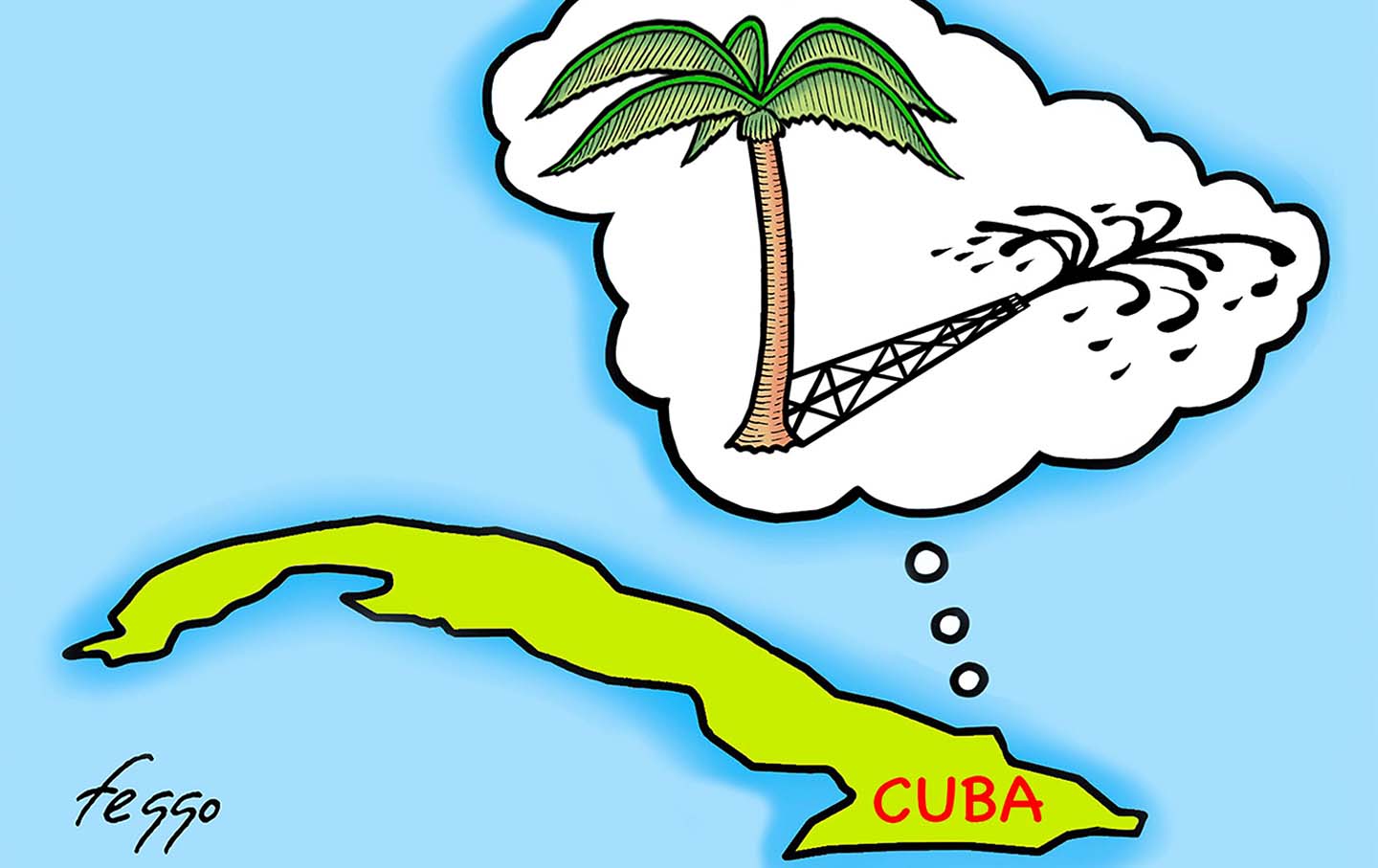
Cuba’s Oil Crisis Cuba’s Oil Crisis
Much of Cuba goes dark as a US oil blockade chokes the island’s energy supply. Major carriers have halted services now that aviation fuel is no longer available at nine internation...
The Planet-Sized Hole in Trump’s State of the Union Address The Planet-Sized Hole in Trump’s State of the Union Address
Although climate change received no attention during the president’s speech, Americans must continue to find new ways of making progress against the ongoing environmental crisis.
Japan’s New Climate Bomb—in the US Japan’s New Climate Bomb—in the US
Bloomberg Green reveals the climate costs of the US-Japan trade deal.
Do Humans Really Understand the World’s Disorderly Rivers? Do Humans Really Understand the World’s Disorderly Rivers?
In James C. Scott’s last book, In Praise of Floods, he questions the limits of human hegemony and our misplaced sense that we have any control over the Earth’s depleted watershed....
The Scramble for Lithium The Scramble for Lithium
Thea Riofrancos’s Extraction tells the story of how a critical mineral became the focus of a worldwide battle over the future of green energy and, by extension, capitalism.

