
How Larry Ellison’s Acquisition Binge Began in Hawaii
In 2012, the Oracle CEO bought most of the island of Lānaʻi. What happened next doesn’t bode well for his new empire of media properties.
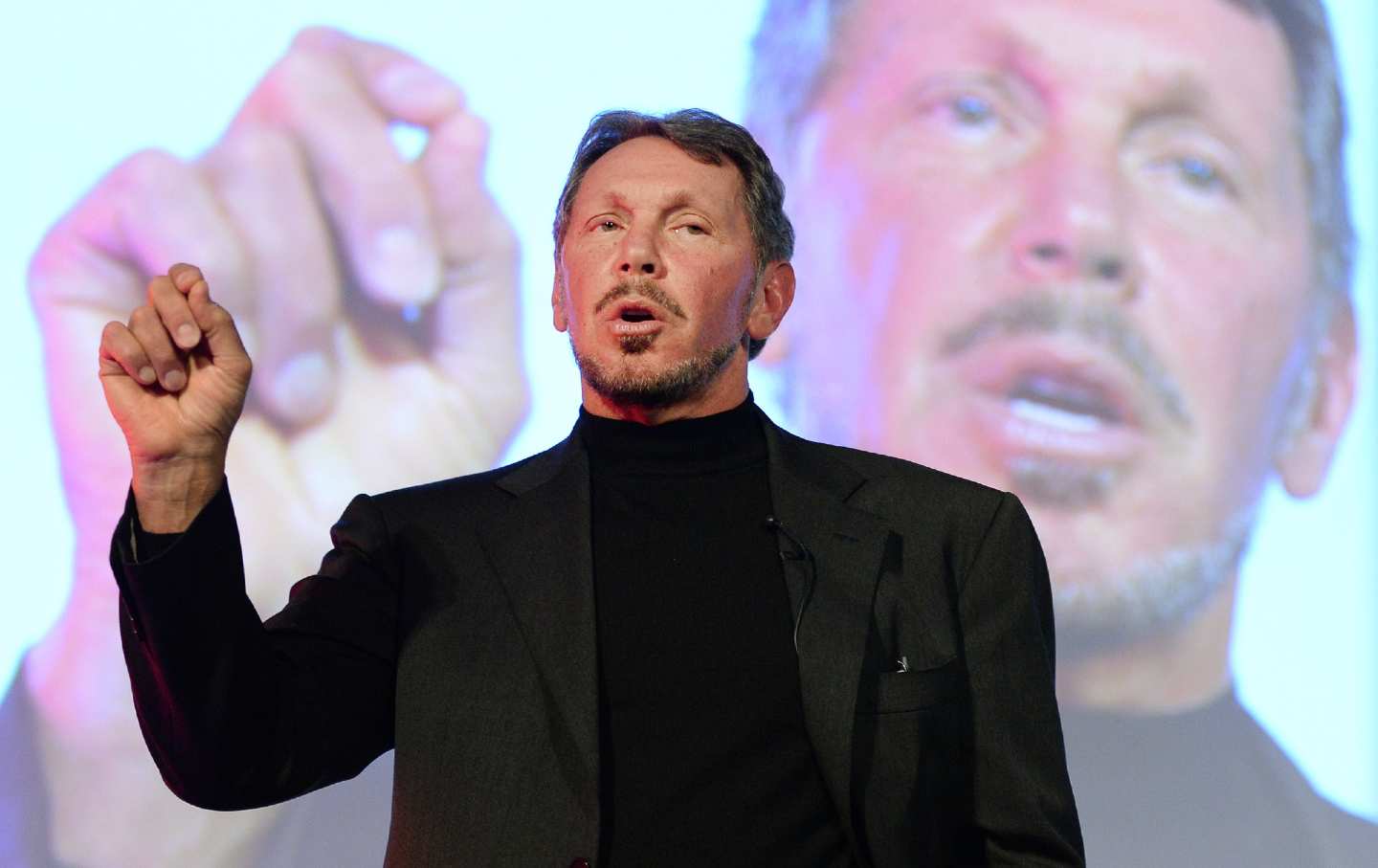
Oracle CEO Larry Ellison addresses the 2014 New Economy Summit in Tokyo.
(Toru Yamanaka / AFP via Getty Images)With a Borg-like grip on corporate media machinations, Larry Ellison and his son, David, are consolidating a vast and unprecedented communications empire. The billionaire Oracle founder launched this mergers-and-acquisitions binge last year, buying out the American arm of TikTok, after Congress mandated its sale to a US buyer in a fit of anti-Chinese paranoia. Then came the $8 billion Skydance-Paramount merger, which delivered CBS News into the hands of the unqualified MAGA shill Bari Weiss at David Ellison’s executive behest. And Paramount Skydance, as the merged company is now known, is planning to add Warner Bros.–Discovery to its media empire after a prolonged bidding battle with Netflix—a move with potentially “apocalyptic” consequences for the struggling film industry, according to David Dayen of the American Prospect. The current deal, valued at a cool $111 billion, will certainly mean seismic layoffs in Hollywood, which is already reeling from the fallout of the streaming revolution.
If the Warner deal goes through, the Ellisons would own, among other things, the US arm of TikTok, DC Comics, the Harry Potter franchise, HBO, and a majority of cable news channels, including Donald Trump’s long-standing “fake news” obsession, CNN.
Yet the Ellison media putsch isn’t ultimately rooted in MAGA politics so much as in Larry Ellison’s drive for maximum vertically integrated monopoly power. Indeed, for all the ideological destruction David Ellison has wrought at properties like CBS, he’s reportedly not a diehard Trumpist, professing “socially liberal” sympathies while having donated $1 million to Joe Biden’s abortive 2024 reelection campaign. What the Ellisons covet is control, and to understand how deep that family drive runs, it’s instructive to turn away from the current boardroom drama and review another full-court press Larry Ellison mounted to gain quasi-feudal dominion over the Hawaiian island of Lānaʻi in 2012.
Ellison’s designs on Lānaʻi began with the once-sleepy island’s emergence as an ultra-luxe travel destination for the high-rolling set. Unlike many other Silicon Valley moguls, the Oracle billionaire isn’t an ideological adherent of the libertarian right’s “networked state” fantasies of secession from the regulatory reach of traditional nation-states. But that’s arguably because he’s already achieved that dream on Lānaʻi; without needing to advertise it on X posts or online manifestos, Larry Ellison acts as lord and master of his own fiefdom.
Lānaʻi has long endured the fantasies of aspiring oligarchs seeking to remake the island in their preferred image. At first sight, it’s an unlikely theater for such ambitions—a quiet working-class community of approximately 3,000 residents on a mere 141 square miles. With no traffic lights and only 30 miles of paved road, it is one of the few remaining islands in the state to qualify as “authentically” Hawaiian.
Lānaʻi gained prominence in the early 20th century, when it was first developed as a pineapple plantation. In 1922, James Drummond Dole purchased the island from the Baldwin family, who experimented with both large-scale ranching and smaller-scale farming there. James Dole already had experience in the pineapple business on Oahu, and his Hawaiian Pineapple Company—later known as Dole—was rapidly expanding. It helped that the Dole family was quite influential in the days when Hawaii was administered as a territory; James’s cousin once removed, Sanford Ballard Dole, was instrumental in the overthrow of Queen Liliuokalani and the abolition of the Hawaiian monarchy. With good reason (if limited self-awareness), James liked to call Lānaʻi his “pineapple kingdom.”
Before long, Lānaʻi was home to the world’s largest pineapple plantation, exporting 75 percent of all pineapples globally. Like the other Hawaiian islands, it drew workers mostly from the Philippines and Japan. These immigrant workers combated brutal working conditions and apartheid-like segregation. Plantation life was so appalling that in 1940, a National Labor Relations Bureau field representative reported that there was no “truer picture of Fascism anywhere in the world than in the Hawaiian Islands.” During its ownership, the Dole corporation ran Lānaʻi as a company town, controlling almost all the housing and travel to and from the island.
But soon, Lānaʻi’s workers would take the initiative, beginning with an abortive five-day strike in 1947. A few years later, in 1951, 800 Lānaʻi pineapple workers went on strike for 201 days. Known as the Great Pineapple strike, the labor action helped spark the rise of both the territory-wide labor union, the International Longshore Warehouse Union (ILWU), and the state’s Democratic Party. However, after its historic 1954 victory in both houses, the Democratic Party declined to initiate any large-scale land reform to break up the plantations. The ILWU eventually unionized a majority of Hawaii’s agricultural workforce—making Hawaii the first and only state to do so.
In the mid-1980s, David Murdock, CEO of Castle & Cooke, purchased Lānaʻi. Murdock oversaw the island’s transition away from pineapple cultivation, which officially ended in 1992. During his three decades’ reign over Lānaʻi, Murdock ran the island as a micromanaging autocrat, referring to residents as his “children.” He was forced to sell to Ellison in 2012 after his continued failure to realize a profit from any of his pet projects, including a bid to build between 100 and 200 “enormous” wind turbines over ancient petroglyphs and ancestral bones. As Murock ran up yearly losses between $20 and $40 million, his properties on the island suffered severe neglect. “This is the poorest financial investment I’ve made in my entire life,” he lamented to Lānaʻi Today. The shambolic state of the island allowed Ellison to take it off Murdock’s hands for a bargain-basement price of $350 million (approximately 16 cents per square foot or $7,000 per acre).
When the island’s sale to Ellison was announced, at least some residents anticipated positive changes—much as one supposes that CNN employees are now trying to boost their own morale as they also frantically update their résumés. A year after the sale, Ellison was wrapping up a charm offensive that had him meeting personally with many Lānaʻi residents. One of the first things Ellison did as lord of the island was to reopen and renovate a community swimming pool to a condition “worthy of a five-star resort,” according to Honolulu Magazine. The writer of that piece, David Thompson, observes that this gesture would seem to run against Ellison’s “cut-throat, scorched-earth approach to business.”
Ellison told the eager Hawaiian press that he had envisioned buying the island ever since he’d flown over it as a child. But a more mundane and plausible explanation is simple billionaire rivalry: In 1994, longtime software rival Bill Gates held his wedding there in an extra-private ceremony, having booked all airline tickets and hotels; Duane Shimogawa of the Pacific Business News theorized that Ellison wanted control over his fellow monopolist’s playground. Meanwhile, Jeffrey Epstein’s personal psychologist, Stephen Alexander, suggested via e-mail that Ellison bought the island out of jealousy of Epstein’s Little St. James.
Whatever his motivation, Ellison soon asserted control over nearly every aspect of life on the island. He acquired not only 98 percent of Lānaʻi ‘s land but also control of its two Four Seasons resorts, a golf course, its utilities, the car rental agency, the only supermarket, a solar farm, and a third of the island’s housing. He had also owned the island’s only airline, though he sold his controlling interest in 2016, leading to its closure. (Only privately chartered flights operating through the Ellison-owned Lānaʻi Air fly to the island now, leaving natives to take the ferry to and from Maui.)
Like Dole, he was now king of the island. As he set up his feudal lordship, he, like much of the rest of Silicon Valley’s power elite in the Obama years, was aligned with the Democratic Party. So he sought to romance the community with a vision of Lānaʻi as a benevolent “laboratory for sustainability and businesses on a small scale,” according to the Honolulu Star-Advertiser. In a softball interview with Hawaii News Now, Ellison did his best not to come across as a colonial overlord. He promised, among other things, to convert aging utilities to “solar, photovoltaic and solar-thermal,” and envisioned desalination facilities to support drip irrigation for what he predicted would be an island-wide boom in organic farming. To set all these grandiose plans in motion, Ellison also said he wanted to double Lānaʻi’s population to 6,000. Working-class locals would gain access to formerly bespoke amenities such as a tennis academy open to both amateurs and professionals, while zipping around the island in electric cars. Ellison even announced plans to build a massive research university on 524 acres south of Lānaʻi City. Locals had no input into the tech lord’s patrician plans for the island—and virtually no advance notice of them.
In any event, all the fast talk of a green-tech makeover for the island was for nought. Instead of ushering in an organically sourced utopia, Ellison accelerated Lānaʻi’s conversion into a luxury tourism destination—and one of the first casualties of his expansion into luxe hospitality was the island’s sensitive ecology. One resident, Solomon Pili Kaho’ohalahala, told Bloomberg that since Ellison took charge of things in Lānaʻi, he’d done little to control the invasive deer population or protect the coral reefs. So far, Lānaʻi has only six greenhouses—a far cry from the island-wide traffic in organic produce and livestock that Ellison imagined as a major revenue source for the island 14 years ago.
The next major casualty of Ellison’s excellent Lānaʻi adventure was the island’s already daunting cost of living. With most of the island’s renovation work directed toward luxury resorts, locals are fighting to make ends meet. Neither the island’s desalination plant nor the research university has broken ground. The tennis academy was transformed into a “tennis optimal well-being program” with a single day of one-on-one tennis classes costing $1,755 per night, combined with a stay at the Sensei retreat.
Popular
“swipe left below to view more authors”Swipe →Contrary to his vague promises to support small businesses, Ellison now rents out 30-day leases instead of administering five-year ones, exploiting his role as the island’s landlord and employer. Ellison-owned businesses have been known to cut prices against their long-time mom-and-pop competitors, destroying independent entrepreneurship outside the Ellison cartel. In 2022, the island’s median family income was only $59,000, while payments for the average two-bedroom home ran more than $2,000 a month. Pulama Lānaʻi—the Ellison-owned company that manages island affairs and employs more than 10 percent of the population—will launch an ostensible civic project like a Montessori school, only to turn around and demand that parents pay an eye-watering $895 in monthly tuition.
Meanwhile, Ellison has showered his tropical largesse on the rich and famous. Elon Musk has been an honored guest, as has Tom Cruise, who allegedly flipped and totaled one of Ellison’s cars while driving on an unpaved road. In 2021, the longtime prime minister of Israel, Benjamin Netanyahu, visited. A close confidant of Ellison, he apparently enjoyed taking Pilates classes at the Four Seasons. The harbors that once brought immigrant laborers from the Philippines and Japan to work are now filled with yachts and boutique racing sailboats. Many Lānaʻi families have left, simply because they no longer see a future for themselves there.
In keeping with his heightened MAGA profile, Ellison has mostly decamped from his home base in Lānaʻi in favor of Palm Beach. Now Ellison keeps himself busy with improvements to his mansion in Palm Beach County. He replaced his property’s dock with a larger structure to accommodate his 88-meter yacht (christened by its former owner “Izanami” in honor of a Japanese Shinto deity, and frantically renamed by Ellison once he realized it spelled “I’m a Nazi” backward). He also plans to construct a personal golf course, in seeming mimicry of his presidential neighbor, who’s now a 20-minute drive away. His last recorded flight from Lānaʻi was in late 2023.
Lānaʻi’s tour through the Larry Ellison wringer confirms another key MAGA-adjacent truth: The Oracle monarch is, much like Trump, a pure con man at selling people on his wonder-working powers, and a vulgar capitalist in his actions. That makes for a sobering moral for the beleaguered Warner-Discovery employees bracing themselves for the Ellison clan’s next marquee acquisition. If Ellison somehow doesn’t manage to run his new properties into the ground via layoffs and debt, he will use them to serve the constituency he knows best: the ultra-rich. Even with him as an absentee overseer, Lānaʻi residents are painfully aware they are little more than members of Larry Ellison’s servant caste. To paraphrase Sir Thomas More’s depiction of enclosure-era England, Lānaʻi is the island where resorts devour men. Besieged media workers, take close heed.
Support independent journalism that does not fall in line
Even before February 28, the reasons for Donald Trump’s imploding approval rating were abundantly clear: untrammeled corruption and personal enrichment to the tune of billions of dollars during an affordability crisis, a foreign policy guided only by his own derelict sense of morality, and the deployment of a murderous campaign of occupation, detention, and deportation on American streets.
Now an undeclared, unauthorized, unpopular, and unconstitutional war of aggression against Iran has spread like wildfire through the region and into Europe. A new “forever war”—with an ever-increasing likelihood of American troops on the ground—may very well be upon us.
As we’ve seen over and over, this administration uses lies, misdirection, and attempts to flood the zone to justify its abuses of power at home and abroad. Just as Trump, Marco Rubio, and Pete Hegseth offer erratic and contradictory rationales for the attacks on Iran, the administration is also spreading the lie that the upcoming midterm elections are under threat from noncitizens on voter rolls. When these lies go unchecked, they become the basis for further authoritarian encroachment and war.
In these dark times, independent journalism is uniquely able to uncover the falsehoods that threaten our republic—and civilians around the world—and shine a bright light on the truth.
The Nation’s experienced team of writers, editors, and fact-checkers understands the scale of what we’re up against and the urgency with which we have to act. That’s why we’re publishing critical reporting and analysis of the war on Iran, ICE violence at home, new forms of voter suppression emerging in the courts, and much more.
But this journalism is possible only with your support.
This March, The Nation needs to raise $50,000 to ensure that we have the resources for reporting and analysis that sets the record straight and empowers people of conscience to organize. Will you donate today?
More from The Nation
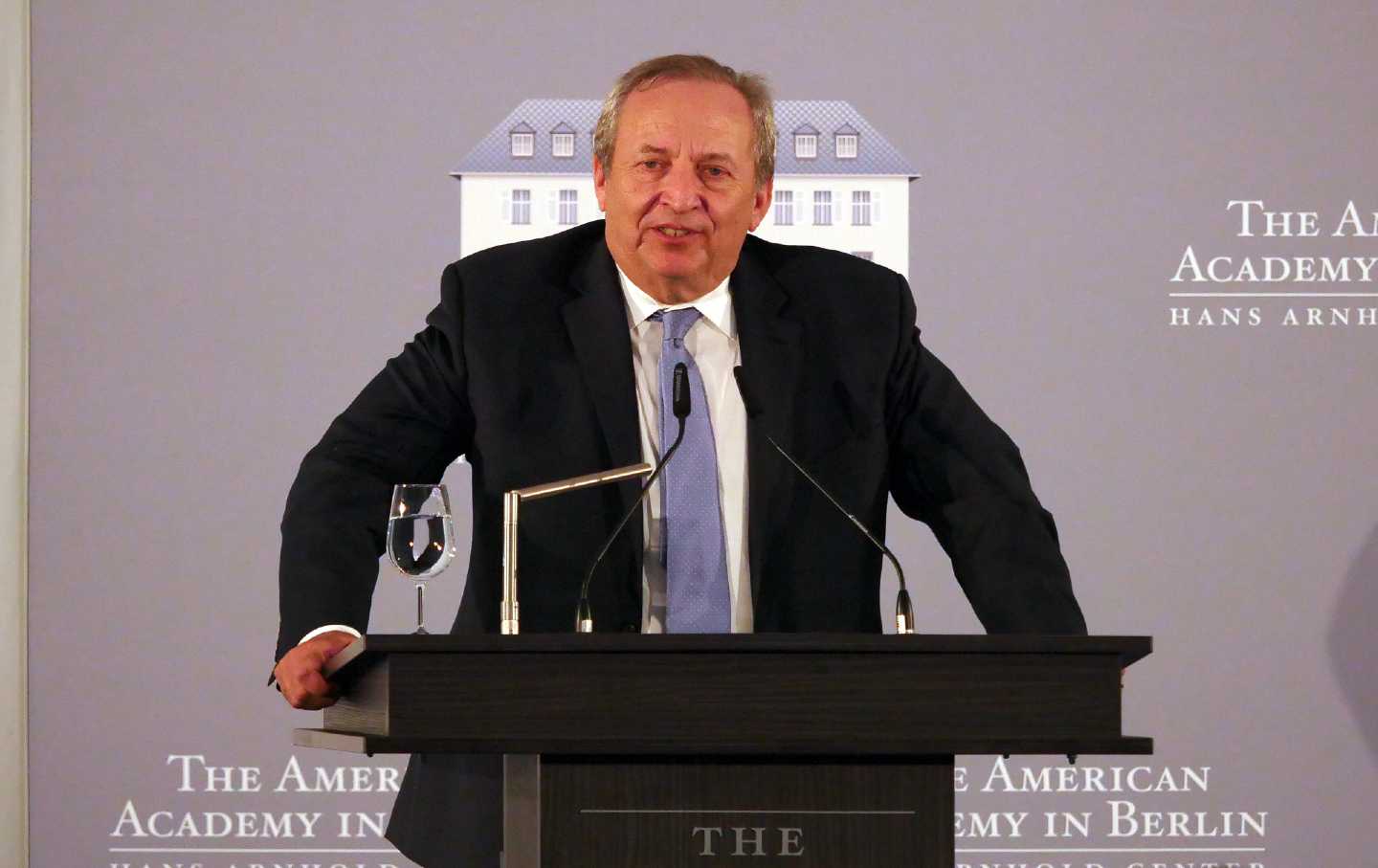
Larry Summers, We Knew Ye Too Well Larry Summers, We Knew Ye Too Well
The former Harvard president and Treasury secretary has resigned over humiliating disclosures in the Epstein files. But will that be enough to keep an ardent neoliberal down?
Binance’s MAGA-Branding Strategy Binance’s MAGA-Branding Strategy
The world’s largest crypto exchange often operates beyond the reach of the law. Now it’s helping to enrich the Trump family.
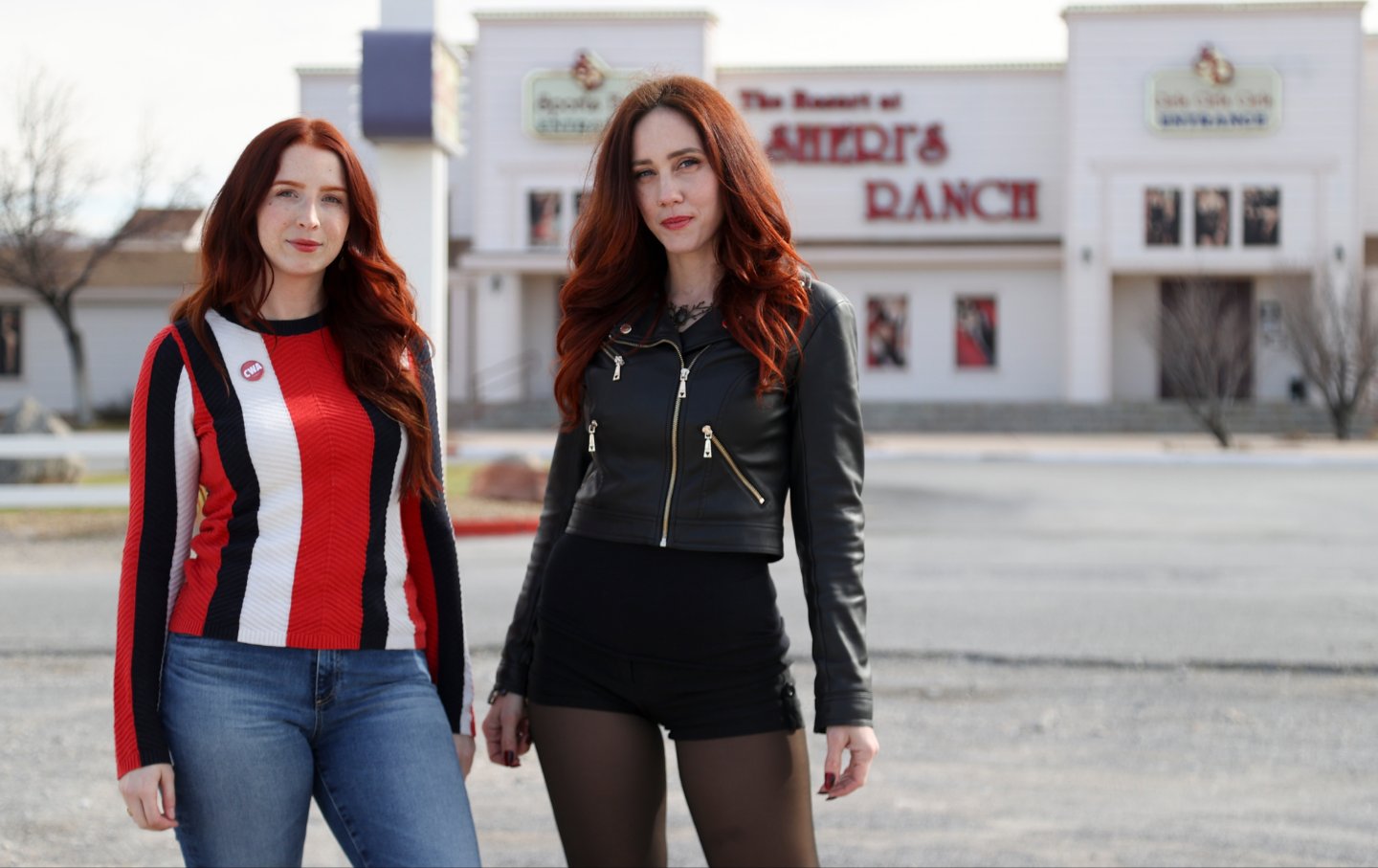
How Brothel Workers in Nevada Just Made Labor History How Brothel Workers in Nevada Just Made Labor History
The courtesans at Sheri’s Ranch were staring down a horrifying new contract. So they did what workers everywhere do: They got organized.
Don’t Let Trump Fool You. The Economy Is Bad, and He Is to Blame. Don’t Let Trump Fool You. The Economy Is Bad, and He Is to Blame.
The Trump administration’s efforts to distract from the bad economy just divert attention from one dumpster fire to another.
Why Elon Musk’s Latest Mega Merger Is Little More than Vaporware Why Elon Musk’s Latest Mega Merger Is Little More than Vaporware
The tech mogul and would-be space pioneer is mashing up his properties once more in a deal that's unlikely to achieve escape velocity .
The Farmland Revolt The Farmland Revolt
America’s farmers are fuming over Trump’s tariffs. Democrats need to channel their anger.

