Poems / October 14, 2025

What We Talk About When We Talk About Cancer

Jane Zwart

Fishy, my mother calls her lymph nodes. She tells me
her voice box is a box full of cancer. She says once
a doctor spilled my brother’s tumor trying to take it out.

I search “cancer images” and my screen tiles and fills
with splattered burrs leaking radiance from under
their hems. Each has landed on the surface of a moon.

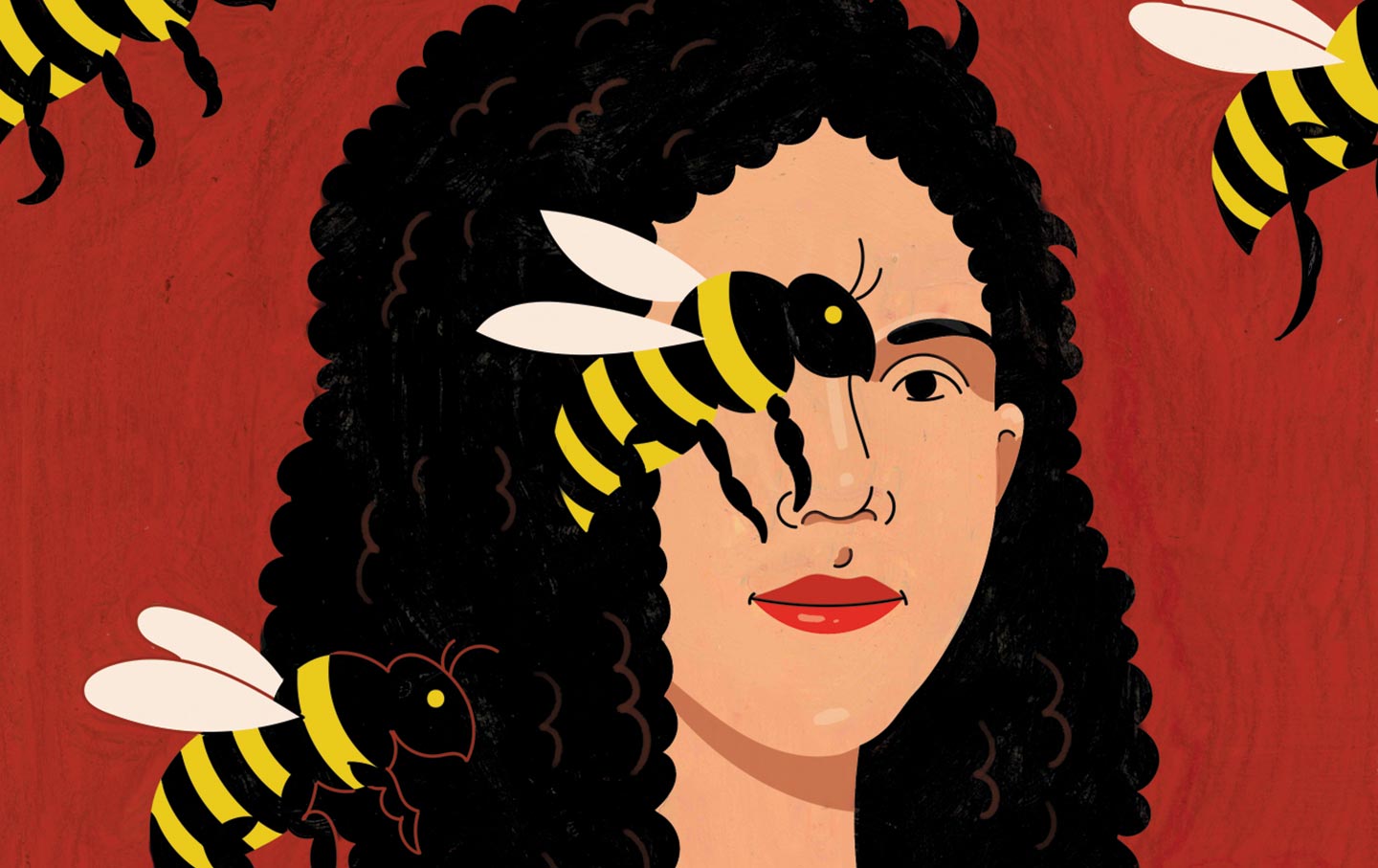
I think of the man who took the wasps’ nests down
from our eaves. I think of the two-sided utensil
with which my mom scooped cantaloupe into marbles—

some taws, some peewees—to suspend in jello. I do not
know whether the surgeon will scoop or scrape
my mother’s windpipe clean. But then, nothing rests

on my knowing whether a tumor is more bowl or balloon,
more shadow or lump. For that, there is the Canadian doctor
for whom my mom, at her second appointment,

wore a sweater knit white around a Norwegian Maple leaf.
I wanted to be remembered, she explains, this woman
who can’t run an errand without someone thrilling

to see her and trying to rally their kids: It’s her, the teacher
I told you about! Of course the oncologist who will take
my mom’s voice, exiling wasps, excising orb

from flesh, knows none of this. I can’t imagine anyone
forgetting you, I say, and Don’t cry, my mother says,
in the voice a stranger couldn’t tell from mine.
Your support makes stories like this possible

From Minneapolis to Venezuela, from Gaza to Washington, DC, this is a time of staggering chaos, cruelty, and violence. 

Unlike other publications that parrot the views of authoritarians, billionaires, and corporations, The Nation publishes stories that hold the powerful to account and center the communities too often denied a voice in the national media—stories like the one you’ve just read.

Each day, our journalism cuts through lies and distortions, contextualizes the developments reshaping politics around the globe, and advances progressive ideas that oxygenate our movements and instigate change in the halls of power. 

This independent journalism is only possible with the support of our readers. If you want to see more urgent coverage like this, please donate to The Nation today.

Jane Zwart

More from The Nation

A World War II–themed party held by the residents of Rose Mount, Birkby, 1986.

Barbara Pym’s Archaic England Barbara Pym’s Archaic England

In the novelist’s work, she mocks English culture’s nostalgia, revealing what lies beneath the country’s obsession with its heritage.

Books & the Arts / Ashley Cullina

Sir William Gell’s “The Removal of the Sculptures from the Pediments of the Parthenon by Lord Elgin,” 1801.

Why We’re Still Fighting Over Elgin’s Marbles Why We’re Still Fighting Over Elgin’s Marbles

In A.E. Stallings’s Frieze Frame, the poet retells the many conflicts, political and cultural, the ransacked portion of the Parthenon has inspired.

Books & the Arts / Nicolas Liney

Is it Too Late to Save Hollywood?

Is it Too Late to Save Hollywood? Is it Too Late to Save Hollywood?

A conversation with A.S. Hamrah about the dispiriting state of the movie business in the post-Covid era.

Books & the Arts / Kyle Paoletta

Melania Trump attends the premiere of “Melania” at the Kennedy Center in Washington, DC, on January 29, 2026.

The Melania in “Melania” Likes Her Gilded Cage Just Fine The Melania in “Melania” Likes Her Gilded Cage Just Fine

The $45 million advertorial abounds in unintended ironies.

Katha Pollitt

Nobody Knows “The Bluest Eye”

Nobody Knows “The Bluest Eye” Nobody Knows “The Bluest Eye”

Toni Morrison’s debut novel might be her most misunderstood.

Books & the Arts / Namwali Serpell

First lady Melania Trump at the Kennedy Center premier of

Melania at the Multiplex Melania at the Multiplex

Packaging a $75 million bribe from Jeff Bezos as a vapid, content-challenged biopic.

Elizabeth Spiers