
TikTok’s Incomplete Story
The company has transformed the very nature of social media, and in the process it has mutated as well—from tech unicorn to geopolitical chesspiece.
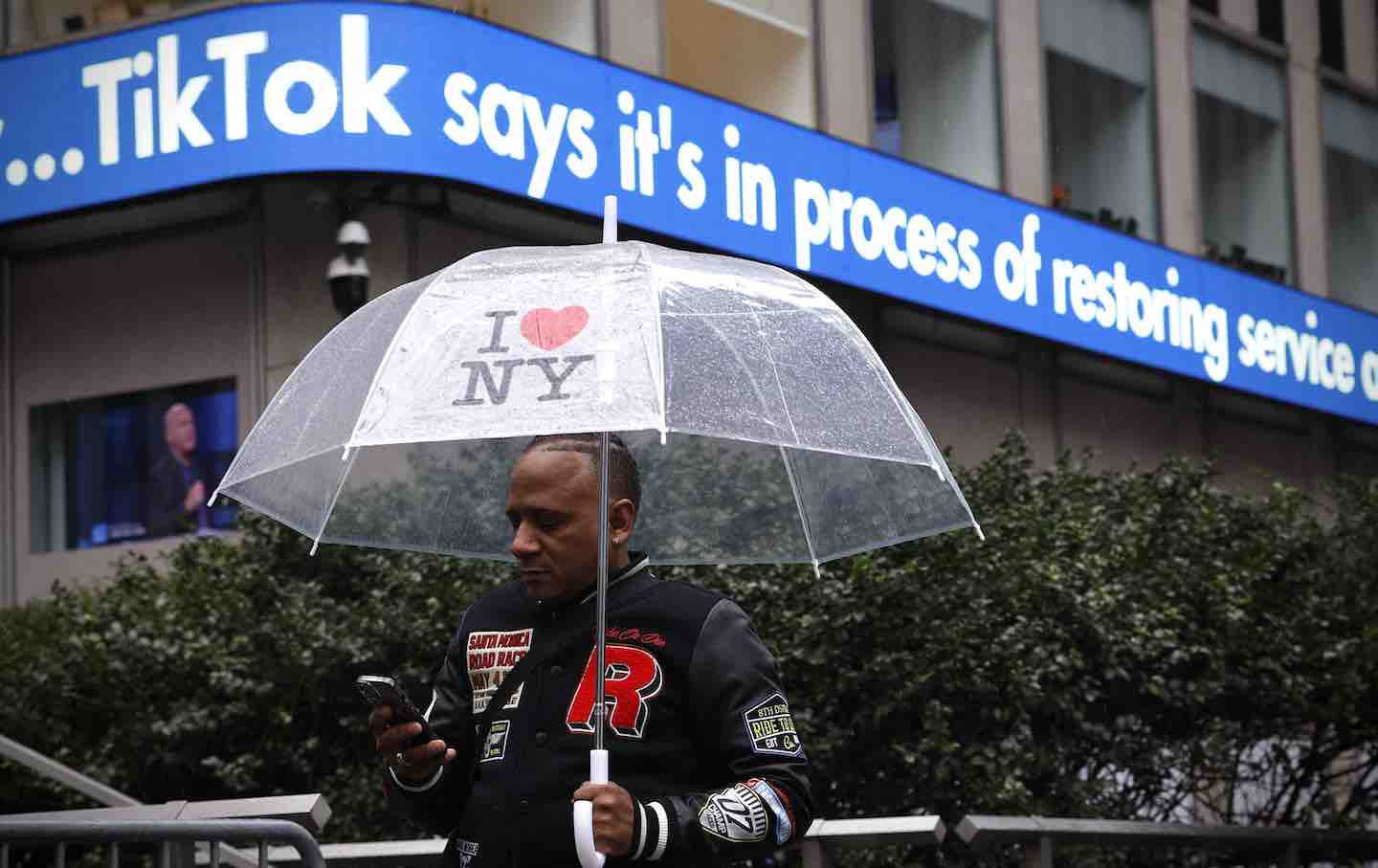
A display shows information about TikTok outside the Fox News building in New York City, 2025.
(Kena Betancur / AFP)TikTok’s adoption in the United States in 2018 marked a vibe shift in American culture. In the app’s early days, everyone’s house looked terrible—piles of laundry in the background, glaring light overhead—and it was common practice to scrunch your hoodie over your face and wear a pair of sunglasses to avoid the mortification of seeing yourself online. Seven years later, the world as it appears on-screen has changed—it’s become snappier, more lush. TikTok was instrumental in this shift; it was the only big social media platform that didn’t give you a prickly misanthropic hangover after using it for too many hours, so users acclimated. They learned to think in images, to self-produce and self-promote with a new level of sophistication. Users shared their dances, crafts, music, unsettling beauty hacks (mouth tape, beef-tallow facials), dangerous mono-diets (only bananas; only organ meat), niche schools of magical thinking (reality-shifting, the manosphere). Every niche found its niche audience. That’s one story of TikTok.
Books in review
Every Screen on the Planet: The War Over Tiktok
Buy this bookEvery Screen on the Planet, a recent history of TikTok by Emily Baker-White, tells another: All of this happened as the app teetered on the edge of the void, stuck between the incompatible interests of the United States and China as it grew to become indispensable to both. That an app this popular could have a future this uncertain presages the end of an economic paradigm. Both of these stories—of TikTok’s cultural history and its fraught politics—indicate what might be a fundamental incompatibility between a humane Internet and the structures that currently determine its shape, and what kind of world might emerge in its wake.
In 2012, Zhang Yiming, an abstemious Chinese computer engineer with an academic interest in hedonism, cofounded the tech company ByteDance. Developed on the theory that online habits were shifting from “people looking for information” to “information looking for people,” ByteDance trained its algorithms on masses of user data to predict what someone scrolling on their phone might want to watch—a passive, frictionless, intuitive user experience as compared to the active effort of a YouTube search. The company had multiple hits—in particular, the news aggregator Jinri Toutiao, one of the most popular apps in mainland China—and its apps also ended up in the crosshairs of a 2017 Chinese Communist Party campaign to bring social media more closely in line with state agendas, which led to a humor app called Neihan Duanzi being shut down for its “lowbrow” content.
Bytedance was, “if anything, late to the trend” of short-form video apps, Baker-White writes, when it launched A.me, the platform that would eventually become TikTok, in 2016. (In China, it was renamed Douyin; it merged with a lip-synching app popular with American tweens called Musical.ly in 2018 to form TikTok, the name it goes by in foreign markets. All apps are a bunch of nonsense names with erratic punctuation stacked on top of each other.) TikTok’s success, in its few years of existence, is seismic: It boasts 1.6 billion monthly users, or one in five people in the world. That rate is double in the US—some 40 percent of Americans are TikTok users.
Despite its popularity, US politicians have talked about banning TikTok for nearly as long as the app has been available in the country. (TikTok came online in the US in 2018, and in 2020, then–Secretary of State Mike Pompeo floated a ban in a Fox News interview.) The concern about a platform on which a fifth of US adults get their news being subject to foreign influence is not unfounded, especially after a 2017 Chinese national intelligence law removed legal limits that may have prevented the state from accessing data on Bytedance’s American users. Baker-White dedicates much of Every Screen to a period that began in 2022, when the app had become “too big to ban and too big not to ban”—hugely popular in the US, but facing a rare level of bipartisan consensus that keeping the app online could be disastrous.
TikTok arrived at this singular geopolitical position through a mix of vision and delusion, a formula familiar to readers of Silicon Valley yarns like John Carreyrou’s Bad Blood and Mike Isaac’s Super Pumped. There’s novelty in reading about a company that grew up far from Palo Alto crash-landing into a sensitive industry with a similar mix of hubris and malfeasance as an American start-up. For example, in its early days in the US, ByteDance filled an app with fake accounts, in what Baker-White calls “a social media Ponzi scheme,” to artificially boost engagement (“when [users] got there, the vibes were off,” she writes). On a 2024 trip to Riyadh, TikTok CEO Shou Zi Chew tacitly condoned state censorship and promoted viral Dubai chocolate. Most seriously, the company spied on journalists who reported on the company, then denied it, then owned up to what it euphemistically called “the Misguided Effort.”
Every Screen is useful reading for those who were too exhausted to follow every twist and turn in TikTok’s existence over the last three years, or the app’s many users who missed the news entirely. In short: After years of negotiations, a bill that required TikTok to divest from Chinese ownership or face a nationwide ban was signed into law in 2024. It went into effect on the final day of Joe Biden’s presidency, which led to the app going dark for a 14-hour period in which many users (including myself) downloaded the Chinese app Xiaohongshu, aka “Little Red Book,” in half-ironic protest. Incoming President Donald Trump restored the app’s availability, then declined to enforce the ban for eight months; this was all ambiguously legal, but it was far enough down the list of legally dicey Trump actions that little happened to counter it.
On some level, you have to feel for Baker-White: Writing a history of TikTok at this moment might be an impossible task. The book’s final chapter takes us through April 2025, with another threat of a ban amid tariff negotiations with China. Then, in September, Trump announced a proposal to spin off a US version of TikTok, something that Baker-White dismisses in the book as unlikely due to the complexity of unwinding TikTok’s algorithm from Bytedance’s oversight. While the deal is still pending, three investors have signed on thus far: a Saudi state AI fund chaired by a billionaire royal with a history of surveilling human-rights activists (the same fund that bought $2 billion of a Trump-affiliated cryptocurrency in May); the private equity firm Silver Lake capital; and the cloud-services company Oracle, founded by close Trump ally Larry Ellison. (Oracle will also manage the security of US user data.) The last three years of TikTok fill half the book; you wonder whether the next six months could fill another.
This is Every Screen’s biggest weakness: As the story of a clusterfuck that is still ongoing, it’s well-reported but thin on analysis. In the midst of the melee, it’s hard to say which battles and gambles of TikTok’s first years will end up mattering. The stakes of the app’s future are, at this point, largely theoretical: Although the company has misused personal data, Baker-White finds no evidence that it did so on a large scale or at the behest of the CCP. Although concerns about data security hang overhead like a sword of Damocles, China’s social media influence operations in the US have been so clumsy and weird that they have mostly failed to gain organic traction thus far; it is hard to imagine the CCP wrangling the brain-rotted, irony-pilled American Internet toward any particular aim. It’s certainly possible that TikTok could be used for sinister ends in the future, but specifically how and why remains unclear.
Left unaddressed in Every Screen is the most intriguing part of TikTok’s rise: By presenting an alternative to Meta and Twitter TikTok challenged the idea, pervasive in the early 2020s, that social media’s destiny was terminal decline, what the extremely online would call a “vibe sink.” Before TikTok took off in the United States, I and many others took for granted that social media had become a place you hate but can’t escape, somewhere between a high school cafeteria and purgatory. Gone were the days when posting was fun, but social media was so deeply embedded in social life that logging off felt akin to moving to an off-the-grid homestead in the woods.
But in the past few years, that has started to change: A recent Financial Times analysis found that global social media use peaked in 2022 and has been declining ever since, with the sharpest drop among Gen Z, who increasingly view it as a negative force on their peers’ mental health. It’s hard to determine TikTok’s place within that shift, but it is structurally easier to disengage from the app—the user’s social network is less central to their experience, and there’s little obligation to post. You can use it without stirring up the insecurity involved in being perceived. Yiming’s idea of “information looking for people” may have fixed something about social media; it may also have helped break the compulsion to use it.
Ironically, Trump’s plan to hand over the app to his political allies represents a more immediate threat to its users than the hypothetical risk of CCP manipulation. A week before the TikTok deal was announced, Trump opined to a group of reporters that TV coverage critical of his policies was “really illegal,” and that “when 97 percent of the stories are bad about a person, it’s no longer free speech.” It’s an insane idea about the role of media in public life, one that would be much easier to test on an app run by Trump’s friends rather than a network of TV broadcasters protected by decades of regulation. TikTok has been used to great effect in political campaigns (see Zohran Mamdani’s mayoral run), and its potential for political influence has been noted by, among others, Benjamin Netanyahu, who said in a recent meeting with pro-Israel influencers that social media is a “weapon” for the “battlefields on which we are engaged” and that the TikTok sale may be “consequential” for the US perception of Israel’s genocide in Gaza.
Popular
“swipe left below to view more authors”Swipe →There is, of course, the possibility that none of this will matter. Baker-White spends a chapter on the tech critic Cory Doctorow’s theory of “enshittification”—the idea that, once an online platform reaches a critical mass of users, the company has no incentive to continue making that service better and will begin prioritizing advertisers and then short-term cash, entering a death spiral in which the platform becomes more and more unpleasant to use over time. (Facebook, with its glacial load speeds and creepy ads, is a classic enshittified platform.) The theory has another implication: Unlike a cable provider or a local grocery store, if you grow to hate a website, it’s fairly straightforward to never use it again. If TikTok becomes horrible—as is likely if its new owners tweak the algorithm to ensure that it’s sufficiently friendly to theTrump administration—people may just log off.
After half a century of neoliberalism and two decades of Web 2.0, it’s strange to consider that a popular app might cease to exist because two states are unwilling to let it exist outside of their control. If the end of TikTok is nigh—if it is banned or devolves—I wonder what could take its place, whether its prosocial spark could catch elsewhere. Maybe a decentralized, stateless platform for cat videos and craft tutorials. Or maybe we’ll look back on this panoramic slickness with sympathy and vague horror, as an artifact from another era, like a watch painted with glowing radioactive numbers, which in its time also felt like the future. Maybe we’ll all just get outside and touch grass.
More from The Nation
The Scramble for Lithium The Scramble for Lithium
Thea Riofrancos’s Extraction tells the story of how a rare earth mineral became the focus of a worldwide battle over the future of green energy and, by extension, capitalism.

“The Pitt” Shows Doctoring Uncensored “The Pitt” Shows Doctoring Uncensored
The second season tackles everything from the role of AI in medicine to Medicaid cuts. But above all, it is about burnout.
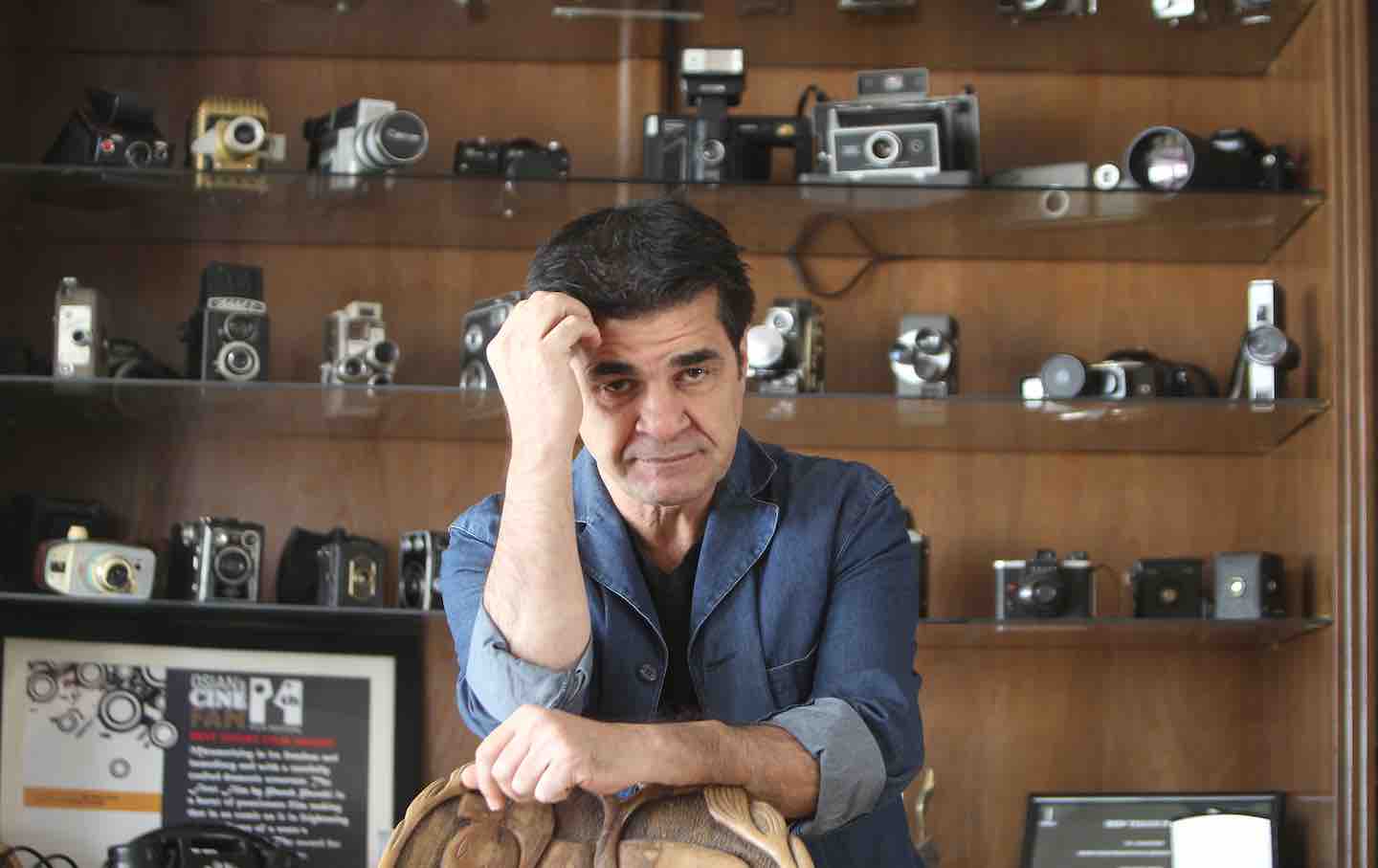
Jafar Panahi’s Scenes From a Crime Jafar Panahi’s Scenes From a Crime
His films show how a regime’s wrongdoing can upend one’s sense of self and transform the very rhythm of daily life.
Molly Crabapple's Time Capsule of Resistance Molly Crabapple's Time Capsule of Resistance
A new set of note cards by the artist and writer documents scenes of protest in the 21st century.
The Exposure Therapy of “A Private Life” The Exposure Therapy of “A Private Life”
In her new film, Jodie Foster transforms into a therapist-detective.

