Gallery / February 13, 2026

Molly Crabapple’s Time Capsule of Resistance

A new set of note cards by the artist and writer documents scenes of protest in the 21st century.
Molly Crabapple
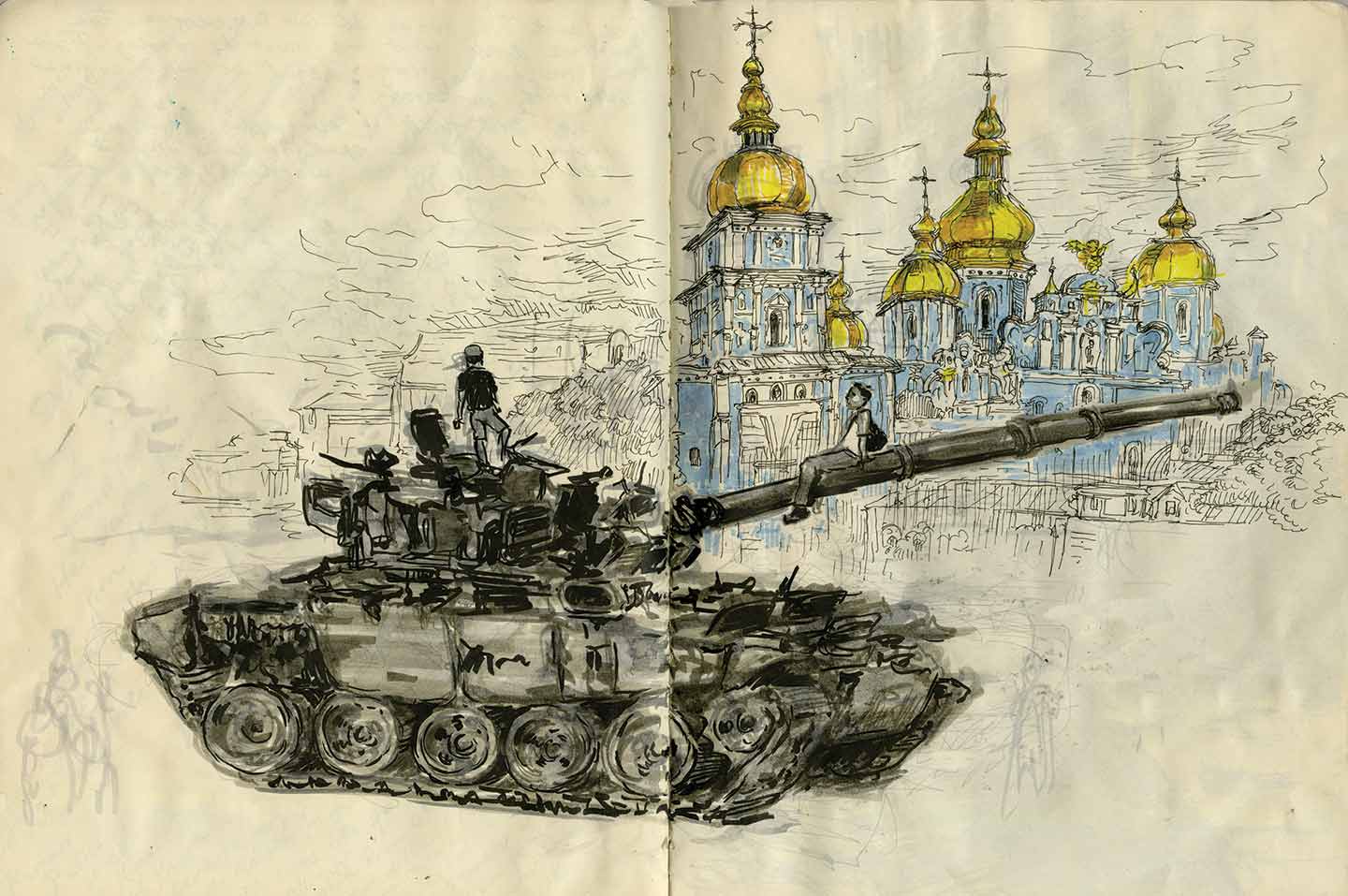
A destroyed Russian tank in front of St. Michael’s Golden-Domed Monastery (Kyiv, 2022).

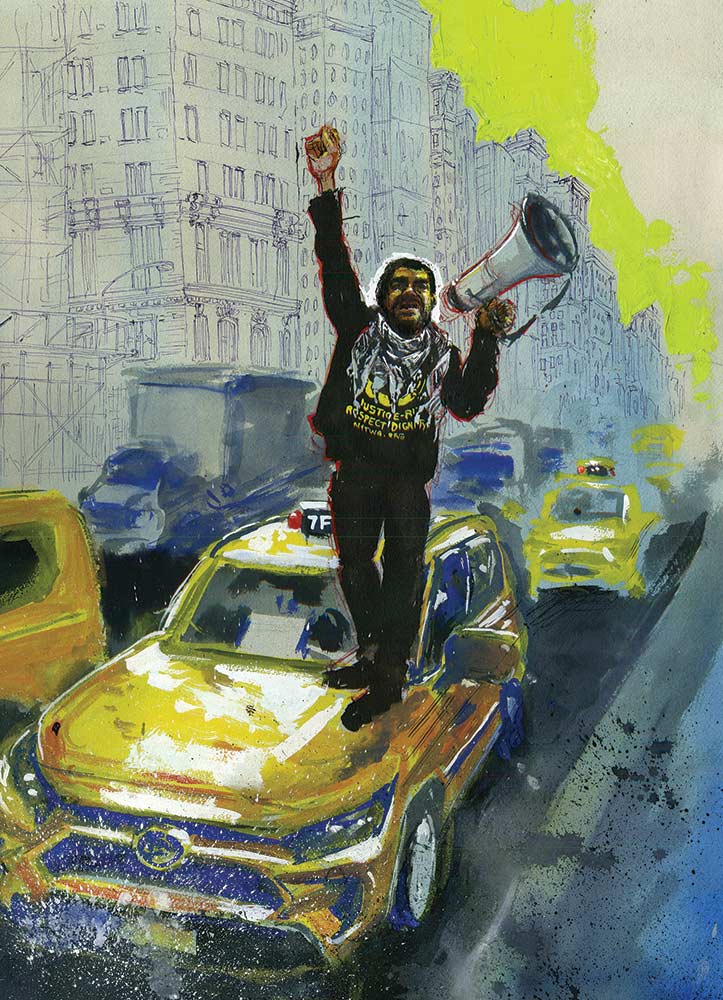
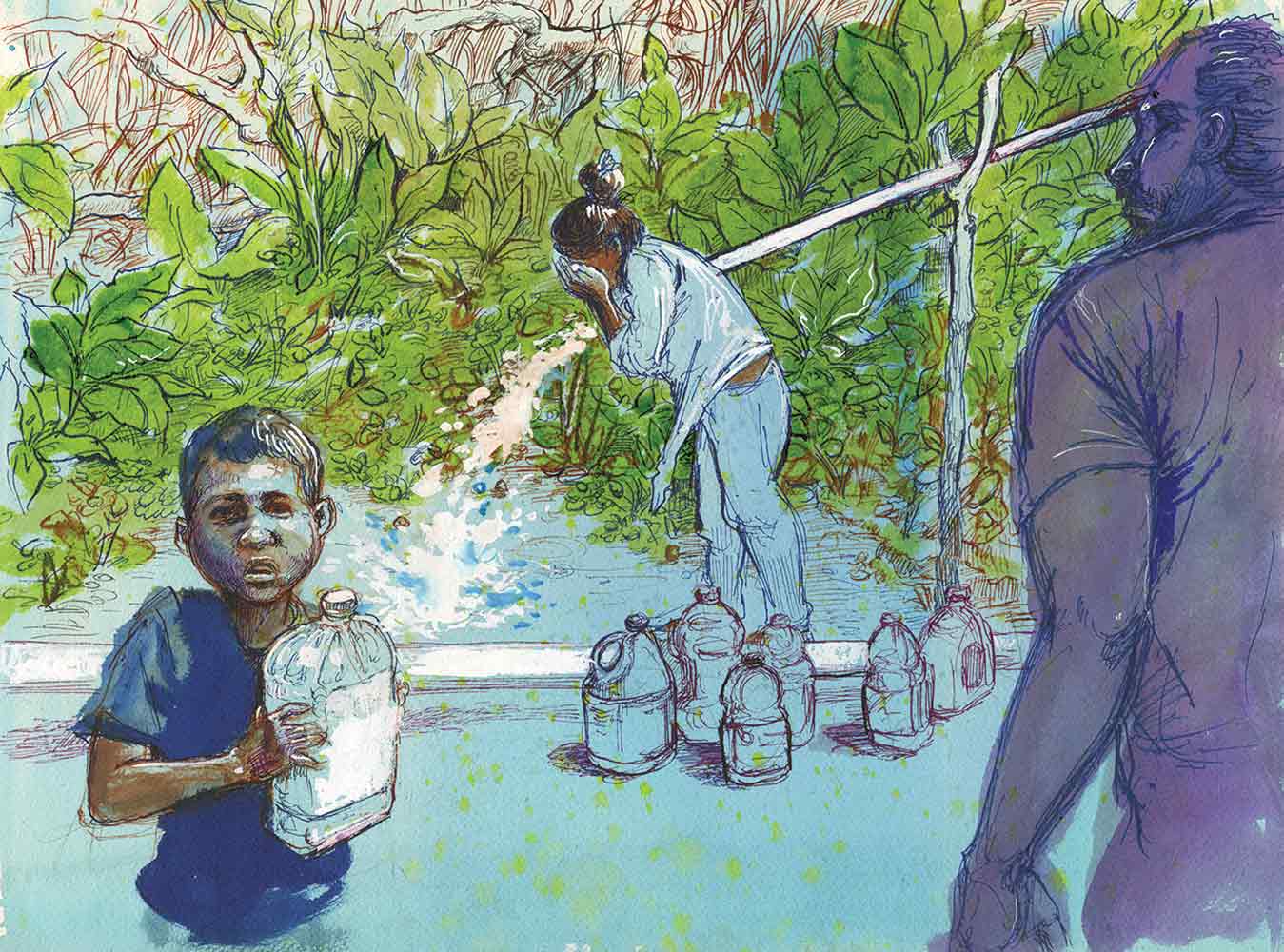
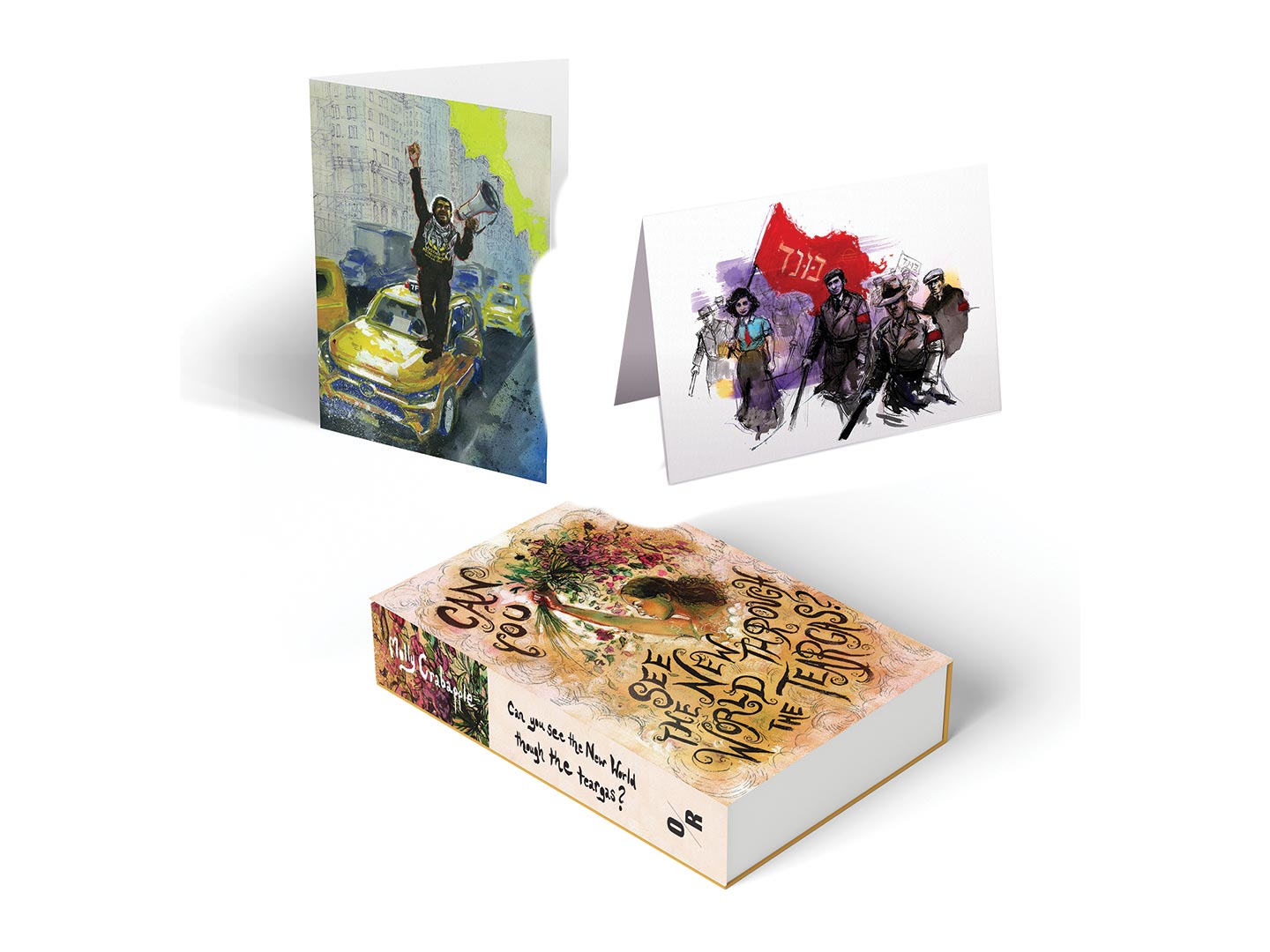
I’ve spent the past 15 years traveling around the world and documenting history as it happens. I use my sketch pad the way a photojournalist might use their camera: to capture scenes of protest, celebration, repression, and revolt. OR Books has gathered some of my favorite pieces for a collectible note-card set, titled Can You See the New World Through the Teargas? Use these cards to write love letters or ransom notes. Or get them framed for your wall. And remember: Every handwritten letter is a rebellion against Silicon Valley dystopia.

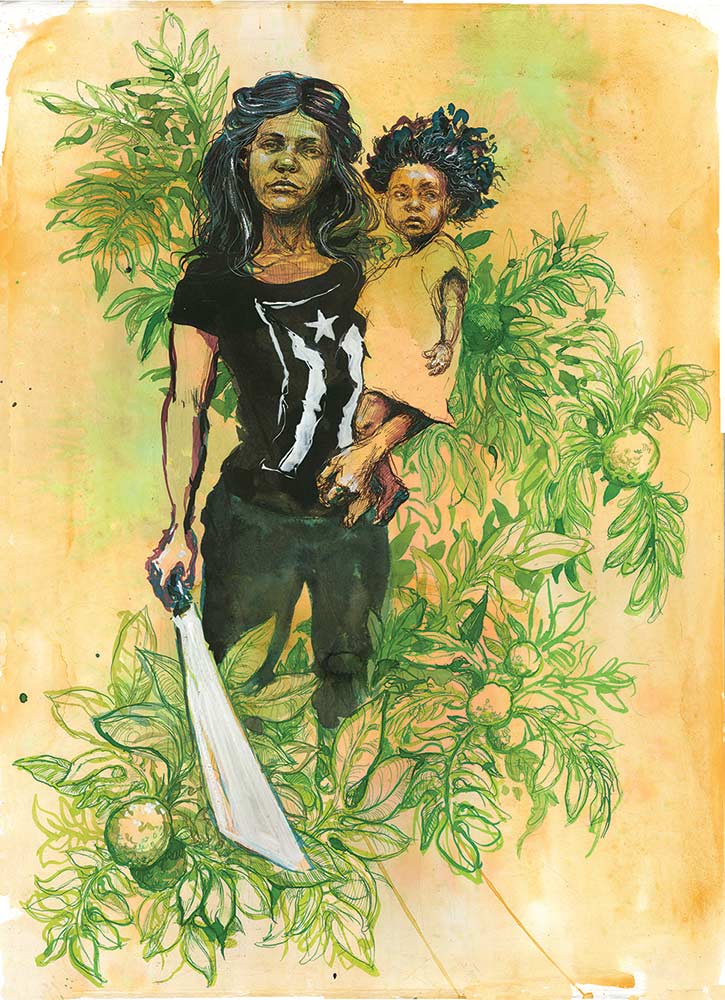
The pictures in this set range from kids playing with their kitten in the Aida Refugee Camp near Bethlehem, to a showtime dancer doing backflips in a New York City subway car, to images from the trial of Luigi Mangione. For all of them, I tried to use the lessons I first learned at 20 while sketching next to the stages of underground nightclubs. Each fleet-­footed second is a universe of impossible richness. Look hard. Draw fast. Be ruthless. Get it right.
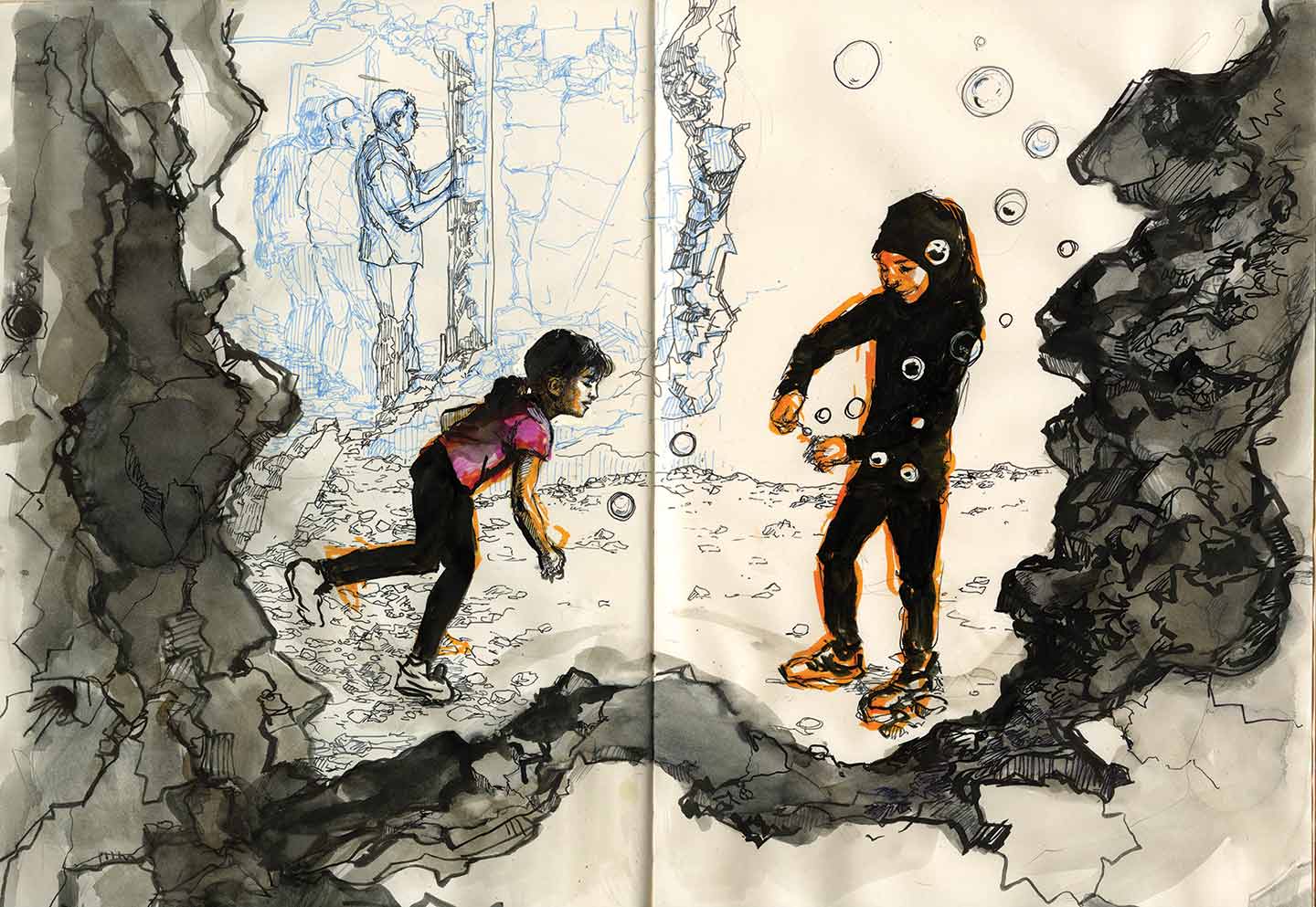
The Faroukh family’s damaged home (Bethlehem, 2023).
Luchadora (Puerto Rico, 2018).
Taxi-driver protests (New York City, 2021).
Drinking water from a spring after Hurricane Maria (Puerto Rico, 2017).
Published by OR Books. Use the code MOLLY2026 for 15 percent off the card set when ordering from ORBooks.com.

Support independent journalism that does not fall in line

Even before February 28, the reasons for Donald Trump’s imploding approval rating were abundantly clear: untrammeled corruption and personal enrichment to the tune of billions of dollars during an affordability crisis, a foreign policy guided only by his own derelict sense of morality, and the deployment of a murderous campaign of occupation, detention, and deportation on American streets. 

Now an undeclared, unauthorized, unpopular, and unconstitutional war of aggression against Iran has spread like wildfire through the region and into Europe. A new “forever war”—with an ever-increasing likelihood of American troops on the ground—may very well be upon us.  

As we’ve seen over and over, this administration uses lies, misdirection, and attempts to flood the zone to justify its abuses of power at home and abroad. Just as Trump, Marco Rubio, and Pete Hegseth offer erratic and contradictory rationales for the attacks on Iran, the administration is also spreading the lie that the upcoming midterm elections are under threat from noncitizens on voter rolls. When these lies go unchecked, they become the basis for further authoritarian encroachment and war. 

In these dark times, independent journalism is uniquely able to uncover the falsehoods that threaten our republic—and civilians around the world—and shine a bright light on the truth. 

The Nation’s experienced team of writers, editors, and fact-checkers understands the scale of what we’re up against and the urgency with which we have to act. That’s why we’re publishing critical reporting and analysis of the war on Iran, ICE violence at home, new forms of voter suppression emerging in the courts, and much more. 

But this journalism is possible only with your support.

This March, The Nation needs to raise $50,000 to ensure that we have the resources for reporting and analysis that sets the record straight and empowers people of conscience to organize. Will you donate today?

Molly Crabapple

Molly Crabapple is an artist and writer for outlets including The New York Times, The New Yorker, Rolling Stone, and The New York Review of Books. She is the author of Drawing Blood and National Book Award–nominated Brothers of the Gun, with Marwan Hisham. Her work is in the permanent collection of the Museum of Modern Art.

More from The Nation

Robert A.M. Stern gives a construction tour of the George W. Bush Presidential Center.

The Neoliberalism of Robert A.M. Stern The Neoliberalism of Robert A.M. Stern

The passing of postmodern architecture’s last living holdout marks the end of an era—and reminds us that we’re in a new, worse one.

Kate Wagner

The Cinema of Societal Collapse

The Cinema of Societal Collapse The Cinema of Societal Collapse

This year’s Oscar-nominated international feature films—especially The Secret Agent and Sirāt—tackle what it means to live and die under tyranny.

Books & the Arts / Vikram Murthi

A page taken from the Merriam-Webster's Desktop Dictionary, 2016.

Can the Dictionary Keep Up? Can the Dictionary Keep Up?

In Stefan Fatsis’s capacious, and at times score-settling, personal history of the reference book, he reveals what the dictionary can still tell us about language in modern life

Books & the Arts / Lora Kelley

An internet cafe in Beijing, 2007.

Why We Misunderstand the Chinese Internet Why We Misunderstand the Chinese Internet

Journalist Yi-Ling Liu’s The Wall Dancers traces how the Internet affected daily life in China, showing how similar this corner of the Web is to the one experienced in the West.

Books & the Arts / Rebecca Liu

The Bad Vibes of “Wuthering Heights”

The Bad Vibes of “Wuthering Heights” The Bad Vibes of “Wuthering Heights”

Keeping its distance from the novel, Emerald Fennell’s film ends up offering us a mirror of our own times.

Books & the Arts / Sarah Chihaya

A fast-food restaurant in France, 1982.

Has Contemporary Fiction Ignored the Working Class? Has Contemporary Fiction Ignored the Working Class?

Claire Baglin’s bracing On the Clock gives its readers a close look at work behind the fry station, and in the process asks what experiences are missing from mainstream letters.

Books & the Arts / Rachel Vorona Cote