
Culture Therapy
Films to remember for pre-Trumpian times and inspiration.
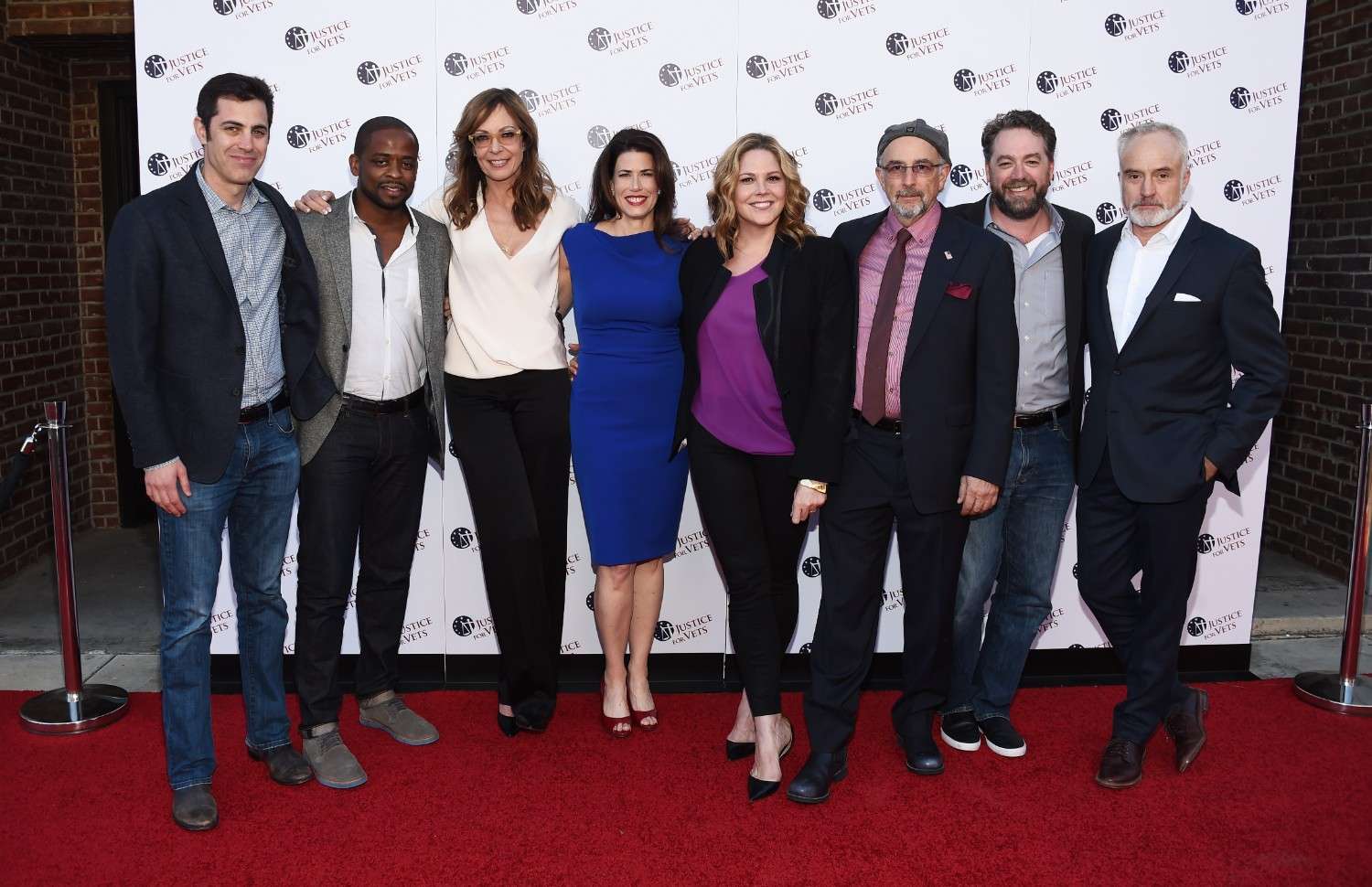
A few months ago, my family was making fun of me because I couldn’t stop watching The West Wing. I will say that by season eight, even my husband was by my side, trying to remember who won that final presidential election. Was it Alan Alda or Jimmy Smits? (No spoilers here!) Mostly, we could not believe how great that Aaron Sorkin series was. I highly recommend it as therapy for where we are now. One of its stars, Bradley Whitford, who now acts on the dystopian Handmaid’s Tale, recently joked, “I am afraid my career mirrors the beginning and end of democracy.”
Rewatching those 155 episodes made me think about what we should aspire to be again. Since everything these days comes down to a list, the following artistic endeavors should be watched to remember pre-Trumpian times. Here goes.
POLITICIANS STEP UP (OR DOWN)
The Seduction of Joe Tynan: In this 1979 film, Alan Alda (supported by a new actress named Meryl) is a senator who ultimately stands up to a racist Supreme Court nomination, risking all. Alda wrote this one as well.
Being There: In this 1979 adaptation of Jerzy Kosinki’s book, Peter Sellers plays Chauncey Gardiner, a simpleton who somehow emerges as a sought-after political pundit and more. He depends on television (“I like to watch” has a couple meanings here) and uses language that somehow strikes a chord with clueless politicians. (“As long as the roots are not severed, all is well.” “In the garden, growth has its seasons.”)
Mr. Smith Goes to Washington: Jimmy Stewart soars in this 1936 classic about a newly appointed senator who is expected to buckle under to higher-ups. In the end, he filibusters for 25 hours for the good of the country. The reel—not quite real—variety, but it works. Stewart’s It’s a Wonderful Life is also more than just holiday viewing. After all, his smalltown citizen ultimately overwhelms a rich man who thinks he is king.
The American President: Michael Douglas rises in Rob Reiner’s excellent film—written by Aaron Sorkin—in which the chief executive ultimately sticks with a controversial cause and faces down opposition—ad learns that he doesn’t need to buy his girlfriend flowers (“It turns out I have a rose garden!”).
The West Wing: Probably the best series ever. (Martin Sheen has graduated from chief of staff in American President to President Jed Bartlett). And what a cast, dealing with every issue imaginable. Timely still? One episode is called “Gaza,” and another deals with immigration. It holds up.
The Candidate: This 1972 film is one of Robert Redford’s best. Who can forget him, as a handsome backup guy suddenly asked to run for the Senate. “What do we do now?” is one of the most famous of last lines, especially from a winner.
The Best Man: This 1964 drama featured Henry Fonda versus Cliff Robertson in a presidential race. Script by Gore Vidal. Both candidates—one considered principled, one ruthless—seek an important endorsement.
JOURNALISTS AS HEROES
All the President’s Men: We have likely all seen Redford and Hoffman as Woodward and Bernstein, and Jason Robards as Ben Bradlee (“Run that baby!”) breaking the biggest story of that time (and sending every young writer to investigative journalism school). Less classic, but covering the same period is The Post, which primarily follows the viewpoint of Washington publisher Katharine Graham. Meryl Street and Tom Hanks are, not surprisingly, great. Third suggestion: the new documentary on Graham.
Good Night and Good Luck: George Clooney’s 2005 film on Edward R. Murrow taking on Joe McCarthy. If ever the power of the press was at stake, it was during the blacklisting period. (P.S. This is now a smash hit on Broadway, starring Clooney in his stage debut.)
Frost/Nixon: The late British interviewer is probably best remembered for his televised conversations with the former scandal-infused US President. The 2008 movie starred Michael Sheen as Frost and Frank Langella as Nixon. Directed by Ron Howard and based on a play by Peter Morgan, the film takes us behind the scenes as the two adversaries prepare.
ONES THAT MADE US LAUGH—AND THINK
Dave: in this 1993 film, written by Gary Ross and directed by Ivan Reitman, Kevin Kline plays a presidential look-alike asked to step in at a pivotal time. (If only.) Sigourney Weaver is the first lady, and it all works well. A theatrical version is in the works.
Wag the Dog: Often the most referenced movie that seemed too real for comfort. Until it wasn’t. This was directed by Barry Levinson in 1997, and starred Dustin Hoffman and Robert DeNiro. The plot follows a spin doctor and Hollywood producer as they fabricate a war to cover up a presidential sex scandal. Hmm…
The Front Page: One of the classics, from a Broadway show to a 1974 Billy Wilder movie with Jack Lemmon and Walter Matthau. It is about city politics: that city being Chicago. Somehow, we are laughing as death penalties and other dark subjects arise. In the end, justice, love, and witty banter prevail.
Charlie Wilson’s War: One more plug for Aaron Sorkin. This 2007 film was a hilarious, based-on-truth story about a congressman who cares little about anything of substance… until he does. Tom Hanks and Julia Roberts are wonderful.
BEFORE THEY WERE SUCKERS AND LOSERS
Obviously, there have been countless films about those who have given their lives to save democracy. A few we suggest:
Born On the Fourth of July: Arguably Tom Cruise’s best performance. In this 1989 film, directed by Oliver Stone, Cruise plays Ron Kovik, who served—and almost died—in Vietnam and later became an important anti-war voice.
Popular
“swipe left below to view more authors”Swipe →Da Five Bloods: This 2020 film was notable for several reasons. It was made by Spike Lee; it deals with four former black Vietnam Vets returning to that country; and it was Chadwick Boseman’s final released performance. Netflix made an important contribution with this one.
Coming Home: Jane Fonda surely deserves an award for making numerous films that caught political moments, from The China Syndrome to 9 to 5. Perhaps most memorable was this one, released in 1978, which earned her and Jon Voight Oscars. The story, of course, is about a returning Vietnam vet, permanently disabled… but not too much to keep him from speaking to others about the costs of war.
The Americanization of Emily: This beautiful, sadly forgotten 1964 film starred James Garner as a proud anti-war coward, and Julie Andrews as a WWII driver. Written by the great Paddy Chayefsky, the film was Garner’s favorite of all his work.
A Face in the Crowd:A classic from 1957, which starred Andy Griffith and Patricia Neal. This one is about a phony who allegedly speaks for the people, via radio and then television, and who’s subsequently courted by powers that be. Until he is outed by a TV producer. (Anyone have a hot mic ready?) The good news: it has been adapted to the stage, with music by Elvis Costello.
Our award for the actor who most-portrayed politicians: Melvyn Douglas. He played memorable ones in The Candidate, Being There, The Americanization of Emily, and Joe Tynan. “He played a politician better than I ever did,” confessed his wife, Helen Gahagan Douglas, the great congresswoman taken down by Richard Nixon in their infamous 1950 Senate race. Stay tuned for her story.
Support independent journalism that does not fall in line
Even before February 28, the reasons for Donald Trump’s imploding approval rating were abundantly clear: untrammeled corruption and personal enrichment to the tune of billions of dollars during an affordability crisis, a foreign policy guided only by his own derelict sense of morality, and the deployment of a murderous campaign of occupation, detention, and deportation on American streets.
Now an undeclared, unauthorized, unpopular, and unconstitutional war of aggression against Iran has spread like wildfire through the region and into Europe. A new “forever war”—with an ever-increasing likelihood of American troops on the ground—may very well be upon us.
As we’ve seen over and over, this administration uses lies, misdirection, and attempts to flood the zone to justify its abuses of power at home and abroad. Just as Trump, Marco Rubio, and Pete Hegseth offer erratic and contradictory rationales for the attacks on Iran, the administration is also spreading the lie that the upcoming midterm elections are under threat from noncitizens on voter rolls. When these lies go unchecked, they become the basis for further authoritarian encroachment and war.
In these dark times, independent journalism is uniquely able to uncover the falsehoods that threaten our republic—and civilians around the world—and shine a bright light on the truth.
The Nation’s experienced team of writers, editors, and fact-checkers understands the scale of what we’re up against and the urgency with which we have to act. That’s why we’re publishing critical reporting and analysis of the war on Iran, ICE violence at home, new forms of voter suppression emerging in the courts, and much more.
But this journalism is possible only with your support.
This March, The Nation needs to raise $50,000 to ensure that we have the resources for reporting and analysis that sets the record straight and empowers people of conscience to organize. Will you donate today?
More from The Nation
The Cinema of Societal Collapse The Cinema of Societal Collapse
This year’s Oscar-nominated international feature films—especially The Secret Agent and Sirāt—tackle what it means to live and die under tyranny.
Can the Dictionary Keep Up? Can the Dictionary Keep Up?
In Stefan Fatsis’s capacious, and at times score-settling, personal history of the reference book, he reveals what the dictionary can still tell us about language in modern life

Why We Misunderstand the Chinese Internet Why We Misunderstand the Chinese Internet
Journalist Yi-Ling Liu’s The Wall Dancers traces how the Internet affected daily life in China, showing how similar this corner of the Web is to the one experienced in the West.
The Bad Vibes of “Wuthering Heights” The Bad Vibes of “Wuthering Heights”
Keeping its distance from the novel, Emerald Fennell’s film ends up offering us a mirror of our own times.
Has Contemporary Fiction Ignored the Working Class? Has Contemporary Fiction Ignored the Working Class?
Claire Baglin’s bracing On the Clock gives its readers a close look at work behind the fry station, and in the process asks what experiences are missing from mainstream letters.
Werner Herzog Between Fact and Fiction Werner Herzog Between Fact and Fiction
The German auteur’s recent book presents a strange, idiosyncratic vision of the concept of “truth,” one that defines how he sees the world and his art.

