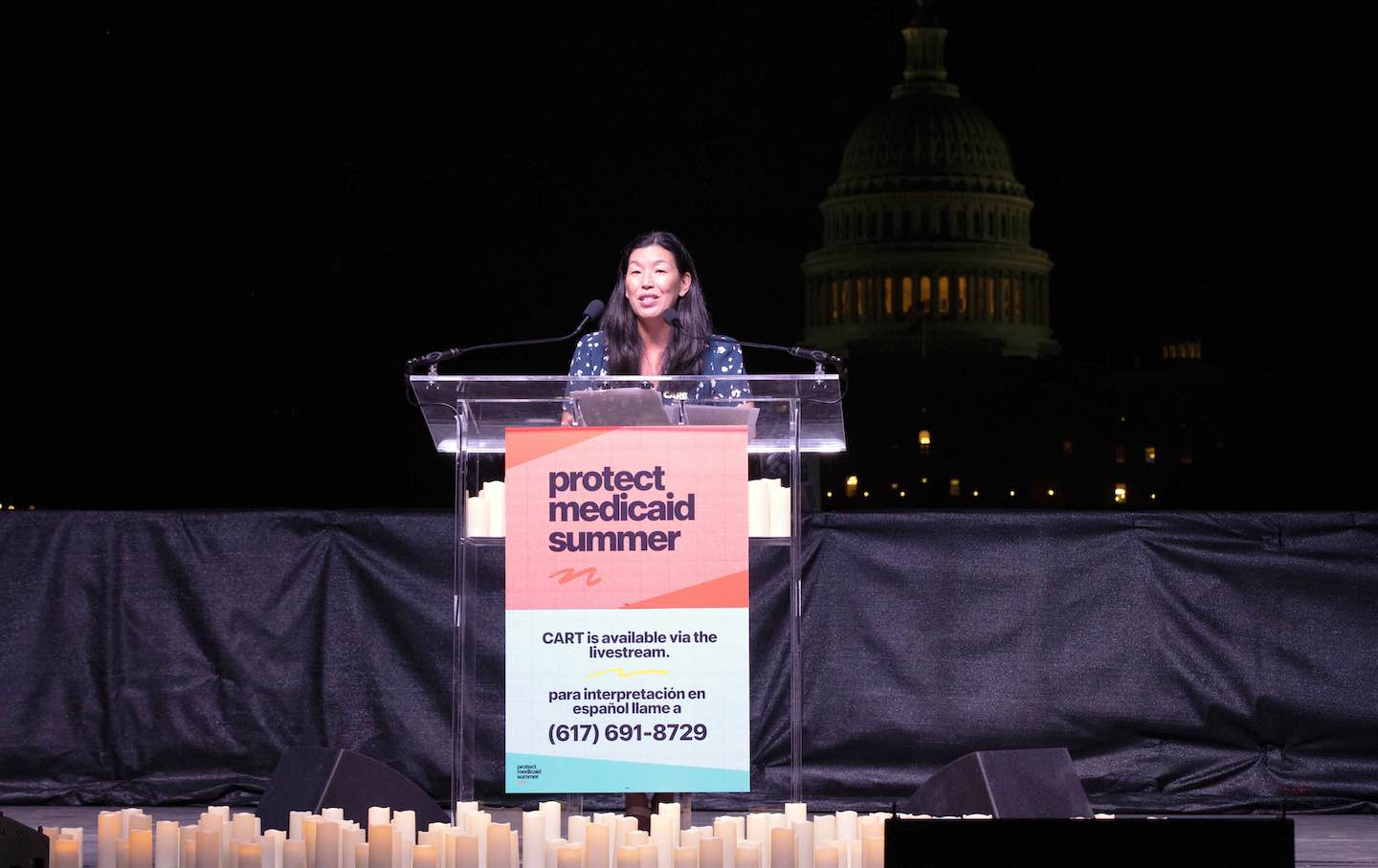
It’s been 60 years since President Lyndon B. Johnson signed the Medicaid and Medicare Act into law, and those programs have built a safety net of care for American families. Sixty years since advocates, organizers, and families came together and refused to let our country abandon adults as they aged into poverty and low-income workers as they struggled to afford healthcare. But in the wake of the largest cut to Medicaid in history, this is no ordinary anniversary.
Today, nearly 80 million people rely on Medicaid for care. From covering 40 percent of all childbirths to nearly 70 percent of home care for older and disabled people, Medicaid is more than a line item. It has represented a promise that no matter the ups and downs of life, our ability to care for one another, from generation to generation, will be protected.
The $1 trillion in cuts included in the massive budget bill signed into law in July, however, put care for 17 million people at risk. The caregivers, the direct care workers, the disabled and chronically ill, and the families juggling it all will bear the brunt of the pain. This big, ugly bill tells us that our care, and our lives, are disposable.
The promise of Medicaid is being shattered. But in the wake of this devastation, the dream of something better is coming into view. We have the chance to shape the future by building a system of care that leaves no one behind. From healthcare to paid family and medical leave, from affordable, quality childcare to aging and disability care—a new system of care that reflects the true realities and pressures on our families is long overdue.
Even before these cuts, these programs were insufficient, underfunded, and inaccessible to far too many. Millions of us were already struggling to access the care we need and deserve. Family caregivers, sandwiched between raising a young child and supporting aging parents, are buckling under the weight of the financial and emotional cost. Care workers are taking second and third jobs, because they can’t afford to support their own families on the poverty wages they earn. More than 700,000 eligible families are stuck on waiting lists for home care, and rural nursing homes are shuttering, without the workforce necessary to meet the demand.
With our existing care system on the brink and care for millions hanging in the balance, the question of what comes next is up to us to answer. Now is the time to build toward a future where no one is left to navigate illness, disability, aging, or parenthood alone. A future where families have the time and support they need to care for one another without sacrificing income or stability. A future where care workers are supported and recognized as essential, with good wages, strong protections, and dignity on the job. In this future, care is not expendable; it is prioritized as the foundation of a thriving society.
But this future doesn’t come to us—we build it, together.
Just as generations before us fought for a guarantee of healthcare and economic security, delivering us Social Security, Medicaid, Medicare, and the Americans With Disabilities Act, now it’s our turn. These programs didn’t just happen; they were built by people who dared to demand more and organized to make it real. We must follow their lead and fight for more than just saving the bare minimum.
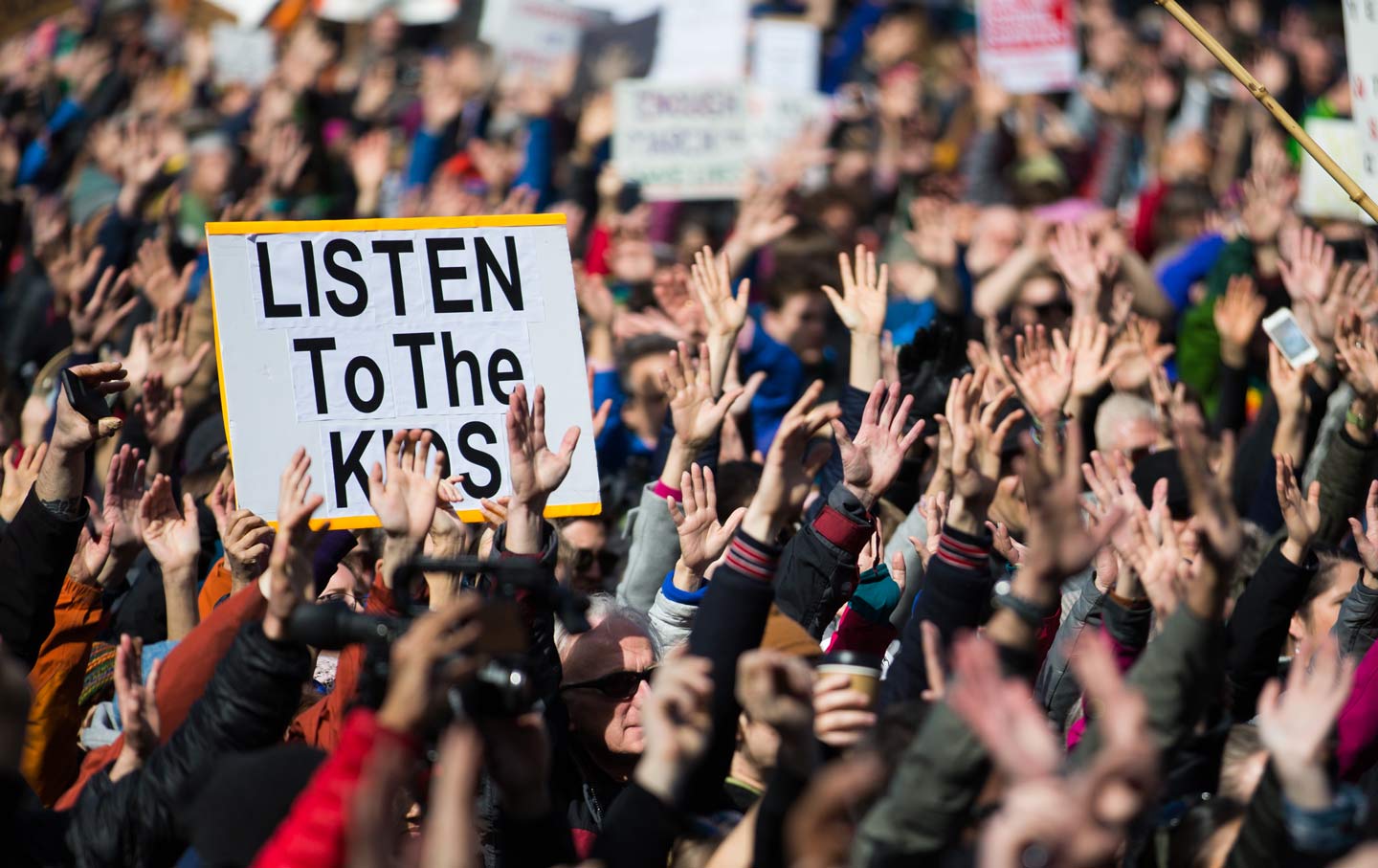
In late July, Caring Across Generations and our partners hosted hundreds of families on the National Mall for 60 hours, holding a vigil to mark the 60 years since Medicaid was created. We came together in our shared fear about what it means to lose Medicaid. We raised our voices to let our elected representatives know that we will not let their cruelty go unanswered. And we let our rage spark our commitment to ensure that the next 60 years of care are not like this.
We deserve policies that let us thrive. To get there, we have to keep coming together—not only in moments of crisis, but in our everyday lives. Each of us must commit to showing up and organizing others to demand change.
Only we can plant the seeds for what comes next: a future of care worth fighting for.
Support independent journalism that does not fall in line
Even before February 28, the reasons for Donald Trump’s imploding approval rating were abundantly clear: untrammeled corruption and personal enrichment to the tune of billions of dollars during an affordability crisis, a foreign policy guided only by his own derelict sense of morality, and the deployment of a murderous campaign of occupation, detention, and deportation on American streets.
Now an undeclared, unauthorized, unpopular, and unconstitutional war of aggression against Iran has spread like wildfire through the region and into Europe. A new “forever war”—with an ever-increasing likelihood of American troops on the ground—may very well be upon us.
As we’ve seen over and over, this administration uses lies, misdirection, and attempts to flood the zone to justify its abuses of power at home and abroad. Just as Trump, Marco Rubio, and Pete Hegseth offer erratic and contradictory rationales for the attacks on Iran, the administration is also spreading the lie that the upcoming midterm elections are under threat from noncitizens on voter rolls. When these lies go unchecked, they become the basis for further authoritarian encroachment and war.
In these dark times, independent journalism is uniquely able to uncover the falsehoods that threaten our republic—and civilians around the world—and shine a bright light on the truth.
The Nation’s experienced team of writers, editors, and fact-checkers understands the scale of what we’re up against and the urgency with which we have to act. That’s why we’re publishing critical reporting and analysis of the war on Iran, ICE violence at home, new forms of voter suppression emerging in the courts, and much more.
But this journalism is possible only with your support.
This March, The Nation needs to raise $50,000 to ensure that we have the resources for reporting and analysis that sets the record straight and empowers people of conscience to organize. Will you donate today?